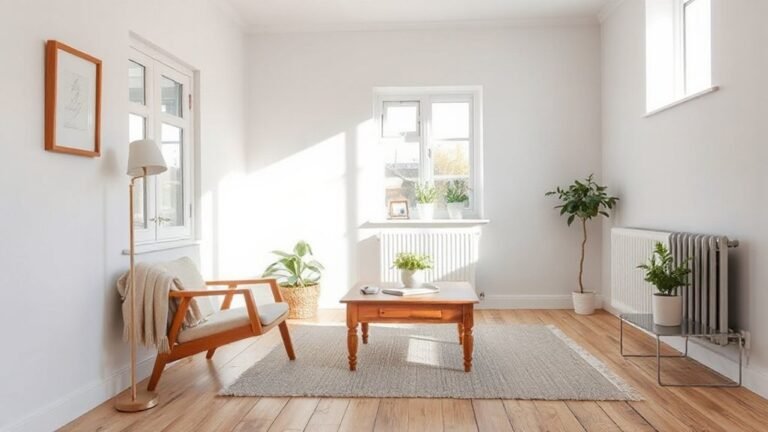
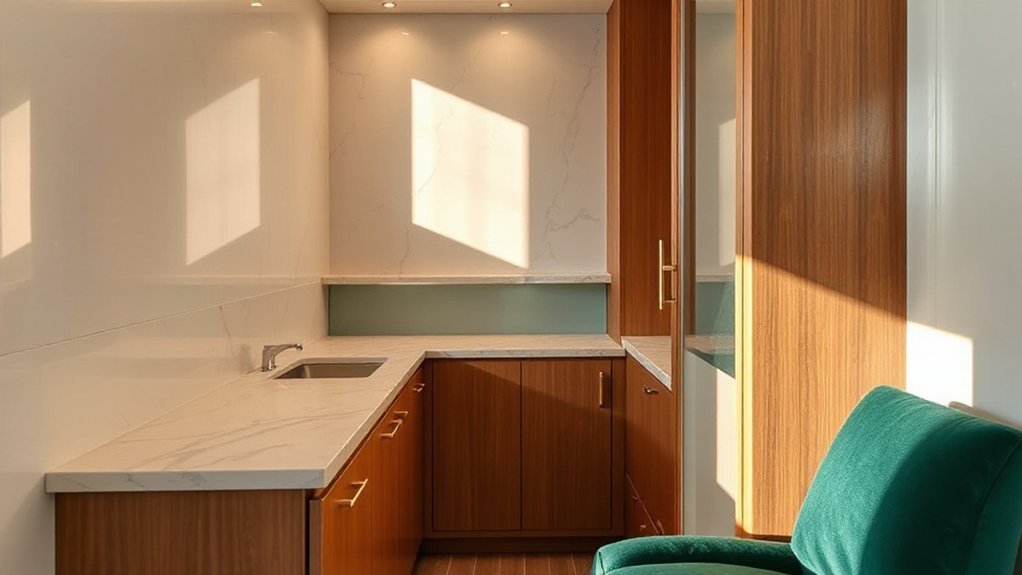
What are possible Small‑Space Design Choices That Feel Surprisingly Luxurious? Think of a 250-square-foot loft where brushed brass accents catch the light as you shut the door, a single slab of quartz grounding the kitchen, and hidden storage keeping surfaces pristine. You’ll notice how layered lighting, tactile textures, and restrained materials turn a compact space into a quiet luxury. There’s more to it than looks, and the method behind the calm is what keeps you coming back for the details that truly elevate your space.
Key Takeaways
- Favor refined textures and high-end accents used sparingly to evoke luxury without crowding the space.
- Layer lighting with dimmable ambient, task, and accent sources to create depth and tactile warmth.
- Choose subtle-depth finishes and a mix of smooth and tactile textures to add dimension in a compact footprint.
- Prioritize hidden, modular storage and vertical solutions to maintain calm, clutter-free surfaces.
- Use light wall tones with a brighter ceiling and restrained accents to visually enlarge the room.
Foundational Luxury in Tiny Spaces
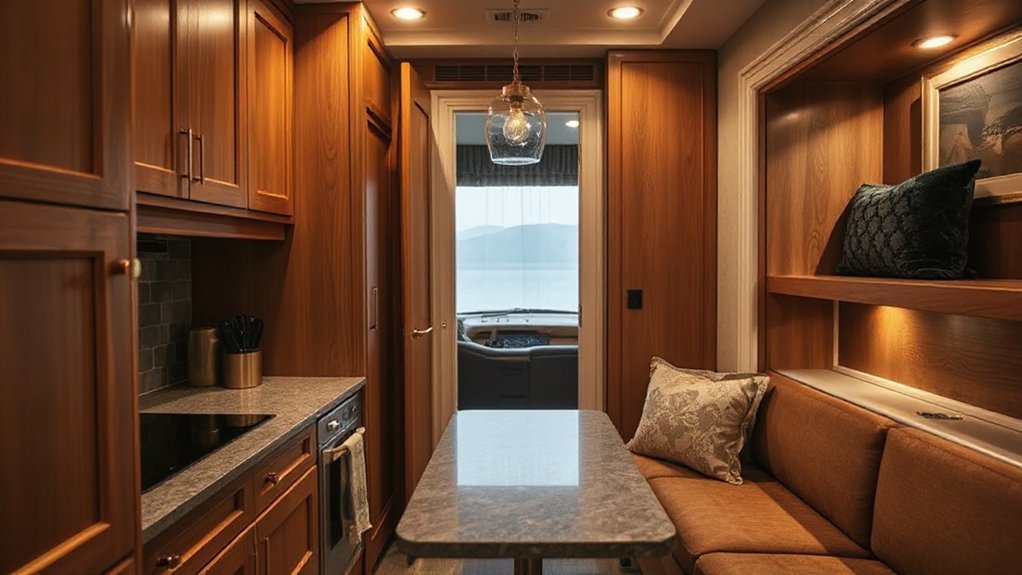
Your approach favors refined textures over loud patterns, so opulent decor emerges from restraint, not excess. Choose high end accents that age gracefully—stone, brass, or brushed nickel—applied sparingly to elevate without crowding.
Every item earns its place through function and tactility: a drawer that closes with a sigh, a chair that supports you with subtle spring, a rug that anchors rather than overwhelms. You create perceived room by clarity, precision, and the quiet power of well-made, purpose-driven details.
Layer Lighting to Make Your Tiny Room Feel Warm and Deep
Layering light transforms a tiny room from functional to inviting: think ambient, task, and accent layers that work together without crowding. You’ll start with an ambient glow from a dimmable ceiling fixture or wall sconce, balancing general warmth with soft shadows.
Add task lighting for specifics—a reading lamp by the chair, a focused under-cabinet light, or a desk lamp you can adjust without glare.
Then place accent lighting to sculpt depth: a narrow uplight behind furniture, a candle-style glow, or a slim LED strip beneath a shelf. Keep cords tucked and fixtures proportionate to the space.
The result is cozy ambience and a refined, tactile atmosphere that feels generous, not cluttered.
Textures and Materials for Small-Luxe Finishes
Textures and materials shape the tactile luxury of a small space, turning compact areas into inviting, layered palettes. You’re deliberate about pairs that read as intentional, not cluttered, using a restrained material palette. Choose finishes with subtle depth—brushed metals, matte stone, or warm woods—that catch light without shouting.
Textural contrast matters: pair smooth surfaces with tactile, grainy textures to add dimension without expanding the footprint. Keep seams and progressions clean, letting edges and corners reflect refinement rather than clutter.
In a small room, scale governs success: opt for refined, proportionate slabs, tiles, or fabrics that feel generous yet compact. Signature tweaks—a leather seat, linen drape, or wool rug—anchor the space.
The result: a cohesive, luxe feel built on thoughtful material choices.
Smart Storage for Calm and Space
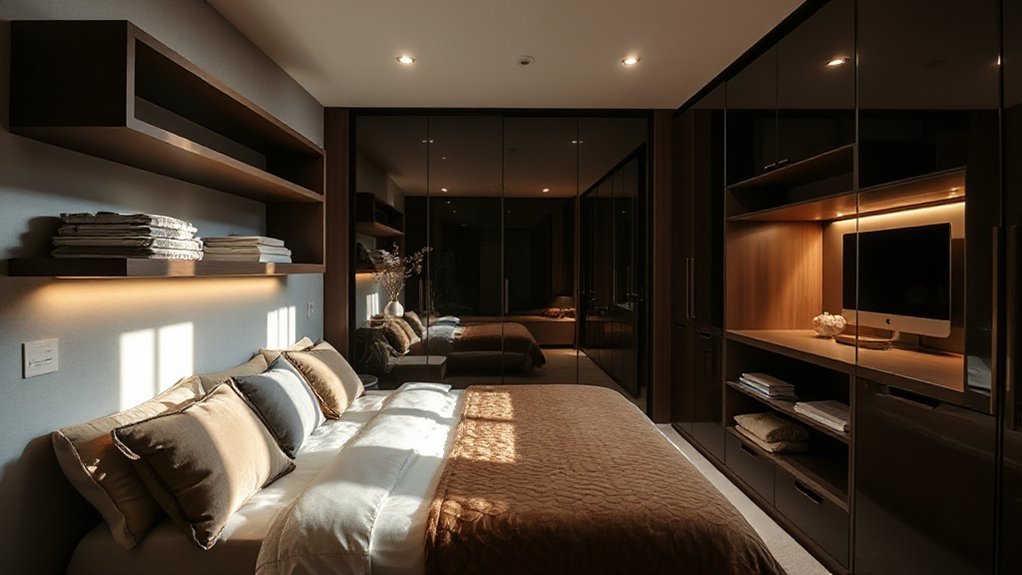
Smart storage isn’t about stuffing more into a room; it’s about carving calm through thoughtful placement and access. You’ll prioritize hidden compartments and compartments-with-pulls, so every item has a defined home.
Build vertical solutions that draw the eye upward, freeing floor space for movement and texture. Choose micro-zones: a slim alcove for daily essentials, a shallow pullout for chargers, a labeled bin system that drops straight into a cabinet.
Creative organization becomes a tactile routine—touch, return, and see. Favor clean lines, soft-close hinges, and uniform hardware to sustain minimalist aesthetics.
Opt for modular shelves that adapt to changing needs, keeping surfaces uncluttered. The result is calm, precise storage that feels luxurious because nothing is out of place.
Color Tricks to Make a Tiny Room Look Bigger
Color tricks can make a tiny room feel expansive by manipulating light, depth, and focus. You’ll use light tones on walls to reflect daylight, while choosing a slightly brighter ceiling to lift the space.
Subtle color contrast around architectural edges—trim, molding, doors—creates clean read lines that guide the eye upward and outward. An accent wall in a restrained shade can anchor the room without shrinking it, especially when paired with complementary decor.
Keep saturated hues sparing; apply them to a single surface or niche to avoid busyness. Test color in natural light at different times, then commit to a consistent palette across textiles and surfaces.
Color contrast and accent walls work together to enhance perceived volume without clutter.
Multipurpose Furniture That Elevates Luxury in Compact Rooms
When space is at a premium, multipurpose furniture becomes a quiet luxury, delivering function without sacrificing finesse. You’ll notice how a single piece performs in several roles, reducing clutter while elevating tactility.
Choose a sofa that morphs into a guest bed with a solid timber frame and a foam core that feels substantial to the touch. A coffee table with integrated storage and a lift-top surface keeps essentials within reach, yet hidden.
Look for innovative material choices—quiet metal alloys, velvety upholstery, and lacquered surfaces that resist wear while exuding refinement.
Prioritize minimalist decor strategies: clean lines, restrained silhouettes, and seamless joints that read as deliberate design. Every detail should feel purposeful, so you experience luxury through restraint, durability, and the pleasure of intelligent, compact living.
Frequently Asked Questions
How Can I Maximize Perceived Height in a Tiny Space?
You can maximize perceived height by drawing the eye upward with vertical accents and deliberate lighting. Install tall, slim mirrors or shelving that extend to the ceiling, and choose wall colors with a light, cool tone to bounce light.
Use minimal lighting at suspended levels, not floor lamps, to deepen shadows near the base. Keep furniture low-profile, and frame openings with tall trim.
Your space feels taller when vertical lines repeat and lighting stays refined and focused.
What Small-Luxury Details Matter Most for First Impressions?
You want the tiniest space to feel instantly premium, and the details matter most: luxury lighting that casts flattering, layered glow, and statement artwork that anchors the room with personality.
You’ll notice textures you can feel underfoot and on fingertips, crisp lines, and purposeful finishes. You choose cohesive hardware, clean reflections, and thoughtful placement.
You’ll greet guests with refined rhythm, where every focal point signals quality, comfort, and effortless, curated luxury.
Which Compact Accessories Elevate a Room’s Sense of Value?
You know it: luxury wall art, elegant decorative accents elevate a room’s value. You pick pieces that balance scale, texture, and color.
You hang one bold canvas, then layer with refined sculptures and chic trays. You curate with restraint, you feel the nuance of craftsmanship, you notice the finish, you touch the surface.
You pair bold statement with quiet details, you contrast matte and gloss, you craft a cohesive, tactile sense of premium without shouting.
How Do I Balance Function and Opulence on a Budget?
You balance function and opulence by choosing versatile pieces and budget-friendly luxuries. Prioritize durable basics, then layer in vintage accents and statement lighting to elevate mood without crowding space.
You’ll pick compact, high‑quality hardware, furniture with hidden storage, and textiles that feel expensive yet affordable. You mix finishes for depth, keep lines clean, and opt for warm light to transform every surface.
You’ll curate thoughtfully, letting purposeful choices read as refined, not excessive.
What Finishes Resist Wear but Feel Upscale in Tiny Areas?
You want finishes that resist wear and still feel upscale in tiny spaces. Opt for luxury hardware with clean lines and satin or brushed metals, plus textured surfaces like tactile wallpaper, linen, or subtly kosha-grain wood.
Choose coatings that hide fingerprints, such as powder-coated aluminum or ceramic, and pair them with durable composites.
Prioritize tight seams and precise tolerances; every surface should read refined, durable, and distinctly premium to the touch.
Conclusion
In a tiny space, luxury hinges on your senses: texture, light, and restraint. You curate materials that feel deliberate, layer lighting to sculpt warmth, and tuck away clutter with smart storage. You’ll notice how color depth and tactile finishes trick the eye into spaciousness. For example, a €1,000 micro-apartment where a matte stone dining surface, brushed metal accents, and hidden lighting transformed a cramped kiss-length footprint into a serene, refined sanctuary you actually enjoy living in.
About the Author