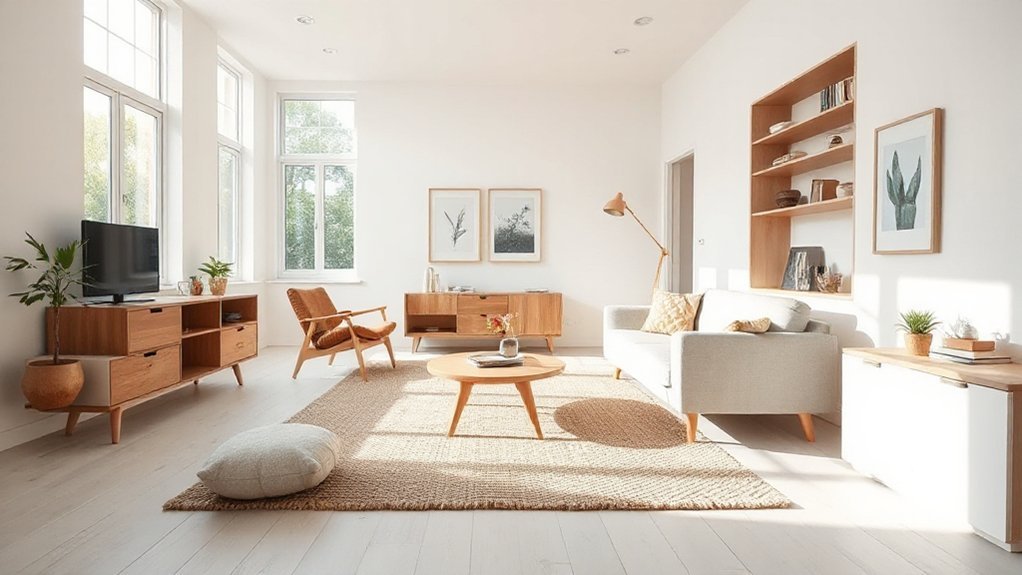
If you’ve seen a one-bedroom, staged with light wood, a soft gray sofa, and corded lamps, you’re stepping into rental-friendly design. You’ll want flexible, non-permanent elements that adapt as tenants change, while keeping the space easy to update without damage. From Scandinavian minimalism to Moody Modern, practical choices—modular furniture, removable textures, and strategic lighting—help you balance style with durability. Curious how to apply these moves to small spaces without overhauling walls?
Key Takeaways
- Prioritize rental-friendly, non-permanent design with modular furniture and removable decor to avoid penalties and ease updates.
- Use scalable layouts and space-saving, multiuse furniture to maximize small or tiny rental spaces.
- Embrace flexible style approaches like Scandinavian Minimalism, Moody Modern, and Coastal/Industrial for broad appeal.
- Opt for swap-friendly decor (peel-and-stick, textiles, removable wall accents) to refresh interiors without long-term commitments.
- Rely on portable lighting, layered ambiance, and non-permanent accents to enhance mood and functionality without alterations.
What Rental-Friendly Styling Really Means
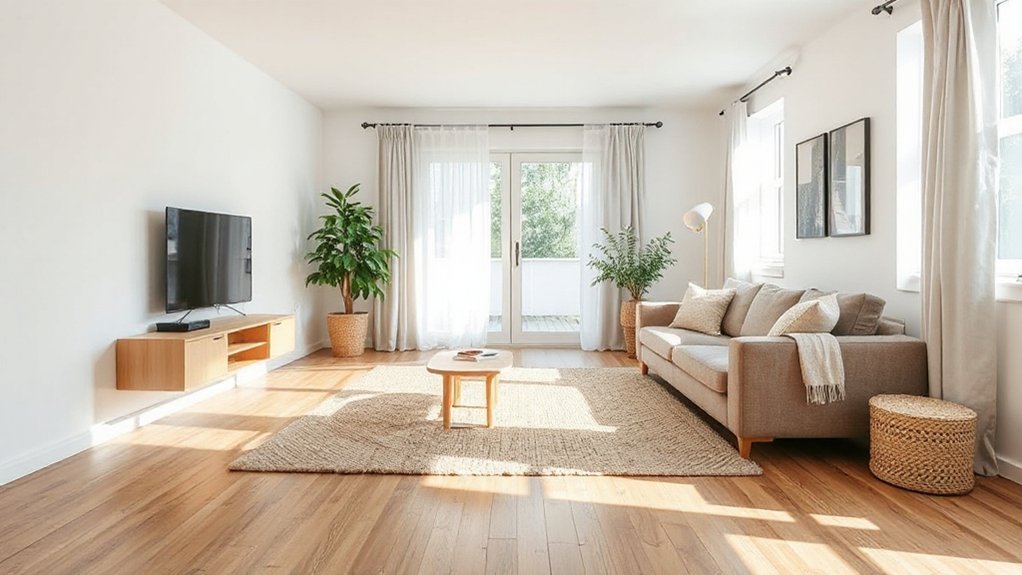
What does rental-friendly styling really mean? You approach design with care for policy and practicality. It means choosing finishes, furniture, and layouts that enhance space without risking violations or costly fixes.
You’ll prioritize modular pieces, removable decals, and neutral palettes that adapt to different tenants and lease terms. Consider rental restrictions when selecting fixtures, fabrics, and hardware, avoiding permanent alterations that could trigger penalties.
You’ll plan for easy maintenance, liftable storage, and transferable decor that tenants can enjoy without ownership burdens. You’ll also map tenant responsibilities into your approach: choose washable paints, label cords neatly, and document fastenings to prevent damage.
In short, style that respects rules, reduces friction, and stays rentable and appealing.
Rental-Safe Foundations for Small Spaces
Need to maximize a small space without sacrificing durability or rental compliance? Start with a solid, non-structural foundation: choose furniture-friendly layouts, minimal drilling, and surfaces that won’t damage walls.
Prioritize rent friendly flooring that tolerates traffic, spills, and occasional relocation; options like luxury vinyl plank or engineered laminate balance durability with easy maintenance and a compact footprint.
Use modular pieces to transform zones without walls, keeping electrical access and HVAC clear.
For vertical impact, apply removable wall decals instead of paint or wallpaper to refresh tones without commitment.
Keep wiring hidden with cord management sleeves and attach items using adhesive hooks rated for rental walls.
Finally, measure doorways and passages before buying to prevent bulky misfits; plan low-profile storage that preserves flow.
Consistency and flexibility drive lasting small-space foundations.
Scandinavian Minimalism for Tiny Apartments
Could Scandinavian minimalism turn a tiny apartment into a functional oasis? Yes, with careful layout, light optics, and high-contrast simplicity.
Start with a neutral base: white walls, light wood, and restrained textiles to widen perceived space.
Prioritize multiuse furniture: a sofa that converts to bed, a wall-mounted desk, and storage ottomans.
Keep clutter off surfaces; implement hidden organizers and slim profiles to preserve floor plan clarity.
Add natural textures—lambswool throws, jute rugs—to soften edges without visual heaviness.
Introduce Artistic wall murals sparingly as focal accents, ensuring they complement the palette rather than overwhelm.
For ceiling interest, employ statement ceiling designs—subtle coffers or a pale, matte tone—so the eye travels upward without interrupting flow.
Guarantee consistent lighting and reflectivity for a breathable, scalable environment.
Moody Modern: Balancing Dark Palettes With Light
Moody Modern starts with dark foundations that feel grounded, but you’ll keep the room breathable with strategic light details. Use bright accents to punctuate the space, so Moody Hues don’t overwhelm and contrast stays clear.
The key is balance through contrast: pair deep tones with selective textures and reflective surfaces to keep rental-friendly practicality.
Moody Hues, Bright Accents
Dark rooms can feel welcoming rather than oppressive when you balance deep hues with bright accents. You’ll apply Moody Hues, Bright Accents by pairing charcoal or navy walls with crisp white trim and a punch of color in decor. Use matte finishes to keep surfaces refined, while a single, saturated accent—like emerald, cobalt, or burnt orange—draws the eye without overwhelming the space.
Choose furniture with clean lines and sturdy proportions to maintain a modern, rental-friendly feel. For art, curate an art gallery vibe with a small collection of bold pieces; mix in vintage posters for nostalgic texture.
Keep lighting flexible: dimmable LEDs, warm lamps, and focused spotlights highlight depth without clutter or damage.
Dark Foundations, Light Details
You can balance bold, dark foundations with light details to keep a space feeling open and modern. In Moody Modern, deepen walls with near-black or charcoal tones, then lift the room with white or pale accents.
Choose wall treatments that add texture without overwhelming, such as matte paint, subtle paneling, or a soft wallpaper with linear patterns to emphasize height. Let light flow from large windows and strategic mirrors, ensuring the ceiling designs stay clean and unobtrusive.
Pair dark floors with lighter trim to draw the eye upward, preserving a sense of airiness. Keep upholstery and accessories in muted neutrals to prevent heaviness.
This approach delivers a versatile, rental-friendly contrast that remains timeless and easy to refresh seasonally.
Balance Through Contrast
To balance a moody palette, introduce light elements that contrast with the dark core—this is where depth meets openness. You’ll create contrast by pairing bold walls with airy textiles, clean lines, and reflective surfaces, keeping practicality in mind. Use light neutrals to keep rooms legible and inviting without sacrificing mood.
- Incorporate bright accents through artful lighting, white trim, and glass surfaces to sharpen edges efficiently.
- Layer textures that brighten the space—linen curtains, wool throws, and ceramic finishes—while preserving the palette’s gravity.
- Reflect cultural influences with curated pieces that express artistic expression, ensuring balance via proportional display and thoughtful placement. This approach maintains focus, enhances cohesion, and supports a rental-friendly, trend-aware aesthetic.
Bright, Budget-Friendly Coastal Vibes
Choose durable, easy-to-clean finishes for high-traffic areas, and rotate small accents seasonally to refresh the look without a full redo.
For furniture, prioritize compact pieces with clean lines and hidden storage to maximize square footage. Beach-inspired decor should feel intentional, not cluttered, so limit sea-shells and bulk decor to a few statements.
Opt for affordable coastal accessories that elevate the scene while staying within budget. End result: calm, airy rooms that convey a vacation vibe.
Warm Industrial Touches That Don’t Overwhelm Rent Terms
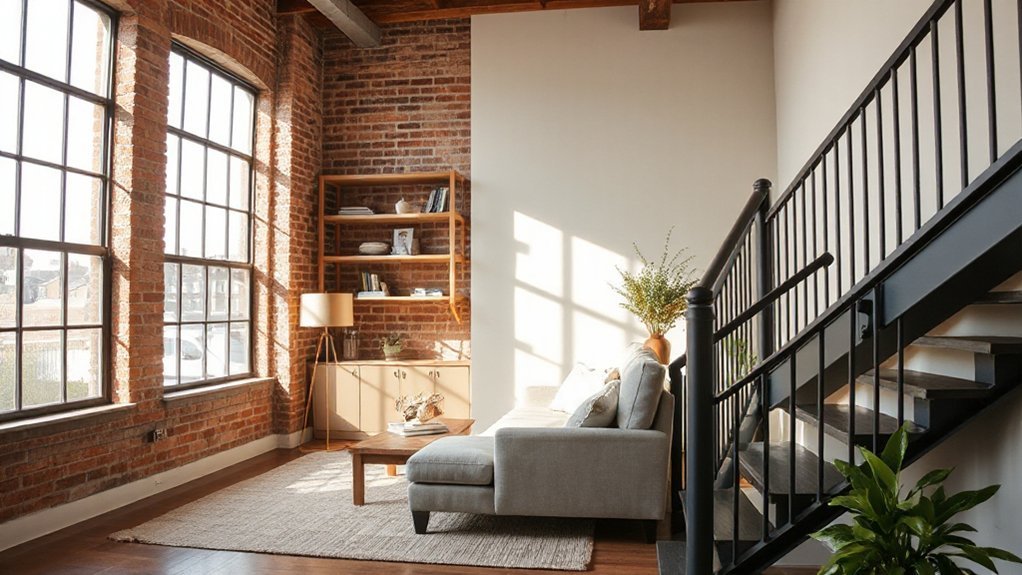
Warm industrial touches add character without locking you into a look renters can’t live with. You can lift a space with practical, reversible accents that stay rent-friendly. Focus on balance, not bold overload, so terms remain happy for both sides.
- Choose rent friendly wall art: lean into metal frames, neutral palettes, and lightweight prints that don’t damage paint.
- Introduce temporary flooring options: peel-and-stick vinyl or faux concrete runners offer texture without commitment.
- Pick compact, modular metal-storage accents: open shelving and utility desks keep flow clear and easy to remove.
Strategies stay current by favoring matte blacks, warm woods, and mixed textures. Keep installations removable, maintainable, and aligned with your lease, so updates feel fresh without penalties.
Durable, Removable Textiles and Swapable Decor
Choose swapable accents—lampshades, throws, and curtains—that you can switch seasonally without tools. For walls, temporary wallpaper and magnetic wall panels deliver frequent updates without commitment; they travel well between rentals and protect surfaces.
Prioritize modular furniture with hidden storage to reduce clutter while maintaining style. Layer textures through rugs, poufs, and fiber art.
Plan a neutral base and rotate bold pieces to reflect trends without permanent changes. This approach keeps spaces fresh and tenant-friendly.
Color Strategies That Don’t Require Painting
Temporary color tactics and swap-friendly accents let you refresh vibes without paint. You’ll try peel-and-stick options, removable wallpapers, and dynamic textiles to shift moods with ease.
This approach keeps rentals practical, stylish, and on-trend while preserving décor flexibility.
Temporary Color Tactics
If you’re renting, you can refresh a space quickly without repainting by leaning on temporary color tactics that are easy to swap out. This approach uses non-permanent elements to influence mood, depth, and flow without commitment. Focus on contrast, texture, and scale to keep the look fresh and modern.
1) Swapable textiles: pillows, throws, and curtains in bold hues create drama without touching walls.
2) Removable wall accents: decals, fabric coverings, and organizers add color punch while remaining reversible.
3) Accessory layering: vases, lamps, and art in coordinated palettes unify the room and showcase personality.
Temporary color thrives with paint-free decorating strategies, short-term updates, and smart placement, ensuring you stay on trend while preserving your security deposit.
Swap-Friendly Accents
Choose personalized wall art to tailor mood yet keep walls neutral; this keeps resale value intact while adding a focal point. Layer lighting with adjustable lamps and dimmers to modulate tone and depth.
Use decorative storage solutions that hide clutter while contributing texture and color, like woven baskets and modular ottomans. Opt for metallics or matte finishes in small doses to elevate sophistication.
Preview changes with swatches or mockups before purchase to avoid mismatches.
Multifunctional Furniture for Compact Rentals
When space is at a premium, multifunctional furniture becomes your best ally, letting you transform a single area into sleeping, dining, and working zones without sacrificing flow.
In compact rentals, choose pieces that adapt to your routine and scale with the room. Convertible beds and fold away desks keep traffic clear while staying ready for guest nights or remote work.
To optimize layout, use these options:
- Wall-mounted folding tables with slim profiles
- Sofa beds that don’t protrude when closed
- Storage ottomans that double as seating
Keep finishes cohesive and avoid heavy, bulky frames. Prioritize modular units you can rearrange as needs shift, and select lightweight materials for easy repositioning.
This approach blends practicality with modern, trend-aware design.
Lighting That Transforms Without Wiring or Permits
Creative lighting can transform a rental fast—without wiring or permits, you can layer ambiance, task light, and accent color with portable options. You’ll choose plug-in and battery-powered lamps that move with your space, avoiding permanent changes.
Start with a dimmable floor lamp to establish mood zones, then add directional desk lamps for tasks, and finish with a slim wall sconce or clip-on fixture for subtle drama.
Prioritize Eco friendly lighting to align with responsible styling, and select materials that resist wear in rental environments. Vintage inspired fixtures bring character without committing tenants to a new install.
Use color temperature around 2700–3000K for warmth, and keep cords hidden or contained. Quick swaps, modular pieces, and smart plugs boost control without disruption.
Frequently Asked Questions
How Can I Rent-Friendly Materials Without Damaging Walls?
You can rent-friendly materials by using removable, wall-safe options like Decorative wall panels and temporary flooring that install without nails.
Choose adhesive systems labeled for rentals, and test first on a hidden spot.
For walls, opt for peel-and-stick panels or fabric-wall coverings that come off cleanly.
Use temporary flooring, such as interlocking tiles, over existing surfaces to protect baseboards.
Keep measurements precise, and document any changes for your landlord.
Are Removable Wallpapers Truly Allowed by Landlords?
Yes, removable wallpapers can be allowed, but it hinges on landlord policies. You’ll want to check your lease and ask for written permission before you start.
If approved, use renter-friendly surfaces and plan for clean wallpaper removal to avoid wall damage. When you remove it, document the state of walls, and keep patches handy for touch-ups.
This keeps you compliant and makes future returns smoother, especially for credit checks and move-out conditions.
Can I Legally Replace Fixtures in a Rental?
Yes, you can legally replace fixtures in a rental only with landlord approval and within the terms of your lease. Before you start, document agreements in writing.
Plan lighting upgrades that preserve safety and resale value, and choose paint color choices that don’t violate policies.
Use energy-efficient fixtures where allowed, avoid permanent changes, and keep receipts.
If unsure, ask for written consent and keep fixtures transferable or removable for move-out.
How Do I Test Durability of Temporary Decor?
Durability tests aren’t formal—trust your eye, then confirm with a quick bend, rub, or drop. If it survives a week on high-traffic spots, it’ll likely endure everyday use.
Begin with decorative adhesives to gauge grip, then swap to lightweight accessories to see how it handles bumps. Keep weights low, and avoid permanent fixes.
Document results, rotate pieces seasonally, and adjust placement based on wear so your setup stays sharp and safe.
What Are Best Budget Options for Transient Tenants?
You should prioritize affordable, flexible furniture and easy-to-remove decor for transient tenants. Choose compact, modular pieces and sturdy fabrics that clean up fast.
Use multipurpose storage to maximize small spaces, and keep furniture arrangements open to adapt layouts quickly.
For lighting, opt for affordable, energy-efficient options you can swap between units, plus portable lamps.
Focus on durable, low-maintenance finishes and neutral tones with subtle accents to stay trend-aware without committing tenants to long-term styles.
Conclusion
You can pull off a rental-friendly look by mixing modular pieces, removable textiles, and smart lighting, all without annoying wall changes. Embrace Scandinavian light, Moody Modern coziness, or coastal flair, then swap accents as trends shift. Think durable finishes, multiuse furniture, and color strategies that skip painting. Your space stays fresh, flexible, and market-ready. Picture a vintage typewriter perched beside a sleek lamp, a quirky anachronism that hints you’ve mastered timeless style without permanent upgrades.
About the Author