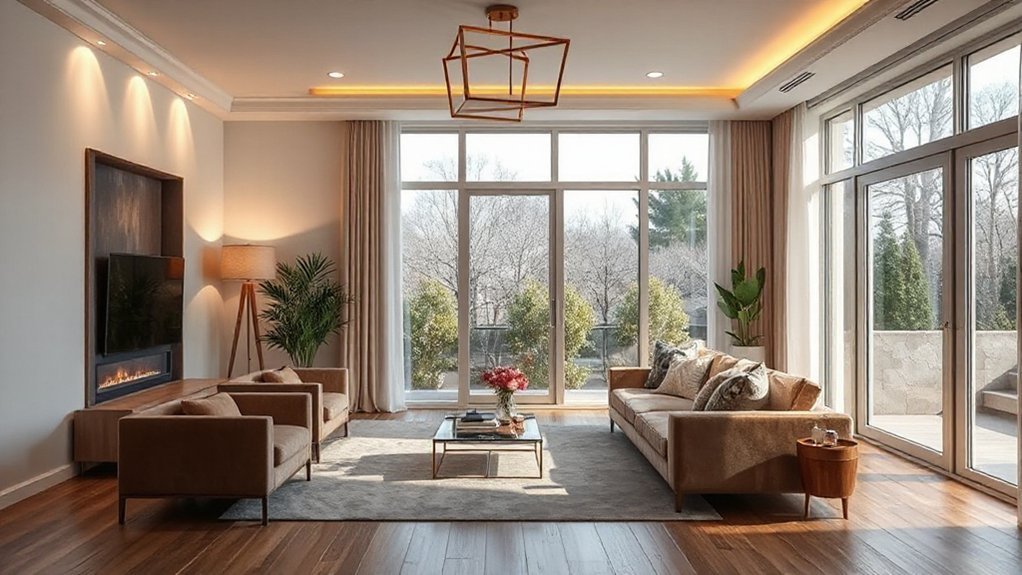
Lighting can transform a room in an instant—if you get it right, everything else falls into place. You’ll want to define clear goals, layer ambient, task, and accent layers, and pick fixtures that scale with the space and your mood. Dimmer switches, energy-efficient LEDs, and smart controls help you adapt as needs change, without overhauling the room. Stay practical: plan layouts, balance color temperatures, and keep maintenance simple. Curious how to start optimizing your space from the ground up?
Key Takeaways
- Layer ambient, task, and accent lighting to shape mood, function, and depth in any room.
- Plan layouts that balance light with space, ceiling height, and natural daylight for scalable efficiency.
- Use color-temperatures from 2700–3500K and dimmers to maintain perceptual balance across zones.
- Select purpose-driven fixtures with finishes and scales that support mood and clutter-free aesthetics.
- Integrate smart controls, sensors, and scenes for energy efficiency and effortless, adaptive illumination.
Define Your Lighting Goals for Any Space (Step-by-Step)
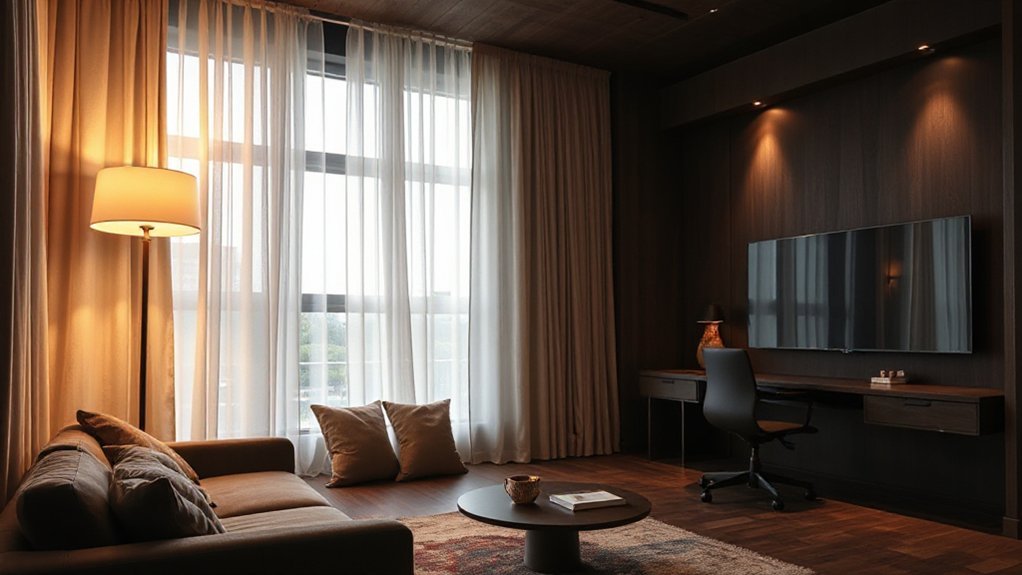
To define your lighting goals for any space, start by identifying what you want the room to do. You’ll map tasks, mood, and times of use, then translate those needs into concrete targets.
Assess existing constraints: ceiling height, natural light, and electrical capacity. Establish a primary zone, secondary tasks, and a decorative layer before choices.
Use a pragmatic lens to balance function with efficiency, ensuring comfort and usability. Document required illuminance levels for work areas and the desired ambiance for social spaces.
Consider how lighting design interacts with color and finishes to enhance perception. When selecting fixtures, prioritize quality and longevity, matching beam spread, color temperature, and dimming compatibility to your goals.
This disciplined approach guides fixture selection and supports an intentional, repeatable process.
Layer Ambient, Task, and Accent Lighting
A layered approach starts with ambient lighting as the room’s base, then adds task lighting to support specific activities, and finishes with accent lighting to shape mood and highlight features. You combine these layers deliberately, ensuring each serves a purpose.
Ambient fixtures set the overall brightness and color warmth, while task lights target work surfaces and detail areas for accuracy. Accent lighting then creates depth, drawing attention to architectural elements or art.
Plan fixture placement to avoid glare and shadows, especially at eye level. Align color temperature and intensity to the room’s function, coordinating with color contrast for visual interest. Use dimmers to modulate mood and efficiency.
Keep wiring simple, and place controls where you’ll reach them naturally. This approach yields balanced, adaptable illumination throughout the space.
Choose Core Fixtures by Room and Mood
Choosing core fixtures by room and mood means selecting versatile, purpose-driven pieces that cover many tasks without clutter. In practice, identify the primary activities in each space and match fixtures to support those tasks with minimal fuss.
Prioritize a few well-chosen sources that blend form and function, avoiding over-saturation of lighting layers. For a living room, lean toward a mix of a ceiling device for general light and a couple of task or accent options to spotlight art or focal points.
In bedrooms, emphasize soft, dimmable layers that cue relaxation, plus a reading light near seating. When it comes to core fixture selection, favor adaptors and heads you can reconfigure as needs shift.
Use mood setting to guide finishes, scales, and placement for consistent, efficient illumination.
Balance Color Temperature for Harmony
To achieve harmony, aim for a Balanced Warmth Range that feels natural across spaces.
Layer your light temps so task areas stay crisp while ambient zones glow with consistent color rendering.
Keep color temperatures coordinated and avoid abrupt shifts that disrupt perception.
Balanced Warmth Range
Have you ever noticed how the right color temperature can tie a room together? A balanced warmth range keeps photos, fabrics, and finishes looking natural, preventing harsh contrasts or flat tones.
To achieve harmony, target a narrow spectrum around 2700–3200K for living areas and 3000K–3500K where tasks occur, adjusting only when needed. Maintain warmth consistency by using fixtures with stable output and avoiding mixed cool and warm sources in the same zone.
Pair dimmable LEDs with a single color temperature when possible, and reserve subtle shifts for intentional ambiance changes. This approach yields an ambient glow without pronounced shifts during the day, preserving depth and coherence.
In practice, measure, compare, and standardize, then document settings for reliable, repeatable results.
Layered Light Temperatures
Begin with a stable baseline—often warm white (around 2700K to 3000K)—to anchor furniture, walls, and textiles.
Introduce cooler accents (3500K–4000K) for task areas or work zones, ensuring they don’t overpower the ambient layer.
Use dimmers to modulate intensity and preserve perceptual balance as activities shift.
Focus on temperature zones rather than isolated fixtures; guarantee every light contributes to the overall spectrum.
Consider color rendering implications only subtly, avoiding shifts that disrupt the rhythm.
This approach supports color blending across zones, producing a cohesive, versatile environment.
Consistent Color Rendering
Prioritize a high Color Rendering Index (CRI) and targeted TM-30 metrics to confirm color fidelity across spaces and tasks. When you switch temperatures, maintain reference echoes for furniture, artwork, and finishes so tones stay true.
Implement layered strategies: baseline ambient light paired with task lighting that matches the main color temperature, then adjust accents without altering perceived color. This approach supports lighting consistency, reduces perceptual drift, and preserves color accuracy during renovations or seasonal changes.
Your framework keeps environments coherent, inviting, and visually trustworthy.
Explore Smart Lighting on Any Budget
Smart lighting doesn’t have to break the bank; you can upgrade a space on any budget by prioritizing efficiency, compatibility, and scalability. Begin with a smart hub or bridge that supports your chosen devices, then layer controls with dimmers, schedules, and scenes to maximize value.
Prioritize energy-efficient LEDs, which cut running costs and reduce heat, and verify compatibility with voice assistants for hands-free operation. Choose adaptable fixtures that allow future upgrades without a full revamp.
For style and personality, consider Vintage fixtures to evoke character and Artistic bulbs to tailor color temperature and ambiance.
Keep installation practical: measure space, plan wiring access, and label components. A phased approach lets you expand features as needed, ensuring lasting impact without overspending.
Apply Budget-Friendly Tricks to Elevate a Room
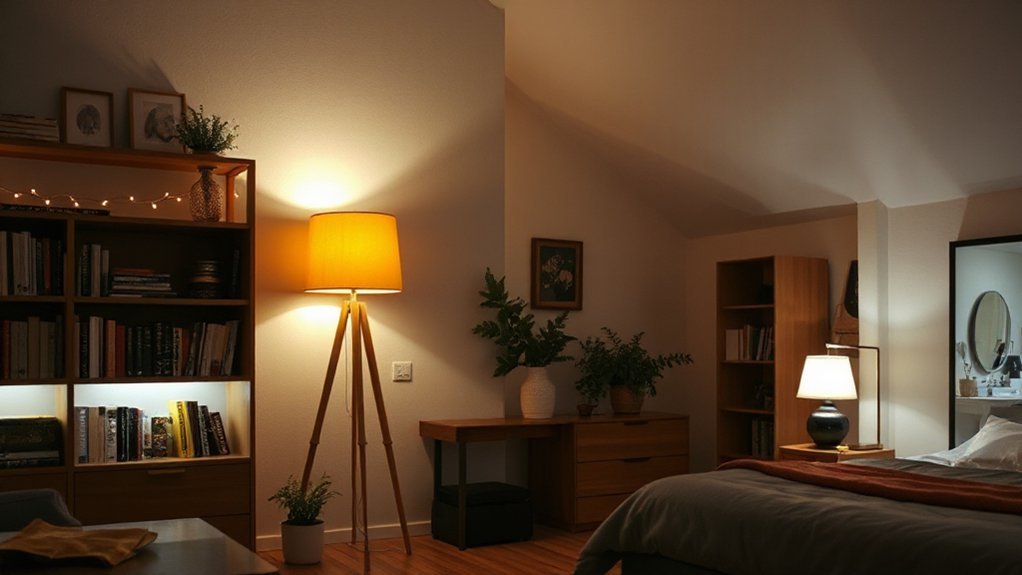
You can lift a room without a full upgrade by embracing budget-friendly tricks that boost ambiance and function. You apply affordable upgrades through smart placement, color balance, and layered illumination to create depth without breaking the bank.
Prioritize practical results, using DIY lighting where it counts and avoiding excess clutter that distracts from the glow.
- Optimize lamp layering: mix ambient, task, and accent lighting to transform mood with minimal cost.
- Recolor with light: use warm bulbs and reflective surfaces to brighten spaces without new fixtures.
- Upcycle affordably: refresh shades, mounts, or cords to improve function and look.
These moves center on affordable upgrades and DIY lighting, delivering measurable impact while staying lean and purposeful.
Spotlight Features With Precision
Spotlighting isn’t about brighter bulbs alone; it’s about precision—targeting features that deserve attention while avoiding glare or wasted heat. You’ll spotlight architectural details, artwork, and textures by choosing fixtures that deliver narrow, controllable beams rather than generic ambient light.
Focus on fixture placement to create defined pools of illumination that guide the eye without overwhelming the room. When highlighting an accent wall, use adjustable, low-voltage or LED perimeters to sculpt depth and color without hot spots.
For artwork, position a dedicated spotlight at a slight angle to reduce reflections and bring surface texture forward. Keep balance in mind: too many cues fight for attention, too few leave the space lifeless.
Use dimming controls to modulate impact as scenes change.
Plan Layouts for Small and Large Rooms
To plan layouts effectively, you need to balance light, space, and function for both small and large rooms. You’ll optimize where ceiling fans circulate air and where natural light enters, shaping light levels without clutter.
Start with zones that reflect activities, then layer ambient, task, and accent lighting to adapt as furniture changes.
- Map entry paths and focal points to guarantee unobstructed light flow and airflow.
- Place ceiling fans to complement natural light, reducing glare and heat without crowding ceilings.
- Use scalable lighting plans that adjust with room size, keeping energy efficiency in mind.
This pragmatic approach helps you maintain clarity, maximize utility, and create a cohesive, comfortable atmosphere across any space.
Maintain and Dim Your Lighting
You’ll keep lighting reliable by choosing dimmer-friendly fixtures and straightforward controls that match daily use.
Smart, adaptive light control learns your patterns and adjusts without fuss, reducing energy waste while preserving task visibility.
Start with a practical setup: tune brightness in zones, enable automatic schedules, and keep controls intuitive for consistent, comfortable illumination.
Dimmer-Friendly Lighting Solutions
Dimmer-friendly lighting starts with choosing compatible dimmers and bulbs that match your fixtures and load. You’ll optimize mood and energy use by pairing solid dimming gear with the right heat and wattage ratings. When you upgrade, test each circuit to confirm smooth flicker-free operation and stable output across the range.
- Choose dimmers that support the fixture type and load, avoiding incompatible devices that cause buzzing.
- Pair bulbs with dimmers rated for LED or incandescent use to maintain consistent color and brightness.
- Prioritize Vintage fixtures and Natural light as complements; adjust dim levels to preserve character without sacrificing visibility.
Smart, Adaptive Light Control
When you enter a space, sensors detect activity and adjust brightness and color temperature to suit tasks and mood, then smoothly return to baseline after you leave.
Scenes let you tailor lighting for work, relaxation, or entertaining with a single command.
Voice activation lets you tweak settings hands‑free, keeping flow uninterrupted.
This approach prioritizes energy efficiency by dimming redundant fixtures and avoiding overlighting.
Implementations should prioritize reliable connectivity, predictable responses, and clear fail‑safes to preserve comfort and control.
Frequently Asked Questions
How Do I Measure the Impact of Lighting on Mood?
You measure mood impact by tracking changes in focus, comfort, and energy after adjusting lighting.
Use lighting psychology principles: set appropriate color temperature, brightness, and glare levels, then log mood ratings and productivity daily.
Compare baseline versus tweaks to see patterns in sleep quality, relaxation, and stress.
Ambiance enhancement comes from consistency in cues, timing, and zone-specific lighting.
Establish controls, gather user feedback, and quantify results with simple charts to justify adjustments.
Can Lighting Changes Affect Room Perceived Size?
Yes, lighting changes can alter how big a room feels. With careful ambient enhancement, you push light toward walls and ceilings, widening visual perception and creating a sense of spaciousness.
Dim corners fade, while brighter, uniform illumination expands perceived depth. Use cooler temps and even distribution, avoiding harsh shadows.
You’ll notice ceilings seem higher and spaces more open, especially when you contrast bright accents against soft ambient glow, guiding the eye and shaping perceived size.
What’s the Best Way to Test Color Accuracy at Home?
To test color accuracy at home, you’ll compare colors under a known reference and then in your space. Start with a color chart or fabric swatch in neutral daylight, and observe under your main light.
Use a color temperature around 2700–3500K for warm scenes and 5000K for task lighting.
Check color consistency with Light layering, adjusting shadows and ambient light.
Document deviations, then calibrate with bulbs or filters until colors read true.
How Often Should I Replace Bulbs for Efficiency?
You should replace bulbs as needed to maximize energy efficiency. Bulb lifespan varies, but many LEDs last 10,000–25,000 hours, while incandescent bulbs burn out sooner.
Check manufacturer specs and your usage patterns; replace before brightness drops noticeably or before efficiency declines.
For ideal energy efficiency, consider upgrading aging bulbs to LEDs and use smart scheduling or dimmers.
Regularly inspect fixtures, and keep track of replacements to maintain consistent lighting quality and lower energy bills.
Do Dimmers Save Energy Without Sacrificing Task Light?
Dimming can cut energy use by up to 20-50%, depending on where you dim and the bulb type. You’ll still get task light when you need it, while ambient enhancement remains strong at lower levels.
Dimmer switches don’t waste power; they reduce wattage drawn. For LEDs, energy savings are even higher.
Use high-quality dimmers, stay within recommended ranges, and you’ll optimize ambient enhancement without sacrificing task light or efficiency.
Conclusion
You redefine spaces by layering light, guiding mood, and shaping function. You plan, you choose, you adjust—layer ambient, task, and accent for balance; pick core fixtures by room and mood; harmonize color temperature; and embrace smart controls on any budget. You embrace budget-friendly tricks, spotlight features with precision, and plan layouts for small or large rooms. You maintain clarity, you dim thoughtfully, you evolve with ease. You transform every space with purposeful light, practical control, confident style.
About the Author