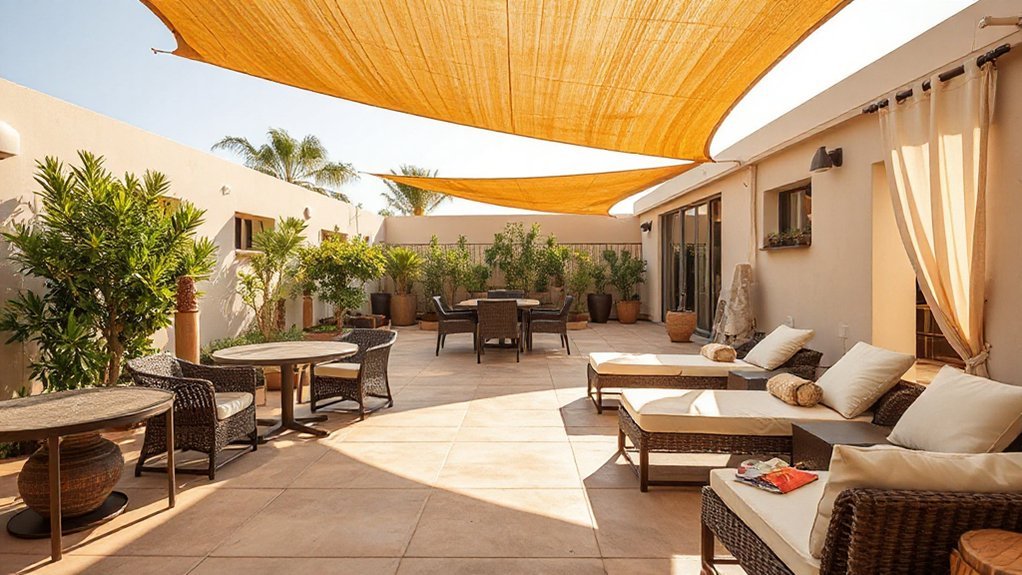
When you design for hot climates, start with materials that endure sun and heat without fading or warping. Think high-density teak, powder-coated steel, and UV-rated fabrics that reflect heat. Favor light, breathable cushions with quick-dry foam and protective covers, plus modular layouts you can reconfigure for shade and breeze. Keep finishes layered and textures reflective to cut down heat. Keep an eye on maintenance cadence—a few careful coatings and cleanups can extend the life of your setup, making the rest of this approach easier.
Key Takeaways
- Choose weather-resistant materials (teak with proper finish, aluminum, or powder-coated steel) that stay cooler and resist sun damage.
- Favor UV-rated fabrics, tight weaves, moisture-wicking, light colors, and breathable cushions with removable covers.
- Use modular designs for flexible layouts, easy rearrangement, and targeted cleaning or replacement.
- Prioritize protective covers, layered cushion durability, dense foam cores, and sunshade solutions to reduce heat buildup.
- Consider textures and finishes that reflect heat (light hues, smooth matte surfaces, subtle textures) to enhance comfort and longevity.
Deciding What Matters: Criteria for Outdoor Furniture in Hot Climates
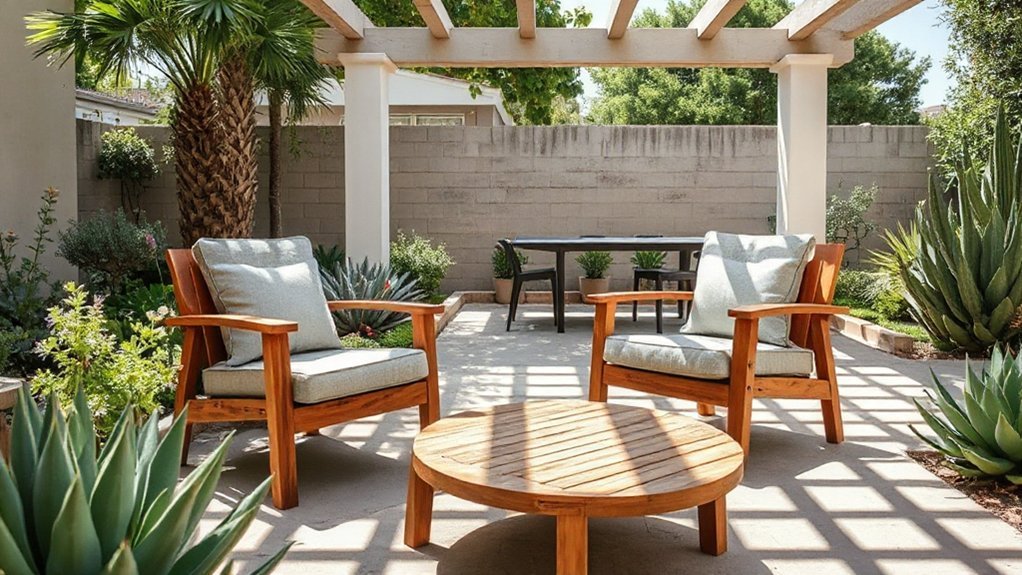
When you pick outdoor furniture for hot climates, start with materials that stay cool to the touch, resist sun deterioration, and require minimal maintenance. You’re weighing criteria that balance comfort, durability, and aesthetics.
Prioritize sun exposure behavior: how long pieces touch direct sun, and whether finishes fade or warp. Consider temperature response, surface heat, and grip under bare feet.
Assess UV resistance, wind tolerance, and stain or mold resistance for spills. Plan for outdoor storage, guaranteeing cushions and fabrics can be protected seasonally without heavy handling.
Favor modular designs that adapt to shade and sun shifts, plus easy cleaning. Verify frames, joins, and fasteners resist corrosion.
Finally, confirm compatibility with your climate’s humidity, rainfall, and pests to sustain form and function. Sun exposure controls, outdoor storage practicality.
Materials That Stay Cool Under Sun: Pros, Cons, and Best Uses
To keep surfaces cooler under sun, choose heat-resistant materials and consider how color and texture reflect or absorb heat.
You’ll want fabrics and finishes that stay cooler to touch while still delivering the look and durability your space needs.
This sets up a practical comparison of pros, cons, and best uses for different materials.
Heat-Resistant Materials Best
If you’re choosing outdoor seating for hot climates, prioritize heat-resistant materials that stay cool to the touch and won’t warp under sun exposure.
For heatwave resilience, choose high-density teak with a proper finish, aluminum frames, or powder-coated steel that reflects heat rather than absorbs it.
Polycarbonate slats and high‑grade synthetic weaves also resist sun damage and keep surfaces cooler than solid wood or tile.
UV resistance matters: look for fabrics and coatings rated for outdoor use, with tight weaves and fade resistance.
Favor breathable, moisture‑wicking textiles in light colors to reduce heat buildup.
Avoid untreated softwoods and low‑density plastics that deform under solar stress.
Pair with shaded zones and reflective surfaces to minimize heat absorption while preserving clean, modern lines.
Documentation and warranties reinforce long-term performance.
Color and Texture Impacts
Color and texture choices dramatically influence surface heat and comfort in hot climates: lighter hues reflect more sunlight, while subtle textures add grip and visual coolness. You’ll improve usability by pairing color psychology insights with material texture, guiding seating and surfaces toward cooler perception and feel.
Light, desaturated tones reduce ambient heat while still delivering style; contrast with darker accents for depth without increasing heat load. Opt for smooth, matte finishes on seating for a cooler touch, and introduce texture contrast with woven cushions or brushed metals to minimize glare.
Consider color psychology to evoke calm spaces, and use textured surfaces to hide footprints and wear. Prioritize breathable fabrics, reflective powders, and shade-aware layouts to sustain comfort and durability.
Breathable Fabrics and Cushions: Comfort Without Heat Build-Up
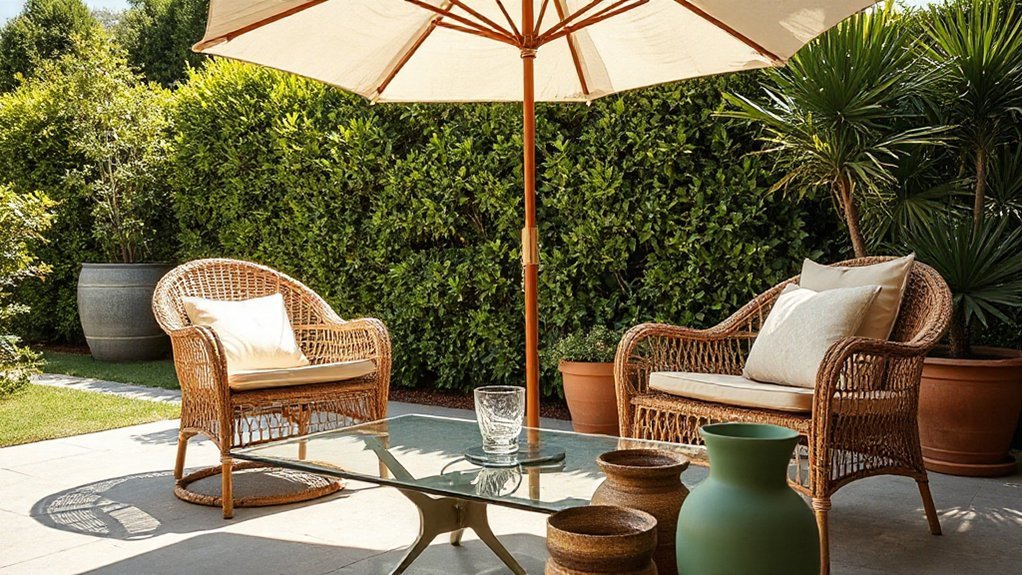
Breathable fabrics and cushions matter more in hot climates because heat tends to accumulate where materials trap it. You’ll prioritize fabrics with open-weave textures, moisture-wicking covers, and quick-dry foams that resist heat buildup.
Choose cushions with breathable cores and removable, washable covers for easy refreshment after sweaty sessions. In seating, look for polyester or acrylic blends that breathe and dry rapidly, avoiding vinyl or dense foam cores that trap warmth.
For sun exposure, pair with sunshade solutions to reduce direct heat, and guarantee cushions compress slightly for airflow without losing support.
Wind resistant features are essential: secure ties, snug spans, and low-profile frames to prevent shifting. Prioritize light colors and UV-stable fabrics to maintain comfort over long outdoor use.
Weather-Resistant Finishes: Protecting Your Investment (Maintenance Tips)
Weather-resistant finishes protect your outdoor investment by shielding against sun, rain, and temperature swings. To maximize lifespan, choose durable, weatherproof coatings that resist cracking and peeling, then apply with even strokes.
Regular maintenance keeps color fidelity and surface integrity, so you’ll enjoy consistent form and function season after season, not just after a fresh rain.
- Inspect annually for wear, recoat when sheen dulls or edges begin to show micro-chips.
- Clean with a soft brush and mild soap; avoid abrasive cleaners that dull UV protection.
- Reapply protective finish according to manufacturer timing to maintain UV protection and overall durability.
Layout and Design for Hot Climates: Shade, Flow, and Cooling
To design for hot climates, start by prioritizing shade, air flow, and cooling strategies that create comfortable outdoor rooms rather than simply adding furniture. You’ll structure spaces for movement, sightlines, and microclimates, using built-in shade and reflectivity to reduce heat gain.
Implement shade solutions with pergolas, lattices, and strategic planting to cast steady shadows throughout the day. Align seating areas to prevailing breezes, and place seating away from direct sun, allowing airtight, breathable zones.
Favor materials with low heat retention and elevated ratios of open space to enclosure to support airflow and evaporation cooling. Emphasize clear paths, functional zones, and durable, low-maintenance finishes.
Prioritize airflow optimization, ensuring overhead shading and cross-ventilation work together to sustain comfortable outdoor rooms.
Budgeting for Durability: A Practical Buy Guide
To optimize durability without overspending, start by matching climate-ready materials to your design goals and expected use.
Consider long-term maintenance, weather resistance, and cost per year of service when selecting options like powder-coated metals or engineered woods.
This practical lens—balancing material durability with budget—keeps your outdoor setup resilient and stylish.
Material Durability Planning
Durability isn’t an afterthought; it’s the core of a smart outdoor furniture purchase. You’ll plan for longevity by evaluating materials, finishes, and construction in real terms, not promises.
In hot climates, performance hinges on how UV resistance and structural design hold up over time, while considering environmental impact. You’ll budget for factors that reduce maintenance and replacement frequency, keeping long-term costs predictable.
- Assess UV resistance of finishes and fibers, prioritizing materials with proven colorfastness and surface protection.
- Prioritize corrosion-resistant hardware and reinforced joints to survive heat, humidity, and daily sun exposure.
- Compare lifecycle environmental impact, including recyclability and manufacturing footprint, alongside price and warranty.
Budget-Conscious Material Choices
If you’re aiming to maximize longevity without breaking the bank, start with budget-conscious materials that balance cost, performance, and maintenance.
For hot climates, choose powder-coated aluminum frames or high-density resin composites that resist rust and fading, then pair with durable fabrics. Look for fabric durability that remains colorfast after sun exposure and moisture cycles, avoiding quick-dry synthetics that cling or stiffen.
Leather-like finishes can crack in heat; instead, opt for engineered textiles designed for outdoor use.
Prioritize style versatility: neutral tones with subtle texture, so you can refresh pillows seasonally without replacing furniture.
Build layered durability into cushions with dense foam cores and protective covers.
Favor modular pieces that rearrange easily, maximizing use while keeping care simple and costs predictable.
Frequently Asked Questions
How Often Should Outdoor Cushions Be Washed in Hot Climates?
You should wash outdoor cushions every 1 to 3 months in hot climates, depending on usage and exposure. For high-traffic spots or dusty summers, lean toward closer to monthly.
Use mild detergent, rinse well, and air-dry fully to prevent mildew.
Cushion maintenance benefits from spot cleaning between sessions.
Prioritize fabric-safe cleaners and sun-safe drying to preserve color and texture.
Cleaning frequency stays practical, and you’ll extend longevity while maintaining a fresh, design-focused outdoor space.
Which Colors Stay Cooler on Sunny Patios?
Colors that stay cooler on sunny patios are light, desaturated tones like off-white, pale gray, and soft taupe. They reflect more sun, reducing heat absorption.
Prefer cool neutrals over saturated hues; avoid black or deep blues.
Consider color psychology—cool tones promote calm and shade perception, while sun exposure effects fade vibrancy over time.
In design terms, pair these with breathable, light fabrics to keep seating comfortable and visually balanced.
Do Metal Furniture Pieces Heat up More Than Plastic?
Yes, metal heats up more than plastic in sun, but aluminum cools quicker than other metals. You’ll feel less heat with aluminum durability in hot patios.
While plastic longevity can stay cooler to the touch, it may warp over time. For comfort and value, mix materials: use aluminum for frames and cushions in lighter tones, reserve plastic for accent pieces.
Consider finishes and vents to maximize airflow and minimize radiant heat.
How to Prevent Fading of Fabrics in Intense Sun?
Sun fades fabric fastest when you protect it with UV resistant coatings and fabric waterproofing. You should choose high UPF fabrics and apply UV inhibitors, then seal seams and zippers with waterproofing spray.
Use shade, rotate cushions, and wash regularly to remove sun-bleaching oils.
Inspect for wear, replace faded panels, and store during peak sun.
With proper coatings and consistent care, you’ll extend color and durability while keeping a design-forward outdoor space.
Are There Eco-Friendly Cooling Materials for Outdoor Lounges?
Yes—eco-friendly cooling materials exist for outdoor lounges. You’ll want eco conscious materials like recycled aluminum frames and breathable, UV-stable fabrics, plus reflective surfaces that reduce heat gain.
Opt for sustainable cooling solutions such as shaded, airflow-friendly layouts, shade sails, and porosity-rich cushions.
Choose low-VOC finishes and responsibly sourced woods. You’ll design for comfort without sacrificing style, ensuring performance and longevity amid sun.
Conclusion
In hot climates, choose durable, heat-resisting materials and breathable, quick-dry cushions that stay cool in sun. Prioritize UV-rated fabrics, light colors, and modular layouts for flexibility. Apply protective finishes regularly and keep covers handy for sudden heat or storms. Plan layouts that shade seating while promoting airflow, and pick materials that weather gracefully. Your outdoor space should feel calm and practical, like a well-tuned instrument, delivering comfort and longevity with minimal upkeep.
About the Author