
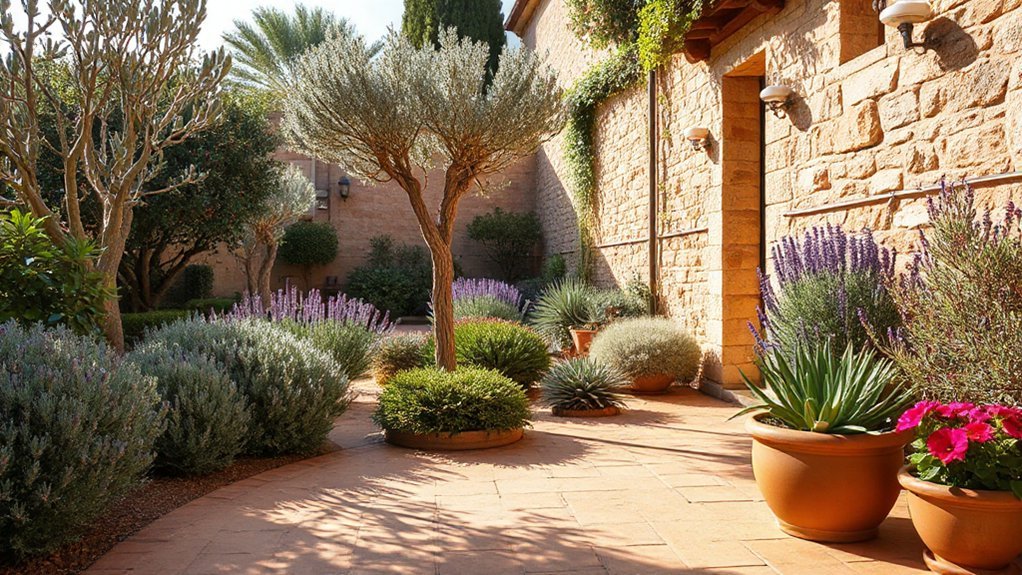
We have clients living out in the sun, in Murcia, Alicante and Costa Del Sol, so we advise them on The Best Plants for Mediterranean Climates, as well as doing construction projects and consultancy work for them.
Picture the sun as a constant companion, shaping your garden with heat, drought, and bold light. You’ll want shrubs that sip water slowly, herbs that stay vibrant, and perennials that endure long summers without complaint. The challenge is to balance color, texture, and resilience while keeping maintenance low. Ready to choose the right plants, design for microclimates, and create a sustainable, year‑round Mediterranean look that Spain’s sun demands? Let’s start with the essentials.
Key Takeaways
- Prioritize drought-tolerant, heat-resilient natives (e.g., olives, rosemary, lavender) with compact forms and pest resistance for sunny Mediterranean sites.
- Use deep, well-draining soil with organic matter, mulch, and drip irrigation to maximize moisture efficiency.
- Combine groundcovers and evergreen perennials to maintain year-round interest and reduce soil stress.
- Incorporate colorful, heat-tolerant annuals (zinnias, calendulas, salvias) for vibrant seasonal displays and regional character.
- Design with texture and color coordination (silvery/blue/olive greens with terracotta tones) and focal trees for rhythm and balance.
Mediterranean Garden Essentials for Spain: Heat, Drought, and Sun
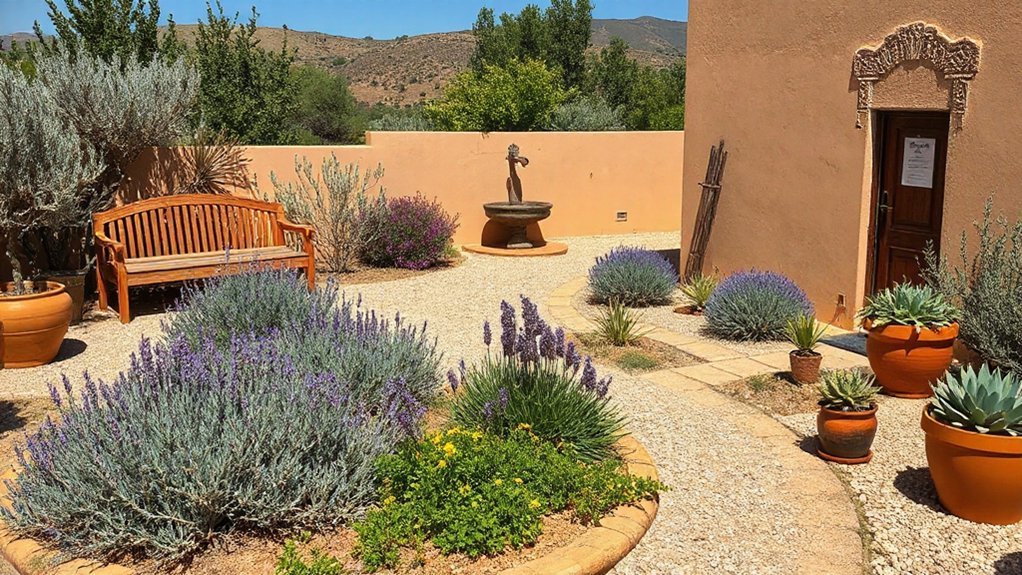
Spain’s Mediterranean climate demands tough, drought-tolerant plants that thrive in heat and bright sun. In this topic, you’ll align your garden with proven Mediterranean garden design principles, prioritizing resilience and enduring color.
Choose species that cope with long summers, quick recovery after drought, and soils ranging from rocky to sandy. Incorporate durable textures, shallow-rooted ornamentals, and evergreen structure to maintain visual interest year-round.
You’ll optimize irrigation by employing efficient systems, drought-aware pruning, and mulching to reduce evaporation. Focus on plant communities that tolerate wind and saline spray near coastlines, and layer heights to create microclimates that protect delicate specimens.
Native plant benefits include reduced water use, better pest resistance, and easier maintenance, amplifying sustainability and local biodiversity.
Criteria for Choosing Plants in Spain’s Climates
When selecting plants for Spain’s climates, prioritize drought tolerance, heat resilience, and sun tolerance as your core criteria. You’ll rate species by water needs, heat exposure, and bright sun tolerance, then match them to your site’s microclimate.
Consider root habits, soil type, and reliability across hot summers. Plant propagation should be simple, scalable, and feasible, enabling you to expand beds without stress.
Evaluate maintenance requirements, pest resistance, and seasonal performance to ensure long-term vigor. Favor species with compact growth, drought-sparing features, and efficient water use.
Wildlife attractants matter, but balance it with drought discipline and compatibility with irrigation timing. Choose resilient natives or well-adapted ornamentals that thrive in Mediterranean cycles, minimizing inputs while maximizing color, structure, and ecological value.
Drought-Tolerant Shrubs for Spain’s Sunny Spots
Prioritize those with compact growth or predictable form to reduce pruning needs and maintenance. Consider native wildlife benefits: nectar-rich flowers attract pollinators, birds shelter in dense foliage, and seeds support local ecosystems.
For garden sustainability, pair shrubs with mulch, efficient irrigation, and soil amendments that improve moisture retention. Avoid high-water-demand exotics that require ongoing care.
Establish a drought-tolerant palette now, and you’ll enjoy year‑round interest with minimal resource drain.
Hardy Perennials That Withstand Long, Hot Summers
Long, hot summers demand perennials that stay upright, bloom reliably, and recover quickly after heat spikes. You’ll value hardy perennials that endure prolonged heat without collapsing, providing steady structure and color through peak drought.
Choose native wildflowers when you can; they’re better adapted to local heat cycles, soils, and insects, supporting resilient garden ecosystems. Look for deep-rooted species that conserve moisture and resist leaf scorch, such as clump-forming grasses, asters, and penstemon relatives.
Groundcovers and select evergreen perennials can reduce soil stress and maintain mulch-friendly roots. Practice minimal irrigation once established, letting plants acclimate to seasonal rain patterns.
Consider Botanical conservation by sourcing from reputable nurseries and preserving local genetic diversity in portions of your border. With thoughtful selection, your Mediterranean border remains vibrant and dependable year after year.
Low-Water Herbs That Deliver Flavor and Color
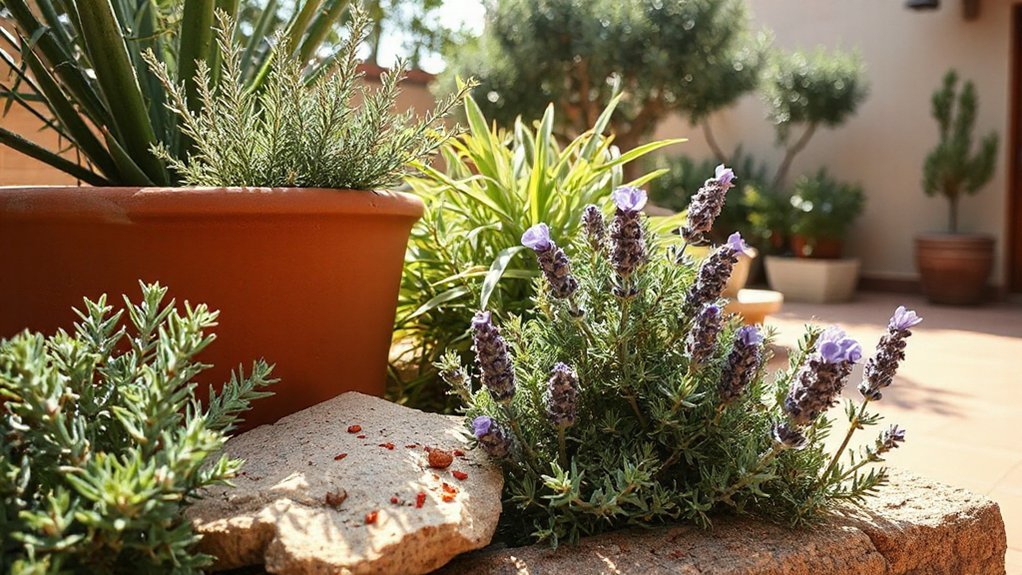
You’ll get big flavor with just a little water from these low-water herbs. Their color and aroma brighten dishes while conserving scarce Mediterranean moisture.
Start with thyme, oregano, and rosemary, then add basil and chives for a quick flavor and visual boost.
Low-Water Flavor Boosts
Low-water herbs can deliver bold flavor and color even in drought-pruned gardens. You’ll maximize impact with compact, drought-smart choices that complement Spain’s climate, while keeping irrigation minimal. Focus on varieties that intensify dishes and garnish presentations without demanding attention.
- Rosemary and hardy thyme blends — sturdy, aromatic accents that endure heat, enrich oils, and perfume borders.
- Oregano, marjoram, and savory trio — resilient, savory notes for robust sauces, soups, and meats, with year‑round color.
- Basil cousins and microgreens — compact, quick-harvest flavors that refresh salads and caprese with minimal water.
These succulent varieties and drought resistant groundcovers reduce maintenance while providing consistent flavor bursts and visual appeal throughout the season.
Herb Color & Aroma
Color and aroma go hand in hand with drought-smart herbs, where bold hues and scent amplify dishes and borders with minimal water. You’ll rely on low-water varieties that impart both flavor and visual punch. Choose compact, evergreen options with aromatic foliage to maintain color year-round.
Rosemary, thyme, and oregano offer resinous scents that wake up meals without irrigation waste. Basil and mint provide bright, edible foliage, but plant them where their scent isn’t overpowering. Cilantro adds delicate color and fresh notes, though it’s a touch water-thirsty; harvest regularly to sustain vigor.
For a mojave-like palette, pair sage with lavender-blue flowers and purple stems. The goal is to maximize herb scent and color with sparse irrigation, creating borders and plates that feel vibrant, cohesive, and efficient.
Colorful Annuals for Year-Round Spanish Flair
Colorful annuals bring immediate drama to a Mediterranean yard, delivering year-round Spanish flair with bright, reliable blooms. You’ll see how the Colorful Annuals Overview threads with plants that perform in warm climates, ensuring consistent color through changing seasons.
Expect concise selections that underscore Spanish garden year-round flair and peak bloom times this season.
Colorful Annuals Overview
Even in a Mediterranean climate, you can achieve a vibrant year-round display by choosing the right colorful annuals and planning for successive blooms. This Colorful Annuals Overview guides you through reliable picks, durable under sun, and layered color schemes. You’ll optimize impact with sharp flower combinations and strict planting schedules to maximize bloom windows and minimize gaps.
- Choose heat-tolerant annuals that bloom in successive waves, like zinnias, marigolds, and salvias, ensuring steady color from spring to fall.
- Pair contrasting hues within each container or bed to amplify brightness, while grouping similar bloom times for continuous display.
- Map a planting schedule that staggers sowing, transplanting, and deadheading to maintain consistent flowering.
This approach delivers vivid accents without gaps, aligning with your year-round Spanish flair.
Spanish Garden Year-Round Flair
Spanish year-round flair starts with heat-tolerant, long-blooming annuals that echo regional palettes. Then layers color through successive waves of bloom. You build contrast and movement by pairing robust heat lovers with delicate fillers, ensuring continuous display from spring to late fall.
Focus on Mediterranean garden design principles: sculptural forms, tactile foliage, and saturated hues that endure drought and sun. Choose textures that read well at a distance and in close-up, from silvered grasses to glossy-leafed annuals.
You’ll signal seasonality with bloom timing, while using repeat planting for cohesion. Emphasize Spanish plant symbolism—colors and motifs that convey warmth, hospitality, and celebration—without clutter.
This approach yields year-round visual interest, resilient performance, and a distinctly regional, culturally resonant garden aesthetic.
Bright Blooms This Season
1) Zinnias: dependable succession bloomers, heat-tolerant and windswept, with bright faces that echo festive streets.
2) Calendulas: sturdy season-long color, edible petals, and a nod to traditional cottage gardens across coastlines.
3) Portulaca: sun-loving cushions that spill color over walls, linking modern containers to historic Indian Ocean trade routes.
These selections reinforce regional character, pair with drought-smart practices, and celebrate cultural significance while honoring historical uses in Mediterranean landscapes.
Soil Prep and Waterwise Irrigation for Mediterranean Gardens
To prepare Mediterranean garden soil, start with a deep, well-draining bed and amend with organic matter to improve structure and moisture retention. You’ll want a slightly sandy, loamy mix that drains quickly after watering.
For soil amendments, add compost or well-rotted manure to boost microbial activity and nutrient availability. Incorporate coarse sand or perlite to enhance drainage where clay dominates.
Establish a mulched surface to reduce evaporation and stabilize soil temperature.
When you irrigate, use drip irrigation to deliver water slowly at the root zone, minimizing waste and disease risk. Target deep, infrequent soakings rather than frequent shallow sprinkles.
Schedule irrigation based on weather and plant demands, and adjust for seasonal dry spells.
Regularly monitor soil moisture and adjust amendments to maintain ideal structure and consistency.
Pest-Resistant Plants and Simple Care Tips
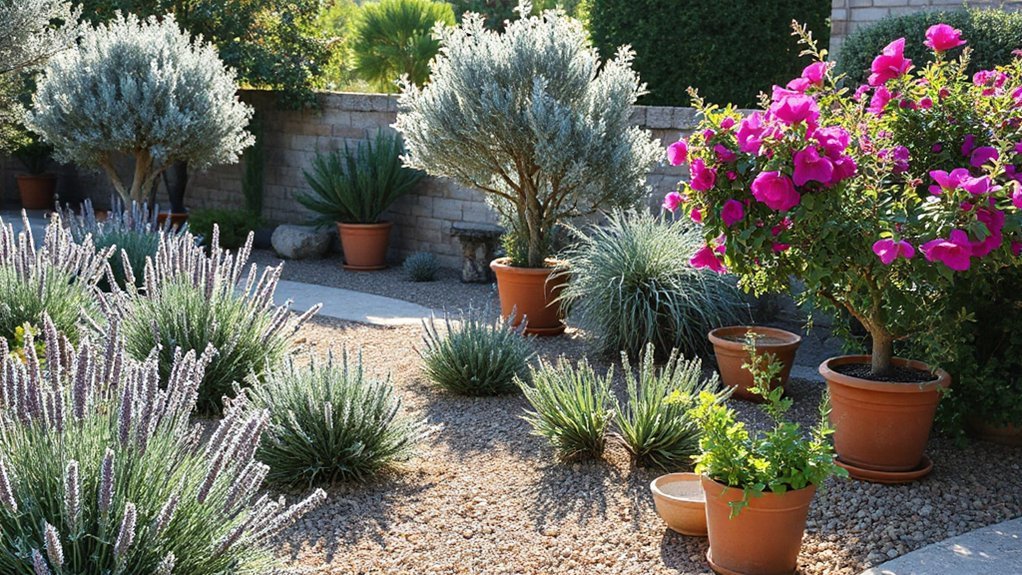
If you’ve prepared your soil and established a waterwise routine, you’re ready to focus on plants that resist pests and thrive with minimal fuss. You’ll maximize resilience through smart choices and simple upkeep, guided by practical pest management and companion planting ideas.
- Rosemary, thyme, and lavender: aromatic allies deter many insects, tolerate heat, and require little care, making them ideal in paths and borders.
- Sage and yucca: sturdy companions for Mediterranean beds; their dense foliage helps shield nearby vegetables from pest pressure while needing minimal water.
- Olive and oleander cultivars: naturally hardy, drought-tolerant, and less prone to common garden pests when sited in sun and well-drained soil.
Designing With Texture, Color, and Structure in a Mediterranean Palette
Texture, color, and structure define a Mediterranean garden just as much as plant choice does, so plan with a three-layer framework: tactile surfaces for contrast, a cohesive color cast, and architectural silhouettes that anchor the space.
You’ll pair rough stucco walls with smooth gravel, and introduce woven textures from baskets or screens to heighten Texture contrast.
Choose plants that deliver both form and foliage drama, then align their hues for color harmony across the scene.
Use silvery, blue, and olive greens alongside warm terracotta tones to establish a unifying palette.
Structure matters: place focal specimen trees or sculptural elements so sightlines read cleanly from multiple angles.
Finally, repeat shapes and rhythms to reinforce balance, ensuring the garden remains cohesive, legible, and resilient.
Frequently Asked Questions
Can I Grow Edible Mediterranean Herbs Year-Round Indoors?
Yes, you can grow edible Mediterranean herbs year-round indoors. You’ll need a bright setup, with ample indoor sunlight requirements met by south-facing windows or supplemental grow lights.
Choose compact herbs for herb container gardening, like oregano, thyme, rosemary, basil, and parsley.
Use well-draining pots, and rotate plants for even growth.
Maintain consistent temps and humidity, water when the top is dry, and feed lightly.
With proper light and care, harvest thrives throughout the year.
Which Native Plants Thrive in Spain’s Diverse Microclimates?
Spain’s diverse microclimates host several native plants thriving across ranges. You’ll find hardy native shrubbery like Genista and Lavandula proper; they tolerate drought and poor soils.
In hotter zones, you’ll also see desert succulents such as Sedum and Aloe that cope with extreme sun. Choose species adapted to local rainfall patterns, and provide well-drained soils.
Prune lightly to maintain shape. With proper site selection, you’ll sustain vibrant, low-water landscapes year-round.
How Do I Balance Irrigation With Drought-Tolerant Choices?
You should balance irrigation with drought-tolerant choices by pairing efficient irrigation scheduling with drought resistant landscaping. Start with smart zones, drip lines, and soil moisture checks to avoid waste.
You’ll water deeply, infrequently, and early in the day to minimize evaporation. Choose native, drought-adapted plants, mulch generously, and group by water needs.
This keeps your system precise, saves water, and maintains healthy, resilient landscapes through variable seasons.
Are There Pest-Resistant Options That Still Bloom Often?
Yes—there are pest-resistant options that still bloom often. Look for pest resistant varieties like lavender, salvia, and rosemary, which produce frequent blooms and tolerate drought when established.
Pair them with browsier, disease-resistant choices such as echeveria or Mediterranean herbs to reduce pest pressure.
Prioritize plants marketed as pest resistant varieties and guarantee proper spacing, sunlight, and soil drainage.
With consistent care, you’ll enjoy drought tolerant blooms while minimizing pests.
What Soil Amendments Boost Mediterranean Plant Performance Long-Term?
Soil amendments that boost long-term performance include compost, well-rotted manure, and organic mulch, plus mineral additives like lime or gypsum as needed. Think of soil health as your foundation: you’ll improve structure, drainage, and nutrient availability with careful amendment techniques.
You’ll also focus on timely soil testing, balanced pH, and gradual, repeat applications rather than quick fixes. This keeps plants resilient, thriving, and ready for seasonal stresses.
Conclusion
You can craft a stunning, sun-soaked Spain-ready landscape with steadfast, drought-smart shrubs and hardy perennials. Choose sun-loving staples, sprinkle silvery textures, and pair vibrant annuals for year-round color. Prioritize soil prep and waterwise irrigation, plus pest-resilient picks for low-maintenance success. Shape spaces with texture, color, and structure, letting Mediterranean magic mingle with minimal moisture. Sustainable, striking, and season-spanning, your Spanish garden stands strong, steady, and sensational.
About the Author