
Did you know that a well-timed kitchen and energy upgrade can push rents by a surprising margin in UK university areas? You’ll see faster lets and steadier occupancy when you couple durable finishes with smart, low-cost efficiency gains. Think robust worktops, efficient heat, and secure access, all tuned to student turnover. There’s a practical path here that balances upfront cost with long-term yield, but you’ll want to weigh city-by-city quirks before you commit.
Key Takeaways
- Align renovations with student preferences by upgrading durable surfaces, flexible layouts, and scalable workspaces to reduce vacancies and attract long-term lets.
- Modernize kitchens and appliances with easy-clean finishes, solid cabinetry, energy-efficient units, and wipeable backsplashes to command rent premiums.
- Prioritize energy efficiency: high‑efficiency boilers, sealed ducts, tight envelopes, smart thermostats, and moisture control to lower running costs and increase appeal.
- Enhance safety and compliance with clear egress, robust fire and security systems, routine inspections, and timely third-party certifications.
- Optimize occupancy and pricing with data-driven space planning, flexible leases, and real-time occupancy monitoring to maximize yield.
How Renovations Lift Rental Yield in UK University Towns
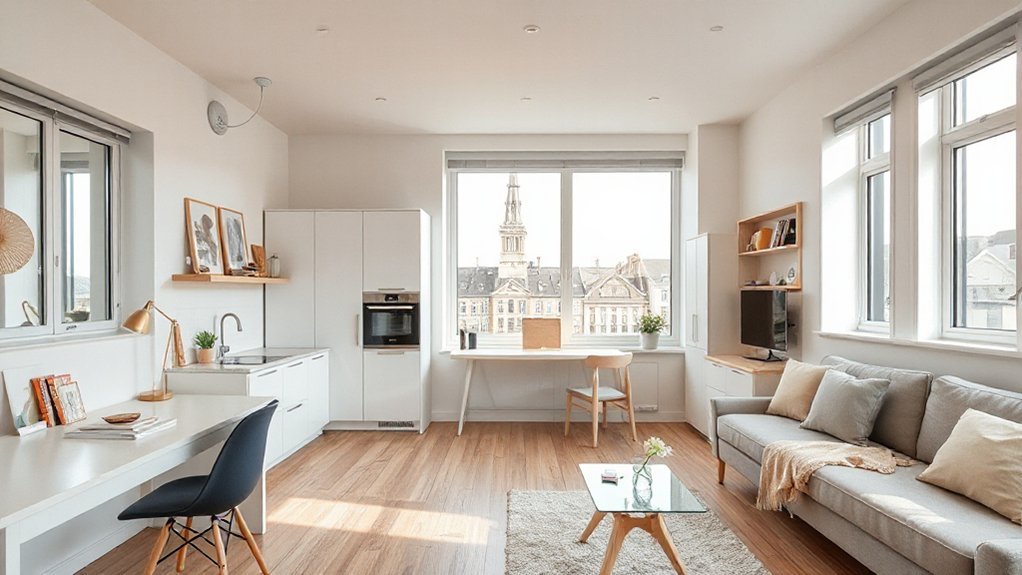
Renovations can directly boost rental yield in UK university towns by aligning properties with tenant preferences and cutting vacancy periods. You’ll see impact when you target spaces, finishes, and layouts that match current needs.
Practical upgrades, like durable, easy-clean surfaces and efficient heating, reduce maintenance costs and attract longer tenancies. Tie refresh choices to property market trends, ensuring rents reflect upgraded features without overshooting the local ceiling.
Consider scalable workspaces for students who blend study and part-time work, along with secure, quality internet setups to support remote learning. Track student demographic shifts to spot demand swings and adjust room mix or amenities accordingly.
This data-driven approach helps you price competitively, shorten vacancy, and sustain higher yields over multiple academic cycles.
Rent-Ready Must-Haves for Student Tenants
To attract and keep student tenants, prioritize a rent-ready setup that combines durability, flexibility, and connectivity. You should specify low-maintenance finishes, anti-stain fabrics, and robust flooring to withstand high turnover and active study spaces.
Integrate modular storage, compact dining/work zones, and secure, wired internet with strong Wi‑Fi coverage across common areas. Prioritize energy efficiency—LED lighting, double glazing, smart thermostats—to lower utility costs for both you and tenants.
Guarantee ample, clearly labeled storage in every room and a simple furniture scheme that allows easy reconfiguration for varying study and social needs. Align fixtures with preferred layouts and budget constraints, referencing rental market trends and expected demand.
Consider documenting quality checks and warranties to reassure applicants about the Student lifestyle and long-term value.
City-by-City Budgeting: Timelines and Costs for Renovations
City-by-City budgeting starts with a clear map of renovation timelines and costs, aligned to local rental demand and regulatory constraints. You’ll segment projects by city, then assign start dates, milestones, and cash-flow forecasts that reflect seasonal leases and statutory approvals.
Use historical trends to anchor cost projections, factoring inflation, supplier lead times, and material cycles. Pair each city’s timeline with a detailed budget—hard costs (renovations, furnishings, safety upgrades) and soft costs (permits, inspections, project management).
Carry out a market analysis to compare expected rent uplift against cap-ex spend, targeting payback periods within university calendars. Build contingency lines for delays and price shocks.
Document assumptions publicly to guide lenders, investors, and property managers, ensuring transparency and actionable decision-making.
Kitchen Upgrades That Command Higher Rents
If you upgrade the kitchen strategically, you’ll see rent premiums that outpace other common improvements.
In student-focused properties, demand centers on durability, efficiency, and a modern look. Begin with high-contrast, easy-clean counters and solid cabinetry, limiting frequent wear points.
Upgrading to energy‑efficient appliances reduces utility costs and appeals to tenants who stay longer. Invest in a reliable range, a quiet dishwasher, and a capable fridge to support busy schedules.
Consider luxury appliances thoughtfully; price them against expected rent uplift to verify ROI.
Finish with stylish backsplashes that are wipeable and durable, avoiding busy patterns that narrow perceived space.
Calibrate lighting to highlight textures without creating glare.
Track pre/post-rent data to quantify premiums and tailor future refurbishments.
Heating and Insulation for Long-Term Value
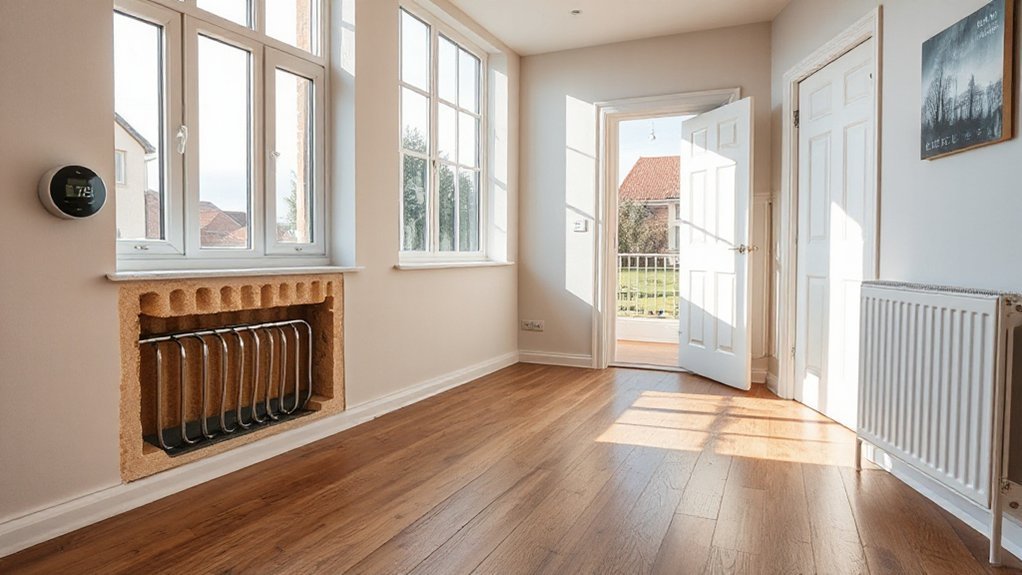
Heating and insulation aren’t just comfort features—they drive long-term value by cutting energy bills, reducing turnover, and supporting compliant, high-performance homes.
In university cities, you’ll want tight building envelopes, high-efficiency boilers, and well‑sealed ducts to minimize heat loss and air leakage.
Target a U-value under 0.25 for walls and under 0.18 for roofs where feasible, then pair with responsive controls and smart thermostats to balance loads across peak demand periods.
Prioritize insulation in communal areas and bedrooms to preserve thermal comfort and reduce drafts.
Use moisture control strategies—vapor barriers, proper ventilation, and bathroom/kitchen extraction—to prevent damp, mold, and related maintenance.
Document performance data to justify rents and reassure tenants about consistent comfort and energy costs.
Smart Tech Tenants Actually Want (and Landlords Can Justify)
Smart comfort upgrades, from smart thermostats to automated lighting, directly affect tenant satisfaction and retention in university-city lets.
You’ll want concrete data on energy savings, reliability of connectivity, and the cost-benefit of upgrades that tenants actually use, not just what’s installed.
Start with predictable ROI: quantify energy cuts, maintenance needs, and the value of robust Wi‑Fi and wired connectivity as a non-negotiable amenity.
Smart Comfort Upgrades
- Smart thermostats that learn patterns and cut waste while maintaining comfort
- Voice control for lights and climate to streamline routines
- Zoned heating options to tailor occupancy spaces
- Mobile app dashboards that clearly show usage and savings to tenants
Energy Efficiency Savings
Prioritize loft and cavity wall insulation, high-efficiency boilers or heat pumps, and updated thermostats to curb heat loss and smooth demand spikes. Roof-mounted solar or community renewable energy schemes can trim bills further and boost appeal without major daily disruption.
Use energy certifications to quantify performance gains, guiding refurb budgets and lease disclosures. Track payback periods, typically 3–7 years for common upgrades in UK university towns, and align with institutional tenants’ sustainability mandates.
Renewable energy credits and lifecycle costs should influence procurement without delaying occupancy.
Reliable Connectivity Needs
Reliable connectivity is a baseline requirement for modern tenants, and smart tech features only matter if the network performance holds up to daily use. You’ll win rental appeal by prioritizing robust Wi Fi reliability, consistent speeds, and straightforward security.
Focus on a wired backbone for core access points, dual-band coverage, and scalable capacity to handle study, streaming, and collaboration without buffering. Proactive security reduces risk and insurance costs, so implement automatic firmware updates, strong guest networks, and device isolation.
Measure uptime, latency, and throughput to set realistic targets, then publish results to justify premiums and leases. Deliberate maintenance wins tenant trust and lowers vacancy.
- Wired backbones and dual-band APs ensure stable coverage
- Regular speed tests with documented targets
- Segmented guest networks and device isolation
- Proactive updates and clear security policies
Wi Fi reliability, internet security
Durable Finishes That Survive Heavy Student Use
Durable finishes matter most in student-heavy spaces because high-traffic areas wear quickly and replacement costs erode margins. You’ll prioritize materials rated for commercial use, with scratch resistance, stain resistance, and easy cleanability. Focus on matte or lightly textured surface textures that hide scuffs while reducing glare, aiding both maintenance and resident perception of quality.
In each room, specify strong backings, sealed edges, and compatible coatings that resist moisture and heat from everyday spills and coffee mugs. Choose resilient flooring options, such as commercial vinyl or epoxy with anti-slip top coats, paired with durable finishes that won’t peel under heavy chair legs.
Use modular, replaceable panels and consistent colorways to simplify upkeep, minimize downtime, and sustain appeal across multi-year leases.
Compliance, Safety, and Occupancy Planning for Fast Lets
You’ll align fast-let timelines with local licensing and building regulations, mapping compliance milestones to your project schedule and budget.
You’ll follow clear safety standards, document checklists, and testing thresholds so that occupancy is certified before tenants move in.
You’ll use data-driven occupancy planning to optimize room counts, common-area ratios, and emergency egress, ensuring scalable compliance as demand fluctuates.
Compliance Timelines For Lets
- Early tenant engagement milestones align expectations and reduce revisions
- Renovation permits synchronized with lease start dates and inspections
- Shared dashboards track permit status, safety checks, and licensing
- Contingency planning buffers booking cycles against regulatory delays
Safety Standards Adherence
You’ll implement robust security protocols that control access, log incidents, and deter breaches, documented in a concise compliance file.
Fire safety remains central: install reliable detection, protected escape routes, clearly marked exits, and routine drills recorded for audit readiness.
Compulsory certifications—gas, electrical, and ventilation—are scheduled early, with third-party sign-offs tracked in a single dashboard.
You’ll align property layouts with occupancy limits, ensuring adequate room dimensions and egress capacity.
Data-driven checks—incident rates, time-to-resolution, and maintenance response times—drive continuous improvement.
Occupancy Planning Strategies
Occupancy planning for fast lets starts with precise headcount projections and space optimization to minimize wasted capacity and maximize rent yield. You’ll align room types, shared spaces, and amenities with anticipated rental demand, using historical occupancy data and university calendars.
Implement flexible configurations, staggered leases, and proactive maintenance to sustain tenant retention and compliance. Track turnover metrics, identify peak demand windows, and adjust pricing to minimize vacancies.
Prioritize safety standards without overengineering spaces, ensuring clear egress, detectors, and safe access for short-term cohorts. Use real-time occupancy data to reallocate rooms, reduce idle stock, and optimize utility use while preserving comfort.
Integrate tenant communication channels to boost satisfaction and long-term retention.
- Data-driven headcount forecasting and configuration
- Flexible lease structures aligned to academic cycles
- Real-time occupancy monitoring and adaptive reallocation
- Proactive safety, compliance, and tenant-retention focus
Frequently Asked Questions
How to Price Renovations for Maximum Per-Room Yield?
To price renovations for maximum per-room yield, you should price strategically using renovation budgeting and pricing strategies.
Start by calculating per-room costs, then set target yields, and adjust for market data, property type, and location.
Factor in labor, materials, permits, and contingency.
Use a data-driven approach: compare rents, turnover costs, and vacancy risk.
Bundle upgrades with smart features to boost value, monitor ROI weekly, and revise pricing as occupancy and demand shift.
Which Permits Most Commonly Delay Student-Focused Projects?
Permit delays are most common with planning constraints. You’ll face extended review times, required consultations, and potential environmental or listed-building checks that stall student-focused projects.
You should map permitting milestones against your schedule, build buffers for planning committee decisions, and prepare robust impact assessments.
Stay proactive by engaging early with planning officers, submitting complete documentation, and aligning your design with local policies to minimize iterations and keep your project on track.
Do Post-Renovation Viewings Boost Occupancy Speed?
Yes. Post-renovation viewings do boost occupancy speed, especially when you pair them with targeted viewing strategies. About 60% of renters decide within 24 hours of a viewing, so your scheduling matters.
You’ll use viewing strategies that emphasize key amenities and refreshed spaces, then apply occupancy tactics like promptly following up and offering fixed-term incentives.
If you streamline tours and highlight improvements, you’ll shorten vacancy periods and raise your rental yield.
Which Maintenance Cycles Minimize Vacancy Risk in Term-Time?
Yes—you should schedule maintenance cycles during term-time to minimize vacancy risk. Prioritize routine garden landscaping and pest control before high-demand periods, aligning with student move-in windows.
You’ll reduce outdoor maintenance gaps and deter pests that frighten tenants. Implement weekly quick checks, monthly servicing, and seasonal landscaping tweaks, then document results with occupancy data.
This data-driven approach shows you’re proactive, keeps units appealing, and helps sustain steady occupancy when term starts.
How to Measure ROI Beyond Rent Increases (Asset Value, Resale)?
You measure ROI beyond rent by tracking market valuation and resale potential alongside cash flow. Start with comps to estimate appreciation rates, then model capital expenditure against projected sale price, factoring interests, taxes, and holding period.
Use sensitivity analyses for occupancy stability, energy savings, and modernization premiums. Compare cap rate shifts and ROI on resale to rental yields.
Document trends, leverage third-party appraisals, and update dashboards quarterly to guide future renovations and maximize overall asset value.
Conclusion
You’ll see rental yield climb when you pair practicality with smart investment. Start with durable kitchens and energy-smart heating, then add secure access and smart tech tenants actually want. A well-insulated flat with low-maintenance flooring cuts voids and boosts happy reviews. Think of your property like a well-tuned instrument: one loose string slows the whole melody. In practice, that means precise budgets, clear timelines, and compliance checks to keep lets fast and profits steady.
About the Author