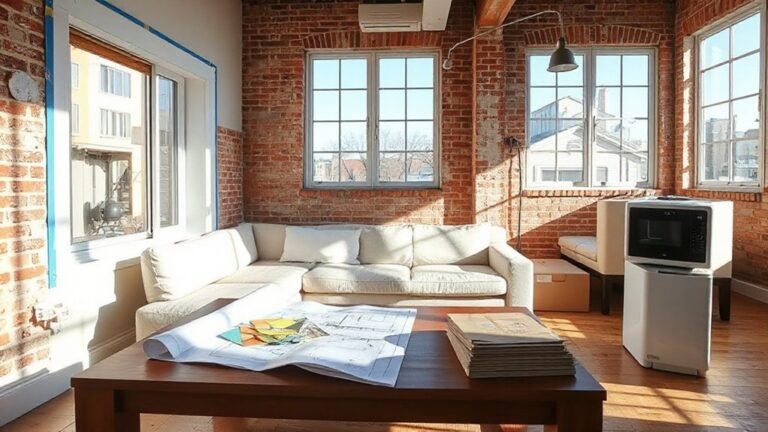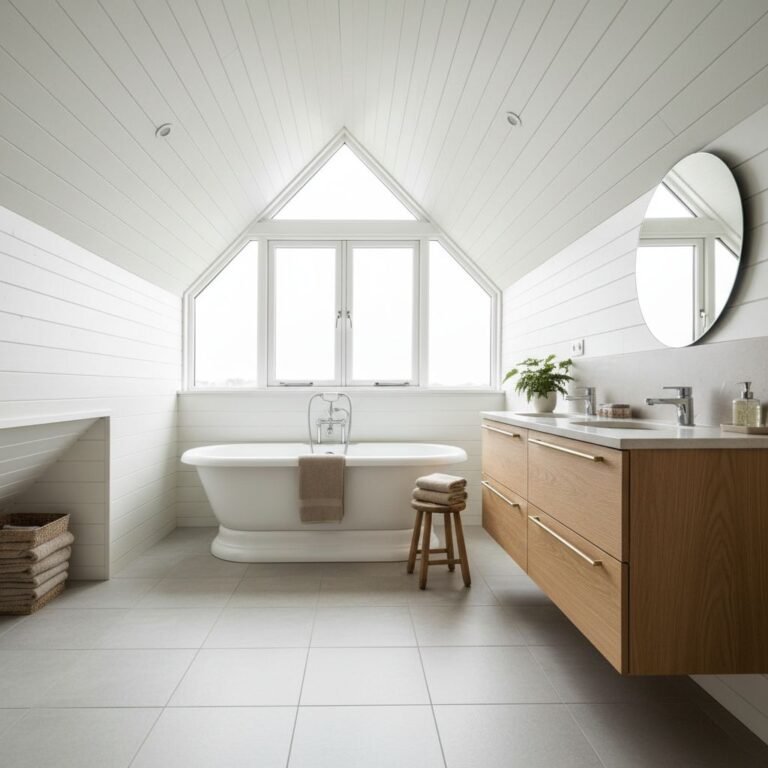
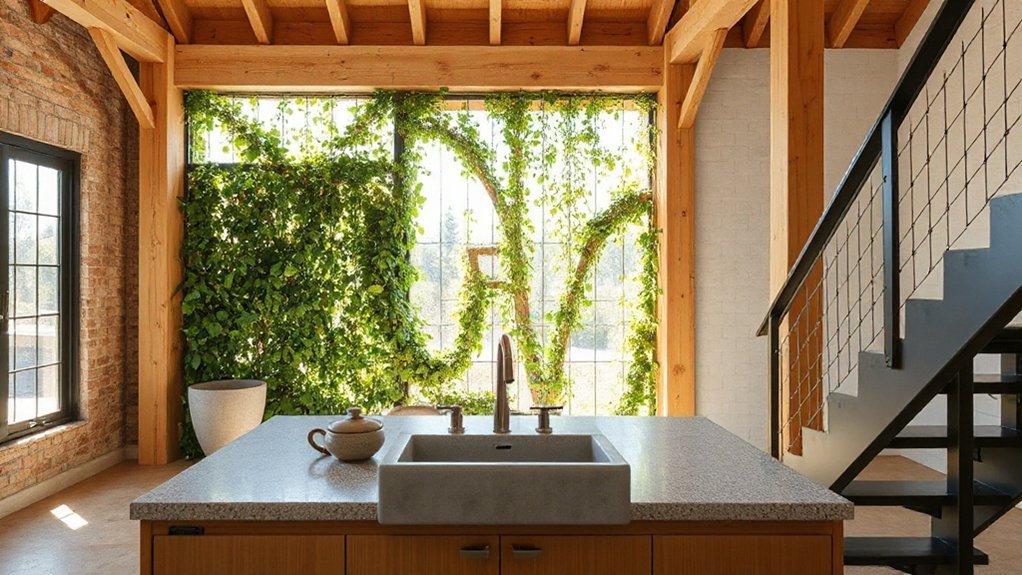
You may not realize that the materials you choose can cut embodied carbon by a factor of two or more over their lifetime. In modern renovations, durability, recyclability, and indoor safety drive choices, from reclaimed wood to recycled metal and post-consumer composites. You’ll want low-VOC finishes and modular, locally sourced systems to minimize waste and disruption. Consider lifecycle costs to avoid short‑term gains that hike maintenance, and stay prepared for practical case studies that reveal real-world tradeoffs.
Key Takeaways
- Prioritize low-embodied-energy materials and rapid-installation options, including modular and prefabricated systems to cut disruption and waste.
- Favor durable, low-VOC finishes with strong lifecycle data, third-party certifications, and clear end-of-life pathways.
- Use recycled, reclaimed, and post-consumer materials with traceability to reduce virgin resource use and extend product lifespans.
- Integrate robust indoor air quality strategies, including verified emission testing and ventilation to support occupant health.
- Evaluate performance and durability through standardized testing (wear, moisture, UV) and develop care guidelines aligned with material composition.
Evaluate Sustainability Criteria for Renovations
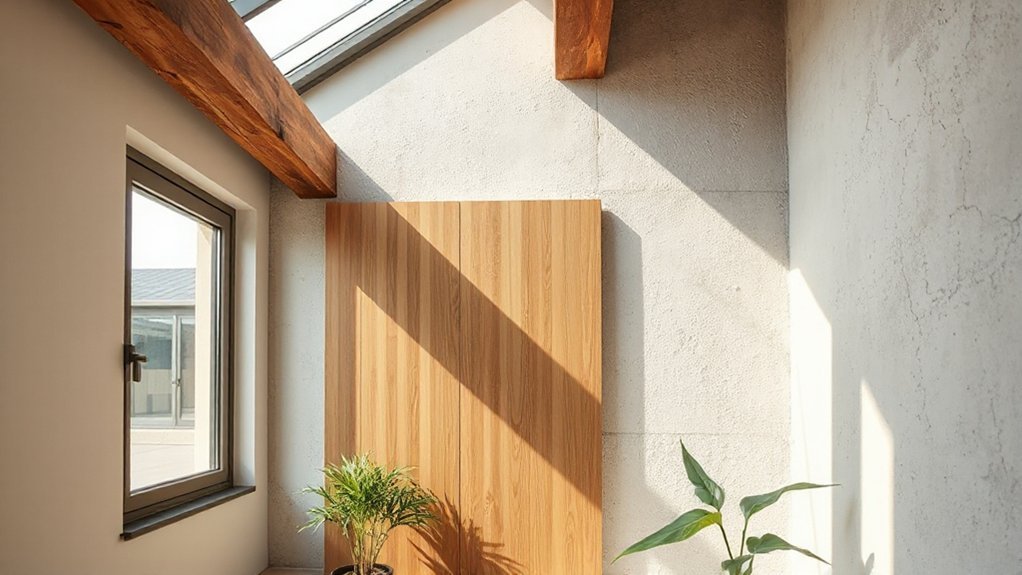
Evaluating sustainability criteria for renovations requires a clear framework that aligns project goals with measurable outcomes. You establish performance indicators for energy, material life cycle, and operational efficiency, then map them to design decisions.
Use a decision matrix to compare options against environmental impact, cost, and risk. You assess Renewable energy potential early, quantifying on-site generation, storage feasibility, and grid interactions.
You also evaluate Water conservation strategies, including fixture efficiency, rainfall capture, and non-potable reuse, ensuring they meet local regulations.
Document baseline performance and set target thresholds for energy use intensity, embodied carbon, and waste diversion.
Incorporate lifecycle thinking: scope, boundaries, data quality, and sensitivity analyses.
Finally, require transparent reporting, auditable assumptions, and periodic revalidation to maintain alignment with evolving sustainability criteria throughout renovations.
Choose Fast, Low-Impact Options for Quick Projects
For quick projects, prioritize materials that combine low embodied energy with rapid installation, so you can meet timelines without compromising performance.
Focus on quick, low-impact options that minimize waste and avoid extensive site disruption, enabling fast-track renovation outcomes.
You’ll assess choices by durability, retrofit compatibility, and supply chain reliability to keep the project on schedule and within sustainability targets.
Quick, Low-Impact Materials
Favor materials with low embodied energy and high recyclability, such as panels and finishes you can install without specialized equipment, ensuring predictable scheduling.
Eco friendly finishes are preferred for surfaces demanding durability and easy maintenance, while tintable, low-VOC options protect indoor air quality.
Consider modular components and prefabricated systems that fit standard tolerances, enabling fast assemblies with minimal on-site cutting.
When evaluating compatibility, verify manufacturer’s installation guidelines, warranty terms, and end-of-life pathways.
Renewable energy integration should be planned separately, ensuring that quick material choices align with broader sustainable objectives and long-term performance.
Fast-Track Renovation Choices
When you need fast, low-impact results, select renovation options that install quickly, require minimal site disruption, and rely on readily available, tested products with clear lifecycle data.
Fast-track choices emphasize modular assemblies, pre-finished panels, and snap-in fittings that minimize on-site labor and waste.
Prioritize products with certified low-emission profiles and predictable performance over their service life.
Maintain airtight detailing and durable coatings to curb callbacks and disruption.
For rapid aesthetic transformation, combine innovative design with standardized dimensions to simplify procurement and installation.
Compatible materials should align with existing structures to reduce demolition, noise, and dust.
The most effective fast-track solutions deliver reliable performance, scalable aesthetic appeal, and measurable sustainability, enabling project completion on or ahead of schedule while upholding rigorous material quality.
Durable Recycled Materials That Lower Long-Term Footprints
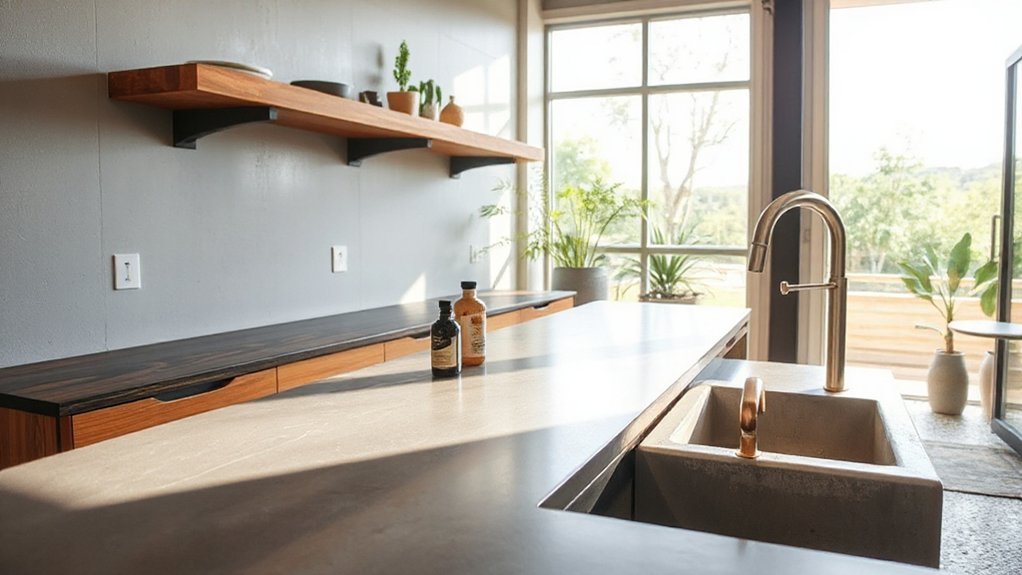
Durable recycled materials deliver long-term environmental benefits by merging performance with resource efficiency. You select composites and tiles engineered from post-consumer and post-industrial streams to minimize virgin extraction while maintaining strength and longevity. Systematic testing confirms wear resistance, thermal stability, and reduced embodied energy relative to conventional options.
You’ll note closely controlled formulations, traceable supply chains, and standardized performance metrics that support predictable maintenance cycles and lower lifecycle costs. In practice, recycled materials enable durable finishes, substrates, and structural components that resist degradation under typical renovation stresses.
They align with eco-friendly packaging considerations for packaging-intensive supply chains and with Renewable energy integration strategies, enabling on-site energy-efficient manufacturing and minimal auxiliary waste. Your choice sustains performance, curtails waste, and supports long-term environmental targets.
Incorporate Reclaimed and Upcycled Staples for Character
By selectively incorporating reclaimed and upcycled staples, you introduce character while minimizing resource draw from virgin materials. You optimize material provenance by selecting components with documented history, ensuring traceability and compatibility with modern systems.
Prioritize items that retain functional performance—doors, hardware, lumber, tiles, and fixtures—that can be cleaned, repaired, or reconfigured rather than discarded. Assess condition, structural integrity, and finish compatibility to preserve value and longevity.
Emphasize design cohesion by pairing distressed or patinated elements with contemporary surfaces, creating deliberate contrast rather than random mix. This approach delivers Vintage charm and fosters Artistic repurposing without compromising efficiency or safety.
Document sourcing and treatment methods to support lifecycle assessment, while maintaining aesthetic clarity and material performance. Integrate upcycled staples strategically to balance authenticity, cost, and sustainability throughout the renovation.
Opt for Low-VOC and Non-Toxic Interiors
Choosing low-VOC options supports better air quality, reduces off-gassing, and minimizes exposure to solvents during and after implementation.
Prioritize non-toxic interior materials and verify that components are free from restricted substances to protect occupants.
Look for Green Seal certifications to confirm claims of low emissions and overall material safety.
Low-VOC Air Quality
Are you prioritizing indoor air quality? You should choose materials and finishes with proven low-VOC emissions to maintain a safe environment. Prioritizing practical VOC reduction directly supports healthy occupancy, aligns with building codes, and minimizes off-gassing risk during initial and ongoing use.
You’ll benefit from accurate labeling, third-party certifications, and tested performance data that translate to measurable air quality improvements. In practice, select products designed for microfiber-free curing, low solvent content, and reduced odor potential, while preserving durability and finish quality.
Maintain ventilation strategies that complement low-VOC materials, ensuring consistent air exchanges and contaminant dilution. This approach strengthens Indoor air quality and supports long-term occupant comfort through documented VOC reduction while avoiding unnecessary risk.
- Verify third-party VOC certifications and low-emission ratings
- Prioritize interiors with minimal solvent content and clear on-label data
- Integrate effective ventilation to sustain air quality gains
Non-Toxic Interior Materials
Prioritize materials that meet clear internal standards for off-gassing, curing emissions, and durability under typical renovation conditions. For finishes, favor eco-friendly finishes that maintain surface performance while minimizing solvent content.
When coating, choose non-toxic paints with low odor thresholds and documented VOC limits, verifying compliance with recognized benchmarks. Partition assemblies, flooring, and coatings should demonstrate stabilized emission profiles during occupancy exposure tests.
You should document product declarations, test results, and batch consistency to ensure repeatable performance. In practice, integrate performance over lifecycle, not just initial appearance, for safer, sustainable interiors.
Green Seal Certifications
- Verifiable emission testing and annual compliance checks
- Clear material declarations aligned with Eco friendly certification
- Consistent data supporting long-term indoor air quality goals
Assess Surface Durability, Moisture Resistance, and Care
Evaluating surface durability, moisture resistance, and care is essential to select materials that endure use and environmental exposure. You evaluate substrate hardness, wear ratings, and finish resilience under anticipated traffic and humidity cycles, then translate results into maintenance protocols.
Assess moisture performance by examining diffusion resistance, capillary action, and seal integrity across seasonal moisture loads. You verify response to cleaning chemicals, abrasion, and UV exposure to prevent surface degradation and color fading.
You implement care guidelines that align with material composition, ensuring long‑term appearance and functional integrity. Surface textures influence tactile feedback and longevity, so you correlate textural properties with scratch resistance and wipeability, prioritizing materials that maintain aesthetic appeal under routine care.
This disciplined approach yields durable, low‑maintenance selections suitable for modern renovations.
Budgeting and Lifecycle Costs: Compare Options
When budgeting and evaluating lifecycle costs, you compare initial capital outlays, ongoing operating expenses, and end-of-life disposal or reuse implications across candidate materials and systems. You perform a structured Cost analysis that weighs upfront price against long-term performance, maintenance needs, and replacement intervals.
Material durability informs expected degradation, frequency of intervention, and resale value or salvage. You should model scenarios with sensitivity ranges for energy use, waste generation, and labor costs to reveal true total cost of ownership.
Decisions hinge on reliability, compatibility with existing structures, and alignment with performance targets. Budgeting benefits from transparent assumptions, documented data sources, and clear decision criteria that prioritize longevity and recyclability.
- Consider total cost of ownership over project life
- Assess maintenance cycles and labor intensity
- Evaluate end-of-life options and salvage value
Source Smart: Practical Tips and Real-World Case Studies
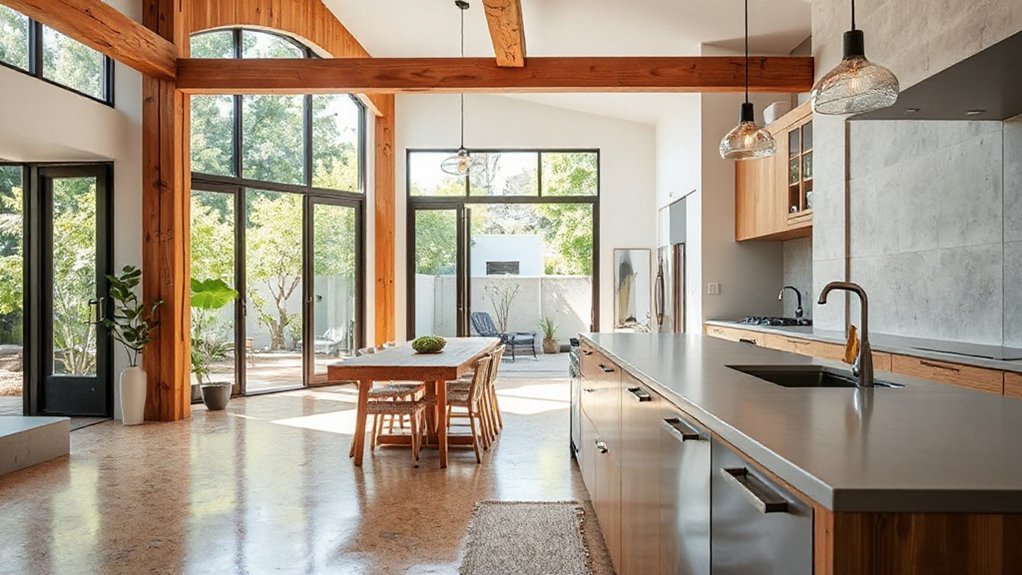
You’ll learn structured, field-tested strategies for selecting sustainable materials, drawing on documented case studies that reveal real trade-offs, implementation challenges, and measurable outcomes.
Source-smart selection hinges on aligning material performance with project goals, local climate, and urban planning constraints. Prioritize lifecycle data, supply chain transparency, and end-of-life recovery to minimize embodied impact while maintaining structural integrity.
Real-world cases show that cultural significance can drive acceptance of innovative materials when embedded in design narratives and community engagement.
Evaluate vendor certifications, local availability, and maintenance needs to avoid hidden costs. Documented scenarios illustrate how prefabrication, local sourcing, and modular assemblies yield faster delivery and lower waste.
Transparently report outcomes, lessons learned, and trade-offs to guide future renovations with greater resilience and adaptive reuse.
Urban planning considerations, cultural significance, and material choices converge for sustainable performance.
Frequently Asked Questions
How Do I Measure Environmental Impact for Renovation Materials?
To measure environmental impact for renovation materials, you perform a lifecycle assessment (LCA) of each option and compare results.
Start with Eco friendly sourcing data, quantify embodied energy, carbon, water use, and waste at each life stage, then normalize per functional unit.
Use reputable databases and standards (ISO 14040/44).
Compile a transparent report, document assumptions, and apply sensitivity analysis.
Prioritize materials with lower embodied impacts and verify supply chain certifications.
Which Materials Perform Best in Humid or Wet Environments?
Water resistant composites outperform in humidity and wet environments, resisting swelling and decay. You’ll want water resistant composites paired with mold resistant finishes to maintain long-term integrity.
In practice, select low-porosity, stabilized substrates and guarantee proper sealing details throughout to prevent moisture ingress. You’ll find these materials offer consistent performance under cyclic dampness, while minimizing allergen risk.
Use explicit moisture testing and durability data to validate suitability for your climate.
What Maintenance Is Required for Sustainable Options Long-Term?
You should perform routine inspections and cleaning, reseal surfaces as recommended, and replace filters or components on schedule to maintain Eco friendly finishes and overall performance.
For Renewable energy systems, monitor performance metrics, service inverters and batteries as advised, and address corrosion or leaks promptly.
Track humidity, ventilation, and material degradation to prevent setbacks.
Schedule professional checks annually, keep documentation, and guarantee warranty coverage stays current while optimizing energy efficiency and long-term sustainability.
How Can I Verify Third-Party Certifications on Materials?
You verify third-party certifications by checking the issuing body’s public records and cross-referencing product claims with Eco labels verification.
Start with the certificate number, scope, and validity dates, then confirm alignment to Certification standards comparison across relevant programs.
Inspect supplier declarations, test reports, and third-party audit summaries.
Make certain the label matches the product’s batch.
Maintain records for audits.
This disciplined approach reduces risk and guarantees ongoing compliance with recognized sustainability benchmarks.
Are Sustainable Choices Cost-Effective for Resale Value?
Yes, sustainable choices can boost resale value, especially when you highlight tangible eco benefits. You’ll notice eco friendly flooring and recycled countertops appealing to buyers seeking efficiency and durability.
In practice, you’ll track life-cycle costs, maintenance, and energy savings to justify price premiums. You’ll quantify payback periods with appraisals and civic incentives, ensuring the market recognizes quality materials.
Conclusion
You can build with brag-worthy durability and design by choosing careful, conscious materials. Consider concrete, reclaimed wood, and recycled metals, because their lifecycle costs stay lower and their impacts stay lighter. Prioritize practical, programmable finishes and low-VOC interiors for healthier habitats. Weigh moisture resilience, maintenance needs, and modular fit to minimize waste. By benchmarking budgets against lifecycle data, you’ll create cohesive, cost-conscious, climate-conscious spaces that commute from concept to completion with confidence.
About the Author