
You’re evaluating bifold door installs, and planning permission plus building regs are central. Internal fits often don’t need permission if you stay within the building envelope; exterior changes or sensitive areas can trigger compliance. You’ll want solid documentation, accurate drawings, and product data to avoid delays, plus a clear path for fire safety, insulation, and accessibility. Stay prepared for potential consultations with professionals who translate rules into a practical, compliant plan that won’t derail your project at the last minute.
Key Takeaways
- Internal bifolds within the building envelope usually don’t need planning permission; exterior bifolds may require consent due to facade changes or conservation areas.
- Check local permitted development rights and exemptions; consult a planning professional to avoid delays.
- Building Regulations: ensure structural support, appropriate materials, fire safety, and accessible design; document all certificates and deviations.
- Fire safety and energy: maintain intumescent seals, fire-rated glazing, correct hardware operation, and use low U-value assemblies.
- Prepare a complete submittal: drawings, framing, glazing, hardware, fire/energy data, revisions, and project timelines for plan checks.
Do I Need Planning Permission for Bifold Doors?
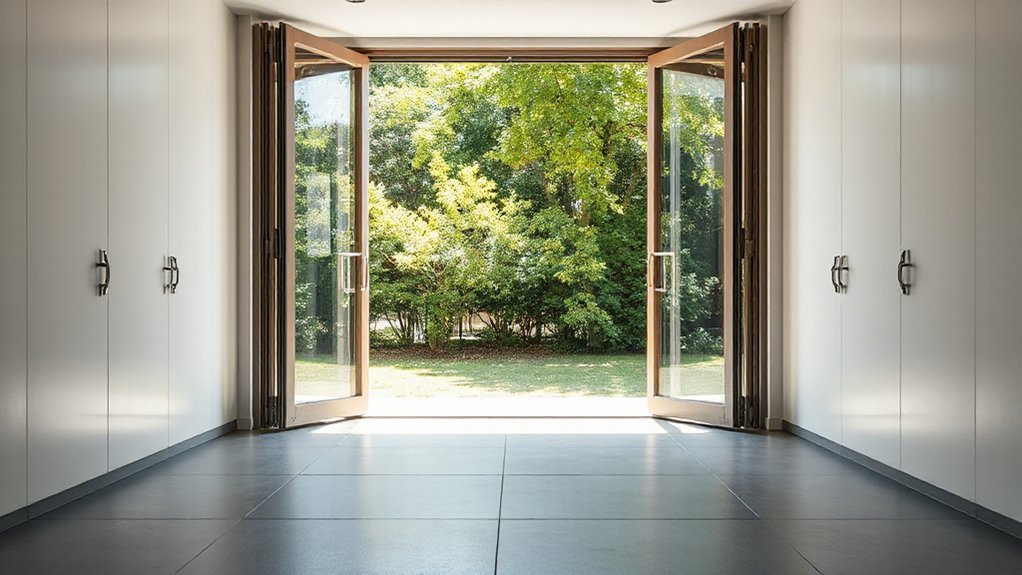
Do you need planning permission for bifold doors? In most cases, you won’t require planning permission for internal bifold doors if they stay within the building envelope and don’t alter the exterior appearance.
Consider how interior design elements influence perception and use, since doorway choice affects space flow, light, and function. If you’re replacing a non-structural interior panel with bifolds, permission isn’t typically needed.
Exterior-facing bifolds, however, can trigger planning rules based on alterations to facades, listed status, or conservation areas.
For cost analysis, evaluate installation scope, materials, and finishing options—these drive compliance steps and potential fees. Always verify local exemptions and permitted development rights.
When in doubt, consult a planning professional to avoid unnecessary delays or rework.
Building Regs Basics for Bifold Installations
Building regulations basics for bifold installations require careful alignment with structure, fire safety, accessibility, and energy performance standards. You assess compliance early, ensuring that structural support and load paths suit the door system without compromising framing integrity.
Material selection becomes pivotal: choose profiles, glazing, and hardware that meet accredited performance criteria while mitigating distortion, corrosion, and long-term wear.
You must verify that installation methods preserve continuity of fire-resisting elements and maintain safe egress routes in line with approved documents.
Accessibility considerations dictate threshold design, lever handles, and operable ranges that accommodate diverse users.
Aesthetic considerations inform finish quality, color consistency, and alignment with surrounding architecture, yet never at the expense of structural or functional compliance.
Document product certificates, installation manuals, and any site deviations for authority review.
Fire Safety and Energy Efficiency for Bifold Doors
Fire safety and energy performance for bifold doors hinge on how fire-resisting elements are maintained and how glazing, framing, and hardware affect containment and egress. You must guarantee seals, intumescent strips, and fire-rated glazing are intact, inspected, and replaced when degraded.
Regularly verify that hardware operates smoothly, latches engage fully, and hinges remain aligned to preserve the enclosure’s integrity during a fire event.
Use compliant glazing units with appropriate fire resistance ratings and minimum margin for thermal expansion.
Energy efficiency requires selecting low U-value assemblies, proper thermal breaks, and weatherclosures to minimize heat transfer and drafts. Maintain door thresholds and sweeps to reduce air leakage.
Document performance data, installation tolerances, and maintenance intervals to support ongoing Fire safety and Energy efficiency compliance.
How to Document and Submit Bifold Door Plans
To document and submit bifold door plans, prepare a complete set of drawings and specifications that clearly show framing, glazing, hardware, and hardware accessories, along with fire-resistance and energy-efficiency data as required by code and project goals.
You’ll organize documents into a cohesive package: intent, scope, performance criteria, and applicable standards.
Include structural details, section cuts, connection methods, and tolerances, plus product data for doors, tracks, rollers, and seals.
Attach testing reports, fire-resistance labels, and energy calculations supporting U-values and solar gains.
Present a concise narrative of design aesthetics and material durability expectations to demonstrate intent and durability.
Guarantee revisions are tracked, and submittals align with local plan-check requirements and your project timeline.
Quick Checklist: Scope, Compliance, and Next Steps
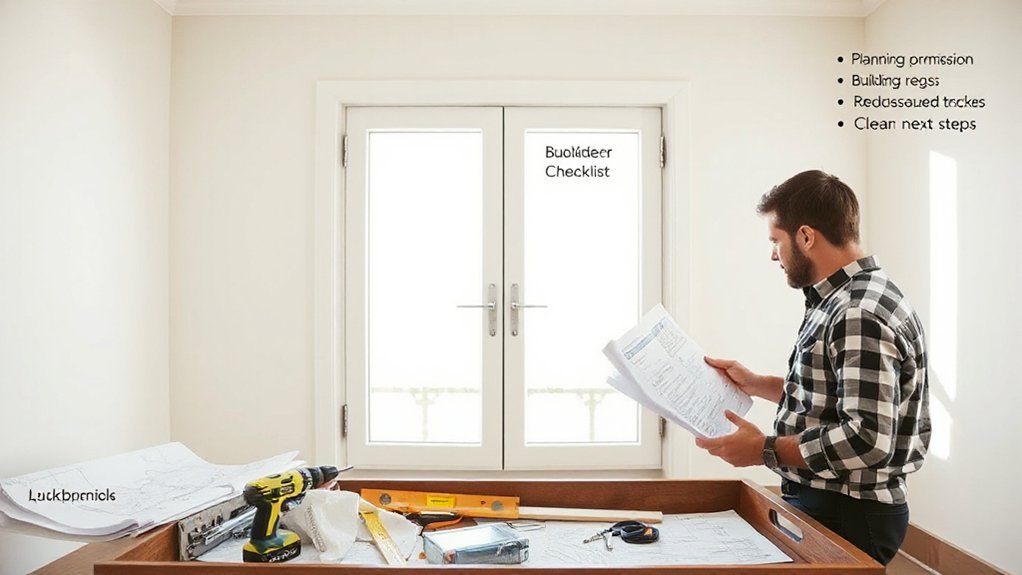
Start with a concise overview of the scope, compliance, and next steps for bifold door plans. This quick checklist focuses on what you must confirm before finalising, ensuring adherence to planning permission and Building Regs.
Scope alignment means inventorying openings, frame types, leaf counts, and hardware choices, plus integration with glazing, seals, and thresholds.
Compliance requires verifying fire ratings, thermal performance, accessibility, and proper ventilation details, plus confirming structural load paths are documented.
Next steps guide you to finalize documentation, secure approvals, and schedule on-site work with clear milestones.
Material selection and installation methods influence performance and future maintenance, so document rehearsed assembly sequences.
Cost considerations should precede purchases, factoring in delivery, fittings, and potential contingencies.
Finalise a consolidated plan bundle for smooth execution and audit readiness.
Frequently Asked Questions
Do Bifold Doors Affect Property Value or Resale Considerations?
Bifold doors can boost your property value and appeal, provided you pick quality door material and align with design aesthetics that suit the home. They often enhance natural light, space utility, and modernity, which buyers value.
However, value uplift depends on overall build quality, installation precision, and durability. Confirm material choices resist weather, and match architectural style.
Thoughtful, well-executed designs can improve resale prospects more than flashy trends.
Can Planning Permission Be Retrospective for Existing Installations?
Yes—you can obtain retroactive approval, but only if the installation complies with current rules and you address any breaches.
You’ll need to submit retrospective planning or lawful development documentation, prove non-harm to neighbors, and guarantee adjustments meet Building Regulations.
If installation compliance isn’t met, enforcement actions may follow.
Begin with a detailed retrospective application, include plans, elevations, and impact assessments, and consult planning officers promptly to avoid penalties.
Are There Size or Weight Limits Specific to Bifold Doors?
Yes, there are size and weight limits for bifold doors. You should check local standards, but typical door design specs cap widths per leaf around 600–900 mm.
Total assemblies are generally under 2.6–3 m high, with weight considerations requiring sturdy tracks and rollers.
Material durability matters: heavier, denser materials demand stronger frames.
Confirm hardware supports the load, and comply with manufacturer guidance.
Always verify with building regs and door design documentation before installation.
How Do Warranties Interact With Building Regulation Compliance?
You’ll find warranties hinge on compliance with regulations, not excuses. When you install, product guarantees align with proper installation and documented compliance.
If a claim arises, warranty enforcement may require you to provide compliance documentation showing adherence to standards, tests, and approvals. Make certain installers follow manufacturer specs, keep records, and reference relevant building codes.
Your proactive paperwork can speed claims, clarify responsibilities, and protect both performance and coverage.
Do Local Authorities Require Amendments After Installation Inspections?
Yes—local authorities may require amendments after installation inspections if you fail to meet approved plans or building regulations. You’ll undergo inspection procedures to verify work matches permissions, then enter the approval processes to confirm compliance.
If deficiencies are identified, you’ll be directed to implement corrections before final sign-off. You should schedule re-inspections promptly and document any changes.
Proper documentation and timely corrections reduce delays and guarantee continued adherence to regulatory standards.
Conclusion
Conclusion: You should treat bifold door projects as a compliance-focused task, not just a fit-out. Most internal installations stay within the building envelope, while exterior changes can trigger permissions. About 60% of external bifold door projects require some form of planning alteration, so verify planning and building regs upfront. Prioritize precise documentation—drawings, product data, and installation details—to avoid delays and guarantee fire safety, thermal performance, and accessibility meet current standards.
About the Author