To update a UK terraced house on a budget, start with a realistic plan and a clear budget that includes a 10–15% contingency for hidden repairs. Prioritize storage and layout to maximize space, and brighten small rooms with budget-friendly pale neutrals and a bold accent. Update hardware for a cohesive look, layer luxury-feel finishes where it counts, and use energy-saving upgrades to save long-term. Small exterior tweaks boost curb appeal without breaking the bank, and more practical steps follow.
Set a Realistic Budget for a UK Terraced Update
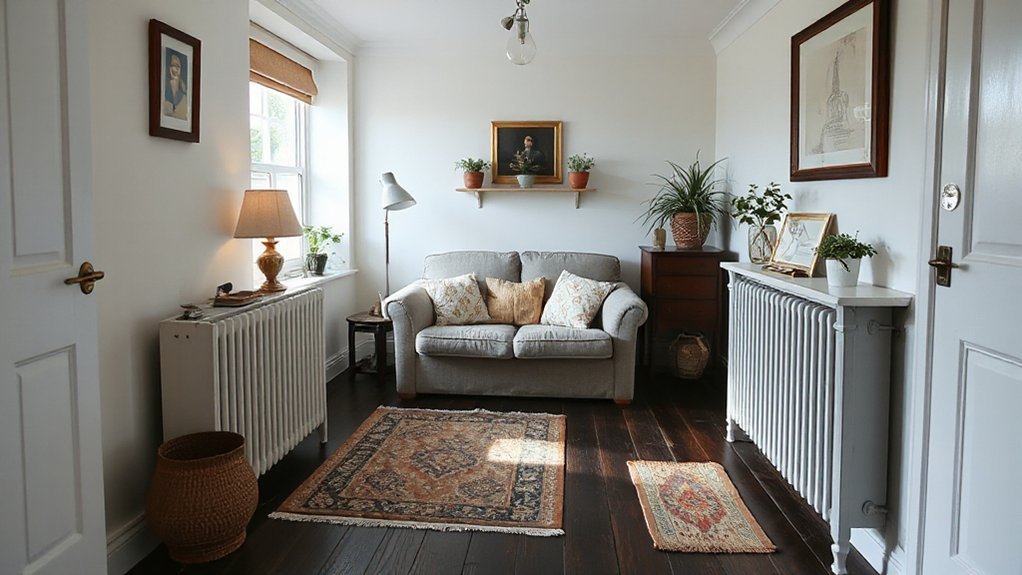
Setting a realistic budget is your first step, not an afterthought. You’ll start with clear goals and a practical framework for cost planning.
Begin with Budget planning by listing must-haves, nice-to-haves, and contingent items, so you don’t overspend when surprises arise.
Next, perform cost estimation for each update—fresh paint, flooring, fixtures, and labor—using current UK market quotes and your local trades.
Add a contingency, typically 10–15%, to cover hidden fixes in a terraced home.
Compare DIY vs. professional options to gauge where you can save without sacrificing safety or quality.
Track every expense in a single spreadsheet, update weekly, and adjust as needed.
Finalize a written plan with target totals and phased timelines to keep you anchored.
Prioritize Storage and Layout to Maximize Space
By rethinking the floor plan, you’ll improve flow and create a sense of space in a tight terraced layout. Use built-in storage that stashes clutter without sacrificing floor area, and flex zones that adapt as needs shift.
Start simple: map traffic paths, then layer storage and room zones for clearer, more versatile living.
Maximizing Floor Plan Flow
How can you improve flow in a terraced house? Start by aligning traffic paths with entry points and doorways, reducing jagged progressions. Prioritize open sightlines between rooms to make spaces feel larger without adding square footage.
Use floor plan optimization to guide furniture placement, keeping high-traffic zones clear and activities well defined. Create logical routes from the front door to the living, dining, and kitchen areas, preferably in one continuous line or gentle L-shape.
Use narrower, taller storage units to maintain openness while boosting function, and consider multifunctional furniture to minimize clutter.
For spatial arrangement, group related functions and avoid overlapping uses in tight zones. Remember: increased flow hinges on intentional layout, precise measurements, and flexible, scalable solutions.
Clever Built-In Storage
Tackle storage first by designing clever built-ins that reclaim unused space without crowding the room. You’ll gain square footage without major renovations by integrating low-profile shelving, recessed alcoves, and floor-to-ceiling wardrobes.
Prioritize vertical storage to draw the eye upward and free precious floor space for living. Use hidden compartments within benches, stairs, and coffee tables to hide infrequently used items, reducing clutter while preserving accessibility.
Choose modular units you can reconfigure for changing needs, and select doors with slim profiles to avoid visual bulk. Labelable, pull-out drawers organize small items, while closed storage hides everyday clutter.
Plan around a single, consistent material palette to maintain a light, cohesive feel and optimize space without sacrificing function. space optimization, hidden compartments.
Flexible Room Zoning
Start by redefining the footprint with flexible zones that blend storage and function, so every square meter earns its keep.
In a tight terraced layout, you’ll want open plan living that still feels organized. Use adaptable zones that can fluidly shift between social and private needs.
Pair compact furniture with vertical storage to keep surfaces clear and flow intact. Install modular dividers, folding screens, or lightweight shelves to carve areas without heavy commitment.
Choose multiuse pieces—sofa beds, ottomans with concealed storage, wall-desks—that serve two roles.
Plan lighting and outlets to suit changing zones, avoiding clutter.
Color and texture unify spaces while maintaining distinct functions.
With deliberate zoning, you maximize usability and preserve a sense of roominess, even when space is limited.
Brighten Small Rooms With Budget Paint Palettes
Ever wonder how a fresh coat of paint can transform a cramped room into a brighter, more welcoming space without breaking the bank? You can achieve this with budget palettes that maximize light and perceived space. Choose pale neutrals as base coats to reflect natural light from windows, then add a single bold accent to create depth without clutter.
Color psychology matters: cool whites and soft blues feel airy, while warm creams invite coziness. Use matte or eggshell finishes to reduce glare on small walls. For durability, pick affordable paints labeled for durable wear, and apply two thin coats instead of one thick coat.
Prepare surfaces properly, patch flaws, and sand edges for even coverage. Label cans, plan a one-day color sweep, and you’ll notice an immediate uplift.
Elevate Interiors With Affordable Hardware and Finishes
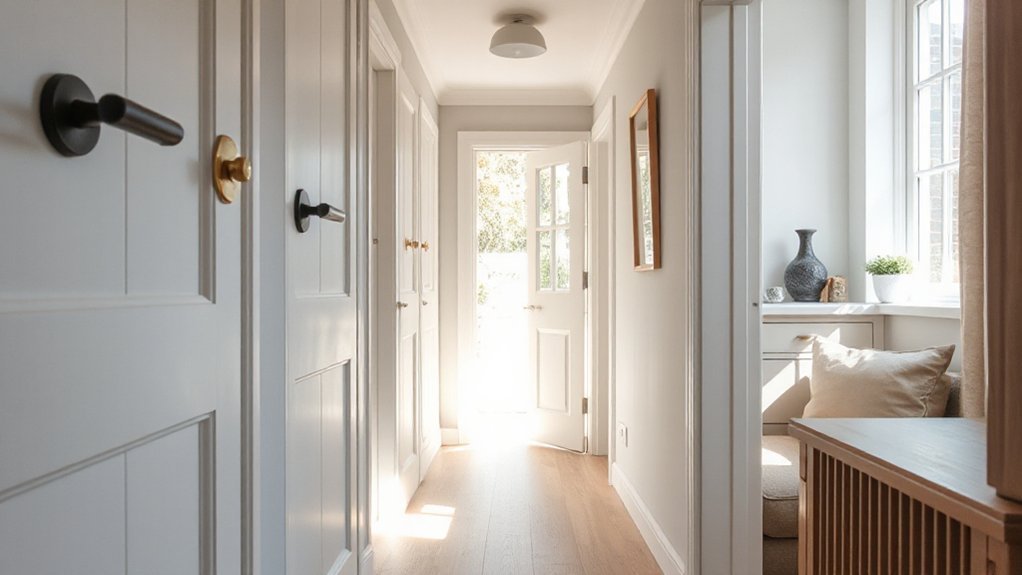
Even small upgrades can dramatically lift a UK terraced home, and affordable hardware and finishes let you do more without overspending. You don’t need a full renovation to refresh rooms; swap in door hardware with clean lines and a matte finish to modernize entrances and cupboards.
Choose cabinet handles that pull the look together across kitchens, bedrooms, and bathrooms—aim for consistency in style and finish. Measure before you buy, noting screw spacing and offset, so replacements fit without redrilling.
Budget-friendly options include satin brass, matte black, or chrome, which pair well with existing tiling and timber features. Test a sample on one door first to confirm grip and feel.
Finish with a simple, wipe-clean protection to preserve the new hardware’s look.
Lighting on a Budget: Atmosphere and Efficiency
Brighten rooms without blowing the budget by prioritizing lighting that layers task, ambient, and accent needs. In a UK terraced home, you’ll gain ambience without waste by mixing affordable sources and careful placement.
Start with ambient glow: diffuse ceiling or wall fixtures to soften harsh shadows. Then add task lighting at desks, counters, and reading nooks. Use dimmable LEDs to control mood and energy use.
When selecting fixtures, prioritize efficiency and scale for narrow rooms. Fixture selection should favor compact, multi-directional designs that maximize wall space rather than excess floor lamps.
Reuse existing fittings where safe, and swap bulbs for cool or warm temperatures to suit room function.
Plan a simple under-cabinet or shelf light for practicality, avoiding clutter and wasted energy.
Exterior Curb Appeal Tweaks for Terraced Homes
You can start with a Front Door Facelift that welcomes visitors and sets the tone for the whole home.
Use practical Lighting and Lighting Tricks to highlight architectural features without breaking the budget. Consider smart warm bulbs for curb appeal after dusk.
A Fence and Gate Upgrade can frame your terrace, improve privacy, and tie the whole look together with durable, low-cost materials.
Front Door Facelift
A front door facelift can dramatically boost your terraced home’s curb appeal without a full remodel. You can start with a fresh, durable coat of front door color in a shade that complements bricks or render, choosing eggshell or satin for low maintenance.
Inspect the door for cracks, add weatherstripping, and repaint or reseal to prevent drafts.
Update door hardware with a modern, vandal-resistant handle set, a deadbolt, and a matching knocker; make certain screws are tight and strike plates aligned.
Consider a glass panel facelift or frosted film for privacy if appropriate to your style.
Add a seasonal mat and a small planter to finish, avoiding overly busy finishes that clash with neighboring doors. This keeps costs tight and impact high.
Lighting and Lighting Tricks
Lighting can make a terraced home feel brighter and more inviting without a full remodel. You’ll impact curb appeal with targeted lighting that highlights architectural details and pathways, while staying budget-conscious.
Use smart lighting to automate dusk-to-dawn and set schedules, reducing energy waste and clutter. Aim for even ambient illumination that avoids harsh glare, creating a welcoming street presence.
Choose warm white bulbs (2700–3000K) for a natural feel and install weatherproof fixtures suited to UK weather. Layer lighting with wall-mounted sconces, step lights, and a small porch lantern to guide visitors without flooding the façade.
Prioritize simplicity, durability, and ease of maintenance to keep the look tidy and timeless.
- Install smart lighting with motion sensors for security and efficiency
- Use ambient illumination to emphasize texture and entry
- Select weatherproof, low-maintenance fixtures for year-round appeal
Fence and Gate Upgrade
Fencing and gates can dramatically boost terraced curb appeal without breaking the bank. You’ll focus on low-cost updates that maximize impact with minimal effort.
Start with privacy screening: a tall lattice panel, evergreen hedge, or trellis with fast-growing vines cuts sightlines from the street while maintaining airflow.
Choose decorative fencing that complements your brickwork and door color—think slim pickets or a boxed timber frame in a neutral stain.
Install gates that align with your front path’s width for a cohesive look and safer entry.
Update hardware with brushed metal handles and hinges for a modern touch.
Maintain boundary lines with clear, affordable markers and repair any loose posts promptly to prevent sagging.
These tweaks provide deliberate curb appeal without overhauling the structure.
Premium-Feel Flooring and Soft Furnishings on a Budget
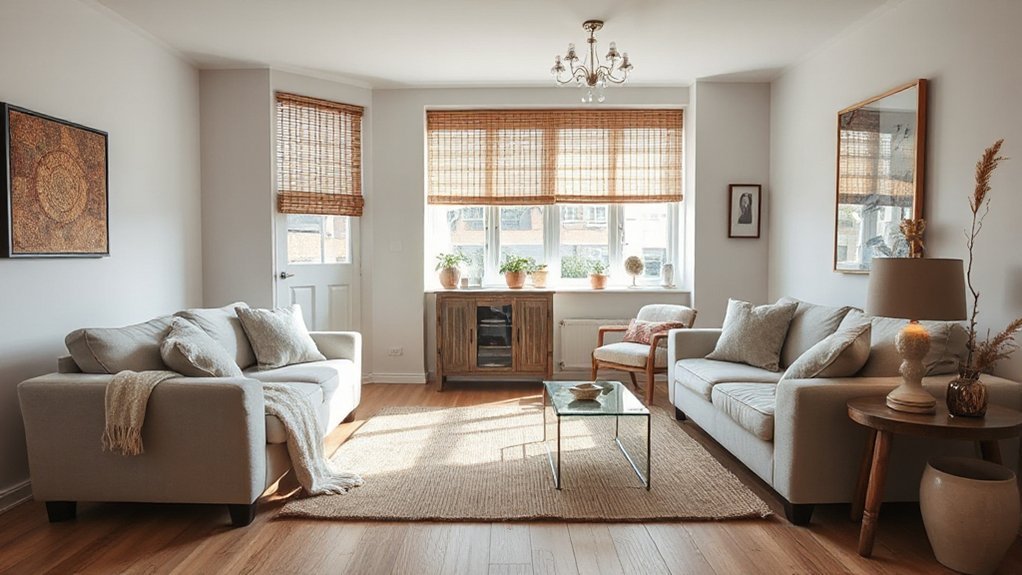
Premium-feel flooring and soft furnishings don’t have to break the bank. You can create a luxe look with smart picks and careful placement. Choose durable, stylish options that read high-end without the price tag, and layer textures to boost warmth and depth. Focus on neutral bases, then punch with accents like velvet cushions. Prioritize easy-install, low-maintenance solutions that still feel premium, so you don’t waste time or money.
- Invest in luxury carpets during sales or opt for high-density finishes that mimic wool without the cost.
- Use velvet cushions to elevate sofas and chairs, rotating colors to refresh the room seasonally.
- Layer rugs over hard floors to create warmth, dimension, and a boutique vibe.
This approach keeps your terraced home stylish, practical, and budget-smart.
Energy-Saving Upgrades That Pay Back Over Time
Upgrading your UK terraced home to be more energy-efficient pays back over time, not just in lower bills but in steadier comfort. You’ll start with small, proven moves that yield measurable gains.
Install solar panel installation where viable, and size the system to match typical daytime consumption. Pair this with double glazed windows to reduce drafts and heat loss year-round.
Add smart thermostats and programmable controls to align heating with occupancy, avoiding wasted energy. Insulation improvements—especially loft and cavity gaps—lock in warmth without constant boiler work.
Choose high-efficiency appliances and LED lighting to cut baseline usage. Finally, seal key air leaks, such as around doors and plumbing penetrations.
These upgrades compound, delivering ongoing savings while improving living comfort.
Weekend DIY Projects for Terraced Homes
Weekend DIY projects in a terraced home let you tackle practical improvements without overhauling the whole house. You’ll get fast results with minimal disruption, using common tools and affordable supplies.
Focus on small, high-impact tasks that boost curb appeal and function, then reinvest saved time into smarter finishes. Plan three quick wins: define zones, measure twice, and // store once.
Prioritise space efficiency, easy maintenance, and durable materials suitable for UK weather. Garden landscaping and DIY decor accents offer big payoff without expensive rewrites.
Choose plants that thrive in containers or against walls, and select statement accessories that pull rooms together. You’ll build confidence for bigger projects, one weekend at a time.
- Revamp a step-free entry with a compact planter strip
- Create a feature wall using decals, paint, and shelving
- Refresh fencing and edging for a polished garden backdrop
Frequently Asked Questions
Can You Update Adjoining Rooms Without Knocking Through Walls?
Yes, you can update adjoining rooms without knocking through walls. Focus on non-structural layout tweaks, clever partitions, and lighting. Prioritize Wall removal? actually avoid it unless needed; guarantee Structural integrity stays intact and consult a pro for safe, compliant changes.
What Grants or Discounts Apply to UK Terraced Home Upgrades?
You can access energy efficiency grants and discounts through schemes like the Green Deal, ECO, and local authority programs, targeting insulation, heat pumps, and roof repairs. Check eligibility, apply promptly, and document energy savings to maximize funding.
How Long Do Budget Renovations Typically Take in Terraced Houses?
Renovations in terraced houses typically take a few days to a few weeks, depending on scope. You can speed things up with DIY painting and budget flooring, coordinating trades, and sticking to a clear, practical schedule.
Which Walls Should Be Prioritized for Soundproofing on a Budget?
Prioritize party walls and shared ceilings for soundproofing on a budget. Install wall insulation and add soundproofing panels to these areas first; focus on gaps, doors, and windows afterward to maximize quiet with minimal cost.
Are Upcycled Materials Reliable for Long-Term Terraced Home Use?
Upcycled materials can be reliable, but you should assess durability concerns first. Choose proven options, verify supplier warranties, and test for moisture resistance. Sustainable materials can work well if you prioritize quality, compatibility, and long-term maintenance in your terraced home.
Conclusion
You plan with purpose, you budget with clarity, you prioritize storage and layout to maximize space. You brighten with paint, you finish with affordable hardware, you layer lighting for mood and efficiency. You copy curb appeal with simple exterior tweaks, you choose durable flooring and soft furnishings on a shoestring, you adopt energy-saving upgrades that pay back, you tackle weekend projects, you finish with confidence, you live better, you spend less, you enjoy more.
About the Author