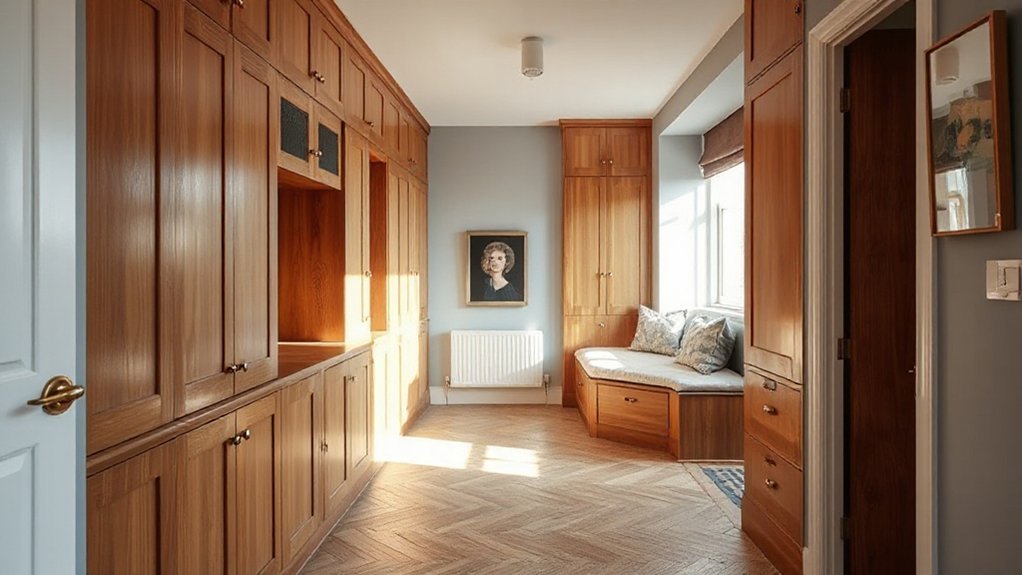
In terraced and semi-detached homes, built‑in storage is more than a nicety—it’s a practical necessity that keeps compact spaces calm and usable. You’ll transform corners, alcoves, and under-stair areas into smart, hidden solutions that don’t crowd your living spaces. From vertical lofts to pull-out shelves, these ideas balance style with function, so you gain order without sacrificing light or flow. Ready to see where space can truly work for you?
Key Takeaways
- Optimize limited spaces in terraced and semi-detached homes with built-in storage that transforms dead corners, alcoves, and under-stair areas into functional solutions.
- Use under-stair designs and hidden compartments (e.g., concealed pullouts, bed trundles) to increase capacity without clutter.
- Implement vertical storage like mezzanine wardrobes, loft storage, and shallow bins to keep living areas open and accessible.
- Choose space-saving doors (sliding, pocket, bi-fold) and multi-use furniture (convertible beds, storage benches) to maximize utility.
- Prioritize accessibility and organization with modular bins, labeled boxes, proper lighting, and finishes that reduce visual noise.
Why Built-in Storage Is a Must in Terraced Homes
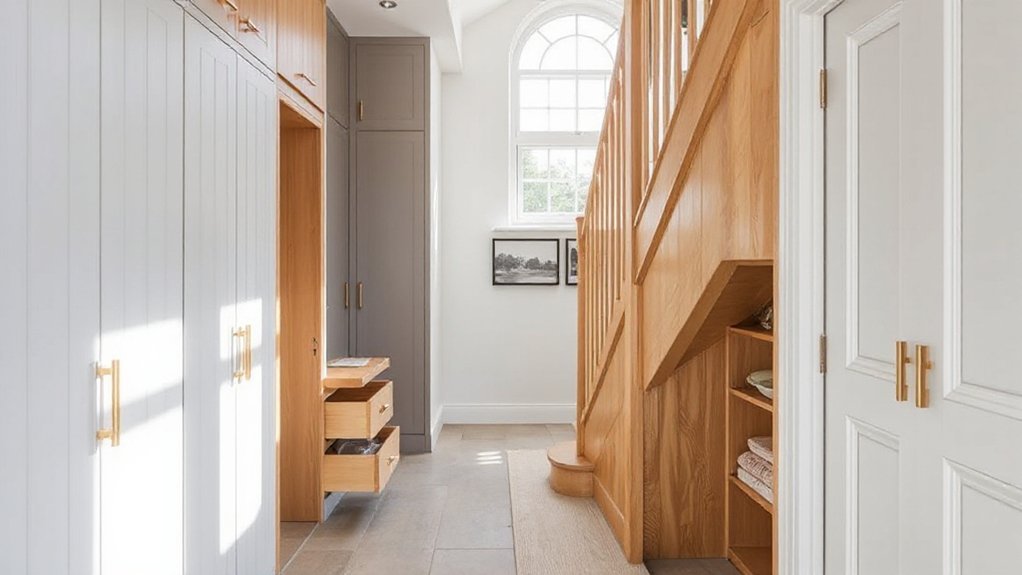
Built-in storage isn’t a luxury in terraced homes; it’s a necessity. When space is tight, you need smart solutions that stay tidy and functional. Built-ins optimize every inch, turning dead corners into usable areas and preventing clutter from creeping into living zones.
You’ll find that clutter management becomes straightforward when drawers, shelves, and cabinets are purposefully placed near daily routines. Storage organization isn’t an afterthought; it’s a design principle that guides layout, access, and ergonomics.
By selecting modular units, you can adapt to changing needs without sacrificing style. Choose clean lines, integrated finishes, and concealed hardware to keep sightlines uncluttered.
In terraced homes, thoughtful storage reduces visual noise, boosts efficiency, and preserves breathing space.
Under-Stair Storage Ideas That Free Up Floor Space
Under-stair spaces are prime real estate for clever storage, turning what’s usually wasted height into usable drawers, shelves, or cabinets. You can tailor the area to your needs, from slim pull-out organizers to deep drawers for shoes and seasonal gear.
Hidden compartments blend invisibly into the base, preserving clean lines while offering surprising capacity. Consider a shallow pull-out tray for keys, bags, or mail, paired with a tall cabinet for cleaning supplies.
If you prefer visible storage, install staircase drawers with smooth runners and soft-close mechanisms to reduce noise. Lighting helps, too—LED strips along the cabinet edges brighten the corridor without occupying floor space.
With thoughtful layout, you reclaim floor area while keeping access effortless and stylish.
Mezzanine Wardrobes and Lofts for Vertical Storage
Mezzanine wardrobes and loft storage rise above eye level to maximize footprint without crowding the floor. You gain generous vertical space by stacking storage above, leaving living areas open and accessible. Use a slim, sturdy staircase or ladder to reach elevated zones safely, and opt for compact rails or hanging bars to keep clothes visible without bulk.
Mezzanine wardrobes work well behind partitions or under sloped ceilings, while loft storage suits awkward nooks—think shallow chests, labeled bins, and clear-front boxes. Choose durable materials with a finish that resists dust and fingerprints.
Plan rail heights, lighting, and air circulation to prevent damp. When designed well, Mezzanine wardrobes and loft storage become practical, stylish solutions that streamline wardrobe needs without consuming precious floor area. Loft storage completes the system with accessible, organized space.
Choosing Wall-Mounted Desks and Living-Ready Surfaces
Need a surface that adapts to your space and workflow? Wall-mounted desks offer clean lines and immediate flexibility, perfect for tight terraced layouts. Choose a model with fold-down capability or adjustable height to keep pathways clear while you multitask.
Pair it with cable channels and a slim, recessed shelf to maintain a clutter-free profile. Opt for Living ready surfaces that withstand daily use and swap paraphernalia seasonally without bulk.
Prioritize a finish that complements existing tones—matte neutrals for formal rooms, warm woods for casual zones. Install at desk height for writing, then fold away to reclaim floor space.
Consider integrated lighting and a small peg rail for quick-access tools. Combining these elements creates practical, stylish zones that feel engineered for everyday living.
Recessed Cupboards for Awkward Alcoves and Nooks
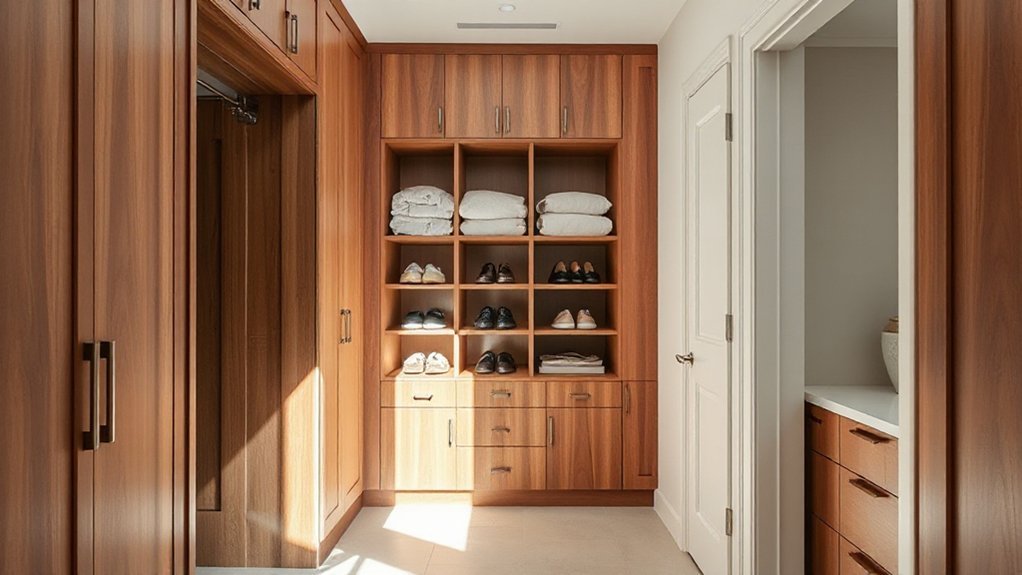
Ever wish awkward alcoves and tiny nooks could hide clutter instead of collecting it? Recessed cupboards make that possible without stealing floor space. You’ll gain storage where traditional cabinets won’t fit, keeping walls clean and lines uninterrupted.
Design-wise, choose shallow depths and uniform fronts to maintain a sleek, seamless look. For noisy households, soft-close hinges reduce slam and wear.
If you’ve got tall ceilings, extend the cupboard to the ceiling or add a slim top shelf for seasonal items.
In tight stair landings or under stair storages, recessed cupboards hide away odds and ends while preserving walkway width.
Use neutral finishes or matte paints to blend with existing tones, ensuring the space feels larger, calmer, and deliberately organized.
When to Choose Sliding, Pocket, or Bi-Fold Doors
Choosing between sliding, pocket, and bi-fold doors depends on how you use the space and what you value most—saving room, easing access, or boosting aesthetics.
In tight terraces, sliding doors maximize opening without intrusion, letting you blur indoors with outdoors while keeping furniture aligned.
When wall depth is limited, pocket doors hide away completely, preserving floor area for storage or seating.
Bi-folds excel where you want a wide, uninterrupted vista or easy, full-width access to a sunlit extension.
Consider daily traffic: frequent use favors sliding or pocket doors for smooth operation; guest areas benefit from bi-folds that fold away neatly.
Material, hardware, and seal quality determine longevity. For durability, choose tracks and rollers built for recessed or surface mounting.
Sliding doors, pocket doors.
Multi-Purpose Furniture: Beds, Benches, and Storage Seating
Built-in storage comes alive with multi-purpose furniture that blends comfort and practicality. You design spaces where beds, benches, and seating integrate storage without clutter, maximizing small terraced and semi-detached layouts.
Choose convertible sofas that aside from hosting guests, tuck away linens, pillows, and seasonal clothing with clean lines and hidden compartments. When you sit or rise, the piece should feel sturdy, not bulky, with smooth mechanisms and a low profile.
Pair benches with lift-top lids for shoes, toys, or tools, aligning height to your seating needs.
Use modular shelving to flexibly partition rooms, display essentials, and conceal electronics behind stylish fronts.
Prioritize durable finishes and easy-clean surfaces to maintain a calm, organized environment.
Materials and Lighting to Keep Terraced Spaces Feeling Open
Little details in materials and lighting can make terraced spaces feel instantly larger. You’ll maximize openness by choosing materials with durability in mind—think low-maintenance, consistent colors, and seamless joins that minimize visual breaks.
Favor light, matte finishes for walls and cabinetry to bounce daylight without glare. Use durable countertops in pale stone or quartz to keep reflections soft.
For flooring, opt for wide planks or large tiles in light hues to elongate the room, reducing grout lines that trap attention.
Lighting ambiance matters: layer sources—ambient, task, and accent—so shadows stay gentle and space feels airy. Prefer integrated lighting in shelves or under cabinets to guide the eye, avoiding bulky fixtures that crowd ceilings.
Quick-Win Tweaks to Boost Order and Perceived Space
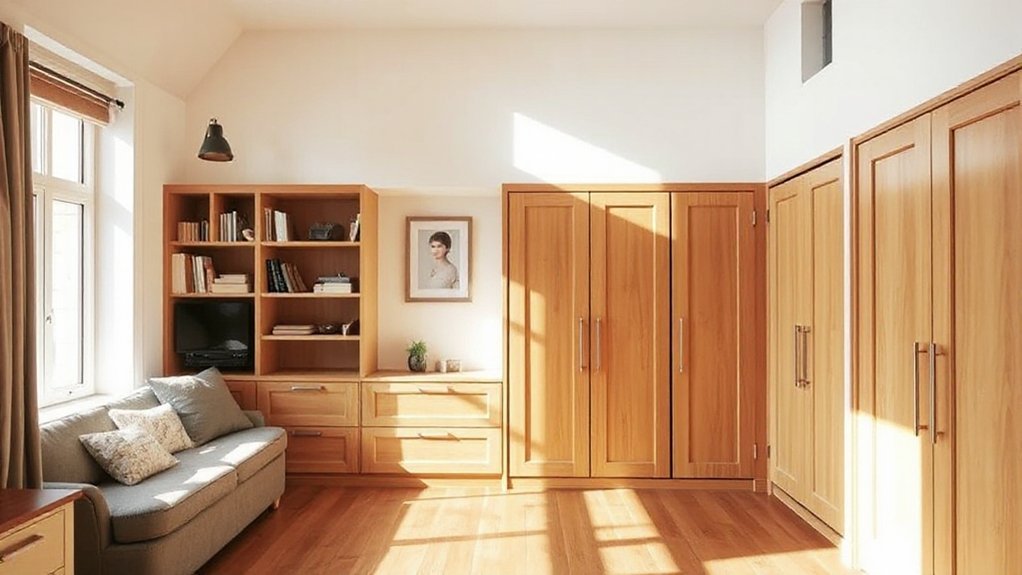
Think about smart storage placement that fits how you live, so every inch serves a purpose without clutter. Tap into hidden space treasures and multi-use surfaces to double up on function while keeping a clean look.
Start with quick wins—open the floor plan visually and tidy edges, then layer in practical, stylish solutions that feel effortless.
Smart Storage Placement
Want to boost order and perceived space with smart storage placement? Start by mapping high-traffic zones and choosing wall-mounted units to keep floors clear.
Opt for adjustable shelving and modular modules that adapt as your needs shift, so you get instant reconfiguration without rework.
Prioritize corners, alcoves, and under-stair nooks to reclaim hidden inches without sacrificing accessibility.
Use shallow, open-front drawers for daily items to reduce rummaging, while deep cabinets hide less-frequent belongings.
Choose a palette with Creative color schemes that visually lightens rooms and reinforces organized boundaries.
Tie in ergonomic design by placing often-used items at elbow height and grouping related tools together for intuitive finding.
Finish with clean hardware and soft-close hinges to sustain order with minimal effort.
Hidden Space Treasures
Hidden space isn’t a myth when you know where to look. You’ll spot quick wins in every room by treating nooks as storage, not dead zones. Start with hidden corners: shallow shelves along stair landings, under-stair cabinets, and built-in niches in hallways. Use door linings or slim drawer systems to reclaim vertical gaps without crowding.
Concealed compartments become your daily organizers: hidden pullouts in wardrobes, a bed frame with a built-in trundle, or a coffee table that conceals a stash of chargers and remotes. Label triggers clearly, but stay discreet with matching finishes.
Prioritize accessibility—don’t create traps for yourself. Crisp, modular bins keep items visible at a glance, while quiet hardware preserves clean lines. Your space feels larger, calmer, and incredibly efficient.
Multi-Use Surfaces Now
Ever wonder how a single surface can do double duty without clutter? You’ll design with purpose, choosing multi use surfaces that slip into your daily rhythm.
A kitchen island with hidden compartments becomes a quick prep area, a homework station, and even a charging hub, all in one.
In a small dining nook, a fold-down counter can become a coffee bar or a compact desk, keeping clutter off main surfaces.
Think vertical efficiency: a sturdy, pullout shelf offers extra staging for meals or crafts, then tucks away.
This is where a versatile workspace shines—clear, accessible, and ready.
Embrace clean lines, concealed storage, and adaptable edges to maximize both function and style.
Frequently Asked Questions
How Do I Measure Stairs for Under-Stair Storage Access?
To measure stairs for under-stair storage access, start with staircase dimensions and note the total rise, run, and tread depth.
Measure the vertical height under the lowest landing for clear under-stair clearance.
Check the door or hatch height you’ll need, plus any obstructions like stringers or handrails.
Mark access points at floor level and account for door swing.
Use these measurements to plan a snug, stylish shoe or bin pull-out that fits neatly.
Can Built-In Storage Improve Acoustics in Terraced Homes?
Yes, built-in storage can improve acoustics in terraced homes. You’ll implement practical soundproofing solutions by integrating dense, insulated panels and vibration-damping supports within shelves or cabinetry.
Pair this with acoustic paneling on walls near noisy rooms to absorb mid- and high frequencies. Choose finishes that stay stylish—soft, matte panels, sleek edge details, and hidden mounting.
The result: calmer spaces, less echo, and storage that feels purposely crafted for everyday living.
What Is the Cost Range for Built-In Storage Projects?
You’ll pay roughly $1,000 to $3,000 for custom shelving and storage compartments, depending on materials, finish, and complexity.
For higher-end bespoke units, budget $4,000–$8,000+.
You can trim costs with modular designs, standard finishes, and DIY install.
If you want maximum impact, invest in solid wood shelving and smart storage compartments that fit awkward nooks.
You’ll get cleaner lines, better durability, and a more organized space, tailored to your needs.
Are There Height Limits for Mezzanine Constructions?
Yes, there are height limits for mezzanine constructions. You’ll need to check local Building height regulations, which determine ceiling clearance, stair access, and guardrail standards.
For Mezzanine safety, guarantee guardrails meet code, and that structural supports handle load requirements. Before starting, confirm permits, floor-to-ceiling restrictions, and fire-safety rules.
You’ll often find practical, stylish solutions by optimizing room geometry, choosing low-profile mezzanines, and coordinating with engineers to stay compliant and safe.
How Do I Avoid Losing Natural Light With Storage?
Yes—you preserve natural light by smart window placement and light-friendly storage layouts.
Position tall storage away from primary light sources, and use shallow, recessed cabinets or open shelving to keep sightlines clear.
Favor glass-front or mirrored doors to reflect daylight.
Consider under-stair niches with reflective backs, and skylight-adjacent shelves to avoid blocking beams.
Natural light preservation remains your goal; choose finishes that bounce light and avoid heavy, opaque panels.
Conclusion
You’ll find built-in storage isn’t just clever—it’s transformative, especially in terraced and semi-detached homes. If a theory claims small spaces breed chaos, test it by reclaiming every inch: hidden compartments, mezzanine lofts, and multi-purpose furniture prove otherwise. When designed with clean lines and thoughtful lighting, you’ll gain order without sacrificing style. The truth: intentional storage creates airy rooms, easier living, and a sharper home aesthetic. Start with under-stair nooks, then scale up—your space will thank you.
About the Author