You’re designing for small spaces where every inch counts, so you’ll want vertical storage, hidden compartments, and foldable pieces that adapt as you live. Use light palettes and reflective surfaces to boost brightness, and plan traffic flow with subtle zoning to keep rooms calm. The trick is to test ideas in real life with a simple setup first, then push boundaries—but you’ll want to see what comes next when clutter-free design meets real constraints.
Key Takeaways
- Plan a simple one-page layout that zones living, dining, and work, optimizing traffic flow and flexible boundaries.
- Maximize vertical storage with tall shelves, hidden compartments, and floor-to-ceiling panels to keep surfaces clear.
- Use multi-functional, foldable furniture with integrated storage to adapt spaces without clutter.
- Boost perceived space with bright, cool neutrals, high-reflectance finishes, and mirrors to bounce light.
- Add budget-friendly upgrades like labeled storage, updated hardware, and dimmable lighting to refresh a small home.
Define Your Small-Space Needs: A Quick Assessment Plan
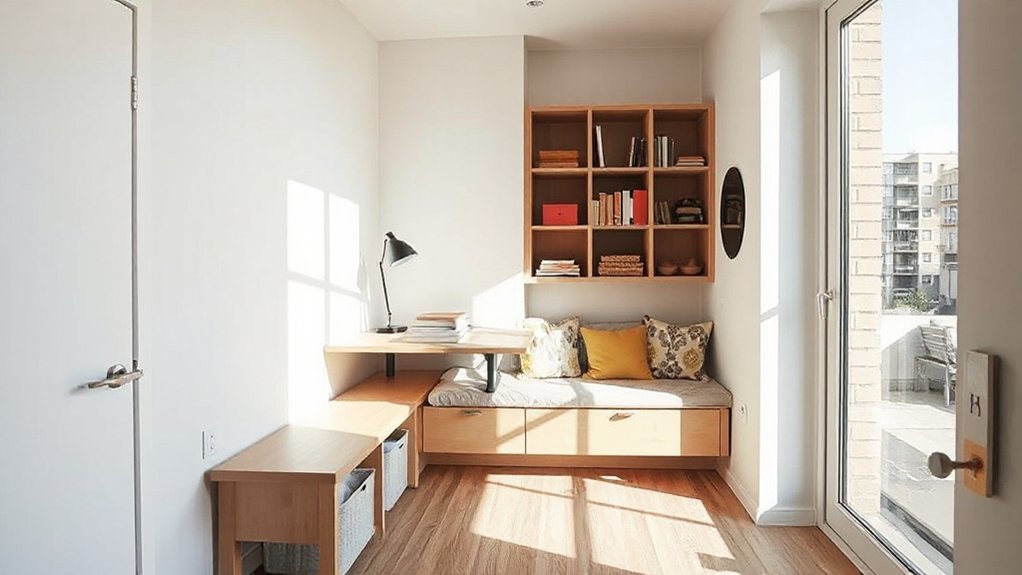
To quickly assess what a small space needs, start by listing the activities you’ll do most and the items each activity requires. This is your Space planning anchor.
Next, perform a quick Needs assessment: note essential vs. optional items, and identify overlaps between functions.
Measure available wall, floor, and corner areas, plus doorways and clearances, so you can map real constraints.
Prioritize multiuse furniture and compact storage that suits every task you perform daily.
Consider traffic flow: can work zones share surfaces without bumping elbows or bags?
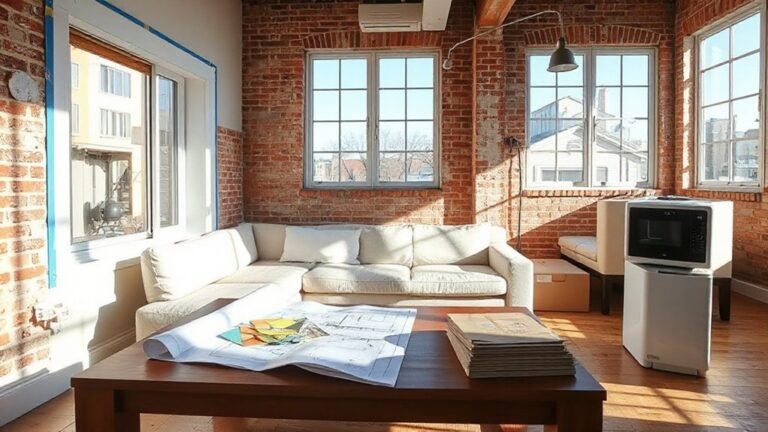
Create a one-page plan with zones for living, dining, cooking, and workspace, marking electrical outlets and lighting.
Revisit thresholds after a week of living with the plan; adjust to keep spaces agile, organized, and inviting.
Vertical Magic: Tall Storage and Shelving for Tiny Footprints
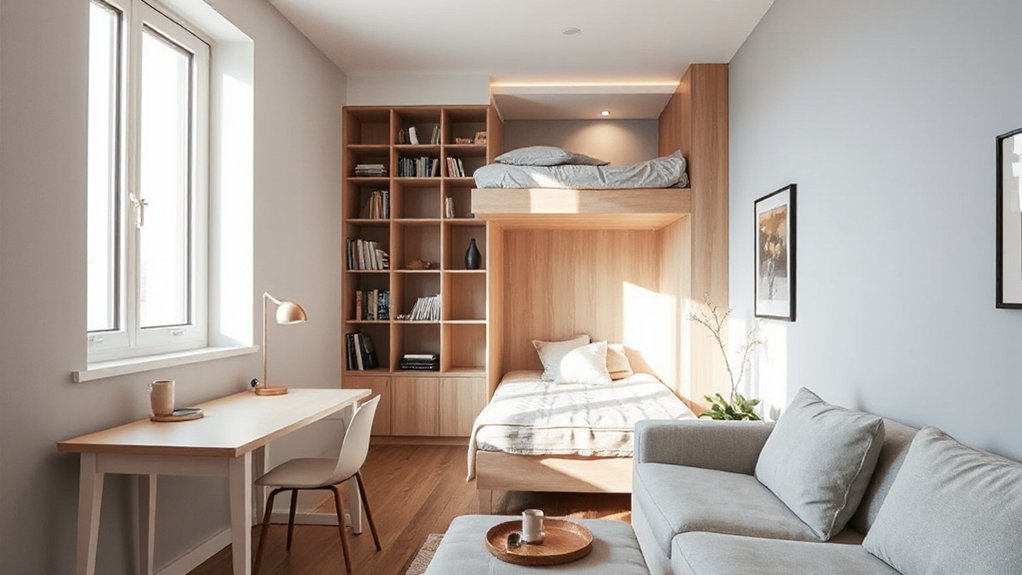
Vertical storage isn’t just tall—it’s smart. You’ll maximize every inch by commanding vertical space with deliberate, modular shelving and high-mounted rails. Think open towers for books, slim cabinets in doorways, and narrow niches above doorframes where clutter never gathers.
Prioritize shelf organization by grouping items by use, weight, and frequency, then label zones so you reach what you need in seconds. Use staggered heights to accommodate varying items, and anchor tall units to the wall for stability.
Integrate hidden storage behind doors or in pull-out drawers to keep a clean profile while preserving capacity. Choose lightweight, durable materials that resist warping and optimize impact with soft-edge finishes.
- Install floor-to-ceiling panels with adjustable shelves
- Create labeled tiers for daily essentials
- Add mounted hooks and slim baskets for tiny items
Multi-Functional Furniture That Frees Floor Space
Ready to free up floor space? Explore foldable surface solutions and hidden storage tactics that unleash utility without crowding your room.
You’ll see how smartly designed surfaces fold away and camouflaged compartments stay out of sight yet instantly accessible.
Foldable Surface Solutions
Foldable surfaces turn small spaces into usable work zones without sacrificing floor area. You’ll transform nooks into productive zones by choosing sturdy, purpose-built options that lock flat when not in use.
Prioritize mechanisms that feel instant, reliable, and quiet, so your workflow never hinges on setup time. When you need a surface, pull out, tilt, or unfold with confidence, then stow just as cleanly.
Consider height-adjustable options to suit seated or standing tasks, and look for integrated storage to keep pens, cables, and chargers accessible yet tidy.
For a cohesive look, select finishes that complement your furniture and walls, ensuring a seamless flow.
Foldable furniture and collapsible surfaces empower flexible living without crowding your footprint.
- Compact wall-mounted desk with magnetic accessories
- Drop-down dining table that tucks behind seating
- Foldable console workstation with cable management
Hidden Storage Tactics
Hidden storage isn’t an afterthought—it’s a design lever that keeps floors clear while boosting function. You’ll use multi‑functional furniture to reclaim real estate without compromising comfort. Choose pieces with hidden compartments for seasonal items, manuals, or chargers, so clutter stays out of sight but reachable.
Lift-top coffee tables, ottomans, and benches become micro‑lockers, each solved with purpose rather than bulk. Concealed drawers inside bed frames or sofa bases store linens, socks, and small gadgets, while still offering full usability.
Integrate vertical crates or wall cabinets that read as art, not storage eyesores. Prioritize accessible hinges and soft‑close mechanisms to reduce noise and wear.
Label zones lightly, so you know where every hidden space lives, maximizing efficiency and flow.
Light, Bright Palettes to Expand Visual Space
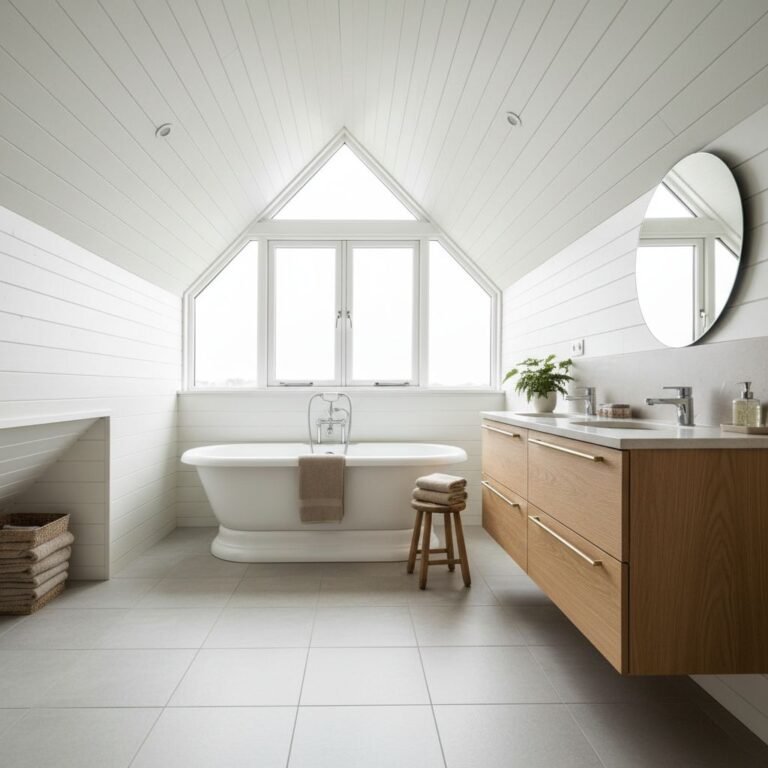
Bright palettes make small rooms feel larger by reflecting more light and creating visual airiness. You can pair whites with pale accents or cool neutrals to amplify natural daylight.
You’ll apply color psychology subtly, using airy tones to foster calm and perceived space, while keeping contrast deliberate with trim and furnishings. Choose paint techniques that maximize glow, like eggshell or semi-gloss on trim for defined edges and matte walls to reduce glare.
Light colors should dominate walls, ceilings, and large surfaces, with small, purposeful pops of color in accessories to avoid visual clutter.
- Use high-reflectance finishes on walls and ceilings to bounce light.
- Test warm vs. cool undertones in daylight before committing.
- Reserve darker accents for focal points, not whole rooms.
Smart Zoning for Open-Concept Living
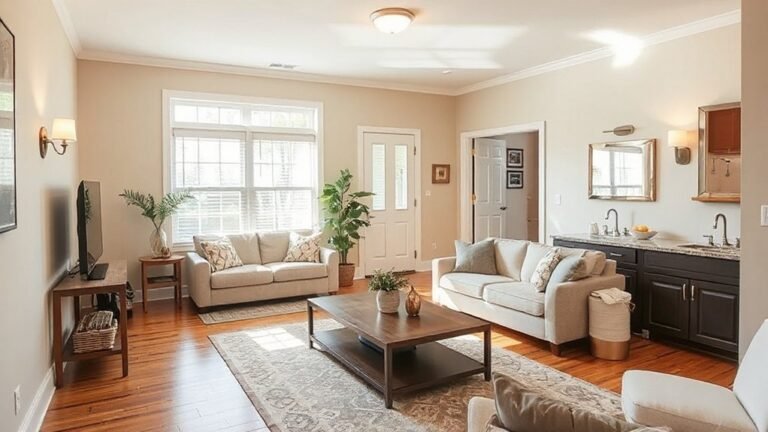
Smart zoning in an open-plan space hinges on clear, intentional boundaries that don’t close the room off. You’ll guide flow with subtle cues: furniture placement, color shifts, and lighting zones that suggest distinct areas without walling them in.
Use open concept zoning to create purpose—living, dining, and workspace—while preserving sightlines and adaptability. Place a sofa or bookcase as a visual divider, not a barrier, so conversation remains continuous.
Area rugs anchor zones, while accent lighting highlights function, not disposition. Define spatial separation with ceiling-height curtains, sliding screens, or wall panels that can retract when you crave openness.
Keep lines simple, scale balanced, and storage accessible; avoid clutter that erases distinctions. The goal: cohesive, flexible spaces that feel deliberate yet breathable.
Hidden Storage Ideas That Keep Rooms Open
Effortless hidden storage keeps rooms open by tucking essentials away without interrupting flow. You’ll reveal practical spots that blend in, so furniture earns its keep without feeling crowded. Use concealed compartments and hidden drawers to reclaim surface real estate without adding bulk.
Build versatility into every piece, choosing pieces with dual purposes and quiet seams that don’t shout organization. Focus on accessibility, so you can grab what you need without hunting.
Prioritize integration with your decor, not disruption of it, and you’ll maintain an airy feel while expanding capacity.
- Built-in ottoman tops with hidden storage for blankets and chargers
- Bed frames with concealed compartments beneath the box spring
- Coffee tables featuring hidden drawers and lift-top sections
Optimize Traffic Flow: Doors, Nooks, and Clear Pathways
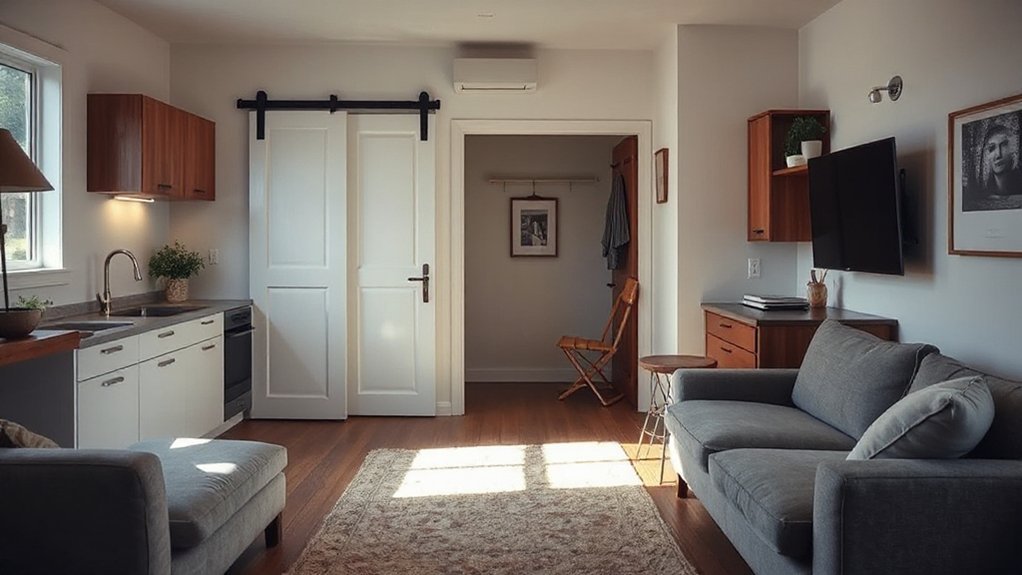
Efficient traffic flow starts with clear, unobstructed chokepoints and intuitive movement through doors and hallways. You’ll map traffic pathways first, then tailor furniture placement to preserve open sightlines and easy turns.
Favor low-profile pieces against walls, avoiding bulky centers that trap movement. Keep door swing clear and doors fully functional: consider pocket or sliding doors where space is tight.
Create defined corridors by aligning rugs and furniture edges, not overlapping pathways. Nooks should invite use without interrupting flow; pair seating with concise clearance to prevent bottlenecks.
Use soft thresholds or mats to signal progression between zones, not barriers. Prioritize flexibility: modular seating and movable ottomans adapt to hosting, daily routines, or sudden needs.
Regularly re-evaluate paths after rearrangements to maintain smooth, continuous circulation.
Window and Mirror Tricks for Airy Light
You can brighten any room by strategically placing mirrors to bounce light without clutter. Maximize natural light with thoughtfully positioned windows and unobtrusive treatments that keep sightlines open.
Try simple window placements and mirror angles to create an airy, awake feel throughout small spaces.
Brighten With Mirrors
Mirrors and windows aren’t just decorative; they’re practical light amplifiers. You’ll brighten tight rooms by smartly using reflective surfaces and careful mirror placement to double the perceived space.
Position big mirrors opposite windows to bounce daylight deeper, and angle narrow mirrors to reflect hallway light into living areas.
- Mirror placement: place near entryways and desks to extend sightlines and reduce shadowed corners
- Prioritize surface quality: choose clean, framed or frameless designs that minimize glare while maximizing brightness
- Layer reflections: combine wall-mounted, cabinet, and decorative mirrors to create multiple light sources without clutter
With thoughtful layout, you create airy ambiance that feels bigger, cleaner, and more energized, while keeping every square inch purposeful.
Maximize Natural Light
Natural light can redefine a small space, so focus on smart window and mirror placement that amplifies what you already have. You’ll optimize existing openings by selecting clear or low-tint glass, framing views with deliberate sightlines, and keeping sills uncluttered.
Use mirrors strategically to bounce daylight from windows onto darker corners without creating glare. Prioritize window treatments that maximize brightness: sheer fabrics, minimal visible frames, and rollers that disappear when not needed.
If possible, schedule skylight installation in rooms lacking natural light to introduce overhead brightness without enlarging the footprint. Keep reflective surfaces angled toward productive zones, not walls, so light feeds task areas and reduces electric use.
Maintain clean, simple lines to preserve airy space while enhancing perceived size.
Window Placement Tricks
Ever wondered how tiny windows can punch above their weight in a small room? You optimize light by smart placement and reflective surfaces. Position windows to align with traffic lines and focal points, never behind furniture blocks.
Use mirrors opposite sources of light to bounce daylight deeper, expanding perceived space.
Choose window treatments that fade into the wall when open, or that stack neatly to avoid bulk. Curtain placement should avoid heavy hems that steal headroom; opt for slim rails and crisp edges.
Consider transoms above doors to invite extra glow without crowding walls.
Small-scale choices compound: framing, glass, and finish matter as much as size.
- Place windows to mirror angles and line of sight
- Use mirrors opposite light sources for depth
- Select curtain placement that minimizes bulk and maximizes openness
Quick Budget Upgrades With Big Impact
Small-space upgrades don’t have to break the bank. You can pack big impact into simple, practical moves. Start with budget friendly updates: swap dated hardware on cabinets, faucets, and doors for sleek, affordable alternatives that sharpen lines without a full remodel.
Next, reconfigure lighting to redefine scale; add dimmable LEDs and under-cabinet strips to brighten work zones and create illusion of space.
For quick decor swaps, swap throw pillows, rugs, and curtains in light, neutral tones to refresh a room without heavy investment.
Declutter strategically; use vertical storage, double-duty furniture, and hidden bins. Refresh mirrors or a compact wall mirror to bounce light.
Finally, refresh air and scent with a low-cost, natural diffuser. Small changes compound into a noticeably larger, more functional space.
Personalizing a Compact Home Without Compromise
You’ll tailor a compact home with intention, blending purpose with your daily routines. Style meets function when every detail earns its keep and reflects you without clutter.
Start by pairing meaningfully chosen pieces with smart storage, so personality shines without compromising space.
Personalize With Purpose
Personalizing a compact home isn’t about overhauling the layout; it’s about choosing purposeful details that reflect your life. You shape a space by layering meaning, not clutter, and you prioritize items that serve daily needs while showcasing taste. Let artistry meet function with thoughtful touches that are easy to update.
Focus on how a room sounds and looks, balancing quiet zones with expressive accents. Use smart, compact storage to keep surfaces clear, letting personal collections tell your story. Embrace flexible furniture that adapts as you change routines.
Artistic expression and acoustic treatment become fundamentals, not afterthoughts, guiding color, texture, and materials.
- Curate a rotating gallery of meaningful pieces on a single wall
- Choose textiles and finishes that soften acoustics while adding character
- Integrate multipurpose, hidden-storage furniture for clean, purposeful spaces
Style Meets Function
You personalize a compact space by selecting artistic decor that reflects you without overwhelming sight lines. Choose multifunctional furniture that stays tidy, then layer in cozy textiles to inject warmth and texture.
Prioritize cohesion: limit palettes to two or three tones, and repeat accents across rooms to unify small areas. Use wall-mounted storage and slim profiles to free floor space, keeping walkways clear for flow.
When mixing patterns, orient them by scale and temperature, ensuring contrast rather than clutter. Incorporate lighting that adapts—task, ambient, and accent—to change mood with minimal furniture changes.
Finally, document your edits; a simple checklist keeps personalization intentional and scalable.
Frequently Asked Questions
How Can I Assess My Exact Small-Space Needs Quickly?
You can assess your exact small-space needs quickly by mapping daily tasks and measuring how long you spend on each. Prioritize multifunctional furniture that replaces single-use items, and plan vertical storage to free floor space.
Track one week of routines, note annoyances, then test a scaled layout. If a solution saves time or reduces clutter, keep it. Iterate with quick swaps, staying flexible, and you’ll reveal precise limits and opportunities in minutes.
What Are Budget-Friendly Hidden Storage Ideas I Missed?
Hidden compartments are easier than you think, and they save space fast. You should look into under stair storage options, wall-mounted desks with secret drawers, and voice-activated ottomans that lift to reveal hidden bins.
For budget-friendly ideas, repurpose crates, use hollow coffee tables, and add magnetic strips in closets. You’ll gain usable vertical space and clutter control, with minimal investment and maximum impact on daily organization in tight homes.
Which Furniture Pieces Maximize Flexibility Without Clutter?
You should pick multi functional furniture and modular storage pieces that adapt as your space changes. Choose a sofa with built‑in storage, a bed frame with drawers, and a coffee table that folds into a desk.
Add modular storage cubes that stack or reconfigure, and a wall‑mounted folding desk for flexibility. Keep lines clean, avoid excess decor, and label zones so each piece serves multiple roles without clutter.
How Can I Balance Privacy With Open-Concept Layouts?
You can balance privacy with open concepts by carving Privacy zones within your layout and using Open partitioning to define areas without walls. Start with a clear traffic flow, then slide screens, shelving, or curtains to create flexible zones you can reveal or conceal.
Use light, color, and furniture placement to soften boundaries. You’ll maintain openness while offering intimate corners, functional workspaces, and acoustic dampening where you need it most.
What Decluttering Habits Boost Space Perception Daily?
A daily decluttering habit that boosts space perception is starting with a minimalist mindset and sticking to clutter free routines.
You’ll put away items after use, limit new purchases, and schedule a 5-minute tidy-up each evening.
Use visible storage, returnables first, and digitalize where possible.
This practical pace keeps surfaces clear, reduces decision fatigue, and makes rooms feel larger.
Maintain momentum by reviewing what’s essential weekly and discarding what isn’t.
Conclusion
In small spaces, bold simplicity meets clever restraint. You carve storage from walls, not floors, letting clutter vanish into vertical horizons. You fold, stack, and hide so daily living stays expansive, like a room that expands as you step in. Yet you design with intention, not sacrifice—bright colors and mirrors amplify light, while smart zoning keeps flow calm and purposeful. The room feels larger because you’ve traded cramped corners for honest rules: function first, space follows.
About the Author