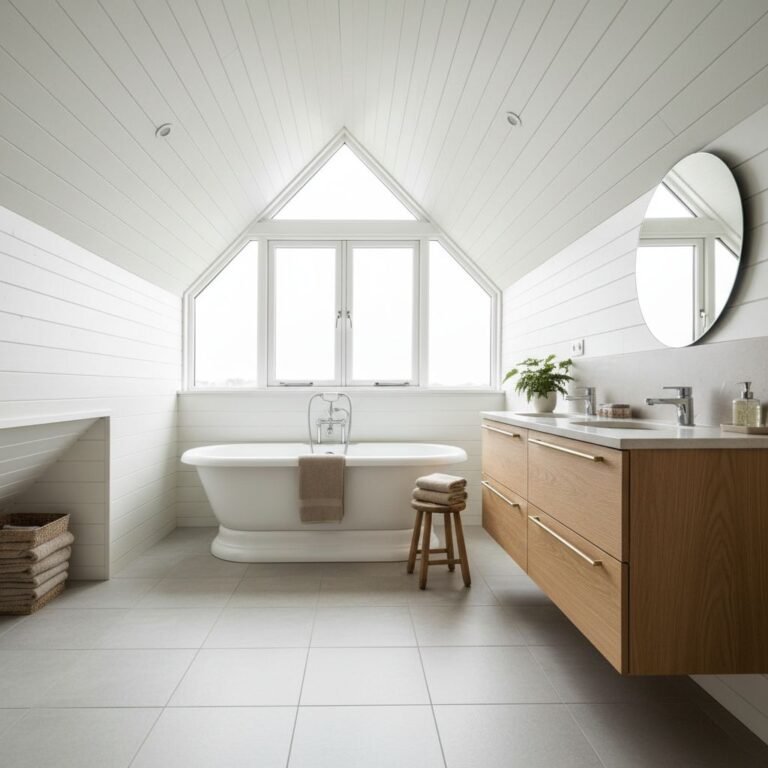
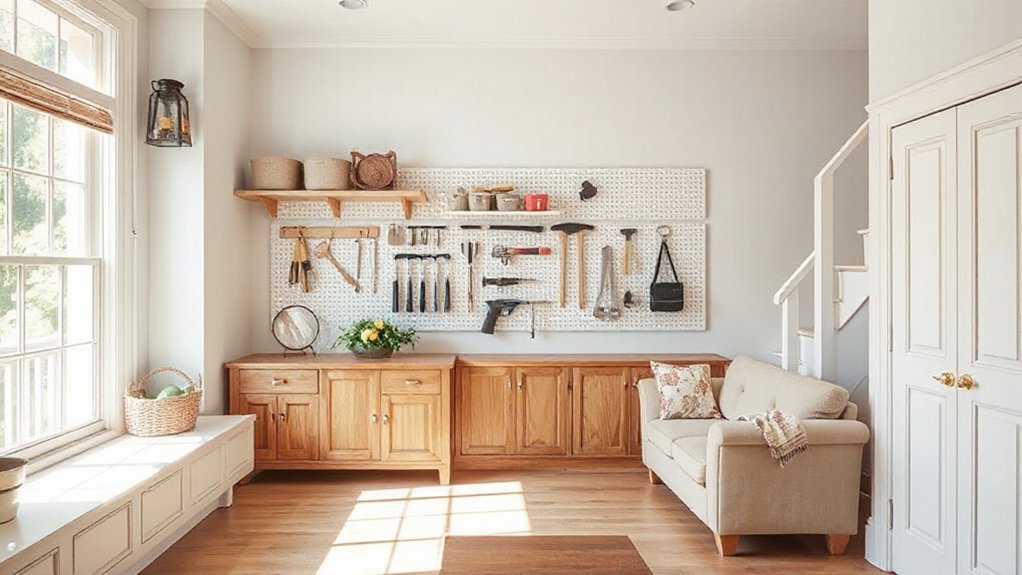
Like a well-placed keystone in an arch, smart storage holds everything together without tearing apart your space. You’ll scan every room for quick wins and vertical real estate, then pick the moves that fit your vibe and budget. From tall shelves to hidden compartments, each choice should feel practical, not a renovation. Ready to map out what actually frees up room and keeps clutter out of sight? Let’s start with a plan that works for you.
Key Takeaways
- Audit existing spaces for underused nooks and rotate seasonal items to free pathways without structural work.
- Use vertical storage like pegboards, tall pantry towers, and ceiling-supported shelves to maximize space.
- Add multi-purpose furniture with hidden storage, such as storage ottomans or lift-top coffee tables.
- Install shallow wall shelves, corner nook units, and over-the-door organizers for discreet, accessible storage.
- Maintain and refresh storage systems regularly with labeled containers, standardized sizes, and a simple weekly upkeep routine.
Audit Your Space for Hidden Storage and Quick Wins
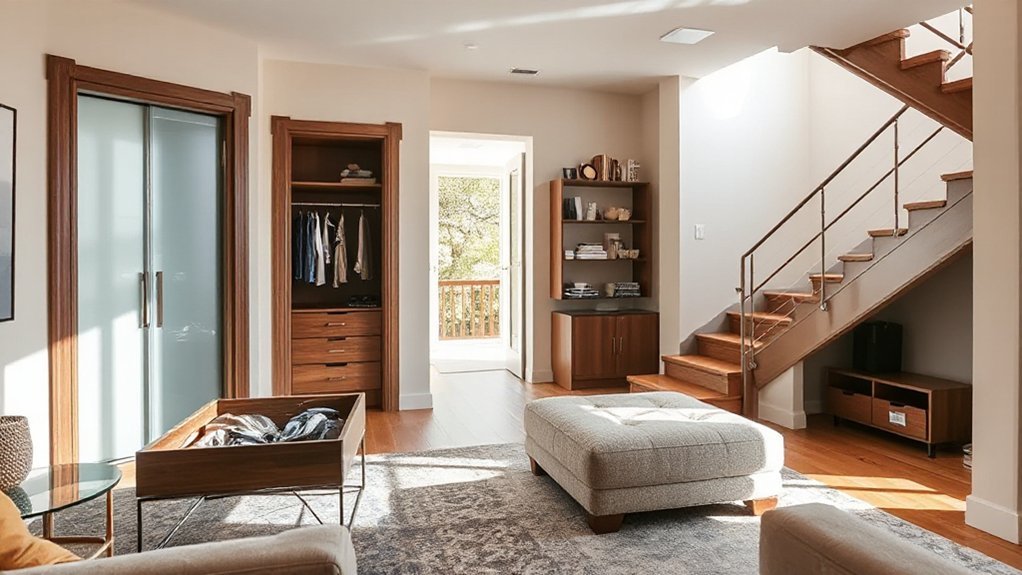
Start by surveying each room for underused nooks, gaps, and everyday clutter magnets. You’re doing a rapid clutter assessment to identify where small changes yield big gains. Look behind doors, under furniture, and atop shelves for flat spaces begging for micro-storage. Favor solutions that don’t require tools or major disruption, like bins, baskets, organizers, and label makers.
Prioritize high-traffic areas first to prevent repeat clutter cycles. Narrow gaps between furniture and walls by sliding items to create breathing room and visually calmer zones. Note items you never use and consider rotation or seasonal storage to free up frequent pathways.
Use the findings to guide space optimization decisions, focusing on functional layouts, accessible containers, and a practical command of daily clutter.
Vertical Storage Solutions That Free Up Floor Space
Vertical storage can dramatically free floor space by lifting items off the ground and using previously unused wall or ceiling real estate. You optimize every inch by selecting vertical racks, pegboards, and ceiling-supported shelves that keep essentials within reach.
Prioritize systems that don’t require major renovation, like tall pantry towers, wall-mounted racks, and modular units that can be reconfigured as needs change.
Use underbed compartments to convert bed space into organized storage for seasonal items, clothing, or linens without encroaching on living areas.
Hanging basket organizers provide accessible, visible storage for snacks, tools, or craft supplies, freeing counter and drawer space.
Aim for consistent labeling, accessible heights, and clear paths to prevent clutter buildup while maintaining quick access to daily items.
Multi-Purpose Furniture That Hides Storage Neatly
Multi-purpose furniture blends function with storage, letting you tuck away belongings without sacrificing surface area or style. You’ll find ottomans, coffee tables, benches, and beds that conceal items behind hinged lids, drawers, or hollow cores. Choose pieces with durable construction and soft-close hardware to keep everyday use quiet and smooth.
Look for hidden storage solutions that align with your room’s scale, avoiding bulky silhouettes in tight spaces. A storage ottoman can host blankets while providing a sturdy seat; a lift-top coffee table reveals magazines and remotes without clutter. Benches with built‑in bins offer seating plus seasonal gear storage.
In each case, prioritize accessibility and consistency with your decor to maintain a clean, open feel. multi purpose furniture, hidden storage solutions.
Clever Shelving and Wall Nooks for Easy Access
Hidden shelf solutions keep essentials within reach without clutter.
Corner nook storage and floating wall compartments maximize wall space while preserving floor area.
Ready to explore practical layouts that blend accessibility with clean, streamlined design.
Hidden Shelf Solutions
A clever shelf setup can transform tight spaces, letting you store more without sacrificing floor area. Hidden shelf solutions keep items accessible yet discreet, so you maintain clean sight lines.
Start with shallow wall shelves that nest in crown molding or beneath cabinets, creating hidden storage without bulky fixtures. A secret compartment behind a faux panel or a bookcase back panel adds a surprising stash spot for small valuables or rarely used tools.
Use adjustable supports to tailor height for vertical stacks, freeing floor space for baskets or bins. Install magnetic or push-to-open latches for seamless fronts, avoiding handles that eat into your elegance.
Prioritize durable materials, moisture resistance, and easy cleanup to guarantee long‑term practicality.
Corner Nook Storage
Choose corner shelving units that fit snugly into the corner and blend with your decor, avoiding bulk. Install pull-out baskets or labeled bins for quick access to recurrent items, reducing digging through stacks.
Use vertical dividers for books, spices, or office supplies to keep surfaces clear. Keep cords tidy with cable clips and discreet organizers.
For ongoing efficiency, assign a dedicated zone for frequent items and label storage zones—this promotes effortless nook organization and minimizes clutter.
Floating Wall Compartments
Opt for floating shelves for open display and practical reach, or choose wall mounted compartments with doors to hide clutter. Mount at varied heights to create a visual rhythm and tailor to your daily routines.
Use shallow depths for small items, deeper bays for books or bins, and add corner or alcove units where walls meet for max footprint efficiency.
Secure sturdy supports and consider moisture- or heat-resistant materials in kitchens or bathrooms. Label bins or interior shelves to maintain order, and regularly reassess placement as needs evolve.
Tucking Storage Into Corners and Doors
Corners and doors aren’t dead space—they’re prime storage real estate. You’ll discover corner-clever solutions, door-forward organizing tips, and compact nook accessories that fit tight spaces without clutter.
Let’s explore practical ideas you can implement today to maximize every inch.
Corner-Clever Storage Solutions
There are smart ways to tuck storage into tight spots like corners and doors without adding bulk or costly remodels.
In corners, install shallow, pull-out trays inside a cabinet corner or use L-shaped shelving that fits the wall’s edge, maximizing unused space without crowding.
Doors aren’t just for hanging; add slim, over-the-door organizers or magnetic strips for small tools and spices.
For hidden needs, consider hidden compartments integrated into furniture, such as a bench with a hinged seat or a hollow ottoman.
Underfloor storage offers discreet options in baths or mudrooms, granting concealment with minimal footprint.
Use modular, stackable units to keep items organized and accessible, and label clearly so you don’t waste time digging.
Efficient design keeps rooms calm and clutter-free.
Door-Forward Organizing Tips
Door-forward organizing focuses on making doors do the heavy lifting, not your furniture. You’ll reclaim surface area by using door-mounted solutions that stay invisible until you need them. Think slim organizers, hooks, and over-the-door racks that create instant entryway storage without remodeling.
With door hacks, you can store keys, mail, and daily essentials where you already move through every day.
- Over-the-door racks for footwear, accessories, or cleaning supplies
- Hooks and small pouches for keys, mail, and tote bags
- Hanging organizers that maximize vertical space on pantry or closet doors
These strategies keep clutter contained and reachable, so you waste less time hunting items. Implement quickly, measure available door width, and choose moisture- and wear-resistant materials for longevity.
Compact Nook Accessories
Ever thought small corners and tight spaces could hide big storage gains? You can maximize every inch with compact nook accessories that slide, hinge, or hang where it’s easiest to reach. Think slim wall shelves, corner corner units, and over-door organizers that don’t crowd the room.
Use these tools to create purposeful storage without sacrificing floor area or style. Pair lightweight baskets with labels to keep items sorted, so you know exactly where things belong.
Choose cozy corner decor that blends with your existing palette to maintain a cohesive look. Prioritize modular pieces you can expand later, and install magnetic or pegboard panels for quick reconfigurations.
With practical placement, you transform nooks into hidden hubs of efficiency.
Budget-Friendly Organizing Systems That Scale
- Choose stackable bins and open shelving for flexible layouts
- Use labeled, uniform containers to speed retrieval and restocking
- Pick modular tools that snap together without specialty hardware
This approach keeps costs predictable and upgrades gradual. You’ll measure results, adjust configurations, and keep the footprint lean.
You’ll avoid waste, keep clutter out, and maintain easy access to essentials. The system remains scalable, affordable, and purpose-built for daily use.
Weekend Implementation Plan and Maintenance Tips
This weekend, you implement the plan you’ve built using stackable bins, labeled containers, and modular tools. Start by surveying active zones and marking high-traffic shelves for immediate reorganization.
Prioritize space optimization with compact stacking and vertical stacking where possible, keeping frequently used items at eye level. Set a simple maintenance cadence: 15 minutes weekly to recheck labels, purge duplicates, and adjust as needs shift.
Label each bin clearly and include a date for freshness, so you know when to refresh. Posture and safety matter; keep cords tucked and avoid overloading shelves.
Integrate aesthetics by choosing containers that match your decor and by aligning storage with the room’s color palette. Review quarterly, document tweaks, and refine the system for lasting reliability and cleaner visuals.
Frequently Asked Questions
How Can I Measure Available Hidden Spaces Accurately?
You can measure available hidden spaces accurately by starting with a plan and tools you trust. Mark wall cavities with a stud finder, then measure depth, width, and height in multiple spots.
Check behind baseboards, closets, and under stairs for hidden compartments. Use a steel tape for precision and keep notes.
Confirm any irregular shapes with a flexible measuring tape. Record results, and map out usable space before you install hidden compartments or wall cavities.
Which Shelving Depth Fits Narrow Door Frames Best?
A 12-inch depth often fits narrow door frames best, but you should check your exact doorway clearance.
For versatility, choose Slim profile shelves with adjustable brackets, so you can fine-tune spacing around hardware and molding.
If space allows, use a shallower tier near the hinges for clearance and a deeper tier where you have room.
You’ll maximize storage without crowding the door when you maintain a consistent, staggered arrangement.
How Do I Prevent Clutter Rebound After Organizing?
Declutter? Start with a system: designate zones, limit new items, and review weekly.
You prevent clutter rebound by enforcing a 24-hour rule for new purchases and treating each item as if it’s staying for good.
Practically, use labeled bins, consistent storage, and daily upkeep rituals.
This Decor organization approach keeps clutter management steady: you’ll see fewer detours, easier finds, and a calmer space.
Stay disciplined, and your routine becomes automatic.
Can I Rotate Seasonal Items Without Redoing Storage?
Yes, you can rotate seasonal items without redoing storage. Use a simple storage rotation plan: label bins with season names, keep a central inventory of what’s inside, and swap items twice a year.
Store Seasonal decor in accessible, clearly labeled bins near their season, so you pull the right set quickly. Keep a small checklist to confirm what’s included. This keeps clutter down and maintains a practical, orderly system for storage rotation.
Conclusion
Maximize every inch without turning your home into a construction zone. Start by auditing for hidden storage and quick wins, then lean into verticals, multipurpose pieces, and smart shelving. Don’t overlook corners, doors, and under-bed nooks. Use budget-friendly systems that scale as you go, and sketch a simple weekend plan to start. Ready to reclaim clutter with practical, proven strategies that preserve your style? Why wait to upgrade your space when the answer is right above you and around you?
About the Author