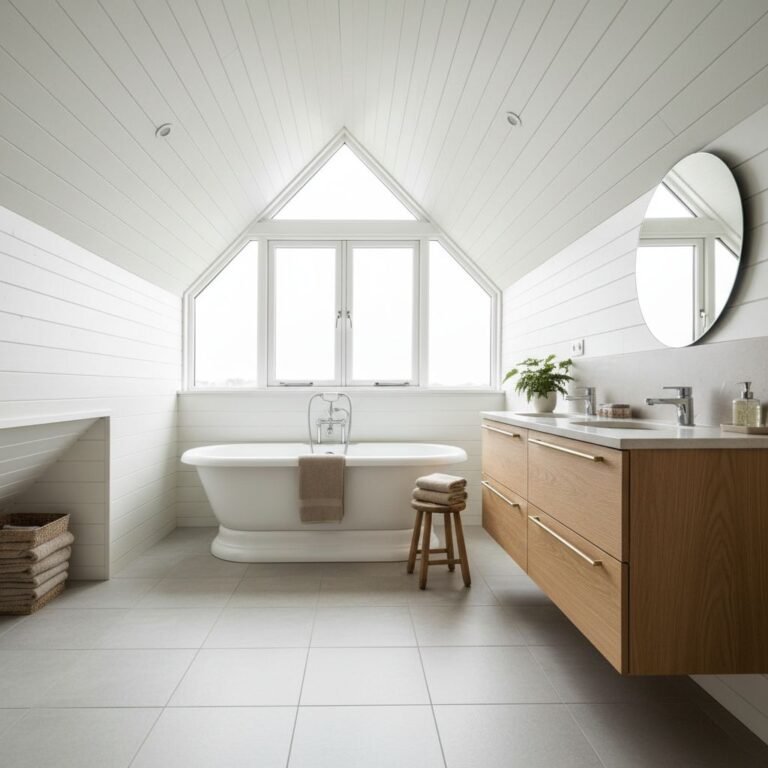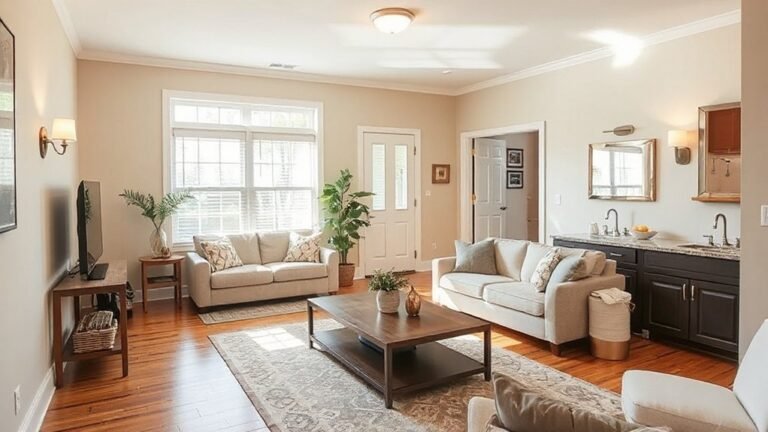
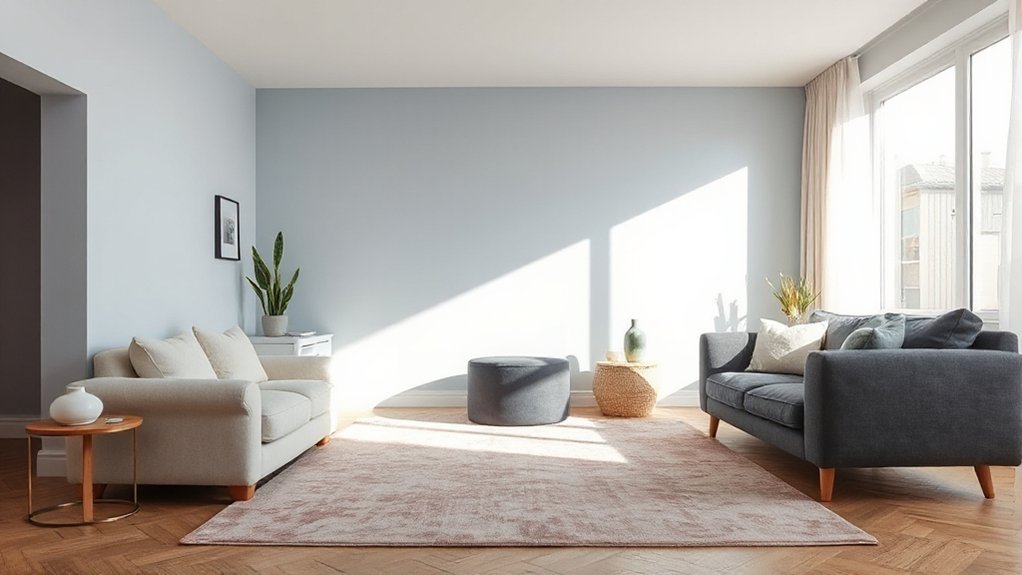
Colors can soothe or unsettle, yet the room you see isn’t just about shade—it’s about you living with it. You’ll want a mood-first approach that tests swatches in real lighting, under daily activity, so what you pick truly supports how you feel. Start with a foundation hue that feels right, then build with textures and finishes that subtly shift mood. Stay with me as we map zones and tweak until the space quietly supports well-being.
Key Takeaways
- Prioritize your personal emotional responses to colors over trends, using feelings to guide palette development and room purpose.
- Test swatches in real lighting and contexts to ensure colors evoke the intended mood throughout the day.
- Use foundation hues to support room activities: neutrals for calm, warm tones for sociability, with purposeful contrasts for focus.
- Consider finishes, textures, and lighting, as they shift color perception and emotional impact.
- Keep a mood-first framework: map emotional goals for each zone, document responses, and iterate to maintain alignment.
Colour Psychology in Interiors: Build a Mood-First Framework
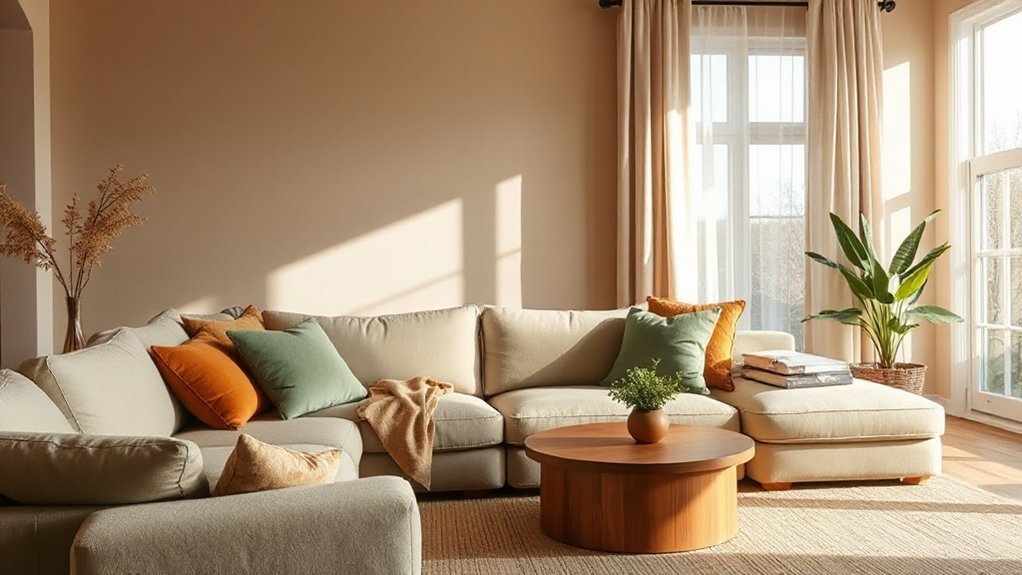
Colour psychology in interiors starts with a practical goal: design spaces that cue the right mood before any decor decisions. You map mood outcomes to color cues, prioritizing a mood-first framework over trend-chasing.
Observe how lighting, surface textures, and scale modify color perception, then test small swatches in context to confirm choices. You’ll define a targeted emotional arc for each room, aligning color choices with intended activities and behaviors.
Consider emotional resonance: how tones foster calm, focus, or warmth, and adjust brightness and saturation to sustain that effect. Acknowledge cultural associations that shape interpretation, applying palettes with intentional nuance rather than blanket scripts.
Document decisions, note reactions, and iterate. The framework becomes a practical tool for consistent, purposeful interiors.
Figure Out Your Everyday Living Zones
To shape rooms that support daily life, start by identifying your everyday living zones: where you work, relax, cook, dine, and sleep.
Begin with how each zone behaves: note typical light, noise, and movement patterns, then map how you flow from one zone to another.
Observe which tasks demand focus and which invite rest, and align color combinations to those needs.
Keep progressions simple to avoid cognitive clutter.
Consider materials and finishes that support your activities without competing signals.
Use color blocks sparingly to delineate zones, not overwhelm them.
Track emotional triggers during routine moments—quiet corners for reading, bright nooks for quick meals, soft hues by sleep areas.
This clarity guides purposeful choices without overthinking, ensuring spaces feel coherent and emotionally aligned.
Choose a Foundation Hue That Feels Right
Your foundation hue sets the mood, so start by choosing a color that feels right for the room’s purpose.
Remember that lighting can shift how that hue reads, so test it under different moments of the day.
Let your own color preferences guide you, while staying aware that mood and perception will shape how the space “reads” to you.
Foundation Hue Impacts Mood
Choosing a foundation hue that feels right sets the mood for every room you design, because the base color anchors perception, light, and energy. You’ll notice how neutral tones steady activity, while warm hues invite sociability and coziness.
Cool foundations suppress urgency, sharpening focus and calm. The mood effect isn’t random: color symbolism and cultural influences shape responses, guiding your instinct toward resonance.
Pick a hue that aligns with room function and personal preference, not fleeting trends. Test swatches under typical lighting, observing how patience, appetite, or alertness shift through the day.
A foundation hue is a mood scaffold; small shifts yield measurable differences in atmosphere. When you commit to a consistent base, you create coherence, reduce decision fatigue, and ease future accents.
Lighting Elimits Perceived Hue
Lighting can skew how a foundation hue reads, so test colors under the same fixtures you’ll use most. When you evaluate shade choices, observe how the light’s quality—whether warm or cool—shifts the hue perception.
You’ll notice subtle shifts across wall, trim, and accent tones as natural pigment reflects differently from daylight versus artificial sources. Use controlled comparisons: place two or three swatches side by side, under the exact lighting you intend, and note the momentary impressions as you move around the room.
Document results with simple notes, avoiding grand conclusions before you’ve tested consistently. The goal isn’t perfection, but a stable feel. Base your choice on steady readings rather than momentary impressions, ensuring the foundation hue remains truthful under everyday lighting.
Personal Hue Preferences Matter
Color comfort matters most: pick a foundation hue that feels right to you, not just what looks trendy. You’re guided by personal preferences, not by flashes of fashion. Start with a baseline you can live with daily, then test it in real spaces: walls, upholstery, and natural light.
Observe how a hue shifts with different times of day, and how it blends with your existing furniture. Color compatibility isn’t about matching every piece perfectly; it’s about harmony across textures, temperature, and mood.
Prioritize pigments that reduce visual fatigue and support your activities. If a shade feels too aggressive, soften it with a warmer undertone or add an accent color you genuinely enjoy.
Trust your eye, then confirm with small swatches and practical usage.
Lighting and Colour: How Light Changes Perception
Light quality shifts how you perceive color, making hues feel warmer, cooler, or more neutral depending on the source.
As brightness changes, the same wall can read differently in tone, so the interaction between brightness and color matters for mood and clarity.
Approach lighting with intention: test how your chosen colors respond under different intensities and adjust to preserve the intended perception.
Light Quality Shifts Perception
As you adjust the quality of illumination, the color you see shifts along with it, altering how spaces feel and function. You notice your eyes render hues differently under cooler versus warmer light, and that affects mood, perceived cleanliness, and depth.
Natural light changes throughout the day, pulling color toward the sky’s coolness or sunset’s warmth, while artificial sources anchor color to their own spectral bias.
Consider color temperature when selecting paints and furnishings: cooler temps sharpen contrast and briskness, warmer temps soften edges and invite coziness.
In mixed rooms, be aware that boundary tones can drift as illumination shifts, so test palettes under real lighting scenarios.
The goal is steady perception, where shade choices remain reliable across moments and tasks.
Brightness Tone Interaction
In bright rooms, brightness levels interact with tonal balance to shape how we read a color. You’ll notice that higher light makes midtones pop, while shadows mute them, shifting perceived saturation without changing the pigment.
This brightness-tone interaction matters when selecting palettes for tasks and mood. Sunlight interaction alters the same swatch across the day, so a color that seems crisp under noon sun may feel cooler or warmer at dusk.
Consider house-wide lighting plans that distribute light evenly to prevent abrupt shifts in color perception. Use tests on wall and decor surfaces at different times to gauge colour saturation and readability.
Finishes and Textures That Subtly Shift Mood
Texture and finish quietly influence mood without shouting first. You notice how subtle texture changes shape perception: a matte wall softens light, a silk curtain adds movement, a wool rug grounds a room.
Finish nuances alter perceived temperature and depth, guiding focus without altering color. You can pair smooth with textured surfaces to create balance, or layer tactile materials to invite touch without overdoing it.
Textural contrasts help define zones—rug versus floor, upholstery versus timber—without screaming intent. Consider polish on hardware, burnish on wood, and solvent-free coatings that feel natural.
Your choices should remain purposeful: avoid busy textures that clash with dominant shades. When done thoughtfully, these finishes gently shift mood, supporting calm, focus, or energy through subtle, measurable cues.
Pair Hues for Harmony: Calm, Focus, and Energy
Pairing hues for harmony builds on the quiet mood shifts from finishes and textures, guiding how calm, focus, and energy feel in a room. You choose hues to support functions, not just aesthetics, balancing perception with usability.
Complementary color schemes create vivid contrast that energizes zones without overpowering them; use calm neutrals as anchors to prevent fatigue. For focus, apply a restrained palette with cool undertones and minimal saturation, letting small accents carry intent.
Monochromatic harmony offers cohesion by varying lightness and texture within a single hue, reducing visual noise while preserving depth.
Consider proportion, not just color, and test how lighting shifts tone through the day. Document responses, adjust gradients, and maintain consistency across walls, furnishings, and soft goods for lasting harmony.
Accent Colors to Boost Energy and Focus
Accent colors can immediately sharpen energy and focus without overpowering a room. You’ll want small, intentional pops rather than sweeping changes, so choose hues that create clear color contrast against your base tones.
Place high-energy shades in areas where you need alertness—near desks, task corners, or entryways—while keeping surrounding walls muted to prevent visual fatigue. Use accent lighting to reinforce the effect: cooler whites or daylight LEDs can make the colors feel crisper and more awake.
Limit the number of accent colors to two or three to avoid chaos, and test in natural light across the day. Consider finishes with subtle sheen to catch light without glare, ensuring the effect remains purposeful rather than distracting.
Colour Psychology by Room: Living, Kitchen, Bedroom, Bath
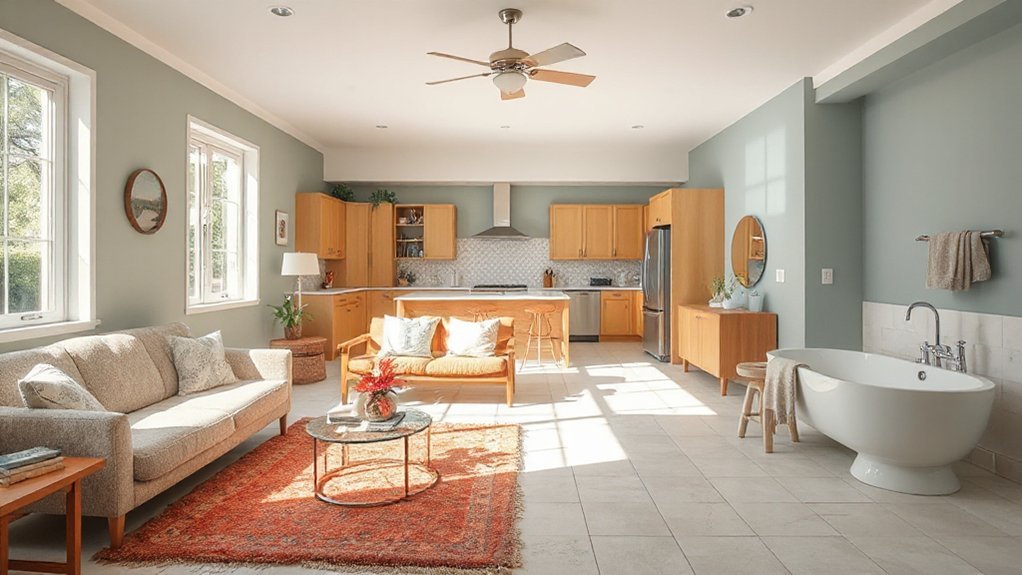
In the living room, you’ll notice colors that promote a balanced vibe and steady conversation, guided by the Living Room Vibe Colors you choose.
In the kitchen, the Kitchen Mood Palette helps you optimize focus and efficiency for daily tasks.
For the bedroom, the Bedroom Sleep Prompts map directly to relaxation cues that support restful nights.
Living Room Vibe Colors
When choosing living room colors, start with the vibe you want to feel: calm and cozy, energetic and social, or focused and stylish. You’ll tune shade choices to support that atmosphere, then test in real lighting to confirm it holds.
Observe how color symbolism shifts with lighting, textures, and furniture; a hue can read differently by day and night. Pair warm tones with cool accents to balance energy, or soften bolds with neutral grounding tones for calmness.
Consider cultural interpretations: some colors carry different meanings across communities, so you’ll adapt palettes to your home’s story without overshadowing function.
Practical picks include muted bases, with purposeful pops for contrast and focus. Finalize a palette that sustains comfort, cohesion, and daily usability.
Kitchen Mood Palette
A kitchen mood palette blends function with atmosphere, using color to guide appetite, speed, and focus. You’ll notice how warm neutrals calm prep zones while cooler greens and blues elevate concentration during tasks like chopping.
Color theory shows contrast boosts clarity, so pair high-contrast accents with soothing bases to avoid visual fatigue. Psychological effects matter: saturated yellows energize quick tasks, but soften with matte textures to prevent nerve strain.
Airy whites expand small layouts, helping you move efficiently. In cabinets, practical finishes reduce glare, while tool-friendly hues mark zones for mess-free workflows.
Countertop tones reflect light for even illumination, supporting accuracy in measurements. Keep repeats of three related hues for coherence, and test samples under kitchen lighting to confirm finished mood.
Bedroom Sleep Prompts
Soft, muted hues in the bedroom promote restorative sleep, so start with a base of cool neutrals—think whisper gray, warm taupe, or slate—and layer in gentle color only for subtle warmth.
You’ll notice how pigment choice shapes perception: cooler tones reduce overstimulation, while restrained accents heighten calm focus.
Implement low-saturation blues or muted greens on bedding, curtains, or a single wall to reinforce a restful ambiance without overpowering the space.
Keep contrast minimal between textiles and surfaces to avoid visual noise, and choose matte finishes over glossy to preserve serenity.
Use lighting with warm, dimmable outputs to support circadian cues.
Maintain consistency across elements, and let natural textures—linen, wool, wood—enhance tactility, reinforcing bedroom sleep and restful ambiance through cohesive, purposeful design.
Test Shades Safely Before Committing
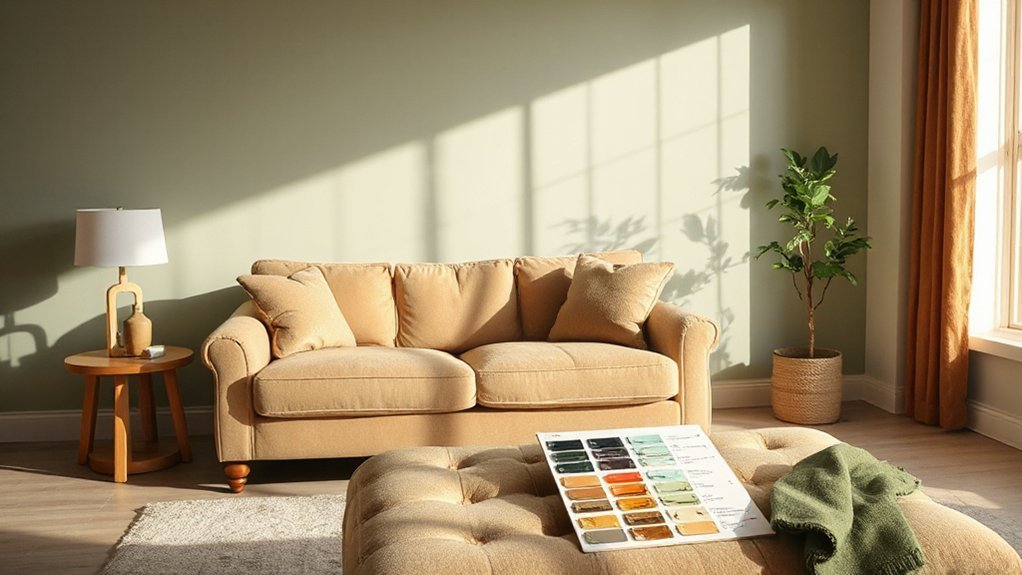
Before committing to a shade, test it in real conditions to see how it behaves with your lighting and existing furnishings. You’ll observe how natural light shifts it through the day and how artificial light alters its warmth or coolness.
Use swatches on walls, not on small chips, and compare them at different times to gauge true tone. Consider color testing under your main lighting setup—paint samples large enough to cover a wall section for a realistic read.
Note how adjacent colors influence perception as well as any glare from glossy finishes. Keep safety considerations in mind: use lead-safe paints, ensure proper ventilation, and allow sufficient drying time before making final decisions.
Record observations, then choose with confidence rather than impulse.
Quick, Busy-Home Refresh: Time-Saving Steps
If you’re short on time but still want a refreshed look, start with fast, high-impact swaps. You’ll achieve this by focusing on a cohesive color palette across key surfaces: walls, fabric, and accents.
Swap in one or two new throw cushions, a fresh rug, or a single statement accessory to shift mood enhancement without overhauling the room. For walls, choose a versatile tone that mirrors natural light and stays calm under daily use.
Prioritize finishes with easy upkeep—matte for comfort, satin for subtle sheen. Simplify clutter first; a tidy background makes the new palette read clearly.
Use interchangeable decor to test vibes quickly, then lock in only items that strengthen the overall mood and flow. This keeps changes practical, verifiable, and serene.
Common Mood-Killing Mistakes (and How to Fix Them)
Common mood-killing mistakes creep in when rooms feel mismatched or overstimulating, so spot them early and fix them fast. You’ll notice patterns that push mood down: clutter, harsh contrasts, and crowded surfaces. Fixes are practical and quick.
1) Check color overuse: limit hues per space to two or three at most, then add texture for depth.
2) Replace mismatched finishes: unify metal tones and woods to reduce visual noise.
3) Trim clutter: dual-purpose storage keeps surfaces calm and purposeful.
4) Balance lighting: mix warm and cool sources, avoiding sole reliance on ceiling lights.
Common decorating mistakes often come from chasing trends; instead, aim for harmony. When in doubt, step back and measure impact with a simple eye test.
Let Personal Taste Guide Your Palette
Your personal taste should lead your palette, not the latest trend. You’ll notice rooms feel more alive when you trust what speaks to you, not what’s hot on social feeds.
Observe how color symbolism guides mood without dictating it; a soft blue can calm, a warm ochre invites warmth, but your nuances matter more than generic rules.
Let cultural influences appear in your choices, reflecting stories you want to tell in a space.
You’ll mix textures, lighting, and shade depth to support your instincts, testing small swatches before committing.
Be precise about contrasts and harmony, avoiding clashes that shout rather than sing.
Prioritize how you feel walking through the room, then translate that feeling into a cohesive, personal palette.
Frequently Asked Questions
How Do Color Preferences Change With Seasons and Lighting?
Seasonal color preferences shift with weather and light, and your spaces respond accordingly. You’ll notice brighter, warmer hues feel right in winter gray light, while muted, cool tones suit summer brightness.
Lighting influence on hues changes perception; incandescent warms, daylight cools, and LEDs skew toward blue or yellow. You adjust by rotating swatches, pairing neutrals with seasonal accents, and testing tones at different times of day.
Observe, compare, refine until the palette supports mood year-round.
Can Colors Affect Mood Without Changing Room Layout?
Colors can affect mood without changing room layout. You’ll notice emotional associations shift how you feel in a space, even if the furniture stays the same.
Subtle hues can calm you or energize you through lighting and contrast, not structure.
Cultural influences shape which shades trigger those feelings and how you interpret them.
You observe practical effects: you feel more focused or relaxed at times, guiding you to minor, effective color tweaks.
Do Wall Colors Impact Room Perceived Size Differently Than Furniture?
Yes, wall colors impact perceived size differently than furniture. You might recall a hypothetical studio where a light, cool gray makes walls recede, while bulky furniture dominates.
Color harmony between walls and accents can tighten perceived space. In practice, you’ll gain depth by lighter walls and darker trim.
Consider paint durability and finish for long-term wear. Start with a base hue, then test color harmony in samples; this supports smarter, durable choices that visually stretch rooms.
Which Colors Work Best for Neurodiverse Sensory Processing?
You’ll want colors with gentle contrast and muted saturation for neurodiverse sensory processing. Favor cool neutrals, soft blues, and warm beiges to reduce overstimulation, while avoiding highly saturated hues that spike arousal.
Use Color symbolism to convey calm and safety, and lean on Psychological effects that support focus and comfort. Pair with textures and lighting that blend seamlessly.
Observe how triggers shift with brightness, then adjust. This practical approach supports steady perception, not just mood.
How Long Before a Color Feels Truly “Right” in a Space?
It takes time, sometimes weeks, for a color to feel truly right in a space. You’ll notice shifts as lighting, furnishings, and routines change, and your eye adapts.
Trust color theory and observe the psychological impact as you test swatches in daily use. You’ll refine contrasts, saturation, and temperature until the room reads cohesive.
Keep notes, compare moods, and adjust. You’ll know you’re there when the space quietly supports you.
Conclusion
You don’t decorate rooms so much as tune them. Listen to how colors breathe in your everyday rhythms, not just in magazines. Test swatches under real light, notice how finishes whisper or shout, and let textures ground your mood. When a shade feels true, it becomes your anchor—calm when you need focus, warmth when you crave belonging. Trust your eye, adapt with the seasons, and let personal taste guide a palette that truly feels like home.
About the Author