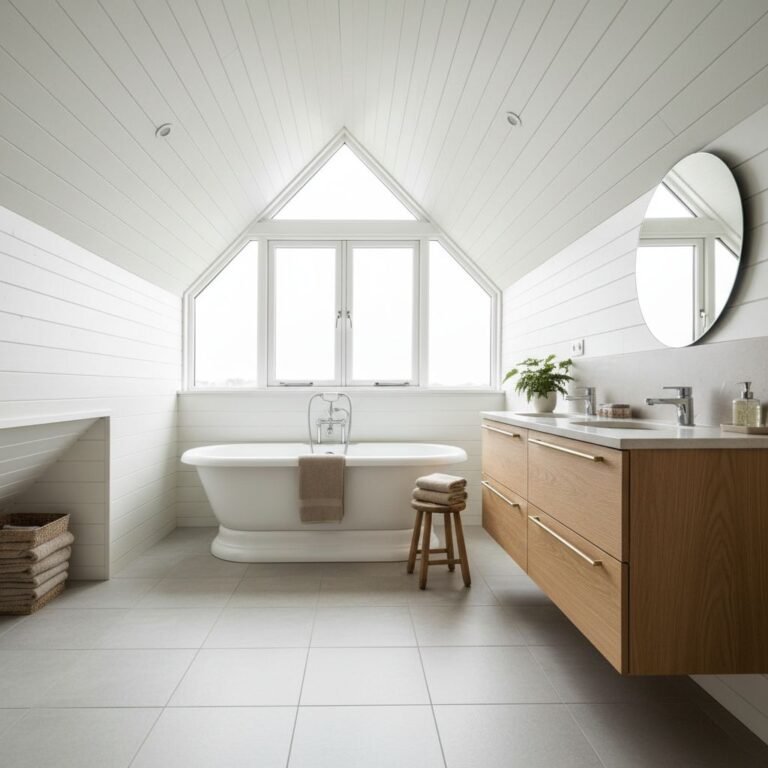
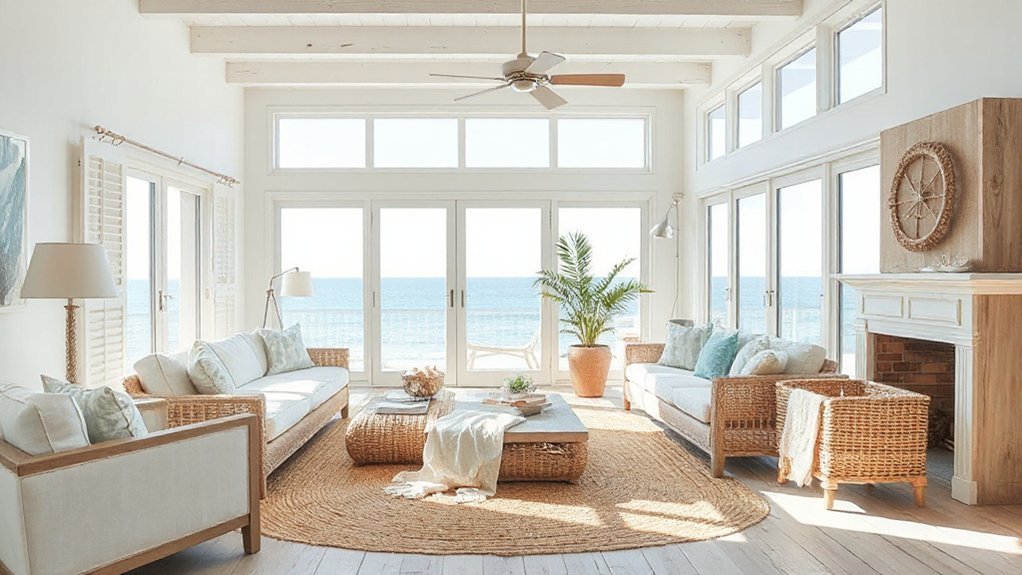
A coastal-inspired interior embraces a calm, light-filled vibe you can feel as soon as you step inside: wide sightlines, breathable textures, and a palette of blues, sands, and whites. You’ll pair linen, driftwood, and jute with durable fabrics that endure salt air and busy days. The result is understated elegance that invites slow, practical living. But the real work begins by shaping what you want to see and hear every day—a balance you’ll only find when you start with the space you already have.
Key Takeaways
- Use a cohesive palette of airy blues, seafoam greens, and sandy neutrals with gray undertones to foster serenity and versatility.
- Emphasize open sightlines, wide windows, and durable, humidity-resistant materials like limestone, driftwood, and seagrass for coastal texture.
- Layer textures with linen, jute, rattan, and marine motifs, balancing matte finishes with glossier accents for depth.
- Layer lighting to mimic ocean rhythms: adjustable, warm to cool temperatures (2700–4000K) with dimmers and daylight-friendly placements.
- Integrate coastal accents sparingly—driftwood sculptures, shells, nautical stripes—in textiles, ceramics, and built-ins for cohesive cohesion.
What Coastal Style Really Is and Why It Works
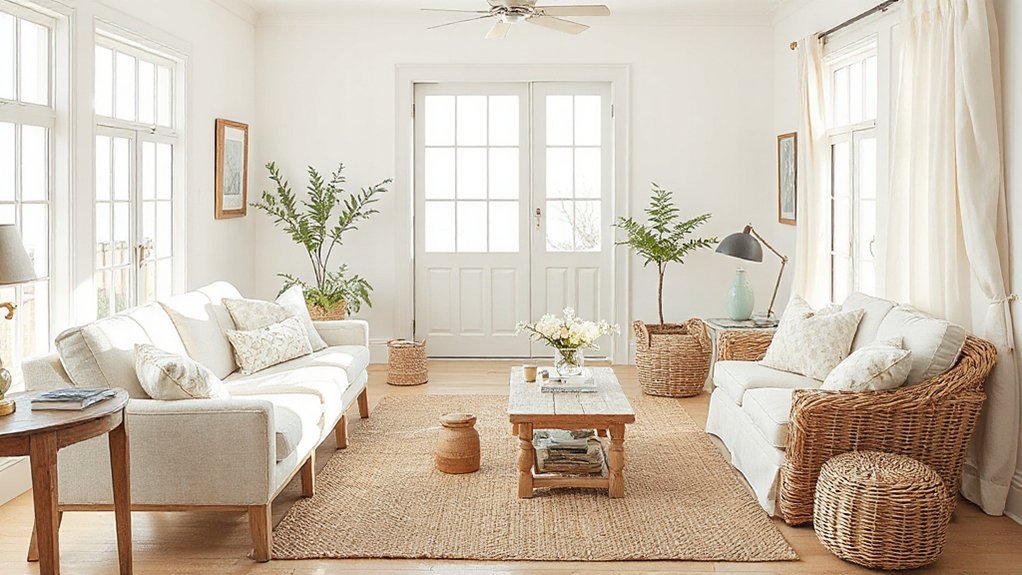
Coastal style isn’t just a look; it’s a way to create spaces that breathe with light and sea-salt calm. You’ll notice it rests on clarity, not clutter, using natural textures, breathable fabrics, and restrained color.
Coastal architecture guides your layout: open sightlines, wide windows, and durable materials that tolerate humidity without shouting. You choose durable woods, stone, and woven fibers that age gracefully, with trim kept simple to let daylight travel.
Marine inspired art anchors moments of focal calm, linking horizon, tide, and shore in quiet, considered statements. It isn’t about mimicking a postcard; it’s about creating spaces that feel refreshed, collected, and resilient.
Embrace balance, contrast, and texture to render a space that stays bright, welcoming, and true to coast living.
Choosing a Calming Coastal Color Palette
Start with Coastal Color Foundations to ground your palette in airy blues, seafoam greens, and warm sandy neutrals.
Choose Serene Shade Selections that evoke calm—think muted, breathable tones with subtle contrast to keep rooms serene.
Balance With Neutrals to temper bolder accents, letting natural textures shine through and creating a cohesive, beachy vibe.
Coastal Color Foundations
How do you build a calming coastal color palette that feels both timeless and fresh? You start with a grounded base: soft sand and creamy whites, then layer in ocean-inspired blues and sage greens. Use cool neutrals to balance warm wood tones, and reserve brighter accents for focal moments in rooms.
Consider the undertones: pigments leaning toward gray, not yellow, keep the palette versatile across seasons. Mix matte and satin finishes to mimic sea-washed surfaces, and pair pale walls with natural textures like linen, jute, and rattan.
For cohesion, repeat a unifying hue in textiles, artwork, and accessories. Coastal architecture informs scale and proportion, while marine-inspired motifs add character without overpower.
This approach yields a palette that feels calm, enduring, and distinctly coastal.
Serene Shade Selections
Start with a primary wall color in a pale seafoam or powder blue, then layer with oatmeal and warm sand accents to keep rooms inviting.
Introduce one or two deeper accents—navy, slate, or driftwood—sparingly, to ground spaces without overpowering their breeze.
Consider undertones—cool vs. warm—so items read cohesive under ambient light. Test swatches at different times of day to verify true hue.
Seaside serenity emerges when textures—linen, jute, and weathered wood—carry color rather than rely on more paint.
Ocean inspired palettes feel fresh, breathable, and endlessly adaptable.
Balance With Neutrals
Even when you’re aiming for a calm coastal vibe, neutrals should do the heavy lifting, anchoring color without competing with it. Your palette should balance cool and warm neutrals to keep spaces open, airy, and inviting.
Start with a base of soft whites and sand, then layer with slightly deeper grays and greiges to add depth without shouting. Use texture to maintain interest: linen, rattan, and matte ceramics read as coastal without color bloat.
Tie in coastal gardening patterns through subtle pot textures and foliage, while seaside cuisine-inspired accents stay restrained and purposeful. Focus on consistency across rooms for coherence.
- Choose a restrained neutral quartet
- Introduce texture, not glare
- Echo natural materials
- Integrate coastal gardening and seaside cuisine cues subtly
Natural Materials That Elevate the Look
Natural materials anchor a coastal interior by bringing texture, warmth, and a sense of place. You choose materials that reflect the shore’s honest character: hardwoods with driftwood patina, limestone and oyster-shell terrazzo, and woven fibers that invite barefoot comfort. Look for low-sheen finishes, tight grains, and durable surfaces that resist salt and sun.
For surfaces, consider limestone counters, cork or seagrass flooring, and marine-inspired ceramics; textures should read coastal without shouting. Incorporate organic textures like jute, rattan, and linen to balance glossier accents.
Subtly echo marine biology and seaside cuisine through reproductions or details—shell motifs on tiles, coral-tinged glazes, or display pieces that nod to the ocean’s ecosystems without dominating the room. The result feels grounded, fresh, and relentlessly practical.
How to Layer Blues, Sands, and Whites With Texture
You’ll start by layering blues with textured whites that glow like sunlit foam.
Bring in sandy neutrals and tactile weaves to soften gaps and add depth, letting coastal light accent the contrast.
Keep the palette cohesive with subtle pattern echoes—think woven rugs, linen drapes, and driftwood accents that pull the blues, sands, and whites together.
Layered Blues Textures
To layer blues, sands, and whites with texture, start by choosing a dominant blue as the anchor and build a tactile map around it. You’ll weave variance with pattern, weave, and finish to keep depth alive without heaviness. Use textiles, woven fibers, and matte glazes to create a cohesive Seaside palette that reads calm at a glance.
- anchor a rich navy with lighter sky tones for contrast
- add subtle ribbed textures and linen for breathability
- introduce matte ceramics and glazed tiles to reflect light
- punctuate with nautical accents in small doses
Cohesion comes from repetition: rotate the same blues across surfaces, layers, and trims. The result feels coastal-hearty, precise, and instantly elevates the room without clutter.
Sands and Whites Mix
Sands and whites pair with blues to create a calm, sunlit stage, where warm neutrals ground cool ocean tones and keep the palette breathable. You layer texture deliberately: a sandy base, crisp whites, and restrained blues read as sculptural elements rather than color blocks.
Choose sand-toned linens with subtle grain and weave, then add whitewashed wood for structure and shadow lines. Introduce texture through woven jute, ribbed ceramics, and linen drapes that catch breeze without clamor.
Seashell patterns appear as accents—coastal ceramics, a throw, or lamp shade—bringing tactile rhythm. Infuse Coastal fragrances via candles or diffusers that echo salt air and dune grass, reinforcing the scene without overpowering it.
Maintain balance: allow negative space to breathe, so tones blend with intention rather than compete.
Coastal Light Accents
Sailing from the sandy base, you’ll build coastal light by layering blues, whites, and sands with texture that reads as a breath of sea air. You’ll select finishes that reflect Seaside architecture—matte plaster, brushed oak, and linen-weave fabrics—then pair them with light-reflecting accents to brighten spaces.
Textural depth comes from jute, sisal, and raffia in rugs and baskets, plus subtle metallics for a sunlit gleam. Coordinate color blocks with restrained contrast to keep a breathing, airy feel.
- Layer blues with whites and sands in varied textures
- Introduce pale textiles and woven accents for depth
- Add reflective surfaces to mimic shoreline light
- Incorporate coastal gardening motifs and sustainable materials
Lighting to Echo Ocean Light
In spaces inspired by the sea, lighting should mimic the ocean’s natural rhythms: bright, crisp daylight flowing through windows, easing into warm, amber tones as the sun lowers. You’ll layer light to resemble shifting tides: daylight fixtures near windows, subtler, warmer sources toward corners, and adjustable layers that glow softly at dusk.
Choose color temperatures between 2700K and 4000K to reflect sunlit surf and twilight hues, avoiding garish contrasts. Incorporate dimmers, glare control, and coastal textures to temper brightness without losing clarity.
Select fixtures with nautical motifs and braided cords, but keep lines clean to preserve Beachfront ambiance. Aim for even light distribution that highlights textures—sanded wood, wicker, linen—while maintaining a cohesive, breathable mood.
Your plan should feel steady, welcoming, and unmistakably coastal.
Furnishing for a Coastal, Timeless Aesthetic
A coastal, timeless aesthetic rests on furnishings that feel seasoned but not dated, combining natural materials with clean silhouettes. You choose pieces that invite daily use, with solid wood finishes, pale upholstery, and soft edges that echo shorelines without shouting.
Balance is key: mix functional seating, storage, and occasional accents that speak quietly of salt air. You’ll weave Seaside gardening and Beach inspired artwork into the scene, letting natural textures lead while treatment remains restrained.
Prioritize comfort, durability, and simplicity, so rooms breathe with light and air. Your selections should age gracefully and stay relevant with subtle updates.
- Clean-lined sofa in light linen
- Reclaimed wood coffee table with gentle curves
- Woven storage bench and coordinating side chairs
- Gallery wall of Beach inspired artwork and quiet botanicals
Texture and Decor: Driftwood, Linen, and Jute
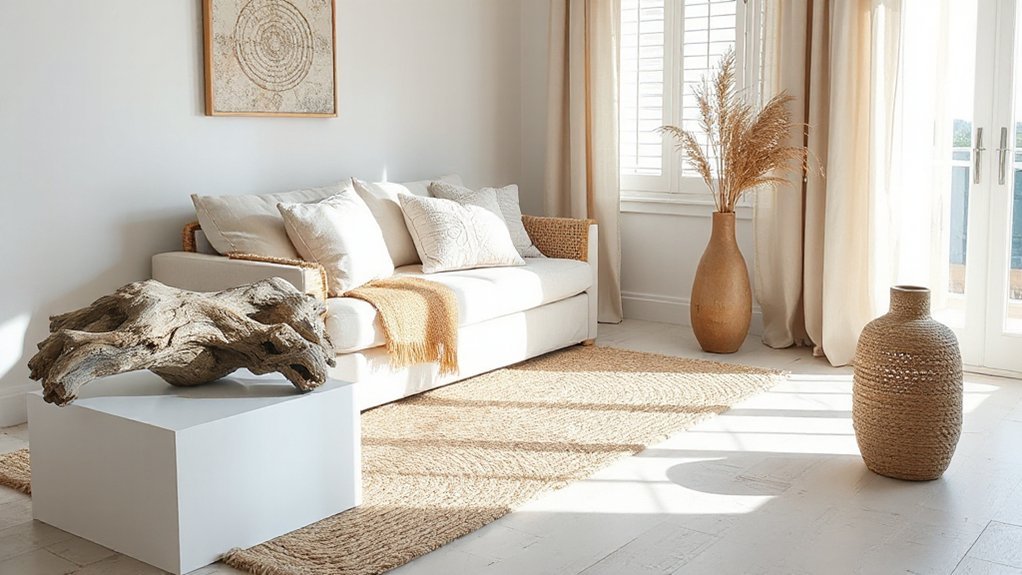
Driftwood, linen, and jute anchor the room with texture that feels earned and effortless. You display driftwood as sculptural accents—a weathered branch on a console, a sun-bleached plank as a shelf support—so the tactile story reads clearly.
Linen keeps upholstery breezy and cool, with tight weaves that resist wrinkling while inviting touch.
Jute rugs ground the space, their low pile offering barefoot comfort and subtle sea-spray echoes.
Marine motifs appear in throw cushions and ceramics, tying the decor to the shore without shouting.
Nautical stripes provide a restrained rhythm—narrow bands on a pillow or a throw, never overwhelming.
Each piece emphasizes craftsmanship, durability, and a coastal-hearty feel that remains refined, calm, and ready for everyday coastal living.
Airy Layouts for Relaxed Living Rooms
Airy layouts create relaxed living rooms that breathe with the sea breeze rather than fight for attention. You’ll prioritize open sightlines, low-profile furniture, and uncluttered surfaces to invite natural light and airflow.
Position seating to encourage conversation while preserving breathing room, using gentle gaps between pieces. Choose fabrics in pale blues and sandy neutrals, with subtle texture to echo coastal surfaces.
Incorporate Marine inspired motifs and seagrass patterns in cushions, throws, and rugs, keeping prints understated to maintain calm. Use soft window treatments that filter glare without sacrificing view.
Integrate organic textures from rattan or cork tables, and keep plant accents minimal for a clean, breathable vibe.
- Open sightlines and low-profile furniture
- Gentle textile textures in coastal tones
- Marine inspired motifs and seagrass patterns accents
- Minimal, unobtrusive accessories for calm cohesion
Practical Tips to Maintain a Coastal Look Year-Round
Year-round coastal style hinges on simple, repeatable habits: protect the palette, refresh textures, and sharpen the small details that keep the look from feeling seasonal. You’ll sustain the vibe by selecting a core palette—soft sand, pale aqua, and a touch of driftwood—then repeating it across rooms, textiles, and accents.
Refresh textures with durable weaves and weathered finishes, swapping plush rugs for flat-waxed options in high-traffic zones. Rotate accessories sparingly, preserving cohesion while preventing stale moments; a few marine-inspired pieces anchor the scheme without overpowering it.
Maintain light by layering sheer drapes and strategically placed mirrors to mimic sea-glow. Consider Marine flora motifs in artwork or pottery and reinforce Coastal architecture cues in built-ins and trim.
Regular upkeep, consistent lighting, and mindful storage preserve the breeze-long, evergreen appeal.
Frequently Asked Questions
How Can I Refresh Coastal Decor After Seasons Change?
Refresh coastal decor by swapping seasonally toned accents and textures, focusing on Beach inspired color palettes and lighter fabrics. You’ll rotate nautical elements: swap cushions, throws, and wall art to cooler hues in spring or warmer tones for fall.
Reevaluate Nautical accessory placement, clustering shells and ropes on desks or mantels as focal points. Add fresh greenery, brighten with white accents, and refresh lighting to keep the space visually open, inviting, and seasonally appropriate.
What Budget-Friendly Coastal Decor Upgrades Make the Biggest Impact?
You’ll maximize impact with budget-friendly tweaks like swapping in sand textures for throw pillows or rugs and adding driftwood accents as focal pieces.
Refresh walls with pale blues and crisp whites, and layer inexpensive coastal art.
Replace bulky decor with lightweight shells, glass buoy books, and rope-trimmed accessories.
Embrace textures—jute, linen, and basket-weave—to mimic the sea.
Finally, curate scent and sound with salt spray candles and a small fountain nearby.
Do Coastal Interiors Require Thematic Furniture Choices?
Coastal interiors don’t demand thematic furniture choices, you can mix styles while keeping themes consistency. You’ll find that the right furniture selection anchors the room: a driftwood bench, a crisp white sofa, or weathered seagrass chairs.
Prioritize cues like color, texture, and proportion over rigid motifs, and let natural light and nautical accents weave the vibe. Your outcome feels cohesive, inviting, and quietly sea-salted, not touristy, with intentional, durable pieces.
How to Incorporate Coastal Elements in Small Spaces?
You can incorporate coastal elements in small spaces by focusing on color and subtle accents. Use a Beach inspired color palette—soft whites, sandy beiges, seafoam greens—on walls and larger surfaces to open rooms.
Add nautical accent pieces sparingly: a rope lamp, weathered driftwood mirror, and navy textiles.
Choose multi-functional furniture with clean lines, mirror-backed consoles, and built-in storage to keep everything airy.
Keep textures natural, details precise, and celebrate the coast with restrained, heartful coastal flair.
What Maintenance Steps Keep Coastal Materials Looking New?
Staying the course, you keep coastal materials looking new by routine, deliberate care. Wipe seashell accents and driftwood displays with a soft, damp cloth, then dry thoroughly to prevent mildew. Avoid harsh cleaners; opt for mild soap and water on wood and resin finishes.
Re-seal driftwood periodically, and polish shells with a gentle mineral-based product. Maintain humidity, inspect joints, and rotate pieces to prevent uneven wear, like tides shaping shorelines.
Conclusion
You’ve got the basics down: calm colors, natural textures, and open sightlines that breathe. Keep the palette simple—blues, sands, and whites—so there’s space for light to dance across linen, driftwood, and jute. Layer textures and lighting to mimic ocean rhythms, never overcrowd. A coastal look lasts with restraint: less is more, more serene. Remember the adage: a calm sea makes for a steady home. Stay purposeful, practical, and warmly inviting, year-round.
About the Author