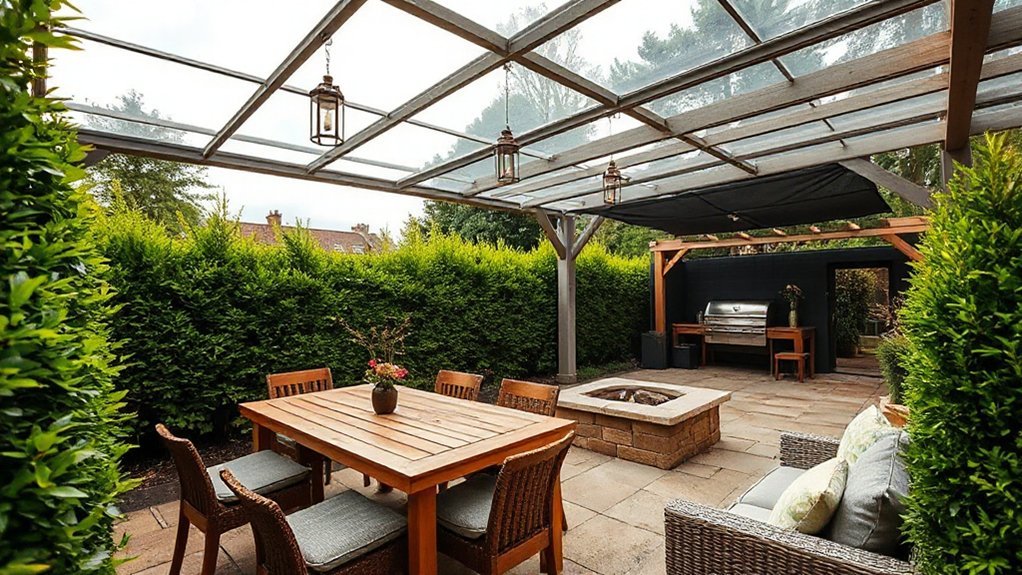
Like a weathered citadel, your outdoor space must endure Britain’s moods while feeling welcoming. You’ll want a flexible layout, weatherproof furniture, and layered lighting that shifts from dusk to starry clear nights. Think shelter options, durable textiles, and smart heating for year-round comfort. Get the basics right, then uncover how small tweaks or a bold move can transform rain into delight. Curious how these choices come together to keep guests comfy whatever the forecast?
Key Takeaways
- Design a flexible outdoor layout with modular zones for seating, dining, and movement that adapt to sun, rain, and wind.
- Use durable, weatherproof furniture and textiles (aluminum/teak, quick-dry cushions; UV fabrics; removable covers).
- Incorporate shelters and windbreaks (pergolas, sails, low walls) with effective drainage for year-round use.
- Implement layered lighting (ambient, task, accent) with weatherproof, dimmable fixtures and clear controls.
- Plan heating and cooling that blend with aesthetics (fire pits, outdoor heaters, cross-ventilation) for comfort in British weather.
Design a Weather-Smart Outdoor Living Room: Step-By-Step
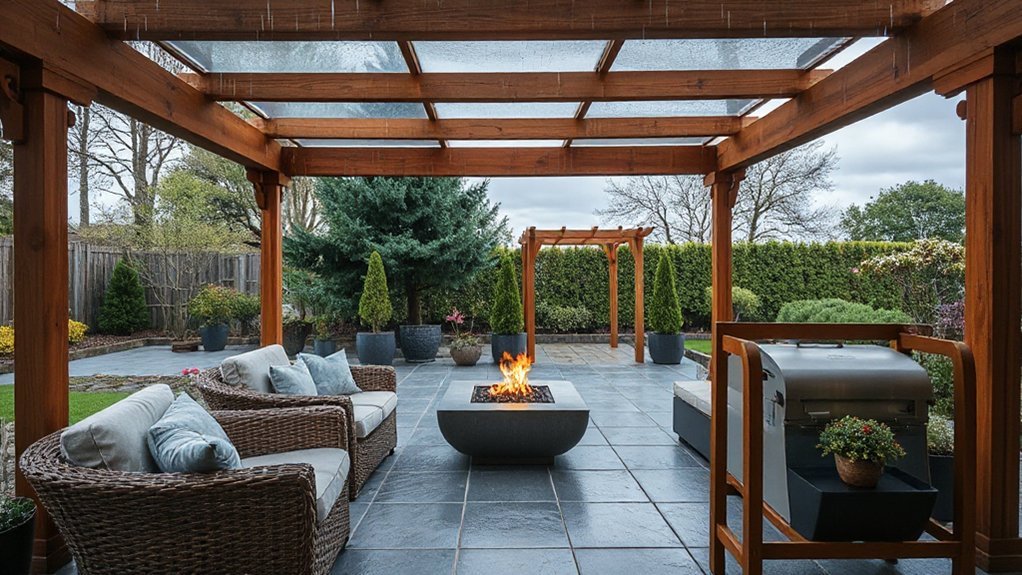
A weather-smart outdoor living room starts with a clear plan for adaptability, so begin by mapping a flexible layout that works in sun, rain, and wind. You center seating near a sheltered zone, then orient lounges to capture light and shade shifts through the day.
Choose durable, non-slip surfaces and modular pieces you can rearrange for gatherings or quiet evenings. Integrate a compact dining nook, a weathered-look timber frame, and recessed storage for cushions to reduce clutter between sessions.
Add Outdoor art at eye level for focal interest without crowding views, and place windbreak elements like screens or fencing where needed. Plant wildlife-friendly plants in container pockets to attract pollinators, and keep paths clear for easy circulation.
Ensure simple access to lighting, power, and a collapsible shelter.
Choose Weatherproof Furniture and Fabrics for Britain
Choosing weatherproof furniture and fabrics for Britain means prioritizing materials that shrug off rain, damp, and sun while staying comfortable and stylish. You’ll want frames in powder-coated aluminum or teak remains sturdy in wet conditions, with joins reinforced for wind.
Look for cushions with weather resistant cushions and quick-dry foams, wrapped in fabrics that resist mildew. UV exposure can fade colors, so select UV proof fabrics in deeply saturated tones or practical neutrals that hide dirt.
Opt for breathable weaves that stay comfortable in humidity, and consider removable, machine-washable covers for ease.
Storage solutions matter too: choose lightweight, stackable pieces you can tuck away when storms threaten.
Finally, test sit-and-swing stability, ensuring feet grip varied British surfaces without sinking.
Create Open-Feel Shelter Options: Pergolas, Sails, and Windbreaks
Pergolas, sails, and windbreaks can transform an open space into a comfortable, weather-ready room without fully enclosing it. You’ll prioritize modularity and airflow, choosing structures that suit your site and climate.
Pergolas offer shade with vibration-resistant timbers or aluminum, and can support climbing plants to soften lines.
Sails provide flexible, weather-tolerant coverage; pick UV-stable fabrics and tight seams to resist breeze and rain intrusion.
Windbreaks act as smart boundary blocks, using slatted panels or low walls that still invite interaction.
Fabric choices must balance sun protection, ventilation, and maintenance; test color, weave, and drainage.
Structural durability matters most: guarantee connections, posts, and anchors resist wind loads, and plan for rain runoff and seasonal detuning.
Layer Lighting for Any Evening, From Gloomy to Starry
Layer your lighting with purpose, layering ambient, task, and accent lamps to cover gloom to starry nights. Use dimmable, weatherproof fixtures so you can dial mood without swapping lamps.
Start by pairing subtle wall washers with portable, low-glare lanterns for flexible illumination that adapts to weather and occasion.
Layered Ambient Lighting
1) Fire pit glow as a central, low-angle radiance
2) Recessed step lights for safe progression
3) String lights above dining or lounge zones
4) Spotlight trees or focal features for depth
Dimmable Weatherproof Lamps
Choose dimmable weatherproof lamps rated for outdoor use, and plan a layout that blends task, mood, and safety needs. Use outdoor lighting controls to tune brightness levels as the event evolves, creating envelopes of warmth or crisp visibility without swapping bulbs.
Opt for weather-sealed enclosures and diffusers that minimize wind-blown glare while preserving color accuracy. Install a smart or tactile dimmer alongside a weatherproof transformer, ensuring smooth, repeatable settings.
Test daylight shifts, label scenes, and document controls so guests enjoy comfort with minimal fiddling.
Plan Year-Round Comfort: Heating and Cooling Essentials
You’ll start with a clear heating options overview to match your space and climate, selecting efficient, low-profile solutions that blend with design.
Pair that with seasonal cooling solutions that address humidity and airflow without overpowering the ambiance, using modular or zone-controlled setups.
Keep the focus on practical layouts, energy use, and weather-ready details that support year-round entertaining.
Heating Options Overview
When planning year‑round comfort, start with a clear picture of how you’ll heat your outdoor space in cooler months and how that will integrate with any cooling you already use. You’ll compare heat types for British weather, prioritizing efficiency, controllability, and layout.
A fire pit offers ambience and radiant warmth, while an outdoor heater fills gaps on damp evenings. Consider zoning so you only heat occupied zones, not the whole yard. Fuel type, gas efficiency, and safety features matter for long-term use.
Aesthetics matter too: conceal cords, match materials, and align with seating. Use switches or smart plugs for timing.
1) Fire pit placement
2) Solar-ready heaters
3) Infrared options
4) Covered shelter integration.
Seasonal Cooling Solutions
Seasonal cooling isn’t an afterthought; it’s a key part of year‑round comfort, especially in temperate British climates. You’ll design for controlled airflow, shade, and evaporation to keep spaces inviting on warmer days.
Start with a ceiling or wall-mounted exhaust fan to exchange indoor air with outside air, then locate openings to create cross‑ventilation without inviting rain.
Incorporate outdoor misting systems where heat buildup is persistent, targeting seating zones and dining areas rather than entire spaces to conserve water. Pair misting with mist-safe fabrics and reflective canopies to reduce heat absorption.
Use retractable screens or blinds to manage sun angles, and consider permeable pavers or gravel beneath seating to prevent heat islands.
Finally, calibrate automation to adjust humidity and airflow, maintaining comfort without overcooling.
Set Up Weather-Ready Dining for Every Season
To set up weather-ready dining for every season, start with a modular layout that adapts quickly to sun, rain, or chill. You want flexible zones, guarded by windbreaks, and a table that can reconfigure with seating on the fly. Use compact, stackable chairs and smart storage tucked beneath planters for a tidy, ready-to-use space.
Incorporate garden art as focal points that don’t obstruct sightlines or traffic flow. For rain, deploy a lightweight canopy and transparent panels that shield without shielding sunshine. For chill, stash warm throws and a portable heater within easy reach.
1) Modular seating clusters
2) Layered shade and rain protection
3) Quick-access outdoor storage
4) Integrated garden art accents
Pick Low-Maintenance Materials That Stand Up to Rain
Choose materials that resist rain and weathering without frequent upkeep; your outdoor space will stay usable after every shower.
For durability, prioritize rain resistant decking that withstands swelling, warping, and moisture buildup with hidden fasteners and cedar or composite blends. Pair it with a solid, water-shedding substructure to prevent puddling.
Select weatherproof paint for fences, railings, and sheds—thermoplastic or acrylic-based systems offer UV protection and easier recoats, plus seamless color retention.
Opt for porcelain or stone pavers with low porosity and slip resistance to maintain grip when damp.
In seating areas, use powder-coated metal or resin wicker designed for rain exposure, and cushion covers with quick-dry fabrics.
Finally, seal joints, gutters, and downspouts to channel rain away, reducing maintenance cycles.
Craft Practical Layouts for Small or Large Spaces
After selecting low-maintenance, rain-ready materials, the next step is plotting layouts that fit your space and how you’ll use it. You’ll optimize flow, sightlines, and zones, balancing seating, dining, and movement. Prioritize flexible arrangements so you can reconfigure for weather shifts.
Consider how garden pathways guide guests, connect focal points, and preserve access to views. Plant selection should echo scale, light, and durability, with container groups reinforcing edges and balances.
Choose compact or extendable elements for small plots, or expansive, layered zones for larger plots. Use sightlines to avoid crowding and ensure safe circulation.
Plan these core layouts now, then refine with furniture, shade, and drainage details for year-round appeal.
1) Zonal lounge
2) Dining alcove
3) Micro-garden path
4) Flexible courtyard
Accessorize for Comfort: Durable Textiles, Rugs, and Greenery
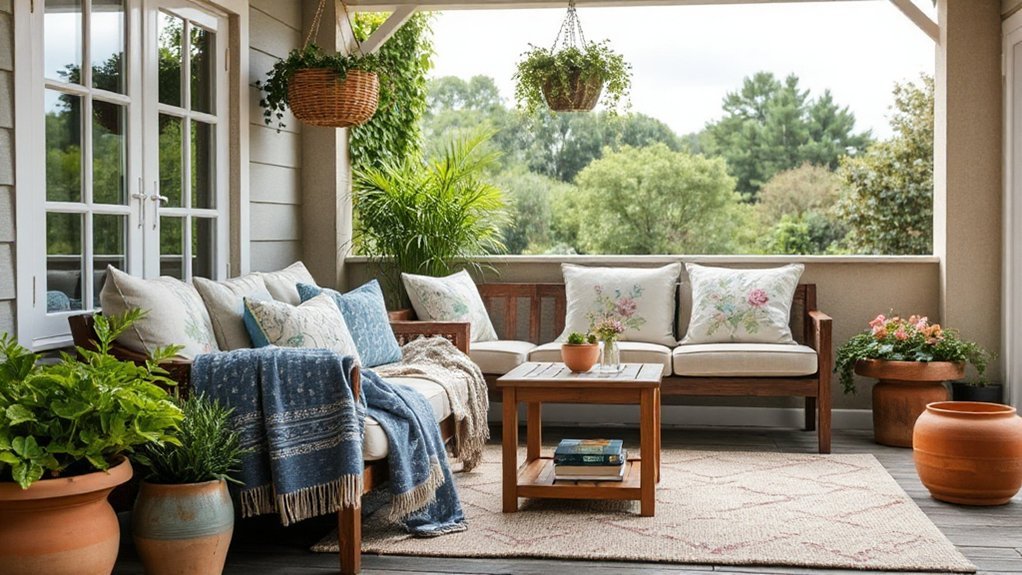
Durable textiles, rugs, and greenery are your comfort anchors, so pick materials and plants that stand up to British weather while still inviting guests to linger. You’ll prioritize weather-resistant textiles that resist moisture, fading, and mildew, choosing woven linens for cushions and quick-dry chenille throws for evenings.
Pair with low-maintenance rugs in natural fibers treated for outdoor use, avoiding heavy patterns that show dirt yet supporting easy cleaning. For greenery, select resilient greenery with strong stems and year-round structure—evergreens, grasses, and compact shrubs that tolerate damp winds.
Layer textures to create depth: screens of plant height, staggered pots, and a moisture-friendly ground cover. Finish with UV-protected fabrics and a simple, cohesive color palette to unify the space.
Frequently Asked Questions
How Do I Protect Electronics From Sudden UK Showers Outdoors?
Yes—keep electronics protected with rainproof covers and strict electronic safety practices. Use IP-rated enclosures, seal all seams, and elevate devices off wet surfaces.
Store remotes and speakers in weatherproof boxes, and connect to GFCI outlets. Use surge protection and weather-rated power strips.
Pre-install simple shading to deter direct rain, and layer cables above ground with cord organizers.
Regularly inspect seals, dry off any moisture, and unplug if you notice condensation or buzzing.
What’s the Best Way to Store Outdoor Cushions Year-Round?
Cushion storage is simple: store them indoors when not in use and protect against damp with breathable covers. You’ll want Seasonal protection that’s moisture-sealing yet air-permeable, like a zipped, UV-resistant storage bag or a cabinet with desiccants.
Keep cushions slightly elevated off the floor, and label sets by season for easy rotation. Consider a dedicated outdoor closet.
This practical approach preserves form, color, and comfort for your next sunbreak. Satire aside, smart design wins.
Can I Extend Usable Space During Winter Without a Heater?
Yes, you can extend usable space in winter without a heater by adding winter insulation and clever sheltering. Install a windproof, insulated canopy or marquee to reduce drafts.
Use snow-proof furniture with powder-coated frames and water-resistant cushions. Create a defined zone with rugs, low-level lighting, and heat-trap side screens.
Store cushions off the ground, and use removable thermal blankets for extra warmth. This practical setup keeps the space functional and design-focused.
How Do I Manage Shade for Unpredictable British Weather?
Shade shifts like weather—unpredictable yet manageable. You pick sun sail for airy, low-profile relief on sunny spans, then switch to a retractable awning when clouds brood.
Position to block low afternoon sun and invite cross-ventilation during heat chills. Use poles and tensioners for stability, add wind sensors, and store sails when storms threaten.
Rehearse a quick deployment routine, and you’ll stay comfortable, adaptable, and design-forward, no matter the forecast.
What Are Low-Maintenance Options for Outdoor Flooring Durability?
Flexible, low-maintenance outdoor flooring options include concrete pavers, composite decking, and porcelain tiles, all durable in varying weather.
For long-lasting comfort, choose patio materials with slip resistance and sealed surfaces.
Add outdoor rugs for warmth and zone definition, but make certain they’re weatherproof and easy to clean.
Consider a gravel or rubber tile base underfoot for drainage.
You’ll enjoy easy upkeep, quick shifts between indoors and outdoors, and a cohesive, design-focused look.
Conclusion
You’ve mapped a space that breathes with British weather: flexible zones, weatherproof gear, and layered lighting that shifts from drizzle to starlight. The practical layout keeps paths clear, while shelter and heating weave comfort into every season. Think of your design as a living plan, not a fixed recipe—adapt as weather changes. Like a sturdy oak in wind, your space endures; its charm grows with every thoughtful detail you add. Resilience, after all, is the quiet style that lasts.
About the Author