Damp shows up in historic homes, damp patterns emerge, damp causes consequences. You’ll want breathable lime-based damp proofing, you’ll want ventilation that actually works, you’ll need careful detailing to avoid trapping moisture. You’ll balance preserving fabric with stopping damp, and you’ll keep a maintenance plan to head off costly repairs. But what works in practice in older UK properties, and why does it matter for long-term stability?
Key Takeaways
- Prioritize breathable lime-based mortars and finishes to manage moisture while preserving historic fabric.
- Use continuous ventilation, humidity control, and avoid trapping dampness with improper sealants or cement renders.
- Match damp-proofing to the wall’s natural moisture movement and employ vapour-permeable membranes where suitable.
- Inspect and address moisture sources (kitchens, bathrooms, plant transpiration) before finishing or decorating.
- Schedule regular 3–5 year inspections to monitor performance and adjust detailing as needed.
How Damp Shows up in Historic UK Homes
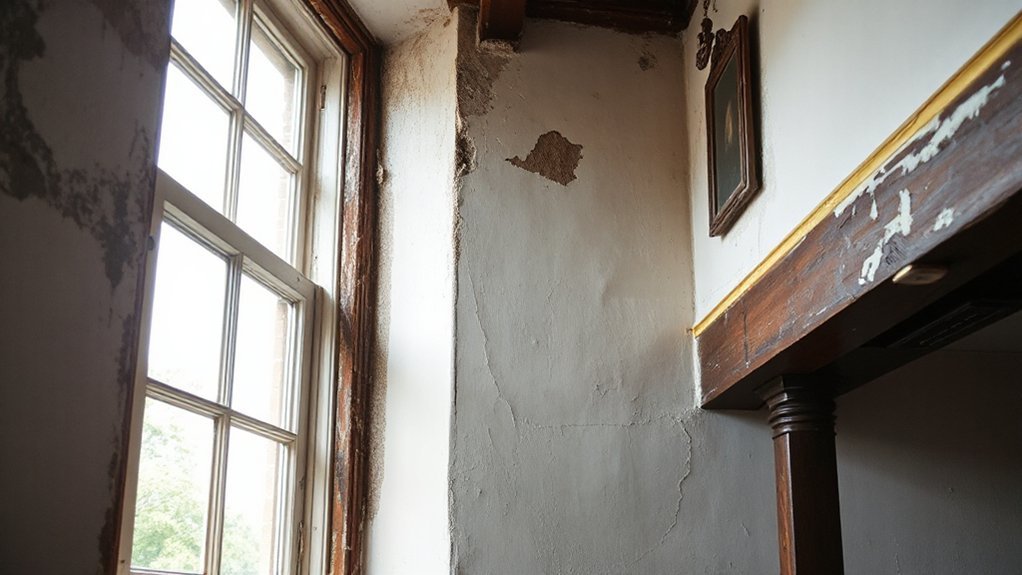
Old dampness isn’t always obvious at first glance in historic UK homes, but it tends to reveal itself through telltale signs you can spot quickly. You’ll notice damp patches near basements and ground floors, flaky paint, and efflorescence on brickwork.
Salts leave whitish crusts as moisture moves through walls, while a musty odor signals ongoing moisture. You may see wallpaper peeling, warped timber, or metal fixtures corroding where humidity concentrates.
External conditions matter: poor drainage, blocked gutters, and external walls permeable to moisture accelerate the issue. You’ll benefit from understanding that exterior insulation and modern materials can influence breathability and thermal performance, affecting moisture movement.
Stay focused on identifying patterns, not isolated spots, and document elevations, seasonality, and heating cycles to plan targeted interventions.
Choose Breathable Lime-Based Damp Proofing
Choosing breathable lime-based damp proofing is about matching the wall’s natural moisture movement, not just sealing it off. You’ll assess brickwork or plaster surfaces for breathability, then select lime plaster and compatible breathable membranes that align with the wall’s porosity.
Lime-based systems allow moisture to migrate outward, reducing condensation and frost risks while preserving historic fabric. Avoid cementitious mixes that trap damp; instead, opt for hydraulic or hydraulic lime where appropriate, and guarantee the plaster skin isn’t too dense.
Detail detailing: key joints, traditional masonry standards, and compatible paints. Prioritize a reversible, low-impedance approach that doesn’t isolate moisture.
Training installers on lime plaster compatibility, drying times, and maintenance will sustain effectiveness and limit future damp surprises.
Ventilation for Historic Fabrics That Actually Works
You’ll want ventilation that respects historic fabrics while effectively moving moisture. We’ll talk through fabric-specific airflow, so you understand practical drying strategies and how to keep damp at bay.
This discussion starts with clear, actionable steps you can apply to real-world fabric loads and spaces.
Ventilation For Fabrics
Ventilation for historic fabrics isn’t about blasting air everywhere; it’s about controlled, effective airflow that preserves material integrity. You’ll balance humidity, air exchange, and material sensitivity with targeted strategies, using moisture barriers and properly designed ventilation systems. Your goal is steady, moderate ventilation that dries surfaces without forcing fabric fibers to contract or distort.
- Maintain discreet, continuous airflow near storage zones
- Use humidity-controlled vents linked to an exterior intake
- Install moisture barriers at joints and seams
- Correctly position extraction points to avoid damp buildup
- Monitor with simple hygrometers and adjust timing accordingly
This approach minimizes condensation risks, reduces mold potential, and supports long-term fabric preservation. It’s practical, precise, and proactive, prioritizing stability over aggressive drying.
Historic Fabric Airflow
Is there a better way to move air through historic fabrics without risking damage? Yes. Historic fabric airflow should respect preservation principles while optimizing ventilation.
You’ll focus on controlled, unobstructed pathways that support steady air exchange without blowing dust or causing fabric abrasion. Prioritize low-velocity airflow and directional design that aligns with airflow dynamics, avoiding sudden gusts near fragile details.
Use breathable, reversible measures that don’t compromise historic preservation, such as discrete vents, strategic openings, and noninvasive fans with dampers. Monitor humidity and temperature to maintain stable conditions, preventing condensation on plaster or timber.
Document changes for future assessment, ensuring airflow improvements are reversible if needed. The aim: reliable ventilation that safeguards integrity while reducing moisture-related risks.
Practical Drying Strategies
When drying historic fabrics, prioritize controlled, low-velocity airflow that moves moisture away without disturbing fragile surfaces. You’ll balance ventilation with gentle humidity control, using discreet extraction and intermittent airing to prevent staining or warping.
Target conditions around 40–60% RH and avoid rapid temperature swings that stress pigments.
- Use unobtrusive fans set on low speed
- Position vents to create cross-ventilation without direct blasts
- Monitor RH and temperature with a reliable gauge
- Seal gaps only when necessary to avoid drafts on textiles
- Pair drying with stable, non-conductive insulation
Historical paint responds to steady, even drying, not forced heat; Modern insulation helps maintain that stability. Keep readings consistent, document changes, and avoid prolonged exposure to moisture.
This disciplined approach protects fabric integrity and finish.
Manage Condensate in Period Houses
Condensation in period houses is often caused by serving the wrong balance between moisture and heat, so manage it by controlling where moisture comes from and how quickly it escapes. You monitor sources: kitchens, bathrooms, drying areas, and plants.
Target ventilation at moisture peaks, using extractor fans and timed vents, while retaining warmth where needed. Keep rooms evenly heated to avoid cold surfaces where condensation forms.
Insulation should be discreet and effective, preserving historic character; consider heritage-approved options that don’t compromise structure.
Manage surface moisture by wiping damp patches promptly and treating wooden beams to limit microbial growth, without obscuring details. When servicing historic paint, use breathable products that allow moisture migration.
Regularly inspect and seal gaps around windows and penetrations to reduce ingress.
Cavity Skins and Plaster: Safe Applications
Cavity skins and plaster require careful, site-appropriate application to protect historic fabric while maintaining breathable performance. You should assess wall construction, moisture history, and fabric condition before any intervention, guaranteeing compatibility with timber frames and lime-based plasters.
Use breathable membranes and lime plaster where appropriate to support plaster preservation and vapor permeability. Limit insulation depth to avoid trapped moisture and radial stress.
Maintain continuous movement joints and proper detailing around openings to prevent bridging.
- Guarantee cavity insulation remains breathable and compatible with the existing plaster
- Prefer lime-based plaster systems for preservation of historic fabric
- Avoid impermeable barriers that trap moisture
- Detail junctions at windows and doors to prevent damp paths
- Monitor moisture post-application to verify performance
Sandstone Vs Brick: Suitable Damp Treatments
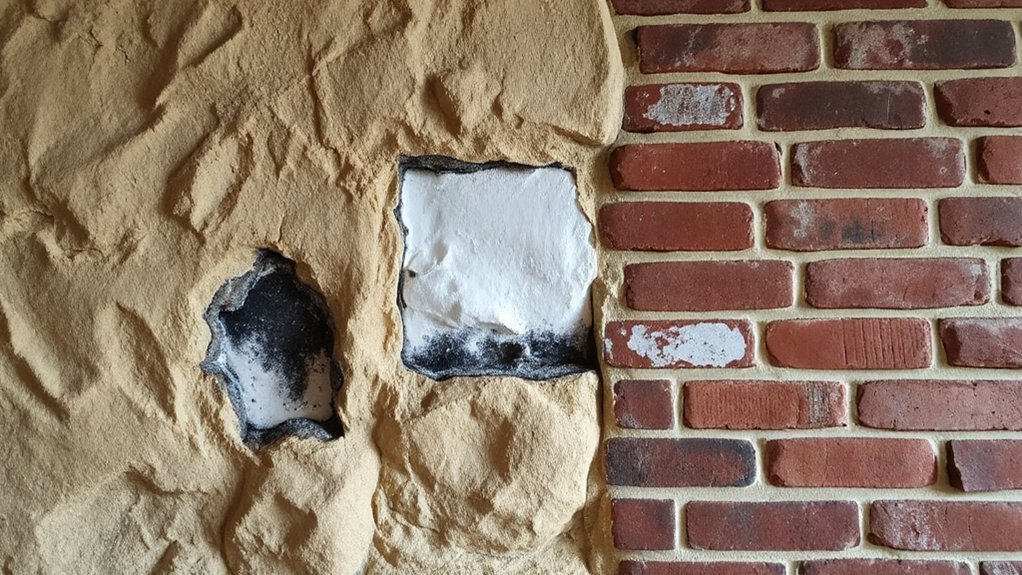
Is sandstone or brick the better canvas for damp treatment in historic UK properties? You’ll assess substrate behavior, moisture movement, and compatibility with historic finishes.
Sandstone offers natural porosity that can aid evaporation, but its durability varies. You’ll weigh sandstone durability against weathering risk and wind-driven damp episodes.
Brick, by contrast, provides uniform strength and a more predictable substrate for injections, membranes, or breathable plasters. Yet, may require repointing to maintain breathability.
Choose damp treatments that respect the wall’s porosity and historic mortar. For sandstone, opt for compatible breathable renders and lime-based products to avoid trapping moisture.
For brick, ensure joint details allow moisture egress while limiting rising damp effects. Remember, longevity hinges on balanced moisture control, not cosmetic sealing.
Brick aesthetics may influence appearance, but durability should drive the method.
Simple Moisture Checks You Can Perform Today
If you want a quick check, start with a simple moisture baseline you can trust: inspect for damp patches, staining, or musty smells on interior walls and ceilings, and look for efflorescence on brick or stone exteriors. You’ll spot warning signs before costly fixes, guiding practical steps.
Focus on conditions that affect energy efficiency and the effectiveness of modern materials.
- Check relative humidity levels with a hygrometer
- Note any condensation on windows and cold surfaces
- Inspect ceilings for watermarks or paint blistering
- Look for efflorescence and salt deposits on masonry
- Assess ventilation and airflow in problem rooms
Use findings to prioritize repairs, then select modern materials that resist moisture while preserving character.
Elevating Walls Without Losing Character
When you elevate walls in older UK properties, you can preserve character while improving moisture resistance by choosing compatible materials and detailing that respect original fabric. Start with lime-based mortars and breathable finishes to maintain wall returns and bond patterns.
Use modern insulation inserted behind the external skin via ventilated cavities, not rendered over historic faced surfaces, to avoid trapping damp. Guarantee airtight barriers are continuous at joist levels and around openings, but avoid creating rigid, non-movable planes that crack the fabric.
Detail junctions with damp-proof courses that align with existing damp history, and integrate moisture-resistive plasterwork only where appropriate. Document every material choice and thickness, monitor performance, and adjust detailing if signs of bridgework or condensation appear.
Maintain ventilation to sustain balanced moisture levels.
Year-Round Moisture Strategies for Ancient Properties
You’ll balance Year-Round Moisture Management with the breathability needs of ancient properties, using careful humidity control and ventilation strategies that respect built-in materials.
Understanding Ancient Property Breathability Principles helps you tailor seasonal damp-proofing so cycles of moisture don’t trap humidity or encourage decay.
Implement practical, precise steps for year-round protection that align with your home’s construction and climate.
Year-Round Moisture Management
- Regularly check for hidden leaks and seal promptly.
- Use controlled ventilation to remove excess moisture.
- Maintain consistent indoor temperatures without extremes.
- Protect walls and floors with breathable, appropriate coatings.
- Schedule seasonal reviews of the fabric and overflow risks.
Apply these practices consistently to reduce fluctuations, deter condensation, and uphold the building’s integrity year-round.
Ancient Property Breathability Principles
Ancient properties demand breathability-first strategies that respect historical fabric while controlling moisture year-round. You approach improvement with a disciplined, evidence-based mindset, prioritising material performance over quick fixes.
Breathability stays central: you promote vapor-permeable paths, avoid impermeable sheathing, and use lime-based renders that permit slow drying without sacrificing strength.
You assess walls for capillary rise, employing moisture-aware insulation choices that won’t seal moisture in.
When upgrading, you balance thermal comfort with historic aesthetics, selecting discreet, compatible products that retain character.
You recognise that Ancient insulation must work with fabric, not against it, enabling gradual moisture management across seasons.
Your decisions emphasise durability, low maintenance, and reversibility, ensuring that repairs respect era-specific detailing while maintaining long-term environmental stability.
Seasonal Damp-Proofing Strategies
Seasonal damp-proofing for ancient UK properties requires a year-round, moisture-aware approach that respects fabric and preserves breathability. You’ll adopt routines that balance ventilation, condensation control, and targeted sealing, avoiding moisture traps while maintaining historic character.
Monitor seasonal humidity shifts and adjust interventions promptly, aligning with building fabric and occupancy patterns. Prioritise physical barriers that work with the wall assemblies, not against them.
- Roof insulation: optimise without hindering breathability.
- Exterior paints: use breathable coatings that deter moisture ingress.
- Ventilation checks: ensure operable sources function effectively.
- Condensation management: dehumidify and heat strategically.
- Seasonal inspections: document changes and adapt plans quickly.
Costs, Longevity, and Maintenance Basics
Costs, longevity, and maintenance are the practical trio you’ll balance when selecting damp proofing for older UK properties. You’ll weigh upfront costs against long-term savings, factoring in product life spans and installation complexity.
Expect typical systems to last 15–25 years with proper care; some methods may outlive others if kept dry and ventilated. Maintenance involves regular inspections, prompt repairs, and timely re-application where coatings degrade or timber shows signs of moisture.
Historical paint details matter: older schemes may require compatible primers and breathable finishes to avoid trapping moisture.
Wall insulation choices affect heat transfer and condensation, influencing ongoing costs. Plan for periodic re-testing, moisture monitoring, and seal checks after heavy rain seasons to sustain effectiveness without surprises.
Case Study Snapshot: What Helped and What Didn’T
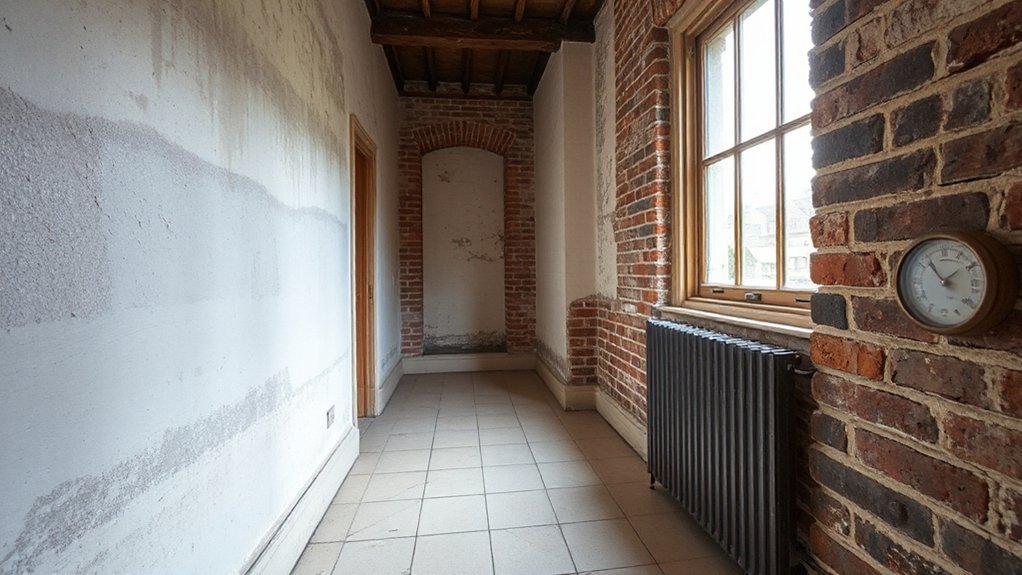
What worked here and what didn’t offers a crisp look at practical outcomes and missteps you can learn from. You’ll see which measures delivered measurable damp proofing results and which approaches fell short in real-world conditions.
Use these insights to guide decisions, avoid repeating errors, and tailor solutions to your property’s specific challenges.
What Worked Here
In this case study snapshot, you’ll see precisely what worked and what didn’t when tackling damp in an older UK property. Focused actions delivered reliable results, with targeted repairs and careful material choices.
Key successes included preserving the integrity of Historical paint and protecting Original flooring during moisture remediation. You’ll notice that early moisture assessment guided every decision, preventing unnecessary disruption and cost.
A combined approach—ventilation, controlled humidity, and selective damp-proofing—stopped recurrent damp without wholesale reconstruction.
- Accurate diagnostic timeline to prioritize fixes
- Gentle removal around sensitive surfaces
- Preserving Historical paint while drying walls
- Protective measures for Original flooring during works
- Clear, occupation-friendly schedule and communication
What Went Wrong
While the initial assessment highlighted promising approaches, several missteps undermined efficiency and increased risk. You discover that emphasis on cosmetic fixes ignored underlying moisture dynamics, delaying durable results.
Historical preservation limited the scope of intrusive testing, so you underestimated wall assemblies and moisture pathways.
You pursued Modern interventions without sufficient monitoring, leading to rebound damp and repeated spot repairs.
Suboptimal timing between dehumidification, insulation, and vapor barriers caused trapped moisture in voids, risking fungal growth and structural decay.
Diagnostic drafts lacked continuity across elevations, so interventions weren’t coordinated with exterior detailing.
You saw costs escalate as contractors rework poor layouts.
The lesson: balance Historical preservation with evidence‑based practice, and align Modern interventions with long‑term performance, preventing superficial fixes from compromising durability.
Case Study Snapshot: What Helped and What Didn’T
Case studies reveal the practical outcomes of damp proofing in older UK homes, showing what worked well and what didn’t. You’ll see that strategic interior insulation and careful use of modern materials often deliver lasting dryness, but you must avoid over-hasty treatments that ignore moisture sources.
In these snapshots, successful projects combined airtight detailing, breathable substrates, and proactive ventilation to sustain long-term results. Failures typically stemmed from blocking air movement, mismatching materials, or neglecting existing timber decay.
- Prioritise interior insulation that breathes
- Select modern materials compatible with historic structures
- Maintain continuous ventilation and humidity control
- Address moisture sources before finishes
- Inspect and re-evaluate every 3–5 years
Frequently Asked Questions
Can Lime-Based Damp Proofing Cause Paint Peeling Later On?
Yes, lime-based damp proofing can cause paint peeling later on if you don’t manage moisture correctly. Lime preservation helps regulate moisture, but inconsistent drying can still push through paint, reducing adhesion.
Guarantee walls are fully damp-stressed before painting, use breathable finishes, and test adhesion after lime application. Properly prepared surfaces improve paint adhesion, preventing peeling.
Monitor humidity, avoid sealing joints too tightly, and reseal if damp returns.
Are Modern Membranes Ever Appropriate in Listed Buildings?
Yes, but sparingly and with caution. In listed buildings, you only use modern membranes when historical restoration goals demand it and no traditional lime-based method suffices.
You assess humidity, breathability, and long-term damage, balancing craft and safety. Modern technology can help detect moisture paths and schedule repairs, yet preserve character.
If adopted, document extensively and guarantee approvals. You’ll avoid unnecessary alteration, prioritise compatibility, and coordinate with conservation authorities for a compliant, respectful scheme.
How to Budget for Long-Term Damp-Proofing Without Harming Fabric?
Budget sensibly by treating damp-proofing like guarding a ship: plan, measure, then repair without weakening the hull. You’ll want a phased plan that balances cost estimation with long-term durability, minimizing fabric intrusion.
Prioritize breathable, compatible materials and moisture-control strategies. Consider contingency funds for inspections and reworks.
Track material longevity, factor in maintenance, and align with energy improvements. Your approach should be economical, precise, and anticipatory, ensuring lasting protection while preserving historic fabric.
Can Decorative Plaster Be Safely Removed for Repairs?
Yes, decorative plaster can be safely removed for repairs, but you must plan carefully. Use controlled Removal techniques to minimize damage and dust; seal adjacent areas, wear PPE, and test for moisture beforehand.
Score with a utility knife, detach plaster in small sections, and support the lath underneath. Expect potential acoustic lath or plaster failures.
Restore with matching materials, and monitor for new damp signs after re-plastering to protect the fabric.
Do Breathable Solutions Require Ongoing Maintenance Costs?
Yes, breathable solutions do involve ongoing costs, though they’re typically manageable. You’ll need regular inspections, occasional resealing, and potential filter or membrane checks to maintain effectiveness.
Focus on moisture control and ventilation strategies to prevent damp recurrence. Keep humidity monitor readings consistent, fix leaks promptly, and guarantee proper air exchange.
Routine maintenance reduces long-term damage and preserves breathability, making the system cost-efficient over time rather than a one-off expense.
Conclusion
In sum, you’ll find that wiser damp strategies respect historic fabric without pretending it isn’t there. Breathable lime-based systems, attentive detailing, and smart ventilation keep moisture from nudging the walls into trouble. It’s not about perfect dryness, but steady balance—allowing walls to breathe, while you monitor and tweak. With regular checks, modest upgrades, and thoughtful maintenance, the fabric lasts longer, looks truer, and costs less over time than sweeping, structure-altering fixes.
About the Author