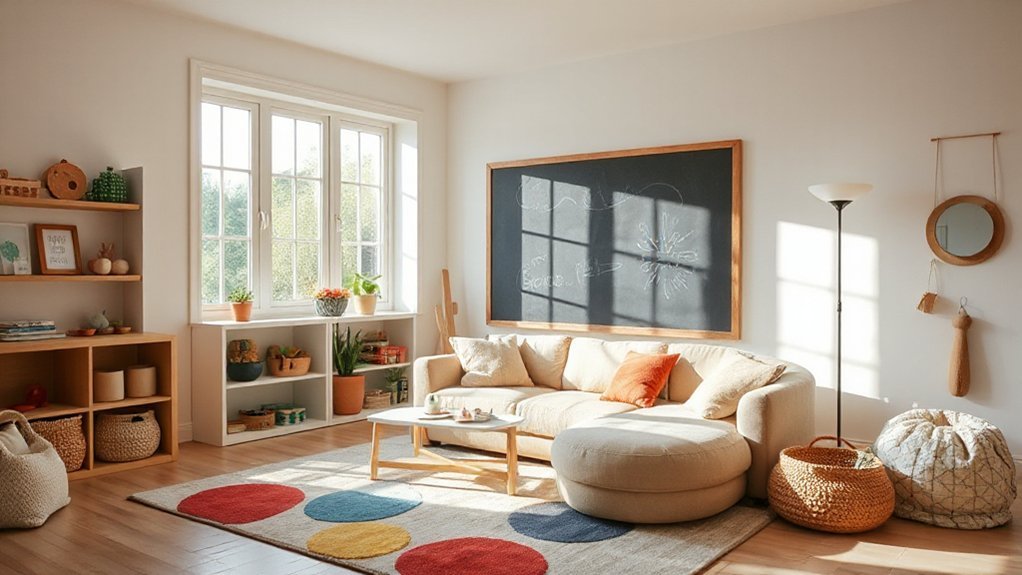
In a living room where rounded coffee tables soften play zones and outlet covers stay tucked away, you balance safety with style to keep both kids and adults comfortable. You’ll want durable, easy-clean surfaces, modular storage, and hidden safety features that don’t shout “childproof.” Picture a cozy reading nook, layered lighting, and flexible seating that expands with family life. There’s more to it than looks, and the details make all the difference as you plan the space.
Key Takeaways
- Prioritize safety with rounded furniture, cordless controls, and easy-access, clearly labeled zones for quick, risk-free play and daily routines.
- Use durable, easy-clean floors and finishes that resist stains and scratches, with non-slip surfaces and underfloor warmth.
- Incorporate modular, adaptable storage and color-coordinated containers to reduce clutter and support responsible toy organization.
- Create cohesive color storytelling with playful textures, interactive art, and layered lighting for versatile, child-friendly zones.
- Establish daily 10-minute routines for tidying, safety checks, and toy rotation to sustain a calm, organized living space.
How to Balance Safety and Style in a Child-Friendly Living Room
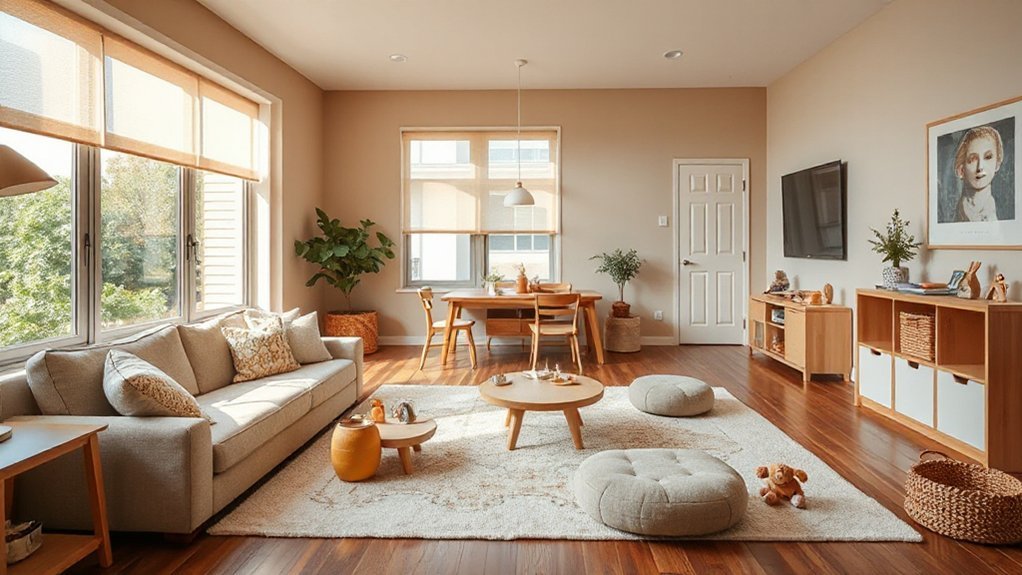
To balance safety and style in a child-friendly living room, start with a clear plan that prioritizes low-risk zones and adaptable, stylish solutions. You map high-traffic areas, lock away small objects, and choose furniture with rounded edges.
You’ll implement interactive safety features like outlet covers that blend with decor and soft-close drawers to reduce pinches, while keeping the look cohesive.
Use stylish child proofing with color-coordinated guards and furniture height flexibility, so growth is accounted for. Favor modular sets that reconfigure as needs shift, plus slip-resistant rugs to minimize slips.
You keep cords tucked and blinds with cordless operation.
You document a simple maintenance routine to refresh finishes, test protections quarterly, and rotate focal pieces to sustain a calm, functional atmosphere without sacrificing aesthetics.
Set Your Design Priorities: Must-Haves vs Nice-to-Haves
Set your design priorities by separating must-haves from nice-to-haves, so you can make confident trade-offs that don’t derail safety or style. You’ll define a clear blueprint that supports daily play, yet preserves a cohesive look.
Focus on layout, storage, and kid-friendly touches that reinforce your vision without clutter.
- Must-haves: sturdy furniture, hidden storage, safe finishes, easy-clean surfaces
- Nice-to-haves: modular seating, colorful accents, gallery-style art displays, flexible lighting
- Toy organization strategies that maximize floor space and minimize tangles
- Ways you balance artistic expression with durable design, so creativity thrives without chaos
Choose Durable, Easy-Clean Floors and Surfaces
When you pick floors and surfaces for a child-friendly living room, durability and easy cleaning come first, but you don’t have to sacrifice style. Choose materials that resist stains, scuffs, and spills, then verify with real-world tests—drop a toy, spill a drink, wipe with a damp cloth.
Eco friendly materials should meet performance goals without sacrificing safety, especially for high-traffic zones. Look for seamless or tightly grouted options to minimize dirt penetration, and opt for finishes that resist scratches while staying gentle to little hands.
Non slip surfaces add protection on slick floors and in progressions to rugs. Plan for underfloor heating or radiant mats if you crave warmth without bulky floor cushions.
Prioritize colorways and textures that hide minor marks, ensuring a calm, durable, and stylish base.
Create a Cozy Reading Nook for All Ages
A cozy reading nook starts with a quiet, inviting spot that complements your durable, easy-clean floors. You create a versatile retreat by balancing comfort and accessibility for all ages, so everyone can reach a favorite book in seconds. Focus on spine-friendly seating, spill-resistant fabrics, and low clutter.
Choose Creative color schemes and textures that energize study sessions while soothing relaxation. Integrate cozy lighting ideas with adjustable brightness to suit daytime reading, late-night stories, and quiet reflection.
Use smart accents like a small shelf, a soft rug, and a side table for drinks or glasses. Keep safety in mind with rounded furniture edges and secure cords.
- Ergonomic seating with washable covers
- Layered lighting for mood and task tasks
- Accessible storage within arm’s reach
- Durable, spill-resistant textiles in welcoming hues
Smart Storage That Actually Works for Busy Families
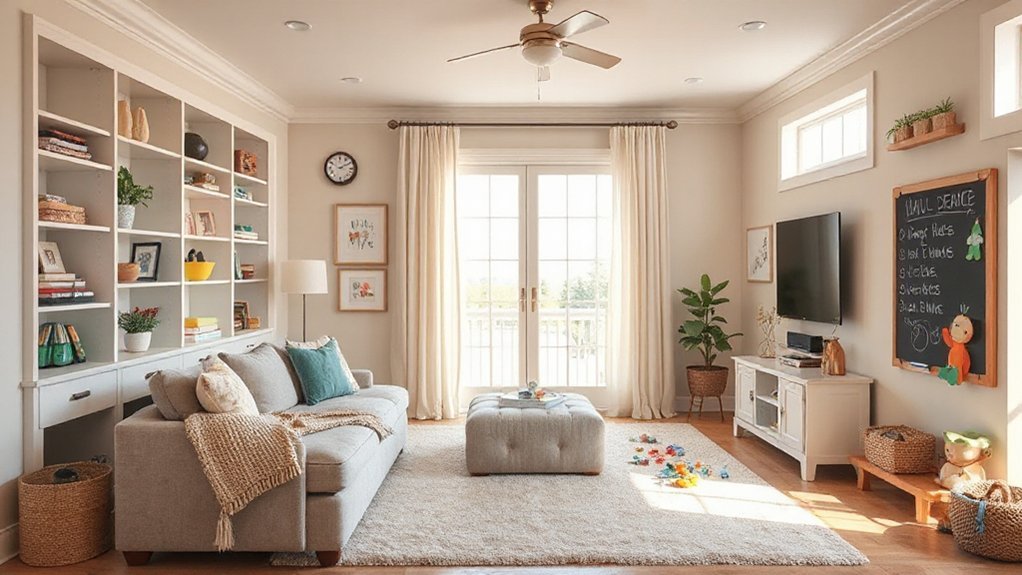
Smart storage for busy families isn’t about stuffing more shelves; it’s about designing systems you actually use. You build a daily rhythm around accessible, clearly labeled zones so clutter never sneaks back.
Start with interactive storage that invites participation: a low, wide book bin you can reach in seconds, a pull-out laundry bin beside the hampers, and touch-friendly drawers for quick gear.
Use colorful containers to differentiate zones and signal purpose—yellow for crafts, blue for toys, green for chargers. Choose modular pieces that stack or collapse, so you can reconfigure as needs shift.
Label fronts with large print and icons, not just words. Maintain a simple purge cadence, rotating out items every season.
With intention and consistency, storage becomes a tool, not a chore.
Design Your Space With Distinct Play, Relaxation, and Gather Zones
Design your space with distinct zones for play, relaxation, and gathering to keep activity purposeful and spaces clear. You’ll map each area to its core need, then align furniture, textures, and paths to minimize overlap.
Use interactive decor to invite participation without clutter, and designate a sensory zones corner with soft lighting, tactile rugs, and calm sounds.
Color blocks or divider furniture visually cue purpose, while storage keeps zones tidy. Plan sightlines so supervision remains easy from the gathering seat.
Introduce flexible elements that adapt as skills grow, maintaining a cohesive flow. Consider a central rug to anchor the play zone, a comfortable reading nook for relaxation, and a child-height table for collaborative crafts.
- Interactive decor prompts engagement across zones
- Sensory zones emphasize touch, sound, and calm
- Clear sightlines support supervision
- Flexible elements grow with kids
Soft, Flexible Seating That Grows With Kids
You’ll choose soft seating that adapts as your kids grow, prioritizing pieces that cozy up now and reconfigure later. Look for cushions with durable covers and modular shapes that can reassemble into bigger or smaller arrangements, keeping comfort and support in balance.
With growth-friendly options, you create a flexible focal point that stays inviting from toddler messes to tween movie nights.
Soft Seating Options
What makes soft seating truly kid-friendly is its adaptability: seating that can be reconfigured, stored easily, and used from toddler years through pre-teen weeks. You’ll prioritize pieces that flex with play, reading, and quiet time, avoiding rigid layouts. Think modular cushions, low-profile frames, and durable fabrics that wipe clean.
Plush armchairs and a bean bag become focal points for creative seating, storytelling, and casual lounging. Prioritize safety, stain resistance, and easy relocation for quick room recharts.
Design with storage that doubles as seats, so clutter disappears between activities. Build a playful yet purposeful setup that invites experimentation and growth.
- Flexible modules for different activities
- Easy-to-clean fabrics and surfaces
- Accessible, low-profile seating
- Hidden storage that doubles as seating
Growth-Friendly Cushions
Prioritize durable, wipeable fabric and stitch patterns that resist wear from active routines. When selecting shapes, favor rounded edges to prevent injuries and to invite sharing.
Color coordination matters: use a restrained palette with contrasting accents to guide zones without clutter. Cushion ergonomics guide posture, so choose responsive foam cores that support lumbar alignment and knee flexion during seating or floor lounging.
Add removable covers for easy laundering, and label zones conceptually—story corner, craft alcove, block-building plane—so kids internalize boundaries and your living room remains organized as it grows.
Kid-Friendly Decor That Still Impresses Guests
When decorating a kid-friendly living room that still wows guests, focus on durable finishes, thoughtful storage, and a cohesive look that reads as intentional rather than childish. You’ll blend practicality with personality by selecting interactive art and themed wall decals that invite curiosity without clutter.
Choose furniture with easy-clean surfaces, hidden storage, and solid silhouettes to anchor the room.
Aim for a color story that’s cohesive, with pops of playful texture through textiles and accessories.
- Durable finishes with washable fabrics
- Storage-smart furniture and baskets
- Interactive art that sparks conversation
- Themed wall decals integrated into the décor plan
Lighting Layering for Mood, Safety, and Focus
You’ll balance a soft ambient glow with direct task illumination at study spots, play zones, and reading nooks for steady visibility. Choose dimmable fixtures and child-safe bulbs to adjust brightness without clutter.
Implement ceiling or wall washes for even coverage, then add focused lamps at desks and activity tables to reduce shadows. Use adjustable accents to cue zones—bright for cleanup tasks, warmer tones for quiet reading.
Keep cords tidy and outlets childproof. This approach creates depth, reduces glare, and supports concentration while preserving a welcoming, breathable environment.
Quick, Simple Maintenance Routine to Keep It Calm
To keep the calm in your kid-friendly living room, establish a quick, 10-minute daily routine that covers tidy surfaces, accessible storage, and ready-to-use lighting. You’ll maintain order, reduce clutter, and prevent stress spikes before tasks or playtime begin.
Focus on practical steps that support safety and durability, matching your vision of a serene space. Integrate deliberate habits that reinforce ownership, not policing, so calm becomes automatic.
- Tidy surfaces: clear toys, wipe spills with stain resistant fabrics in mind.
- Storage: keep bins reachable, label, rotate frequently used items.
- Surfaces: quick wipe-downs, check for sharp edges, replace worn padding.
- Lighting: switch on gentle task lighting, ensure safe cords and switches are childproofed.
Childproofing essentials, stain resistant fabrics.
Frequently Asked Questions
How Can I Hide Clutter Without Hiding Personality?
You can hide clutter without losing personality by using clever storage solutions and decorative concealments that feel intentional. Start with chunky storage benches and open shelving with labeled baskets, so toys and gadgets tuck away neatly.
Choose decorative concealments like stylish ottomans, colorful baskets, and under-sofa bins that blend with your palette. Add personal touches—gallery wall, vibrant throws, and meaningful trinkets—so every hidden space still reflects your style and fuels creativity.
What Are Budget-Friendly Kid-Friendly Wall Ideas?
Colorful murals and removable wallpaper offer budget-friendly, kid-friendly wall ideas. You can transform a space fast, swap themes seasonally, and keep walls practical with wipeable finishes.
Try bold, washable paint for accent walls paired with removable wallpaper panels; you’ll update without committing.
Create zones with magnetic boards or cork strips for art, notes, and schedules.
Use low-cost decals to add whimsy.
Plan layouts first, measure precisely, and choose durable, easy-clean materials for long-lasting function.
How Do I Kid-Proof Power Outlets Stylishly?
To kid-proof power outlets stylishly, use outlet covers that blend with your decor and stay firmly in place. Choose tamper-resistant receptacles for added safety, and pair them with decorative, cushioned furniture placement to keep cords out of reach.
Install cord organizers behind furniture, and consider wall-mounted power strips with discreet spacing.
Prioritize child safety by teaching habits, and rotate covers to match room updates. This keeps both visibility and safety aligned with your design vision.
Which Fabrics Resist Stains but Feel Premium?
Stain resistant fabrics feel like a quiet shield, and premium textures still breathe luxury into daily life. You’ll want performance blends, tightly woven bouclé, and treated linen mixes that resist spills while staying soft to the touch.
Choose nanotechnology or microfiber finishes for easy cleanup, then pair with durable dyes. You’ll see them hold color, resist pilling, and age gracefully, helping your space stay chic under busy, imperfect moments.
How Can Lighting Be Adjusted for Homework and Play?
You adjust lighting by switching between adjustable lighting and task lighting to suit homework and play.
For study, set high-contrast, cool-toned task lighting near desks to reduce eye strain. Dim ambient lights to avoid glare during screen time.
For play, activate warmer, softer adjustable lighting to create coziness. Use dimmers and adjustable lamps with ergonomic heights, ensuring glare-free angles.
Create zones: bright task areas, relaxed reading nooks, and flexible play spaces.
Conclusion
You’ve laid out safety, storage, and softness with precision, and the room begins to breathe like a well-tuned hive. But the last detail—what’s hidden in plain sight—keeps you listening for the next cue. Will the hidden outlets stay covered, the rugs stay secure, the blinds stay cordless? As you test and tweak, you feel the space whisper back: readiness isn’t a finish line, it’s a rhythm. Stay curious, stay vigilant, and watch the calm unfold.
About the Author