

You may not realize that the cost gap between DIY and a contractor isn’t just about labor—code compliance and risk carry real financial impact. You can handle simpler tasks like painting or patching, but you’ll hit limits with electrical, plumbing, or structural work, where a misstep can escalate costs or void protections. Start by evaluating scope, permits, and safety requirements, then decide what to tackle yourself and where to bring in pro help. Your plan starts with a precise boundary.
Key Takeaways
- Assess scope, budget, and risk; DIY for non-structural tasks with clear specs, hire professionals for electrical, plumbing, or code-driven work.
- Prioritize planning, measurements, and material summaries; verify codes and utility locations before starting any project.
- Use design-build for faster decisions and integrated coordination; traditional contracting offers detailed scope control with more interfaces.
- Document assumptions, decision points, and a transition plan to professionals when accuracy or safety demands exceed DIY capabilities.
- Establish milestones, safety protocols, and regular progress check-ins to keep timelines and quality on track.
Decide: DIY vs. Hire for Your Remodel

Deciding whether to tackle a remodel yourself or hire a contractor hinges on scope, budget, and risk tolerance. You assess project boundaries, then map capability to requirements.
If the scope is narrow, with clear specifications and minimal structural change, DIY may reduce cost without compromising safety. If complexity increases—hidden framing, electrical, plumbing, or code-driven criteria—expert oversight minimizes rework and liability.
Your choice impacts schedule, quality, and warranty status, so document assumptions and decision points.
For creative inspiration, you align design intent with practical constraints, validating options against site realities and code provisions.
Material selection becomes a critical control point; you favor proven products, informed by performance data and installation tolerances.
In all cases, formalized criteria guide when to proceed, defer, or engage professional services to preserve project integrity.
Tasks DIYers Can Tackle and Where to Stop
You can handle many prep and finish tasks yourself, but you should stop where safety, structural integrity, or specialized codes come into play.
Start with non-structural cosmetic updates, basic demolition, and standard finishes, then defer electrical, plumbing, and any work that requires permits or licensed oversight.
We’ll map clear decision points to help you know when to hire help.
What You Can Tackle
Some tasks are well within a DIYer’s reach, while others demand professional oversight; knowing where to draw the line saves time, money, and risk. You can tackle framing, drywall patching, painting, basic flooring, and caulking, provided you verify local codes and utility locations.
Prioritize clear planning, accurate measurements, and material summaries before cutting or buying. Tool safety remains nonnegotiable: wear eye and hearing protection, secure power sources, and store blades away from children.
Material selection matters: choose moisture-resistant sheetrock in baths, compatible underlayment for floors, and low-VOC paints for indoor air quality. Don’t attempt structural alterations, electrical line work beyond switch boxes, or gas-line modifications.
When in doubt, consult manuals and reputable guides to confirm limits and sequence.
When to Hire Help
Determining when to hire help hinges on risk, complexity, and codes; when tasks exceed your license, training, or tool access, professional oversight becomes prudent.
You should tackle only elements that you can verify compliant with current standards and that you can complete safely without specialized equipment. Simple demolition, surface prep, painting, and cabinetry adjustments may be within reach when you understand moisture, ventilation, and finish compatibility.
However, electrical work, plumbing modifications, structural alterations, and gas line work demand licensed supervision. For home automation installations, DIY can cover low-voltage wiring and basic device setup, but expert review reduces misconfigurations and security gaps.
Eco friendly upgrades, such as efficient HVAC controls or insulation improvements, benefit from professional design checks. When in doubt, consult an experienced contractor to confirm scope and risk boundaries.
The Essential Decision Framework for Renovations
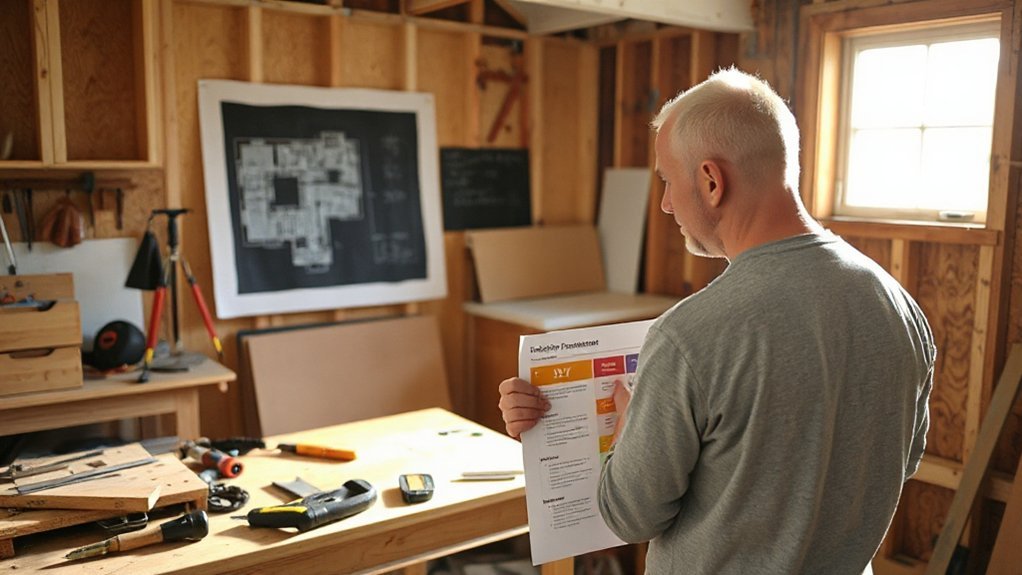
To decide between DIY and hiring a contractor, you must evaluate the renovation’s scope, risk, timeline, and cost uncertainties. You quantify deliverables, required skills, and maintenance implications, then map dependencies and critical-path tasks.
Assess risk by identifying safety hazards, structural impacts, and potential code conflicts; prioritize mitigations and contingency plans.
Establish a decision matrix that weights financial risk, disruption tolerance, and contractor reliability.
Consider material strategy, including Eco friendly materials, and long-term durability versus upfront cost.
Factor historic preservation constraints where applicable, noting preservation standards and documentation needs.
Develop a phased schedule with milestone reviews, aligning procurement, subcontracting, and inspection windows.
Document assumptions, biases, and fallback options to preserve flexibility, then iterate the framework as design evolves and new constraints emerge.
Permits, Codes, and When You Absolutely Need Them
Permits and codes shape every renovation path, and knowing when you absolutely need them prevents delays, fines, and rework. You must identify applicable permit requirements before starting, aligning your scope with local building department rules.
Inspectors verify structural, electrical, plumbing, and fire safety elements, so you should plan plan reviews early, not after. When you pursue permit requirements, you guarantee code compliance across design, materials, and methods, reducing liability and warranty gaps.
Some projects are exempt, but many interior or exterior changes trigger review even for cosmetic updates if load, fire separation, or egress are altered. If you’re unsure, consult the authority having jurisdiction or a licensed professional.
Skipping steps risks enforcement actions, costly rework, and invalid guarantees.
Budget Breakdown: DIY Savings vs. Contractor Costs
You’ll compare DIY savings against the contractor cost breakdown to quantify where value lies. We’ll assess material and tool expenditures, labor time, and potential overruns to reveal true cost differences.
This sets the framework for a data-driven budget discussion grounded in concrete numbers rather than assumptions.
DIY Savings Compared
What’s the bottom line when weighing DIY savings against contractor costs? You’ll compare material, labor, and time with the risks and uncertainties of quality.
When you quantify hours, you reveal true savings, not just ticket prices. Your DIY motivation hinges on control, predictability, and learning, while contractor reputation informs risk management and warranty coverage.
Use precise calculations to surface opportunity costs, including downtime and rework. The result should be a conservative estimate favoring proven tasks and documented outcomes.
- Time-to-delivery estimates and opportunity costs
- Material waste and purchase efficiency
- Warranty scope and post-project support
- Skill limitations versus required safety standards
Apply these factors to decide where you gain value, and where you rely on external expertise for reliability and long-term performance.
Contractor Cost Breakdown
Material procurement includes unit costs, delivery fees, waste management, and limited-use returns, emphasizing material sustainability when selection favors durable, repairable options.
Labor rates reflect trade classifications, skill levels, and regional wage norms, with clear delineation between on-site time and supervision.
Trade-specific surcharges capture permit fees, safety compliance, and temporary utilities, while overheads encompass project management, insurance, and equipment amortization.
Consider contractor licensing as a non-negotiable quality gate—verify up-to-date credentials, scope coverage, and bond status to mitigate risk.
A transparent breakdown guides DIY savings versus contractor engagement, supporting data-driven decisions and risk-aware investment.
Core Trades: What You Can Do vs. What Requires a Pro
Core trades divide the work into tasks you can handle safely and tasks that require professional oversight. You evaluate each job by risk, skill, and the consequences of failure, then assign accordingly.
Before you start, prioritize tool safety and material selection to prevent issues later.
- Assess loads, wiring, plumbing, and structural elements for complexity and code compliance
- Use correct PPE, secure workspaces, and lock out utilities where required
- Verify compatible materials and fasteners with manufacturers’ specs
- Document decisions and mark non-professional limits clearly
Planning, Scheduling, and Realistic Timelines
Planning, scheduling, and establishing realistic timelines are foundational to project success: a clear plan reduces scope creep, aligns expectations, and keeps crews productive. You’ll define phases with concrete milestones, sequence tasks by dependency, and allocate buffers for tradeoffs.
Use a deterministic Gantt view to map critical paths, identify float, and set target completion dates that reflect labor availability and lead times. Integrate material selection into your schedule so procurement aligns with install windows, minimizing idle periods.
Build in safety considerations as nonnegotiables: permit review, site access restrictions, and equipment shutdown procedures, preventing rework. Establish daily check-ins to verify progress against baselines, capture deviations, and adjust weekly timelines without compounding delays.
Document decisions, update stakeholders, and preserve a traceable timeline for future renovations.
Managing the Renovation: Contracts, Milestones, and Communication
With the roadmap from planning and scheduling in hand, you’ll formalize the renovation process through clear contracts, defined milestones, and disciplined communication.
You’ll establish enforceable terms, scope definitions, and change-control procedures to prevent scope creep. Rely on documented expectations to guide progress, payment schedules, and risk allocation, and guarantee compliance with relevant codes.
Maintain open channels aligned with defined communication protocols to minimize misinterpretation and delays. Track milestones with objective criteria and sign-offs, enabling timely course corrections and transparent accountability.
Proactively address potential disputes before they escalate, using written records to support decisions and remedies.
- Clear contracts and scope
- Defined milestones and sign-offs
- Change-control and risk allocation
- Consistent communication protocols
Common DIY Pitfalls That Wreck Timelines
Common DIY projects collapse timelines when homeowners underestimate scope, misjudge labor needs, or skip critical permitting steps. You’ll encounter chronic delays when you overestimate your own capabilities, assume faster completion than reality, or fail to align sequential tasks.
Precise planning matters: define deliverables, establish realistic milestones, and verify dependencies before starting. Tool safety becomes a bottleneck if you rush purchases or ignore manufacturer guidelines, increasing error risk and downtime.
Material selection drives pacing; incompatible products force redesigns, returns, and substitutions that stall progress. Tighten workflows by batching related tasks, validating site access, and scheduling inspections early.
Maintain clear documentation of change orders and accepted tolerances to prevent scope drift. Finally, benchmark your progress against the plan, reserving contingency time for unforeseen complications.
Design-Build vs. Traditional Contractors: Which Is Right?
Design-build offers integrated project coordination that can streamline decision-making, but you’ll want to compare how this differs from traditional contractors’ separate roles.
You’ll also assess budget transparency variances, noting which model provides clearer cost tracking versus potential change orders.
Finally, evaluate timeline and milestone control, focusing on who holds responsibility for schedule adherence and how milestones are defined and monitored.
Project Coordination Differences
When coordinating a project, choosing between design-build and traditional contractor approaches changes who handles interfaces, schedules, and risk.
In design-build, the design and construction partners act as a single coordination node, reducing handoffs but concentrating accountability.
In traditional contracting, you juggle multiple interfaces, increasing meetings and risk of misaligned timelines.
You’ll notice differences in project delegation and fault lines around scope changes, subcontractor sequencing, and decision latency.
Coordination challenges shift from integrated teams to contract-based control, affecting how you communicate requirements and verify progress.
The goal is minimizing latency and ambiguity while maintaining quality and budget alignment.
- Unified responsibility versus dispersed accountability
- Faster decision cycles in design-build, slower in traditional
- Clearer interfaces, but higher initial coordination input in design-build
- Documented change processes reduce dispute risk in both models
Budget Transparency Variances
In design-build, integrated teams aim for collaborative budgeting, reducing owner-initiated changes but sometimes masking cost drivers behind a single price target; this can elevate cost discrepancies when scope evolves.
Traditional contracting emphasizes detailed unit prices and escalation allowances, offering clearer line-item visibility yet risking forecast drift if change orders accumulate.
You assess how documentation, schedule-related updates, and change-control processes influence transparency.
Ultimately, you’ll determine which method yields disciplined cost reporting, aligned incentives, and auditable records, balancing predictability with responsiveness to design evolution and procurement realities.
Budget transparency remains central to informed decision-making and project accountability.
Timeline and Milestone Control
Coordinating timelines and milestones hinges on how each contracting approach plans, tracks, and adapts schedules in response to scope changes.
In design-build, you benefit from a single team coordinating design and construction, which reduces handoffs and accelerates decisions. However, you must lock in material selection early to avoid backtracking.
Traditional contracts separate design and build, increasing review cycles yet preserving specialist input. Schedule buffering is common to accommodate design iterations.
Both approaches require clear milestones, defined acceptance criteria, and change-order protocols to maintain aesthetic consistency across trades.
You’ll benefit from documented baselines, risk registers, and weekly status checks.
Be mindful of procurement lead times and sequencing dependencies that impact finish dates and costs.
- Early design decisions drive later phases
- Unified vs. staggered approvals affect pace
- Material selection impacts lead times
- Change management preserves aesthetic consistency
Transitioning From DIY to Pro Help When Needed
Shifting from DIY to pro help becomes necessary when accuracy, safety, or timing exceeds your skills or available tools. In this progression, you assess task criticality, risk, and impact on schedule, then decide whether to delegate or collaborate with a licensed professional.
Begin with clear project scoping: outline deliverables, constraints, and inspection milestones to prevent scope creep.
Tool selection becomes a joint effort—match equipment capability to required tolerances, and document why alternatives won’t meet specs.
Prioritize safety protocols and code compliance, ensuring all work aligns with local regulations.
Develop a concise transition plan that minimizes disruption, including access control, material sequencing, and contingency buffers.
Skill development remains ongoing; you identify gaps, schedule targeted training, and reserve evaluation windows to confirm contractor outcomes align with your standards.
Frequently Asked Questions
How to Evaluate Hidden Costs Before Starting DIY Projects?
You should start by performing a budget estimation and a skill assessment before you begin any DIY project.
Identify hidden costs like permits, utility shutoffs, disposal, and tool wear, then add a contingency.
Examine material waste, delivery fees, and safety gear.
Compare professional quotes to in-house estimates, and validate with supplier prices.
Track time vs cost, and revise as you learn.
This disciplined approach helps you anticipate overruns and refine your plan.
When Should a Permit Be Required for Minor Renovations?
When in doubt, you should obtain a building permit for minor renovations that affect structural elements, electrical, plumbing, or safety. Think of it like a safety net: skipping permits risks noncompliance and costly corrections later.
Building permits guarantee renovation regulations are met and inspected. In many jurisdictions, even cosmetic changes that impact load paths or fire codes require approval.
Always verify with your local building department before starting any project.
What Common Safety Gear Is Essential for DIY Home Upgrades?
Protective equipment and safety protocols are essential for any DIY home upgrades. You should wear safety glasses or a face shield, hearing protection, dust masks or respirators when needed, and sturdy gloves.
Use a hard hat on head-risk tasks, and steel-toed boots for heavy material handling.
Make certain proper ventilation and secure electrical work with insulated tools.
Adhere to safety protocols, keep your work area organized, and routinely inspect gear for wear or damage.
How to Handle Liability if a DIY Project Causes Damage?
If a DIY project causes damage, you handle liability by reporting it promptly, documenting every detail, and securing liability insurance before it’s needed. You’ll notify your insurer, preserve evidence, and file a claim, then coordinate with the party affected to settle costs.
Maintain thorough damage documentation: photos, dates, witnesses, and receipts. You stay proactive, precise, and compliant, ensuring coverage applies and your exposure stays controlled while you address repairs and prevent future incidents.
Is There a Checklist to Transition From DIY to Pro Help?
Yes, there’s a checklist to shift from DIY to pro help. Start with Project planning, outlining scope, budget, and milestones.
Perform Skill assessment for every task, rating proficiency and safety risks.
Flag items needing licensed trade input or inspections.
Gather drawings, permits, and warranty info, then create a phased handoff schedule.
Confirm contractor qualifications, insurance, and lien waivers.
Establish communication cadence, change-order protocol, and documentation retention to guarantee a seamless, compliant handover.
Conclusion
If you treat a remodel like a controlled experiment, you’ll test one variable at a time and validate safety, codes, and budget at every step. The theory that “DIY saves more than it costs” holds only when you cap scope, know your limits, and call in pros for high-risk tasks. You’ll often save by DIYing simple, documented tasks; you’ll lose time and money if you misjudge complexity. Test, document, adapt, and know when to hire.
About the Author