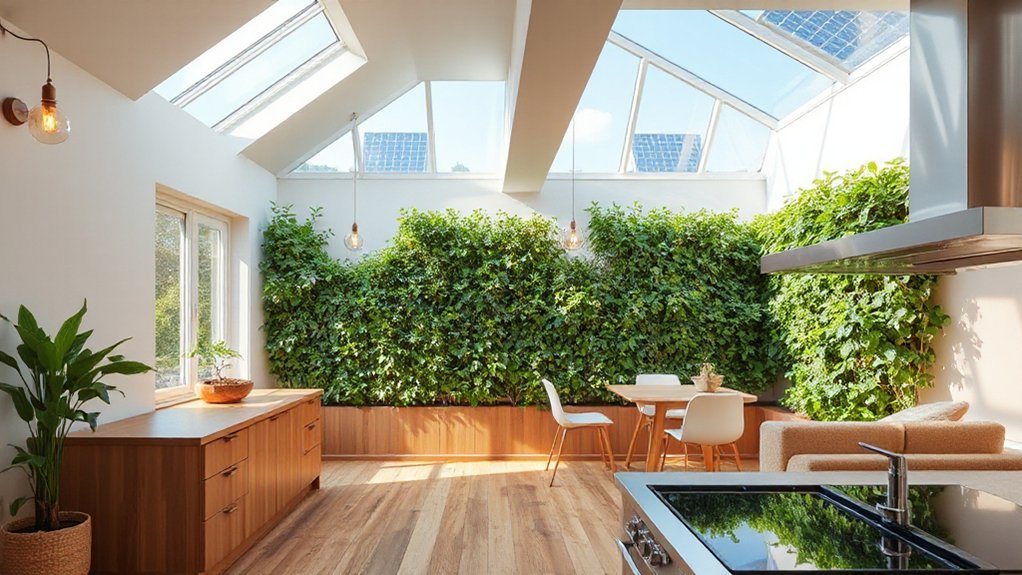
Ever notice how a small change in your home can cut energy use without sacrificing comfort? Start with airtighting and insulation to curb drafts, then pair high-efficiency LED lighting with smart controls. You’ll see faster payback when you layer in rooftop solar and a smart thermostat. Then choose low-emission, responsibly sourced materials and water-saving fixtures to keep indoor air and bills in check—all while setting up future-proof features that invite deeper optimization. Curious how far you can push this?
Key Takeaways
- Prioritize airtight, high-performance envelope and efficient HVAC with heat recovery to cut operational energy use.
- Install solar (and storage) where feasible, paired with smart controls to maximize on-site generation and self-consumption.
- Choose low-embodied-energy, non-toxic materials with lifecycle data for durable, recyclable components across finishes and cabinetry.
- Implement smart technology: energy monitors, smart thermostats, and automatic lighting to optimize efficiency and reduce waste.
- Conduct regular energy audits, seal drafts, upgrade lighting to LEDs, and apply water-saving fixtures for rapid, measurable payback.
Define an Eco-Friendly Home: Core Criteria
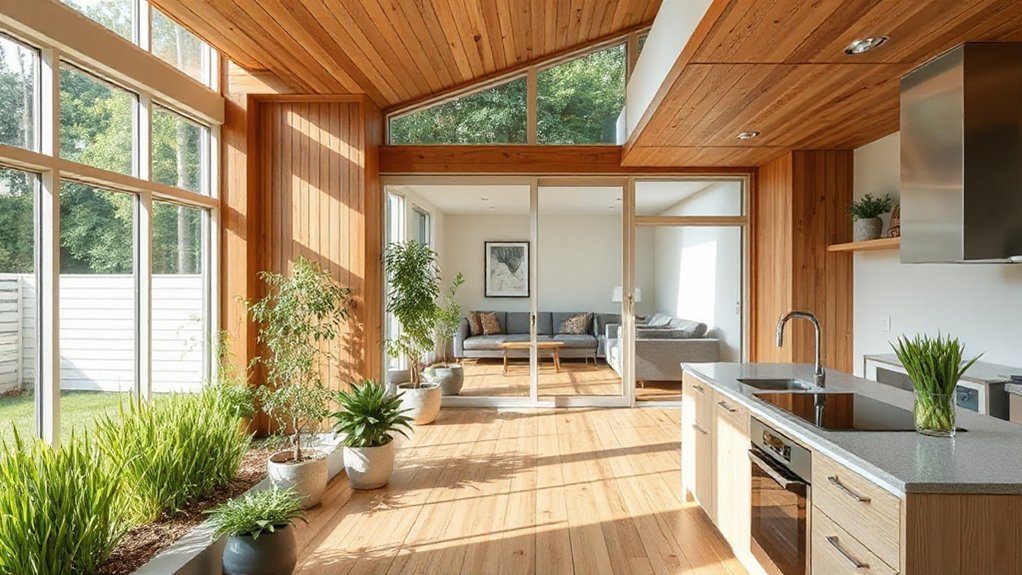
An eco-friendly home is one that minimizes environmental impact across its life cycle, from design and construction to operation and end of life. You define it by measurable criteria: energy efficiency, materials selection, indoor environmental quality, and durability.
Core criteria include airtight building envelope, high-performance insulation, and efficient HVAC with heat recovery when feasible. Sizing and orientation support passive heating, cooling, and daylighting, reducing operational demand.
Materials chosen are low-emission, responsibly sourced, and durable, with lifecycle data supporting reuse or recyclability. Renewable energy integration, such as solar or small wind, offsets on-site consumption.
Construction practices prioritize waste reduction, low embodied carbon, and responsible sourcing. Eco conscious design aligns occupancy patterns with energy supply, and performance testing validates compliance with standards and long-term reliability.
Fast ROI: Energy Upgrades That Make Sense
Prioritizing energy upgrades with rapid payback maximizes value without delaying project timelines. You assess options by installed cost, expected savings, and eligible incentives, then prioritize high-ROI measures.
Begin with high-efficiency cooling, lighting, and insulation, which reduce ongoing energy use and power demand without complex reforms.
Renewable energy installations, such as rooftop solar or small-scale wind, offer visible returns when net metering or stable incentives exist, but verify site suitability and grid interconnection requirements.
Upgrade hot-water efficiency through efficient fixtures and intelligent controls to cut consumption promptly.
Water conservation tactics contribute indirect value by lowering related utility loads, reinforcing overall efficiency.
Document performance benchmarks and track results to validate payback periods.
Choose upgrades that align with grid reliability, climate risk, and long-term operating costs.
Sustainable Materials for Healthy Living
Prioritize products from Renewable sources, ensuring renewability without compromising structural integrity or moisture resistance. Favor low-embodied-energy options that withstand wear and aging, reducing replacement frequency.
Seek certifications that verify content and emissions, and prefer ecoresponsible manufacturing processes over minimal cost.
For finishes, choose non toxic finishes that resist VOC release and maintain surface integrity under daily use.
Drywall, flooring, and cabinetry should align with precise thickness, load ratings, and finish compatibility to avoid pinholes or delamination.
Implement supplier audits, batch tracing, and lifecycle data to confirm long-term health benefits.
Smart Tech to Cut Waste and Lower Bills
Smart tech can dramatically cut waste and lower bills by automating energy use, monitoring consumption, and guiding behavioral changes. You’ll set up smart thermostats to optimize heating and cooling schedules, reducing run times without sacrificing comfort.
Smart plugs and energy monitors reveal appliance draw, enabling targeted shutdowns during peak rates. Integrated water-leak sensors protect supply lines, while demand-controlled circulation minimizes hot-water waste.
For heating and electricity, pair scalable energy storage with on-site generation from renewable energy sources to smooth fluctuations and maximize self-consumption.
Water conservation improves with smart irrigation, moisture sensors, and weather-aware watering, preventing overwatering. In addition, dynamic pricing and time-of-use data help you shift loads to off-peak periods.
Implement secure device ecosystems and regular software updates for lasting efficiency gains.
Budget-Smart Makeovers You Can Do Now
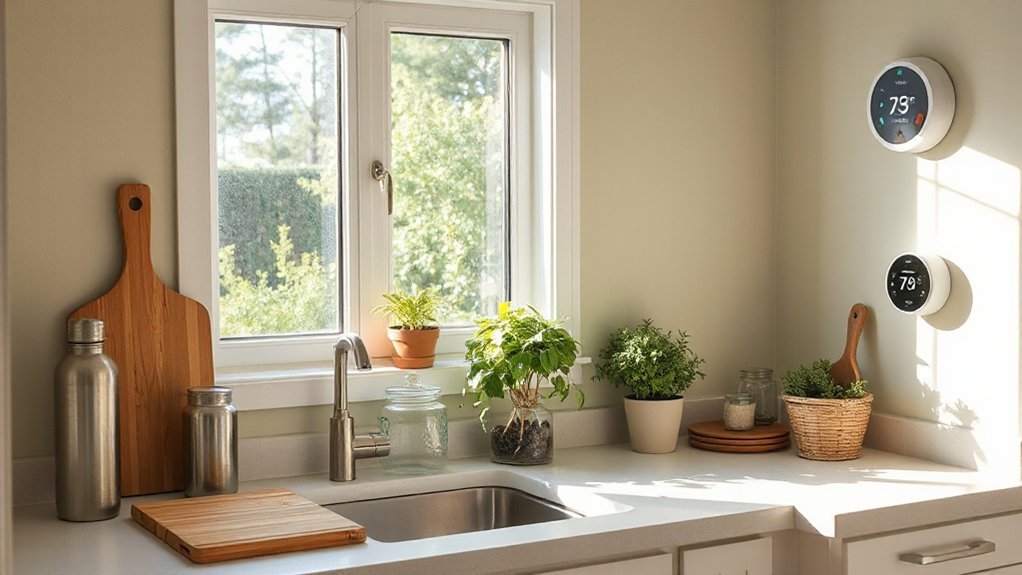
If you’re ready to turn smart-warming concepts into tangible savings, these budget-smart makeovers let you start today without big investments. Begin with insulation fix-ups: seal drafts, weather-strip doors, and add reflective radiator panels to reduce heat loss without new equipment.
Prioritize energy audits to target the highest-return repairs and track monthly consumption for measurable gains.
Rework lighting using high-efficiency LEDs and smart controls; combine with daylight harvesting to cut usage further.
DIY kitchen and bathroom refreshes focus on airtight seals, low-flow fixtures, and durable, repairable components to extend life.
Integrate recycling habits into daily routines and organize simple in-home sorting stations.
Adopt composting strategies to minimize waste and lower disposal costs.
Choose durable, repairable materials to maximize lifespan and savings.
Frequently Asked Questions
How Do I Measure a Home’s Overall Ecological Footprint?
To measure a home’s overall ecological footprint, you track energy use, water consumption, waste, and emissions, then convert those into a single metric like CO2e per year.
Start with utility bills, install smart meters, and estimate embedded emissions from materials.
Include Renewable energy generation and Water conservation gains.
Use life-cycle assessments for major upgrades, and normalize data per square foot.
Compare to regional baselines, then set targets and monitor improvements annually.
Which Certifications Best Reflect Green Home Performance?
The certifications that best reflect green home performance are LEED for Homes, Passive House, and ENERGY STAR for Homes. You should pursue those that align with your priorities, such as energy use and indoor air quality.
When evaluating, look for Renewable energy credits and verified performance data. Certifications should demonstrate reduced energy consumption, durable materials, and healthy indoor environments.
You’ll gain credible benchmarks, clearer retrofit targets, and confidence in long-term efficiency and Indoor air quality improvements.
Can Eco Upgrades Increase Property Value Long Term?
Yes, eco upgrades can raise your property value long term. Consider a hypothetical case where you install rooftop solar plus smart irrigation—the home’s appeal rises to energy resilience and water conservation.
You’ll see higher appraisal notes for Renewable energy credits and lower operating costs, attracting buyers seeking efficiency.
Over time, these features reduce utility bills, differentiate the property, and support value stabilization as demand for sustainable homes grows.
Are There Hidden Costs to Sustainable Renovations?
Hidden costs can arise with sustainable renovations, but you can minimize them through careful planning and procurement.
Expect higher upfront prices for equipment like Renewable energy systems and efficient water-saving fixtures, plus potential permitting or inspection fees.
Ongoing maintenance and battery replacement may add costs.
Yet, you’ll save over time via lower utility bills.
Prioritize Water conservation measures and robust Renewable energy integration to balance initial outlays with long-term performance and resilience.
How Do I Prioritize Upgrades With Limited Budget?
You should start by listing your top two priorities: Renewable energy and Water conservation.
Then map costs against impact. Imagine a tiny drip timer saving you 20 gallons a day and a 5 kW system cutting nested bills; that’s your budgeting anchor.
Prioritize high-return upgrades first, compare payback periods, and stagger investments.
Track energy and water usage, seek tiered incentives, and allocate funds monthly to avoid ballooning costs while maximizing reliability and efficiency.
Conclusion
Imagine your home as a ship gliding a cleaner sea. Each upgrade is a sail trim: improved insulation, air sealing, and LEDs tighten the hull; solar and smart thermostats steer toward calmer currents. Sustainable materials are ballast keeping balance, while water-saving fixtures ease the load. With fast ROI and clear data, you chart steady progress—lower bills, healthier air, less waste. Stay precise, implement steadily, and your eco-friendly voyage becomes a practical, ongoing voyage toward a resilient future.
About the Author