
We’re talking about energy bills that plunge from day one, not years from now. You can start cutting costs today by tightening your home’s envelope, upgrading to efficient gear, and smartly managing how you heat, cool, and light each room. But there’s more to it than a single fix—tiny tweaks, a solid plan, and sensible investments add up. Keep going to map out what to upgrade, what to seal, and how to budget for real, lasting savings.
Key Takeaways
- Upgrade to high-efficiency HVAC systems (furnaces/heat pumps) with proper duct insulation and smart thermostats to cut heating and cooling costs.
- Improve insulation and air sealing (walls, roof, floors, doors, windows) to reduce heat loss and lower utility bills.
- Replace lighting with LEDs and use smart power strips to eliminate phantom loads for immediate savings.
- Install smart controls and zoning to heat or cool only occupied spaces and optimize energy use.
- Adopt solar, water-saving measures, and continuous insulation for sustained reductions and steadier bills.
Why Energy Efficiency Saves Money, Starting Today
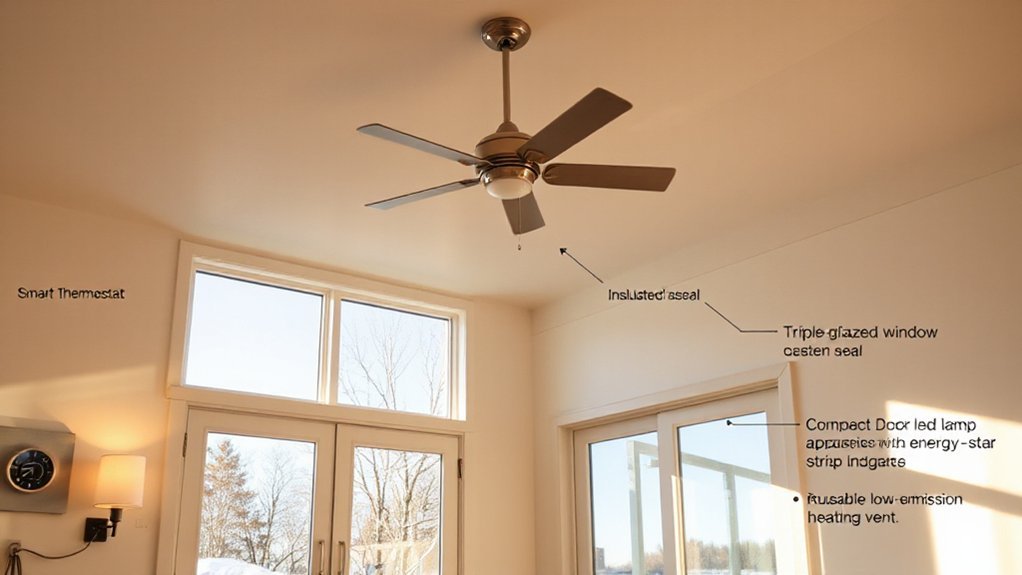
Upgrading your home to be more energy efficient starts saving you money right away. You’ll notice smaller bills once you target inefficiencies and adjust habits.
Start with a clear plan: identify major energy drains, then prioritize fixes with the best payoff. Renewable energy options can lower long-term costs, but they require upfront consideration, feasibility checks, and incentives you can claim.
An energy audit reveals where heat leaks or equipment work harder than needed, guiding concrete actions rather than guesswork.
Implement efficient lighting and programmable thermostats first, since these deliver quick, reliable savings.
Track your usage to confirm results and refine settings as seasons shift. By measuring impact and prioritizing high-return upgrades, you begin saving immediately and keep reducing spend over time.
Quick Wins That Cut Bills Fast
Small, fast wins can cut your bills right away. You can start with simple, tangible changes that don’t require a total overhaul. Prioritize steps you can implement this week, not months from now.
Use smart power strips to eliminate phantom loads; turn off devices fully when not in use. Swap inefficient bulbs for LEDs to drop lighting costs immediately.
If you have outdoor space, install solar panels to offset daytime electricity use and lower your bill, even when other upgrades are pending. Pair this with rainwater harvesting to reduce reliance on municipal water for gardens and non-potable needs.
Track your progress month to month, and reallocate savings toward higher-impact upgrades or maintenance tasks that keep bills low.
Insulation Upgrades That Actually Lower Energy Use
You’ll see real gains from insulation when you boost performance, minimize air leaks, and choose materials with high R-values for continuous coverage.
Reducing thermal breakdowns matters, because gaps and cold spots waste energy and comfort.
When you seal gaps and maintain uniform insulation, you discover clearer benefits: steady temps and lower bills.
Insulation Performance Gains
If you want real energy savings from insulation, start by choosing the right materials and installation method, because performance hinges on both its R-value and how well it seals out drafts.
You’ll gain gains by targeting thermal bridging and improving overall continuity of the envelope. Focus on continuous insulation where practical, reducing gaps that create heat flow paths.
Match insulation R value to climate and space, then guarantee proper installation to avoid compression, voids, and settling that lower effectiveness.
Air sealing matters nearly as much as the material itself, so seal joints, tapes, and penetrations before finishing.
Use batt or spray options thoughtfully, prioritizing tight fit and moisture control to maintain long-term performance without added complexity.
This approach yields reliable, measurable reductions in energy use.
Thermal Breakdowns Reduced
A common pitfall after improving insulation is overlooked thermal breakdowns that still waste energy. You reduce drafts, but gaps and misaligned assemblies can defeat your gains. Focus on thermal insulation continuity: seal joints, install proper vapor barriers, and assure tight framing around doors and windows.
Check attic access, basement rim plates, and electrical penetrations for hidden leaks. Use continuous insulation where possible to minimize thermal bridges that spike heat transfer. Upgrade to higher R-values only where performance signs off, and verify with blower-door testing or infrared scans to spot cool spots.
Maintain HVAC balance so gains aren’t wasted by oversized or undersized equipment. Prioritize durable, weather-resistant materials, and address moisture control to prevent insulation degradation over time.
This approach lowers heat transfer and sustains energy savings.
Continuous Coverage Benefits
What if your insulation isn’t truly continuous? Gaps and misalignments create thermal bridges that waste heat and cash. Continuous coverage means snug layers without breaks, seams, or compressions that reduce insulation value.
You’ll see lower monthly bills when you seal leaks and upgrade to higher‑R materials that maintain warmth across walls, roofs, and foundations. Plan for a uniform thickness, proper weatherstripping, and dedicated airflow barriers so solutions don’t just fill cavities but protect them.
This isn’t about extreme overkill; it’s about consistent performance that compounds over time. By supporting your home with reliable insulation, you stretch renewable resources and improve energy audits results, making efficiency improvements easier to justify and sustain.
You gain comfort, lower bills, and a steadier indoor climate.
Upgrade Your Heating and Cooling for Big Savings
Upgrading your heating and cooling starts with high-efficiency equipment that uses less energy and keeps you comfortable.
Use a smart thermostat to tailor temps automatically and cut waste.
Explore zoning to heat or cool only the rooms you use.
Together, these choices drive big savings through smarter control, not bigger bills.
High-Efficiency Heating
If you want big savings on energy bills, upgrading to a high-efficiency heating system can deliver noticeable impact quickly. A modern high-efficiency furnace or heat pump converts more energy into usable heat, reducing fuel use and emissions.
Look for models with high AFUE or HSPF ratings and variable-speed blowers to smooth operation and preserve comfort. Pair the system with properly insulated ducts to minimize losses.
Regular maintenance, including filter changes and coil cleaning, keeps performance near peak. Implement zoning strategies to tailor heat by area, avoiding over- and under-heating.
Consider smart thermostats for adaptive scheduling and demand response without sacrificing comfort. Choose appropriately sized equipment to prevent short cycling and inefficiency, and guarantee proper refrigerant or fuel line installation for reliable long-term savings.
Smart Thermostat Control
Smart thermostats make boosting energy savings feel automatic by giving you precise control over heating and cooling schedules. With a smart thermostat, you set temperatures that adapt to your day, so you’re not heating or cooling empty spaces. It learns routines, reduces waste, and can be adjusted remotely, so you won’t overheat when you forget.
Focus on reliable temperature scheduling to maximize savings: program wake, work, and sleep periods, and allow for short, intentional temperature swings to save energy without sacrificing comfort. Use separate profiles for weekdays and weekends if needed.
Choose a model that supports easy setup, clear data reporting, and compatibility with your system. This upgrade delivers consistent comfort and measurable utility bill reductions. Smart thermostat clarity drives real, ongoing efficiency.
Zoning For Savings
Zoning your home lets each area heat or cool independently, cutting wasted energy and lowering bills. Smart zoning focuses comfort where you live, so you aren’t cooling empty rooms.
Start with a simple, phased approach: identify high-usage zones, invest in a zoning-enabled HVAC system, and install dampers or smart dampers at the ductwork. Use room-by-room controls to tailor temperatures, enabling cooler spaces while warming others as needed.
Check zoning regulations before major changes to guarantee permits and compliance. Calibrate schedules to match occupancy, optimizing off-peak operation and reducing peak draws.
Pair zoning with a programmable thermostat for seamless automation. Maintain seals and insulation around doors and vents to maximize effectiveness, and run occasional performance checks to keep savings steady over time.
Find and Seal Drafts: Three Easy Air-Leak Fixes
Drafts waste heat and raise your energy bill, but fixing them is quick with three simple fixes.
- Locate obvious gaps around doors and windows, then seal with weatherstripping or caulk for an air leak-free seal.
- Add door sweeps to entryways to stop drafts without sacrificing convenience.
- Seal outlets and switch boxes with foam gaskets to prevent pinch points in the thermal envelope.
These steps tackle the most accessible draft sealing opportunities while keeping you in control.
If you feel a breeze near electrical outlets, recheck wiring plates and seal as needed.
Test by feeling for leaks after each fix.
In minutes, you’ll reduce heat loss and improve comfort without major renovations.
Efficient Appliances and Electronics That Sip Power
Choosing efficient appliances and smart, power-saving electronics helps you cut standby drains and running costs from day one. Look for Energy Star ratings, realistic usage patterns, and features like automatic shutoff and adaptive sleep modes.
Efficient Appliance Choices
Smart appliance choices save energy without sacrificing performance: look for units with an Energy Star label and a high efficiency rating for their category. You’ll cut bills by picking refrigerators, washers, and dishwashers known for low standby power and efficient cycles.
Focus on capacity that fits your real needs to avoid waste and extra runs. Pair these picks with intelligent operation: schedule loads off-peak, and tie into renewable energy when possible.
Consider compatibility with home automation for seamless control and monitoring. Avoid phantom loads by unplugging standby devices when not in use.
Invest in modern microwaves and ovens with precise temperature control to reduce energy use.
- Energy Star verified models and size-appropriate choices
- High-efficiency cycles for laundry and dishwashing
- Load-sensing and adaptive temperature controls
- Smart plugs and device-level scheduling
- Renewable energy integration and home automation compatibility
Smart Power-Saving Electronics
Choose energy-star rated chargers and power strips with on/off toggles to prevent phantom loads. When shopping, prioritize devices with clear efficiency labels, low idle consumption, and fast wake-up.
Pair efficient electronics with solar panels and battery storage to maximize on-site energy use, especially during peak sun hours. Leverage smart plugs and hubs to schedule routines that align with your consumption patterns.
Regularly review device updates and firmware, as improved efficiency becomes available. Consolidate charging, limit per-device power bricks, and maintain vents for cooling to sustain efficiency gains.
Windows, Doors, and Skylights That Reduce Heat Loss
Upgrading windows, doors, and skylights is one of the most effective ways to cut heat loss in a home. You’ll gain better insulation, fewer drafts, and lower heating bills without major remodels. Focus on solid seals, low-E glass, and proper installation to maximize efficiency.
Consider how window aesthetics blend with your interior design while maintaining performance, and plan skylight installation for balanced daylight without overheating. Use precise measurements and professional guidance to avoid gaps.
Below are practical steps to prioritize:
- Inspect frames for cracks and rot, replace as needed
- Choose double- or triple-glazed units with low-E coating
- Ensure storms and weatherstripping seal tight
- Verify proper tilt-in cleaning and easy access
- Schedule accurate skylight installation with flashing considerations
Smart Tech and Real-Time Monitoring to Curb Waste
Wondering how to curb waste in real time? Smart tech helps you monitor consumption without guesswork. Install smart plugs, thermostats, and submetering to flag phantom loads and high-use devices the moment they spike.
Real-time dashboards translate data into actionable steps, so you can cut waste before it compounds. Link systems to a central app to automate schedules, pause nonessential loads, and optimize heating and cooling based on occupancy.
Pair smart controls with renewable energy sources when possible, and track how much you actually draw from the grid versus on-site generation. Use periodic energy audits to verify savings, adjust setpoints, and refine your setup.
Keep updates lightweight, pairing devices that serve clear, cost-saving purposes. Prioritize reliability, privacy, and straightforward maintenance.
Decide What to Upgrade: Sizing, Scope, and Budgeting Basics
Before you upgrade, define what you’re solving for: size the project to match your needs, scope only what adds value, and budget with clear caps. You’ll gain control by planning first, then detailing what actually moves the needle.
- sizing strategies to estimate load and savings
- prioritize upgrades that unlock the most energy gain
- set concrete, time-bound milestones
- budget with a strict top and bottom line
- track results to refine future decisions
Focus on practicality: match each upgrade to a measurable goal, avoid overbuilding, and test ideas at a small scale before expanding. This approach keeps projects lean, predictable, and aligned with your real needs.
Financing Upgrades: Options and Tips to Keep Payments Reasonable
There are several financing paths you can use to keep upgrades affordable while you improve comfort and efficiency, and choosing the right mix starts with clear cost and payoff estimates. You’ll want to compare upfront costs, interest rates, and terms across options like personal loans, home equity products, and utility rebates.
Consider government programs or manufacturer incentives that lower effective costs. Create a realistic budget plan that accounts for monthly payments, energy savings, and potential maintenance.
Prioritize high-impact upgrades with faster payback to reduce risk if rates shift. Use a simple cost–benefit worksheet to visualize break-even points.
Stay disciplined: avoid upselling low-ROI features, and aim for financing options that align with your cash flow and long-term budget planning.
Maintenance Routines That Keep Efficiency at Peak
Maintaining efficiency isn’t a set-and-forget task; it’s a routine that sustains the savings you start counting from your upgrades and financing plan. You keep peak performance by simple, consistent checks and tweaks, not big overhauls. Use home automation to monitor usage patterns and flag anomalies early. Maintain insulation, seals, and vents so systems run only as needed. Refresh batteries in smart devices and reset schedules after weather shifts. Track consumption monthly to catch drifts before they cost you.
When you blend renewable energy with responsive controls, tiny changes compound into real savings.
- Inspect seals and insulation quarterly
- Verify thermostat and sensor accuracy
- Review energy analytics for unusual spikes
- Maintain batteries in smart devices
- Rebalance solar/storage setup as needed
Choosing Materials and Installers Without Overspending
For installer quality, verify licenses, references, and recent projects; ask for energy performance details and site plans. Get written bids that break down labor, materials, and contingencies, and insist on fixed prices or clear change orders. Avoid premium add-ons that don’t boost efficiency.
Schedule phased upgrades to align with seasonal costs and tax incentives. You’ll save more by prioritizing durable materials and reputable installers over flashy but marginal gains.
Frequently Asked Questions
How Long Does It Take for Upgrades to Pay for Themselves?
Upgrades pay back in a few years, but the exact timing depends on costs and usage. Typically, you’ll recover your investment in 3 to 7 years.
If you install Renewable technologies and a Smart home setup, savings compound quickly, especially with peak rates and efficient appliances. Your payoff rises with diligent monitoring, proper sizing, and leveraging incentives.
Track energy use after upgrades to confirm payback aligns with projections, and adjust habits to maximize long‑term savings.
Can I Upgrade in Stages to Fit My Budget?
Yes, you can upgrade in stages to fit your budget. Start with high-impact, affordable fixes and plan future steps. You can blend home automation momentum with efficiency gains while tracking payback.
Prioritize airtightness, efficient lighting, and smart thermostats, then layer Renewable energy and smart controls as budgets allow. This staged approach keeps monthly costs predictable and scalable.
You’ll see incremental improvements in comfort and energy use, and Renewable energy integration amplifies long-term savings.
Are Tax Credits Available for Energy Upgrades?
Yes, tax credits exist for energy upgrades, but eligibility varies by program and year. You can claim credits for renewable energy installations, like solar or heat pumps, and for energy monitoring devices that improve efficiency.
Check federal incentives, plus state and local programs, as they can add deductions or credits. You’ll typically file with your tax return using appropriate forms, and you may stack credits with rebates.
Stay updated on renewal periods and income limits.
Will Insulation Limits Affect HVAC Sizing Requirements?
You’ll likely need adjusted HVAC capacity if insulation limits constrain performance.
An interesting stat: proper attic and wall insulation can cut heating and cooling loads by up to 20–30%, influencing equipment sizing.
Insulation effectiveness directly affects how much heat your home loses or gains, so oversized or undersized systems aren’t ideal.
Measure after upgrades, not before. Recalculate HVAC capacity based on updated conduction and infiltration rates to guarantee efficient, balanced comfort.
How Often Should I Service Energy Systems After Upgrades?
You should service energy systems every six to twelve months after upgrades.
If you’ve added smart thermostats or solar panels, aim for at least annual checks, with more frequent visits if you use heat pumps or batteries.
A technician should verify wiring, refrigerant pressures, and inverter performance, then recalibrate controls.
Keep thermostat schedules aligned with occupancy, and inspect solar PV inverters and optimizers for dust, corrosion, and voltage stability.
Regular maintenance saves energy and extends equipment life.
Conclusion
You can start saving today by tackling quick wins and solid upgrades that pay back over time. Prioritize insulation, sealing leaks, and a high-efficiency heating and cooling system, then add LEDs and smart controls. Budget smartly, compare installers, and keep up simple maintenance to sustain gains. Track your bills to spot improvements. Like a well-oiled machine, your home runs smoother and cheaper when you stay proactive and consistent—the pennies you save today become dollars tomorrow. Focus, act, and watch the savings stack.
About the Author