

You’re prioritising pragmatic, payback-focused upgrades that cut carbon and boost comfort. Start with insulation and airtightness to slash heat loss, then add smart controls and zone heating for real efficiency. Consider windows, doors, and ventilation to stop drafts, plus renewables like solar PV and heat pumps where suitable. Factor in grants, warranties, and disruption. Plan around UK standards and contractor quality to guarantee lasting performance. If you keep going, you’ll uncover practical steps to maximise value.
Key Decision Criteria for UK Home Upgrades
When choosing energy-efficient upgrades for a UK home, start with the decision criteria that matter most to you and your property. You’ll weigh cost, payback period, and installer reliability before any purchase.
Area-specific needs guide prioritisation: heat loss, insulation gaps, and ventilation play into whether you upgrade boilers, windows, or ducts.
Consider future-proofing by compatibility with home automation and smart appliances, so you can manage energy use from a single interface.
Assess the whole-life carbon footprint, not just upfront price, and factor in disruption to daily life during installation.
Availability of grants or supplier warranties also matters, as does local climate resilience.
Finally, guarantee maintenance resources and service backup align with your long-term plans.
How to Tell If Your Home Needs Insulation
If you notice chilly rooms, drafts, or heat escaping around walls and ceilings, that’s a sign your home may need insulation.
Look for energy loss indicators like rising heating bills, uneven warmth, or condensation on walls and windows, which often point to insufficient insulation.
Quick insulation test tips include checking against local energy guidance, using a flashlight to spot gaps, and timing a professional assessment if gaps are found.
Signs Your Home Needs
You’ll know your home needs insulation when you notice drafts, cold spots, or rooms that never stay comfortable. Small temperature swings in living areas, especially after sunset, point to heat leaking through walls, lofts, or floors.
If your heating runs excessively or you feel chilly near external walls, that’s a sign to check for gaps, missing seals, or insufficient loft insulation. Visible condensation on windows during cold mornings can indicate humidity trapped by poor insulation, while uneven room temperatures across floors suggests thermal bridging.
Practical steps include sealing gaps around doors and pipes, adding loft insulation, and considering draft proofing. While you plan improvements, keep home décor and landscaping in mind—shrubs and mulch can influence heat retention near walls without blocking vents.
Energy Loss Indicators
Energy loss shows up in several telltale signs you can’t ignore. You’ll notice drafts around doors and windows, cold walls, and uneven heating across rooms. If your bills spike without reason, insulation gaps could be the culprit.
You might also feel cold floors on winters, attic warmth during summer, or moisture insights like condensation on ceilings. These indicators point to need for insulation improvements, not just tweaking the thermostat. Addressing them promptly saves energy and money.
- Drafty gaps around openings
- Cold patches on walls or floors
- Uneven room temperatures
- Condensation or damp spots
- Rising energy bills without increased usage
Insulation Test Tips
Insulation tests are quick, low-cost ways to confirm where your home needs help. You’ll start by identifying obvious cold spots, drafts, and icicles on gutters, then verify with simple checks.
Look for gaps around doors, windows, and loft hatches, and feel for insulation thickness in accessible spaces. Use a simple torch-and-hand method: warm areas near exterior walls signal heat loss through poor insulation materials or missing layers.
Compare upstairs and downstairs temperatures after a single room is heated; a marked difference suggests bypasses or weak insulation. For more reliability, follow standard Test procedures: seal small leaks, recheck, and repeat after minor fixes.
Record findings, then plan upgrades with appropriate insulation materials tailored to your budget and house type.
Envelope Upgrades That Save Real Money
Envelope upgrades pay back over time by cutting heat loss at the building shell. You’ll notice smaller bills as drafts shrink and comfort rises. Target high-traffic, uninsulated areas first to maximize impact without major disruption. Focus on air sealing, door sweeps, and window upgrades that preserve daylight and curb glare.
Choose insulation that fits existing frames to avoid costly reconstruction. Balance function with style: subtle trims can blend with home decor while improving performance. For outdoor spaces, upgrade vents and louvers to regulate moisture without sacrificing curb appeal.
You’ll also prevent cold spots in hallways, saving energy for heating and cooling alike. Garden landscaping can complement these gains by reducing wind exposure and guiding sun.
- Air sealing first
- Efficient windows
- Door integrity
- Insulation fit
- Exterior detailing
Choosing a Heating System Before Winter
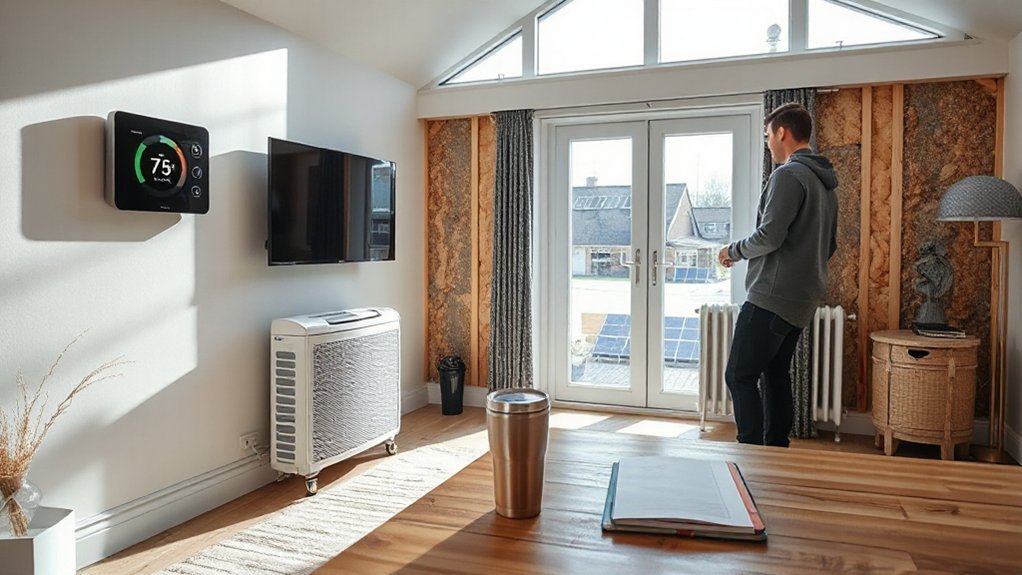
When you choose a heating option, start with practicality: match system type to your home, occupancy, and charging patterns for reliable comfort.
Next, assess fuel efficiency and operating costs so you can compare performance per pound of energy over time, not just upfront price.
Finally, set a realistic budget that covers purchase, installation, and potential efficiency upgrades, then plan for future savings.
Choosing Heating Options
Choosing a heating system before winter starts is about balancing cost, comfort, and long-term savings. You’ll want options that fit your home, climate, and daily routines, while staying practical and future-proof. Start with heat sources that align with renewable energy goals and smart control to maximize efficiency. Prioritize systems that respond to occupancy and weather, lowering waste.
Consider upfront cost versus running expenses, warranties, and service access. Confirm compatibility with retrofits like insulation improvements and smart thermostats.
- Compare heat sources by seasonal efficiency and maintenance needs
- Factor in installation disruption and eligibility for grants
- Plan for smart thermostats integration and zoning
- Assess fuel availability and grid reliability
- Check ongoing maintenance costs and service networks
Assessing Fuel Efficiency
Evaluating fuel efficiency begins with a clear comparison of how each heating option performs in real-world use. You’ll assess running costs, fuel supply reliability, and maintenance needs, not just label claims.
Start by measuring seasonal efficiency, typical house heat loss, and how climate affects performance. Consider renewable energy sources as part of the mix, noting where heat pumps or solar-assisted systems excel in mild winters and how backup heating buffers harsher spells.
Evaluate grid interaction: a smart grid can optimize when you draw power, lowering peak demand and costs. Compare emissions, including indirect ones from generation.
Look for modularity and controls that adapt to occupancy patterns, weather, and insulation upgrades. Prioritize systems that transparently share performance data and align with your home’s insulation and appliances.
Budgeting For Systems
- Compare upfront vs. long-term costs, including energy savings
- Assess installer credentials and aftercare packages
- Factor integration with Renewable sources and smart sensors
- Schedule purchases to leverage off-peak promotions
- Include a contingency fund for maintenance or upgrades
Heat Pumps: Costs, Benefits, and Realities
Heat pumps offer a practical path to heating and cooling with lower running costs, but the upfront price and installation realities vary widely. You’ll see long-term savings, yet payback depends on house type, insulation, and grant support.
Expect higher initial costs for a full system, heat pump-friendly radiators, or underfloor plans, but note grants and rebates can narrow the gap.
In operation, you’ll experience stable temperatures with quiet, reliable performance, though demand varies with outside conditions.
Maintenance tips matter: filter checks, refrigerant health, and annual service keep efficiency high.
Be wary of common Heat pump myths that inflate expectations or prompt DIY fixes.
For best results, enlist a qualified installer to assess your home, size the system accurately, and plan phased upgrades if needed.
Boilers and Controls for Efficient Heat
Smart boilers with smart controls save energy by matching heat to demand without you lifting a finger. You’ll get more comfort and less wasted fuel when you pair precise boiler controls with modern weather and occupancy data.
This discussion starts with how smart boiler brilliance and precise controls can cut bills while keeping your home steady.
Smart Boiler Brilliance
Could a smarter boiler save you money and cut emissions at the same time? Yes, with a smart boiler you tailor heat to demand, avoiding waste and shifting usage to off-peak periods.
By pairing intelligent controls with weather and occupancy data, you optimise energy savings without sacrificing comfort. You’ll notice quicker warm-ups, smarter scheduling, and clearer fault alerts that reduce downtime.
This isn’t about gadgets for gadget’s sake; it’s about reliable, steady performance every day. Invest in compatibility with existing systems and straightforward maintenance routines to protect long-term efficiency.
Smart boiler technology empowers you to monitor, adjust, and verify savings in real time.
- Real-time energy monitoring
- Weather-based modulation
- Priority zones and scheduling
- Fault detection and alerts
- Simple maintenance reminders
Precise Boiler Controls
With precise boiler controls, you can implement staged firing, weather compensation, and optimum start to avoid overshoot. The result is smoother heating regulation across rooms, not just a single boiler moment.
For best performance, pair controls with well-sized radiators, correct pump settings, and a pressure-checked system. Choose devices that store current schedules and adapt automatically, while letting you override for peak or off-peak use.
Regular calibration keeps efficiency high; track feedback from heat-demand signals to refine timing, delays, and hysteresis. Maintain a clear, simple control layout for reliable daily operation.
Windows and Doors: Stop Heat Loss Now
Windows and doors are common weak points for heat loss in UK homes, so start here to cut your bills fast. You’ll tighten drafts, improve comfort, and reduce heating demand without waiting for the next upgrade cycle. Focus on proven fixes that stay effective year after year. Practical steps below deliver measurable gains.
- Inspect seals and frames for cracks; replace worn weatherstripping.
- Upgrade to double or higher glazing; choose Window glazing that minimizes heat leakage.
- Add secondary glazing where full replacement isn’t feasible.
- Consider roof insulation to complement window efficiency and stop unseen losses.
- Seal gaps around plumbing and electrical penetrations to prevent convection loops.
Smart Controls That Actually Cut Bills
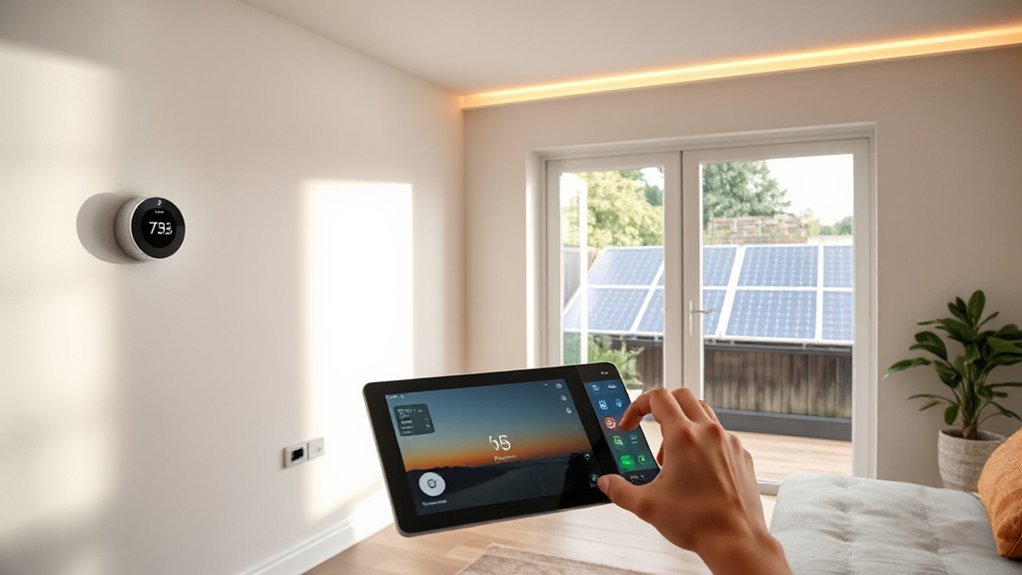
Smart thermostats save energy by learning your routines and adjusting heating accordingly.
With zonal heating control, you only heat rooms you’re using, not the whole house.
This combination cuts bills while keeping comfort consistent.
Smart Thermostat Efficiency
Smart thermostats are more than just a gadget; they’re a practical tool for slashing your energy bills. You’ll see real energy savings when you install a modern model that learns your patterns, adapts to weather, and optimizes boiler calls.
With thoughtful scheduling, you avoid unnecessary heating while you’re out or asleep, and you fine‑tune peak usage times to shave demand charges.
- Learn-based scheduling reduces wasted cycles
- Auto-away features protect comfort while you’re gone
- Weather adapters prevent overheating on mild days
- Remote adjustment helps you manage bills on the fly
- Clear insights reveal where you cut or waste energy
Smart thermostat choices translate to faster energy savings and steadier comfort throughout the year.
Zonal Heating Control
With smart controls, you adjust schedules and setpoint differentials, preventing overheating and speeding up warmth where it matters. This approach cuts boiler time and circulating losses, meaning you use less fuel or electricity for the same comfort level.
In practice, install zone valves or dampers, plus smart thermostats that recognize occupancy and personal preferences. You’ll benefit from finer temperature zoning, faster response to changing conditions, and clearer energy feedback.
Zonal heating delivers efficiency without sacrificing convenience, turning every room into a controlled climate that aligns with your daily rhythms.
Solar PV and Batteries: Add-On Energy
Solar PV and battery storage let you cut bills and gain energy resilience, but the value comes from how you use them. You’ll optimise self-consumption by timing use to match solar generation, and you’ll pair storage with smart controls to shift loads.
Solar batteries act as a buffer, not a cure-all, so plan for daily routines, weather patterns, and peak tariffs. Consider capacity, inverter efficiency, and warranty to prevent overinvestment.
Energy add-ons should complement existing systems, not complicate them. Use monitoring data to refine behavior, reduce standby losses, and identify cost-saving opportunities.
- Align charging with abundant sun and low-tariff periods
- Size storage to daily peaks, not weekly averages
- Use smart meters to maximize self-consumption
- Prioritise reliability and warranty duration
- Evaluate integration with home automation for real-time control
Grants, Financing, and Funding Pathways in the UK
Consider energy-efficient grants that target insulation, heat pumps, or solar PV integration, which often combine with finance options like low-interest loans or pay-as-you-save models.
Before applying, verify eligibility, project size limits, and compliance requirements, then compare total costs and payback periods. Keep records of quotes, performance estimates, and contractor credentials.
You’ll benefit from transparent timelines and clear funding terms, ensuring you select solutions that align with your home’s energy profile and long‑term savings.
Prioritising Upgrades: A Step-by-Step Plan
To prioritise upgrades effectively, start with a clear energy baseline: identify your home’s weakest points—insulation gaps, drafty rooms, and outdated heating or cooling systems—and rank them by potential impact on comfort, bills, and emissions.
- Assess where energy loss occurs most and quantify it with simple measurements.
- Set realistic targets for comfort, cost, and carbon reduction.
- Schedule upgrades by cost, savings, and disruption.
- Tie decor decisions, like indoor plants and home decor, to comfort and airflow.
- Document progress and re-evaluate after each change.
Build a Minimal Viable Retrofit Plan

A minimal viable retrofit plan focuses on delivering meaningful gains with clear, affordable steps. You start by defining your top three targets—heating efficiency, thermal comfort, and fresh air—with realistic timelines and budgets.
Map these to a simple sequence: assess, prioritize, act, and review. Begin with a basic energy survey and a quick home health check to identify leaks, drafts, and moisture risks.
Prioritize interventions that yield the biggest impact per pound, such as insulation improvements, efficient controls, and heating system upgrades.
Plan for Renewable integration where feasible, pairing solar or heat pumps with existing systems to reduce peak demand.
Don’t overlook Indoor air quality; guarantee ventilation, filtration, and moisture control are embedded in every retrofit decision.
Maintain flexibility to adapt as needs and technologies evolve.
Measuring Payback, ROI, and Value
- Align costs with tangible savings and incentives
- Include energy, maintenance, and resale value
- Factor carbon offset into ROI where possible
- Weigh grid resilience and flexibility benefits
- Compare projects on a consistent, time-adjusted basis
Navigating UK Building Standards and Rules
Finding your way through UK building standards and rules starts where cost and efficiency meet regulation. You’ll assess energy-related regulations for existing homes, new builds, and renovations, prioritising practical compliance over complexity.
Start with building regulations, Part L and airtightness targets, then consider ventilation requirements that protect indoor air quality without compromising efficiency.
You’ll map permitted renewable energy integration, such as heat pumps and solar, against grid constraints, tariffs, and installer certification.
Plan insulation upgrades, ensuring compatibility with existing damp-proof courses and thermal bridging controls.
Document compliance steps for planning permissions, if needed, and keep records for future inspections.
Staying current with local authority guidance helps avoid delays, while every decision aligns with safety, performance, and long‑term cost savings.
Finding Contractors: Quotes and Quality Checks

When you’re lining up quotes, start by defining your project scope clearly and requesting detailed breakdowns. You’ll compare not just price, but materials, warranties, and projected energy savings.
Verify credentials, past work, and the contractor’s process for quality checks. Ask for a written method statement and a risk assessment if required, and guarantee cleanup is included.
Cross-check timelines with your calendar and confirm permits are handled. For Home decor or garden landscaping elements, confirm the proposals cover finish quality and long-term performance.
Get a points-based evaluation to rate communication, reliability, and problem-solving. Finally, request a sample of previous work and references.
- Transparent cost breakdowns
- Clear scopes and schedules
- Verified credentials and insurance
- Quality control processes
- Public and private references
Timing Upgrades to Minimise Disruption
Scheduling upgrades to minimize disruption starts with a realistic plan that fits your routine. You’ll map out project phases, aligning work days with your calendar and supplier availability.
Consider timing considerations like weather windows, holidays, and peak demand to reduce delays. Prioritize essential tasks first, then schedule ancillary improvements around them to avoid back‑to‑back trades that clutter your home.
Communicate clearly with installers about access, noise limits, and any safety constraints, and confirm exact start and finish times.
Build buffers for supply delays and inspections, so you’re not chasing deadlines. Use upgrade scheduling that accommodates family needs, work-from-home days, and school hours, keeping disruption manageable.
Document milestones, review progress weekly, and adjust sequencing if a better window emerges.
Frequently Asked Questions
How to Prioritize Upgrades for Listed Buildings?
You should start by evaluating reuse of historic fabric and feasibility with your planner, prioritizing essential upgrades that don’t harm character. Use a phased plan, secure planning permissions, and document preservation benefits to support each, costed, compliant decision.
Do Retrofits Affect Home Insurance Premiums?
Yes, retrofits can affect your premiums. You’ll often see Insurance discounts for energy-efficient upgrades, while Premium impacts depend on risk reduction, installation quality, and insurer policies. Compare providers to guarantee you’re maximizing discounts and minimizing premium changes.
Can Grants Cover 100% of Upgrade Costs?
“You ask if grants cover 100%? Usually, no. But some programs offer substantial coverage. Renewable incentives can help, yet you’d still face limits. You’ll maximize energy savings with mixed funding, audits, and precise contractor quotes.”
Are Green Mortgages Available for Energy Upgrades?
Yes, green mortgages exist. You can access green loan options tailored for energy upgrades, and Renewable energy incentives may reduce costs further, strengthening your financing package as you upgrade your home.
How Long Is Typical Disruption During Upgrades?
Disruption duration varies, but you’ll typically see several days to a couple of weeks, depending on scope. plan around the upgrade timeline, prepare for noise and trades, and schedule major tasks to minimize impact on your daily routines.
Conclusion
In the quiet math of your home, small upgrades add up like careful steps across a rickety bridge. Insulation, sealed envelopes, and efficient heat can be your ballast, steadying bills and comfort as seasons turn. Choose the right system, measure payback, and vet trades with the same precision you’d inspect a heartbeat. Act now, but plan around disruption. Your house isn’t just bricks—it’s a living ledger that rewards every prudent, persistent choice.
About the Author