
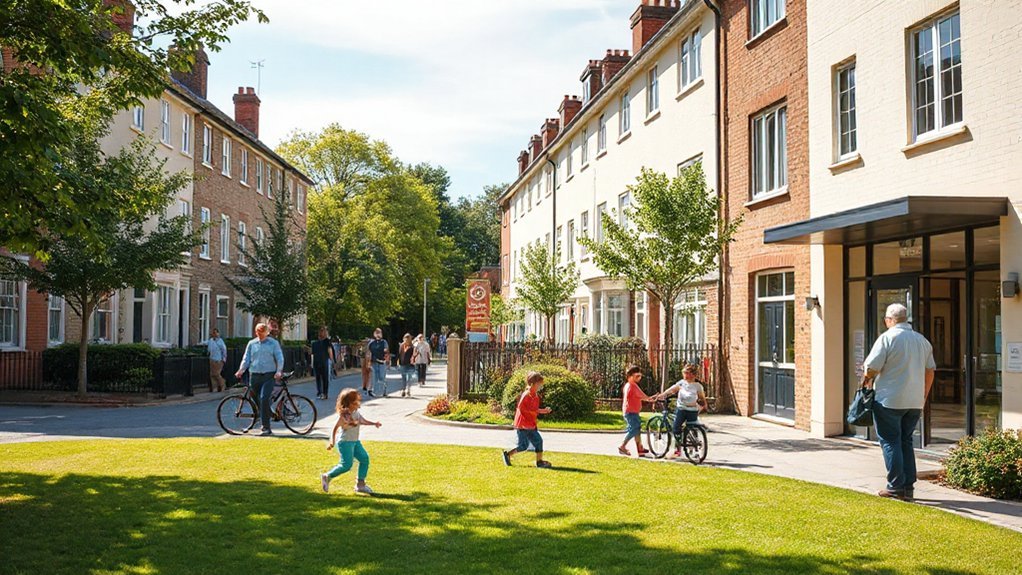
Here’s a concise, data‑driven guide to the UK’s top family-friendly areas for 2026. These towns pair strong Ofsted-rated schools with safe, walkable neighborhoods, affordable housing options, and robust family amenities—parks, beaches, clubs, and extracurriculars—that support consistent routines and healthy growth. Transport links keep commutes predictable, while mixed-use developments cut trip lengths and encourage active living. If you want a clear, practical snapshot, you’ll find practical comparisons and real-life examples as you continue.
Why These UK Towns Excel for Families

Choosing the right town matters for your family’s future, and these UK towns stand out because they combine strong schools, safe neighborhoods, and access to parks and cultural amenities.
You’re looking for tangible benefits: reliable Ofsted-linked progress, steady housing value, and a community that values learning. These towns offer high-quality primary and secondary options, plus extracurriculars that build resilience and curiosity.
You’ll notice that insufficient wait times, transparent data, and collaborative councils translate into everyday peace of mind.
Historical landmarks anchor local pride, while Cultural festivals create year-round inspiration for kids and parents alike.
When you compare options, you’ll see a clear pattern: well-planned city-adjacent or market towns deliver performance, safety, and enrichment without sacrificing accessibility or affordability.
Your family’s future starts with informed, decisive choices.
How We Evaluate Top Schools: Ofsted Ratings and Exam Results (2026)
We start with clear signals: Ofsted ratings offer standardized quality benchmarks, and exam results reveal consistent academic performance.
You’ll see how these metrics interact to identify schools that sustain strong outcomes year after year.
We’ll outline the data sources and timelines we rely on to keep the evaluation transparent and up to date in 2026.
Ofsted Ratings Overview
Are Ofsted ratings a reliable compass for identifying top schools, or do exam results tell a fuller story? You weigh both signals to form a balanced view.
Ofsted provides standardized, inspection-based snapshots of safeguarding, leadership, teaching quality, and pupil progress, enabling cross-school comparisons. Yet ratings alone don’t reveal trajectory or context; you should examine the grading rubric, recent improvements, and consistency across year groups.
When combined with exam results, a clearer picture emerges of academic depth, breadth, and preparedness for next steps. You’ll also consider non-academic factors that influence outcomes, such as parent engagement and school funding, which shape staffing, resources, and support services.
The goal is a data-informed assessment that guides family choices without oversimplifying school quality.
Exam Results Significance
Exam results offer a concrete measure of academic depth and outcomes, complementing Ofsted’s inspection snapshots to form a fuller picture of a school’s performance. You assess results to gauge consistency across cohorts, subjects, and progression.
Top schools show sustained attainment, strong progress measures, and targeted improvement timelines, not just peak scores. You’ll look for grade distributions, progression to higher education, and alignment with national benchmarks to determine long-term value for families.
While Ofsted reflects process and environment, exam data reveals learning efficiency and curriculum impact.
In housing market decisions, steady results signal stability, and in Local healthcare towns, they reflect community support for education.
Use this data alongside context, demand, and local amenities to identify areas with durable educational appeal.
Data Sources & Timelines
Data sources and timelines form the backbone of how we evaluate top schools in 2026. You’ll see a transparent framework that weights Ofsted ratings alongside recent exam results, while also tracking sustained performance over multiple years.
We prioritize consistency, triangulating inspector judgments with independent assessment data and national benchmarks to reduce short-term volatility. Timelines align data releases with key decision points, ensuring you access current, comparable insights for each neighborhood.
We surface historical housing trends to contextualize affordability and stability, and we consider local cultural festivals as indicators of community support and enrichment opportunities.
This approach helps you identify areas where school quality aligns with family life, delivering precise, evidence-based guidance for informed choices.
Greater London Outskirts: Affordable Housing and Commute Wins
You’ll find affordable housing options around Greater London that stay within reach of top schools and solid transport links.
Shorter commutes translate into more family time, with data showing more predictable travel times and lower peak-hour congestion.
Across these outskirts, family-friendly locales balance price, performance, and access to high-quality schooling.
Affordable Housing Options
Affordable housing on the Greater London outskirts can open faster commutes and steadier budgets, while still putting you near the city’s job hubs. You’ll find new-build flats, shared ownership, and affordable rent options that balance upfront costs with long-term stability.
Data shows Outer London boroughs offer lower price per square foot and competitive council schemes that target first-time buyers and families. You gain housing affordability without sacrificing access to top schools and green spaces, aided by clear eligibility criteria and predictable maintenance fees.
Focus on density-managed developments near transit hubs to maximize value. Compare pricing trends, grant availability, and mortgage options to tailor a plan that protects your budget while keeping you connected to London’s opportunities.
Commute Time Benefits
Growing up outside central London often means you can snag faster, more predictable commutes while keeping access to premier schools and green spaces.
In the Greater London outskirts, commute time improvements come from strategic rail links, reliable Tube connections, and integrated bus networks that reduce bottlenecks during peak hours.
You’ll notice shorter door-to-school journeys, often under 45 minutes, with reliable frequency and clear timetables guiding your day.
Transportation efficiency benefits compound when housing is positioned near major hubs, enabling consistent progressions between residential zones and business districts.
Data shows targeted investments yield visible gaps in travel time variance across boroughs, boosting overall punctuality.
Prioritizing these corridors helps you balance affordable housing with high-performing schools, elevating family life without sacrificing mobility or outcomes.
Family-Friendly Locales
On the Greater London Outskirts, family-friendly locales combine affordable housing with reliable commutes and strong school catchments. You’ll find affordable homes near top-rated primaries and rising secondaries, supported by data showing lower entry prices than inner London without compromising access to central jobs.
Commute times average under 45 minutes for many boroughs, with ongoing investments in rail and bus networks that cut travel variability.
Local amenities reinforce practicality: well-rated nursery programs, safe green spaces, and community hubs that host regular family events.
Schools benefit from stable catchments and pupil-per-square-mile metrics that translate to higher inspection scores.
You’ll also notice robust local sports clubs and facilities, enhancing social cohesion and long-term well-being for every household member.
Coastal UK Towns for Safety, Parks, and Kid-Friendly Activities

Coastal UK towns offer safe, family-friendly environments with strong parks, walkable neighborhoods, and active, kid-centered amenities. You’ll find low crime rates, reliable school catchments, and well-planned coastal infrastructure that prioritizes pedestrian access and cycling lanes.
In Beachcomber towns, you gain easy beach access, supervised play areas, and community-led events that foster consistent outdoor engagement, even during school terms. Coastal escapes provide structured schedules for families, including tide-pool education programs, seasonal markets, and outdoor fitness zones tied to local demographics and weather patterns.
Data-driven planning emphasizes noise controls, evacuation routing, and green buffers near schools, ensuring predictable commutes and safe routes. For families seeking balance, these towns deliver measurable quality-of-life advantages, maintainable property values, and enduring coastal character.
Suburban Havens With Parkland, Green Spaces, and Family-Friendly Amenities
You’ll find parkland-packed neighborhoods that balance easy access to green spaces with proximity to top schools.
Local amenities—from playgrounds to family-focused services—drive everyday convenience and time-savings for busy households.
Parkland-Packed Neighborhoods
- Strong park networks that connect schools, playgrounds, and trails
- Proximity to community events that strengthen local ties
- Accessible paths for bikes and strollers throughout residential cores
- Diverse local cuisine options within walkable limits
These districts pair top schools with expansive green spaces, delivering consistent quality of life. You’ll enjoy outdoor recreation, safe play areas, and a family-friendly pace. Parklands become hubs for daily routines and weekend adventures.
Family-Friendly Local Amenities
Are family-friendly communities truly defined by more than just schools? In these areas, you’ll find tangible value beyond academics, anchored in parkland, green spaces, and practical amenities that support daily life.
Data show higher quality of life where streets are designed for safe family mobility, and where accessible play areas boost social cohesion. You’ll notice clusters of nursery facilities and child-friendly services that reduce morning frictions and support early learning continuity.
Local dining options matter too, offering affordable, nutrient-forward choices that fit busy family rhythms. These neighborhoods also feature mixed-use developments that shorten trips for errands, schools, and recreation.
The result: predictable time savings, healthier routines, and a community fabric that reinforces long-term well-being alongside top-rated schools.
How Transport Links Simplify Family Life in Each Area
Efficient transport links knit family life together by cutting commute times and expanding daily options. When you assess an area, you’ll notice how transport infrastructure underpins routines, from school drop-offs to weekend getaways. Strong road connectivity reduces idle time and elevates reliability, shaping your family’s sense of predictability and security.
- Faster commutes translate to more morning minutes with kids.
- Reliable rail and bus services widen weekend activity choices.
- Proximity to major routes lowers transport stress for busy evenings.
- Planned town centers concentrate schools, libraries, and medical services.
This data-driven approach shows how transport networks support consistent school attendance, safer travel, and balanced schedules, turning perceived distance into practical proximity. You gain efficiency, accessibility, and aspirational quality of life through smart planning and evolving routes.
Extracurriculars and Community Programs That Boost Kids’ Growth
Extracurriculars and community programs play a pivotal role in shaping kids’ growth, especially when participation is aligned with local school calendars and family routines. You’ll see measurable benefits when activities complement academics, not compete with them.
Data shows participation in structured programs improves attendance, time management, and social skills, with high schoolers reporting stronger college-readiness indicators.
Music programs cultivate discipline, listening, and cognitive flexibility, correlating with better test performance and creative problem solving.
After school clubs extend engagement beyond class, reinforcing collaboration, leadership, and resilience in diverse settings.
Choose programs that align with your child’s interests and your area’s offerings, ensuring consistent routines throughout the term.
Prioritize quality, accessibility, and safety to maximize growth while maintaining balance for family life.
Cost of Living Snapshot: Housing, Utilities, and Schooling Across Areas
Across areas, family budgets hinge on more than wages—housing costs, utilities, and schooling fees together shape what families can afford. You’ll see clear gaps in housing affordability and utility costs across regions, influencing choices about schools and commutes. Here’s a concise snapshot:
- Median rent-to-income ratios vary sharply, signaling where you can secure stable housing without overextending.
- Utility costs differ by climate and housing type, impacting monthly bills and budgeting.
- School funding and associated fees affect total annual costs even where tuition isn’t charged.
- Local property taxes and council charges alter overall affordability, beyond headline rents.
Total cost of living remains a key lever for deciding where your family can thrive, while still accessing top-rated schools.
Practical Evaluation Checklist: Choosing the Right Area for Your Family
When evaluating a new area for your family, start with a practical, data-driven framework that aligns housing, schools, and daily routines with your priorities. Build a checklist that weighs commute minutes, school catchment performance, and safety metrics against budget.
Prioritize urban development indicators—planned transport upgrades, new parks, and mixed-use hubs—that boost long-term value without sacrificing livability.
Map daily routines to amenities: grocery, healthcare, recreation, and after-school options.
Validate school quality with outcomes, Ofsted profiles, and class sizes, then cross-check housing costs against projected income growth.
Consider historical landmarks as cultural anchors that enrich weekend activities and community identity.
Track data over time, review changes quarterly, and reweight criteria as your family evolves.
This disciplined approach yields a location that supports growth, stability, and aspiration.
Real-Life Stories From Families Living in These Areas
- Parent testimonials reveal how consistent bus routes and park days support kids’ after-school confidence.
- Local data on crime, noise, and green space underpins safer, calmer evening routines.
- Community involvement boosts social skills through organized events and volunteer opportunities.
- Local community events create repeatable traditions that strengthen homework support and peer networks.
These experiences show data-backed living can shape thriving families, not just ticking boxes.
Frequently Asked Questions
How Do Property Taxes Impact Overall Family Budgets in These Areas?
Property taxes shape your family budget noticeably: they affect housing affordability, school funding, and maintenance costs. You’ll benefit from property tax incentives and disciplined budget planning to balance mortgage, utilities, and savings while pursuing top-rated schooling.
Which Towns Have the Best School Catchment Change Policies?
School funding drives change, school funding enables stability, school funding empowers families; you’ll find towns with proactive catchment policies, transparent data, and accessible admissions. You gain educational accessibility, clearer timelines, and stronger planning for evolving catchments in practice.
Are There Hidden-Costs for School Uniforms or Trips in These Towns?
Yes, there can be hidden costs: School uniform expenses and Extracurricular trip costs arise despite strong schools, but you’ll find variability across towns; track policies, subsidies, and fundraisers to minimize impacts while maintaining high academic and extracurricular value.
How Do Crime Rates Fluctuate by School District Boundaries?
School safety fluctuates with district boundaries, and you measure it by patterns in reporting, enforcement, and resource allocation; you boost outcomes through Community engagement, using data-driven insights to reduce risk and strengthen safety culture.
What’s the Best Time to Move for School Year Transitions?
You should move during the best moving season, aligning with school year planning for smooth shiftings. You’ll minimize disruption, timing relocations after summer or before spring terms, using data-driven insights to optimize enrollments, routines, and long-term academic consistency.
Conclusion
You’ll feel inspired as you explore these UK towns, noticing how data lines up with daily life. When you question the “best schools = perfect towns” theory, you’ll see real kids thriving in vibrant, supportive environments. Picture your family’s routine: park days, safe streets, and active clubs, all within reach. The numbers point to growth, but your lived experience confirms it—shore up choices with visits, talk to locals, and let evidence guide a future that feels both practical and aspirational.
About the Author