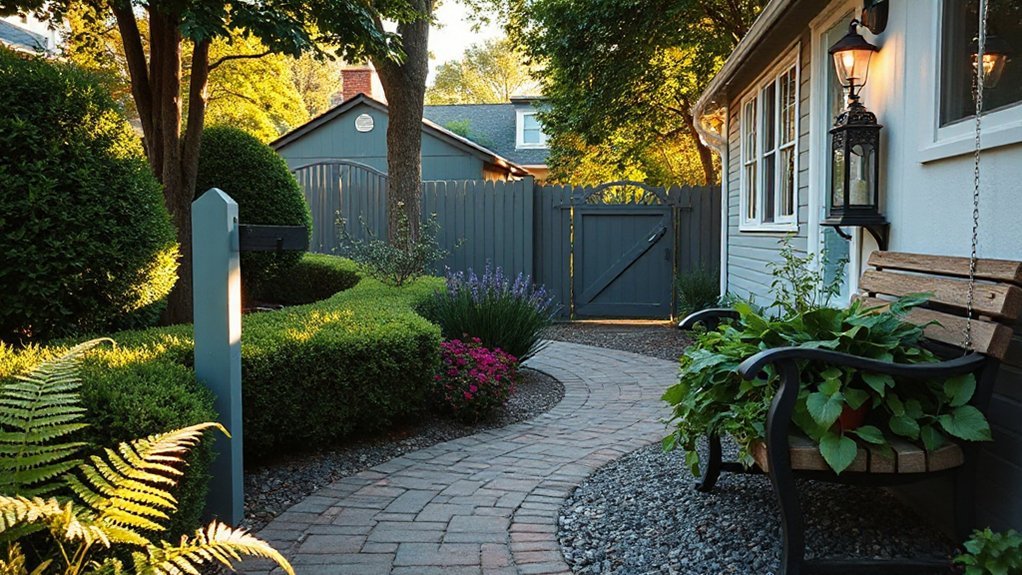
The morning light slips along your front path, catching the edges of planters and the line where mulch meets lawn. You can boost kerb appeal on a tight budget by choosing simple, durable elements and smart planting practices that don’t scream “renovation.” Start with quick wins and tidy edges, then layer texture with containers, lights, and seasonal greens that look intentional. Ready to see how small changes add up without breaking the bank? Let’s map out practical, cost-conscious steps.
Key Takeaways
- Set a clear budget with a 10–15% contingency and focus on durable, low-maintenance elements for small spaces.
- Create a focal point using an affordable sculpture, bold plant groupings, or a striking color block to draw attention.
- Use compact, multi-purpose features (bench, containers, lighting) and a cohesive color palette to maximize impact.
- Improve year-round appeal with evergreen structure, seasonal color, and tidy edges finished with mulch.
- Add budget-friendly lighting (solar path/step lights) to extend usability and highlight key features.
Set Your Front Garden Budget: What to Consider
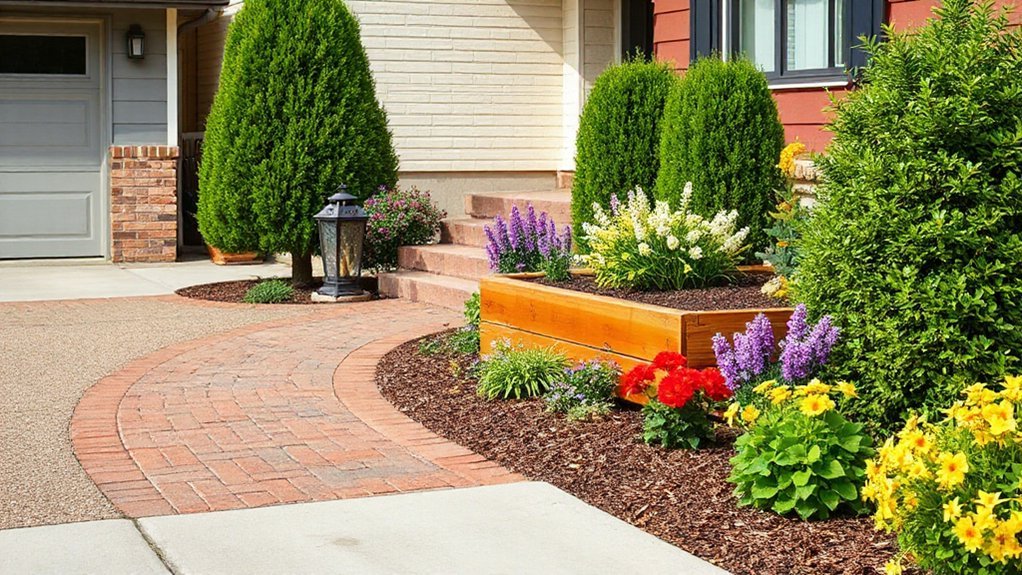
Before you start any planting or hardscaping, pin down your front garden budget by identifying your must-haves, nice-to-haves, and a safety cushion for surprises. You’ll decide what to fund first, then allocate leftover funds to upgrades that enhance curb appeal without waste.
Prioritize durable, low-maintenance items that survive weather and wear. Consider space when estimating costs: small plots benefit from compact, multitasking features over high-end, single-purpose pieces.
Include garden furniture for seating zones and use outdoor art to create focal points without big expenses. Plan for installation costs, permits if needed, and delivery times.
Leave a contingency of 10–15% to cover inflation or late deliveries. Finally, document a simple spending plan to track progress and avoid impulse buys.
Budget-Friendly Quick Wins Under £100
Smart, wallet-friendly upgrades can transform your front garden in under £100 with minimal effort and fuss. You’ll focus on quick, high-impact tweaks that don’t require a green thumb or professional help.
Start with garden furniture: a compact bench or a couple of folding chairs on the path edge can create seating zones and instantly add curb appeal. Choose materials that resist weather and keep costs low, and pair with a simple outdoor rug to define the space.
Add outdoor art—wind chimes, a metal sculpture, or a painted wooden sign—to introduce personality without clutter.
Lighting matters: solar-powered path lights extend usability and highlight focal points.
Finally, prune and tidy existing borders, swap tired pots, and group three to five cohesive containers for a polished finish.
Small-Space Planting: High-Impact Choices for Curb Appeal
For small spaces, start with compact plant pairings that complement each other without crowding your bed.
Add bold foliage accents to create contrast and structure, even in tight borders.
Finish with seasonal colour spots to keep curb appeal fresh from spring through autumn.
Compact Plant Pairings
Pair evergreen structure with seasonal bloom for year-round color, and layer heights from low groundcovers to mid-sized shrubs and a vertical accent. Prioritize plants with similar sun and water needs to simplify care and reduce replacements.
Integrate a garden sculpture or a discreet water feature as focal points, ensuring they don’t overwhelm the scale. Use mulched beds to retain moisture and suppress weeds, and edge with clean lines for a crisp, maintained look.
This approach maximizes impact without crowding your front space.
Bold Foliage Accents
Pair dark-leaved specimens with lighter textures to achieve vibrant contrasts that read at a distance. Use planting accelerators like upright grasses or compact shrub candidates to stretch vertical lines upward, drawing the eye away from sidewalk fatigue.
Keep color deliberately minimal; emphasis on shape and texture over busy hues. Place specimens in odd numbers near entry sightlines to guide visitors, and ensure well-drained soil and consistent irrigation for sustained vibrant foliage.
Seasonal Colour Spots
Choose varieties with prolonged bloom and varying heights to keep interest through the season. Use repeat plant palettes to enhance cohesion and reduce maintenance.
Combine evergreen structure with seasonal pops to sustain curb appeal year-round. Integrate low-water options to fit a small-budget project.
Add garden sculptures or a subtle water feature to heighten texture without crowding space. Keep pots lightweight and mobile, so you can rotate color zones as weather shifts.
Maintain tidy edges and prune regularly for crisp, lasting impact.
Budget Hardscaping That Looks Premium
If you want a premium look without breaking the bank, start with simple, durable materials and smart layout. Use concrete pavers or compact stepping stones for clean lines that read high-end without costing a fortune.
Prioritize sturdy, low-maintenance options like steel edging and treated timber for longevity.
Create contrast with a restrained color palette: charcoal, natural timber, and light sand tones.
Keep dainty details out of the way; choose one statement feature, such as a defined border or a single focal point, to anchor the space.
Integrate garden furniture in a cohesive set to avoid clutter and guarantee comfort.
Add outdoor art sparingly—one well-placed piece can elevate the whole scene.
Focus on proportion, texture, and reliable upkeep.
Seasonal Planting for Year-Round Glow
Seasonal color shifts keep your garden lively through the year, so plan blooms and foliage that peak at different seasons. Use a clear planting calendar to align color changes, texture, and bloom times with your local climate.
Combine year-round texture with smart plant choices to guarantee interest from one season to the next.
Seasonal Color Shifts
To keep your front garden vibrant year-round, plan a color rotation that mirrors the changing seasons and emphasizes bloom succession, foliage texture, and container variety. Seasonal color shifts hinge on predictable color progression and thoughtful contrasts.
Begin with cool tones in early spring for seasonal foliage interest and soft backbone, then mix brighter blooms as temperatures rise.
In summer, pick daring container combos—complementary hues and textured foliage—to sustain impact without extra effort.
Let autumn unfold with warm, earthy tones that echo seasonal foliage while providing contrast against evergreen structure.
By layering textures—fine grasses, glossy leaves, and chunky perennials—you create depth during every shift.
Keep maintenance tight: deadhead routinely, rotate pots, and cap with mulch.
This disciplined approach delivers year-round curb appeal on a small budget.
Planting Calendar Tips
A well-organized planting calendar keeps your front garden vibrant year-round by aligning bloom times, maintenance tasks, and container swaps with the seasons. To systemize success, map your tasks month by month, noting frost dates, compost needs, and water checks, then align them with your garden furniture and outdoor art placements for visual continuity.
Choose a few reliable, low-wuss annuals and perennials that reflower with minimal effort, and rotate them into containers as seasons change. Reserve a spring, summer, and autumn planting window, marking deadlines for dividing perennials and renewing mulch.
Pair color blocks with compatible foliage and keep a backup, low-cost plant list for quick swaps. Review quarterly, adjust for weather swings, and keep notes for next year’s calendar.
Year-Round Texture Mix
Year-round texture comes from mixing plant forms that catch the eye in every season. You’ll combine upright, mounding, and trailing forms to create visual depth from spring through winter.
Choose evergreen backbone plants for structure, then layer seasonal foliage, blossoms, and berries for color and contrast. Keep leaf shapes varied—glossy, matte, silvery—to reflect light differently as the year changes.
Pair compact perennials with short grasses or groundcovers to fill gaps without crowding. Incorporate small-scale garden art and subtle water features to reflect seasonal color and movement, enhancing texture without needing ongoing upkeep.
Space measurements matter: allow for access, view lines, and maintenance paths. Review your palette each season, swapping in one or two temporary accents for renewed texture without a full redesign.
Lighting on a Budget: Pathways and Accents
Even on a tight budget, you can create a welcoming glow along your paths and highlight key landscape features with practical, low-cost lighting strategies.
You’ll maximize impact by layering light sources: path lights, step lights, and low, ground-level uplights for shrubs. Use solar options where possible to cut wiring and energy costs, and opt for warm white bulbs to keep the curb appeal inviting.
Install lights at even intervals to guide movement and prevent shadowy gaps; test angles to avoid glare on windows.
Garden art, subtly lit, can become a focal charm without overpowering the scene, while water features reflect gentle light for added ambiance.
Keep cables neat and concealed, avoiding clutter, so accents stay tidy and secure, even after rain.
Create a Memorable Focal Point Without a Full Redesign
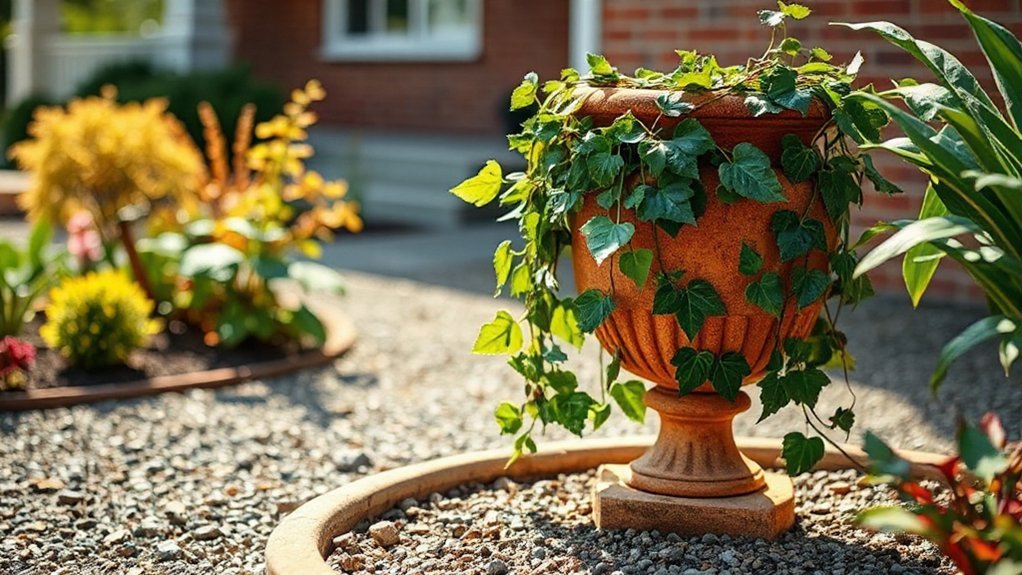
You can create a memorable focal point without a full redesign by using a few bold, budget-friendly elements that draw the eye. Think in terms of memorable focal techniques—like a sculptural piece, a striking plant grouping, or a contrasting color block—that don’t require major changes.
Pair these with affordable accent elements, such as containers, lighting accents, or texture-rich mulch, to amplify impact without a complete overhaul.
Memorable Focal Techniques
A memorable focal point can transform a front garden without a full redesign, using one standout feature that draws the eye and anchors the space. You’ll choose a single element and tailor it to scale, texture, and color.
Start with garden sculptures as a focal cue, selecting a piece with weathered charm or modern lines that echo your house’s character. Place it off-center or at sightlines from the doorway to guide visitors inward.
Pair the sculpture with clean, low-growing borders to reduce crowding and maintain accessibility. If you prefer low maintenance, add decorative mulch around the base to add color contrast and tidy edges.
Keep other elements subdued to let the focal point breathe, ensuring the feature remains impactful year-round.
Budget-Friendly Accent Elements
If you want a memorable focal point without a full redesign, start with budget-friendly accents that punch above their price tag. You can achieve impact quickly with simple, deliberate choices. Consider these elements:
- garden sculpture
- decorative mulch
- contrasting plant textures
A single well-placed sculpture or oversized pot becomes a centerpiece without major work. Pair it with decorative mulch to define borders and add color without irrigation or digging. Use mulch in a contrasting shade to highlight the focal area and improve soil moisture retention.
Choose a sculpture that complements your home’s style and scale it to the space. Finally, curate a small trio of plants with varying heights around the sculpture to create depth and guide the eye toward the focal point. This keeps costs low while delivering a polished look.
Low-Maintenance Borders That Look Collected
Keep maintenance simple: group plants in blocks for easier watering and weeding, and choose drought-tolerant varieties that require minimal attention. Use a restrained planting scheme with evergreen structure—think low grasses or compact shrubs—as anchors, then add seasonal interest with a few repeat-flowering perennials.
Consider container gardening near entrances to extend the border’s impact without clutter. Favor wildlife-friendly plants that attract pollinators, supporting local biodiversity while staying tidy.
Regular mulch and neat edges finish the collected look with practical longevity.
Choosing Plants for Shade and Drought
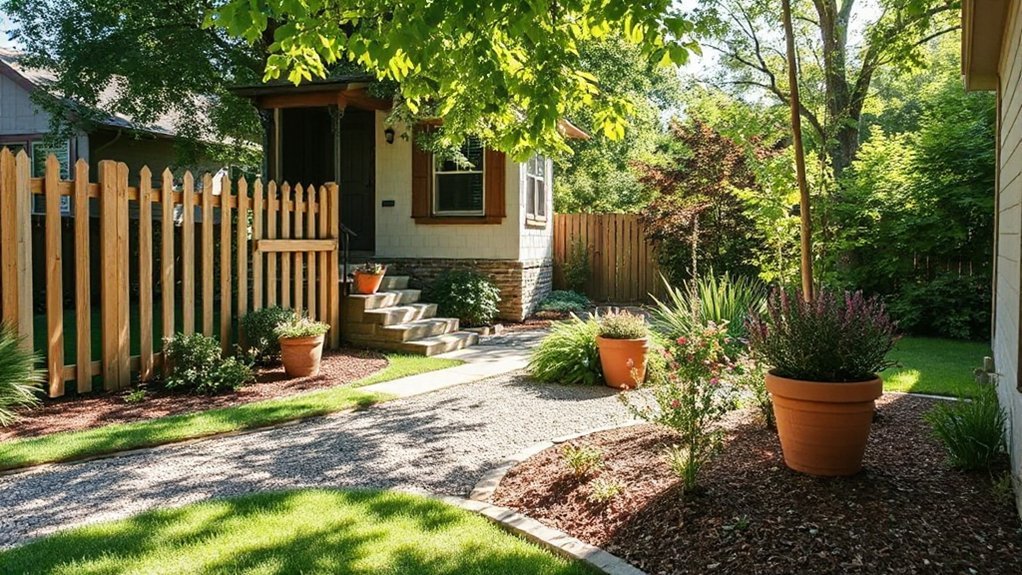
Shade and drought tolerance don’t have to be mutually exclusive. When you choose, prioritize evergreen shrubs and water-efficient plants that maintain structure year-round while sipping less water.
For shade, look for compact options that tolerate low light and moist, evenly cooled soil. For drought, pick drought-tolerant forms that still offer evergreen interest.
Use a simple mix to reduce maintenance and costs.
- Evergreen shrubs provide year-round backbone with minimal pruning.
- Water-efficient plants thrive on reduced irrigation, with mulched roots.
- Combine shade-tolerant and drought-tolerant species to balance moisture needs.
Planting tips: group by sun exposure, water deeply but infrequently, and mulch to conserve moisture. This approach keeps curb appeal intact on a small budget.
Quick Weekend Projects to Elevate Curb Appeal
Spruce up your curb appeal this weekend with simple, high-impact tweaks you can complete in a few hours. Start with a quick power wash of paths and the lowest joints of siding to reveal fresh, clean lines.
Swap in one or two compact garden furniture pieces to frame seating and inviting corners; choose weatherproof finishes for longevity.
Add a new focal point with outdoor sculptures that reflect your style, positioned off-center for visual interest.
Refresh mulch or gravel to a crisp 2–3 inch layer, then edge borders for sharp definition.
Update lighting with affordable solar garden lights along walkways to extend appeal after dusk.
Finally, tidy, prune, and weed to maintain a neat, cohesive look.
Frequently Asked Questions
How Can I Maximize Curb Appeal With Renter-Friendly Changes?
You can maximize curb appeal as a renter by focusing on portable, low-commitment upgrades. Install outdoor lighting along paths and entryways to highlight features, using weatherproof fixtures you can take when you move.
Add decorative accents like planters, seasonal wreaths, and a bold house number. Choose container gardens with fast-growing, low-maintenance plants.
Keep surfaces clean, trim edges, and pressure-wash steps. Use these touches to create a welcoming, cohesive look that’s easy to remove later.
What Are the Best Evergreen Accents for Small Front Gardens?
You want evergreen accents for small front gardens that stay stylish year‑round. Consider compact boxwood or dwarf conifers as backbone shapes, plus low-growing yew or holly for structure.
Use garden lighting to highlight textures after dark, and intersperse decorative stones along paths for contrast.
Choose scale-appropriate specimens, rotate pots seasonally, and keep edges clean.
This approach provides lasting impact with minimal maintenance, maximizing curb appeal efficiently and affordably.
Which Low-Cost DIY Solutions Create Premium-Looking Borders?
You can create premium-looking borders with low-cost DIY solutions. Use garden edging to define edges.
Then build simple DIY border ideas like stacked timber planks, reclaimed bricks, or flat stones set in sand.
Plant low-growing evergreens behind for year-round structure.
Add mulch or gravel for a clean finish, and trench the edging slightly for a neat, professional look.
You’ll achieve sharp lines, durable results, and a polished curb appeal without breaking the bank.
How Do I Assess Soil Health on a Tight Budget?
To assess soil health on a tight budget, start with a simple soil test using a DIY kit or send a sample to a cooperative extension.
Look for pH, texture, and nutrient indicators.
Perform a basic visual check for compaction and drainage.
Add organic amendments like compost if you see deficiencies, and retest after a few months.
Track changes, document results, and adjust watering accordingly.
Prioritize soil testing and organic amendments for steady improvement.
What Quick-Win Improvements Boost Property Value Most?
Quick wins: upgrade curb appeal with landscape lighting and tasteful decorative accents. You’ll boost perceived value by lighting key features, trimming hedges, and adding a defined path.
Use solar lights along walkways for low cost and nighttime drama. Choose durable, simple decorative accents—planters, a bench, or a focal sculpture—to anchor the scene.
Keep colors cohesive, prune regularly, and make certain entrances look inviting. These steps deliver noticeable value without breaking the bank.
Conclusion
You don’t need a big budget to boost kerb appeal—just focus on tidy edges, smart plant grouping, and a few low-cost touches. Use mulch to define borders, solar lights for subtle drama, and compact furniture for invited charm. Pick seasonal plants for year-round color, and create a simple focal point that’s easy to maintain. Voila: a welcoming front with curb-appeal polish, without overhauling your space. Now, channel your inner, don’t-tilt-at-windmills homeowner and get planting.
About the Author