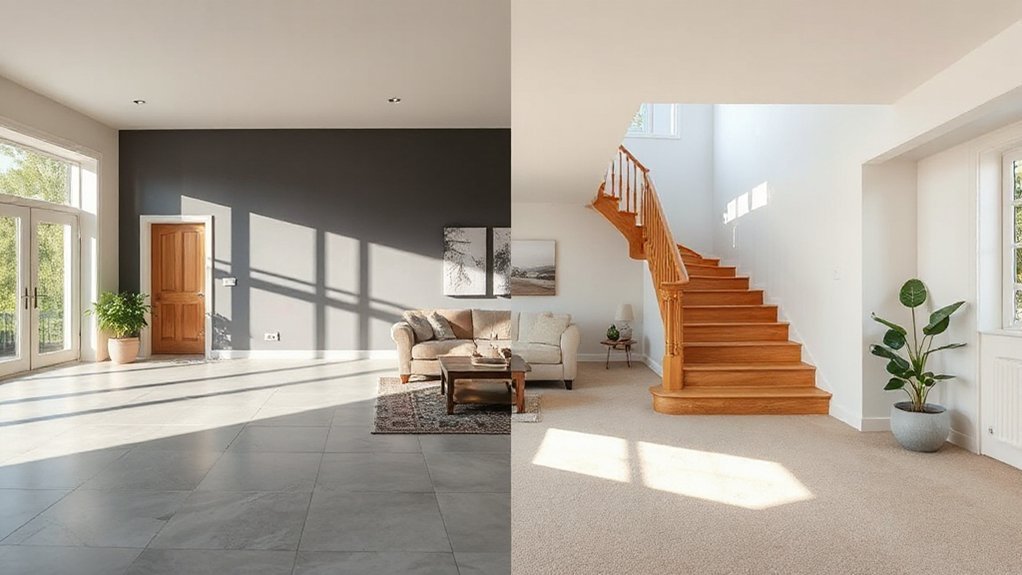
When you decide between a full property refurb and a light refresh, you’re weighing long-term value against upfront cost. A full refurb rarely leaves money on the table in markets craving modern systems and energy efficiency, but it requires bigger budgets and longer disruption. A light refresh can lift appeal quickly with lower risk, yet its value lift is typically capped. The right move hinges on your budget, timeline, and target market—and there’s a clear path you’ll want to map out next.
Key Takeaways
- Full refurb generally yields higher long-term value and resale speed in markets with strong demand, due to upgraded systems, finishes, and layout improvements.
- Light refresh offers faster execution, lower upfront cost, and smaller disruption, making it better for short occupancy periods or tight budgets.
- ROI favors full refurb when energy efficiency and durable materials reduce ongoing costs and attract premium buyers or tenants.
- Disruption, downtime, and permitting can erode short-term value in full refurb; phased approaches mitigate risk and preserve occupancy.
- Decision should align with budget, timeline, asset strategy, market trends, and expected payback to maximize value.
How to Decide: Refurbishment vs Refresh Based on Budget, Timeline, and Value
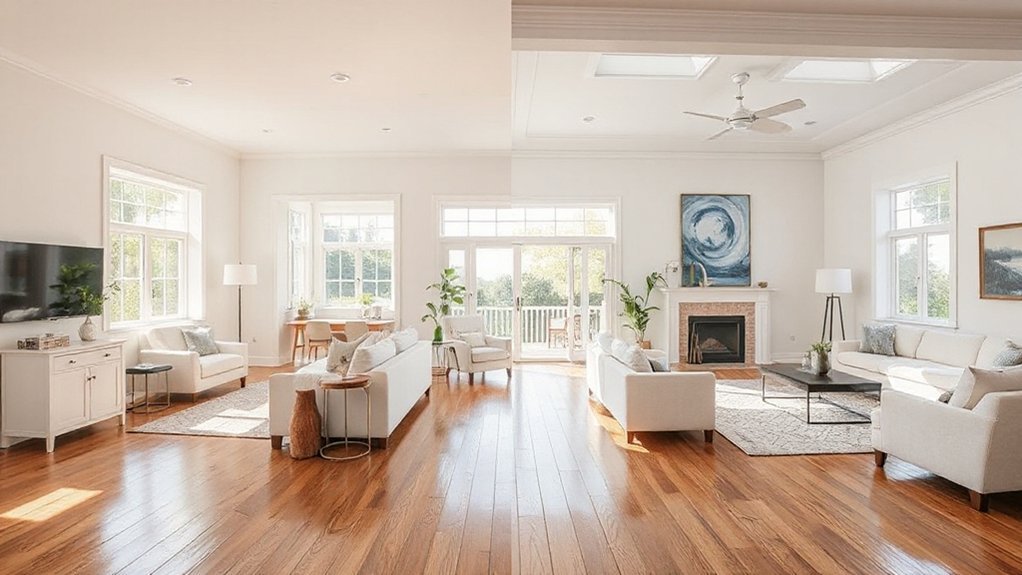
When deciding between a refurbishment and a refresh, anchor your choice in three levers: budget, timeline, and value.
You’ll assess budget first: quantify costs, linger on contingencies, and compare long‑term maintenance with upfront investment.
Timeline matters next: map required disruption, permitted access, and returning residents’ needs, then gauge which option delivers the quickest, least invasive path to occupancy.
Value hinges on how upgrades translate to market appeal and operating efficiency; luxury upgrades and design trends should drive decisions that elevate appeal without overcapitalizing.
Use data from comparable projects to forecast resale or rental impact, walkability of design, and tenant satisfaction.
This approach keeps decisions client‑focused, precise, and aligned with measurable outcomes rather than impulse.
Frame Your Value Equation: Costs, ROI, Disruption, and Time
You’ll weigh Costs vs ROI to map where every dollar delivers value and how long the payback takes.
Consider disruption and downtime, and how they shift project feasibility and user productivity.
Finally, time-to-value matters as you forecast speed to benefits across your environment.
Costs vsROI Tradeoffs
Costs vs ROI Tradeoffs: Frame your value equation by clearly comparing the upfront, ongoing, and disruption costs of a refurb versus a light refresh against the expected ROI, time to value, and potential downtime.
You’ll see higher initial outlays with a full refurb, but potentially stronger market uplift and longer-term operating efficiency.
A light refresh costs less upfront and reduces immediate disruption, delivering quicker payback though with more modest long-run gains.
Consider luxury upgrades as a differentiator; they can elevate perceived value and attract tenants or buyers, influencing Market impact.
Quantify ROI through net present value and internal rate of return, and map it to time-to-value and downtime risks.
Align choices with your asset class, tenant mix, and target markets to maximize value.
Disruption And Downtime
Renovation planning determines when work occurs, sequencing tasks to minimize overlap with peak occupancy, and informs your disruption management approach. Use historical project data to estimate daily downtime, vacancy risk, and rent-loss exposure, translating these into dollarized impact.
Consider phasing possibilities, access limitations, and noise or dust controls, all of which shape resident experience and lease renewal prospects. Precise schedules plus contingency buffers improve predictability, accelerate decision-making, and safeguard ROI during disruption, ensuring stakeholders understand the true time and value implications of each path.
Time To Value Prospects
Time to value hinges on a clear, data-driven equation that stacks costs, ROI, disruption, and time to outcomes. You’ll compare upfront investment against expected gains, then factor in disruption hours and the speed of recovery to productivity.
For luxury upgrades, the premium in materials and craftsmanship can lift resale value or lease rates, but you must quantify how quickly those premiums offset your spend.
In historical preservation, tax incentives and grant timing influence cash flow, potentially shortening payback.
Use conservative projections for disruption and downtime, then test sensitivity across scenarios: full refurb, partial refresh, or phased work.
The goal is a tangible, time-bound ROI map you can present to stakeholders, showing how each option accelerates or delays financial breakeven and operational readiness.
Align decisions with measurable, time-anchored outcomes.
What Refurbishment Typically Includes
When you consider refurbishment, you’ll typically see a defined scope that covers both structural and cosmetic updates, with clear metrics for timing and budget.
Expect a mix of room upgrades—from flooring and finishes to system improvements like plumbing or electrical—balanced against potential layout changes.
This focus helps you compare against a light refresh by outlining what’s included, what it costs, and how disruption varies.
Typical Scope Of Refurbishment
A refurbishment typically covers a defined set of improvements that restore functionality, update aesthetics, and extend the life of a space, with scope adjusted to budget and goals. You focus on core systems, finishes, and layout refinements that yield measurable gains in efficiency and appeal.
Typical scope includes structural assessments, mechanical and electrical upgrades, lighting redesign, flooring and surface replacement, and space-planning adjustments to improve flow. Projects may incorporate cabinet upgrades, bathroom and kitchen refreshes, and door/window enhancements aligned with energy targets.
Where appropriate, you pursue luxury upgrades that elevate perceived value without overreaching cost thresholds. Historical preservation considerations guide material selection and stitching of old with new, ensuring authenticity remains intact.
Clear milestones, cost controls, and risk mitigation underpin decisions to maximize return on investment.
Common Room Upgrades Included
Refurbishment projects translate into tangible, room-by-room upgrades that optimize function, comfort, and value. In this section, you’ll see common room upgrades that typically drive measurable returns.
Kitchens often involve more efficient layouts, updated cabinetry, durable countertops, and improved lighting, while bathrooms focus on fixtures, water efficiency, and smart controls.
Living spaces benefit from enhanced insulation, better acoustics, and durable finishes that resist wear.
Practical improvements like upgraded electrical panels, improved lighting schemes, and efficient HVAC zoning reduce long-term operating costs.
Outdoor landscaping is strategically planned to boost curb appeal and outdoor livability, aligning with overall design flow.
Within rooms, you’ll encounter smart home integration elements—thermostats, lighting, and security—designed for seamless operation, energy savings, and user-friendly control.
These upgrades support clarity, value, and predictable maintenance.
Structural And Cosmetic Focuses
Structural and cosmetic scopes typically include targeted, buildable changes that directly affect both form and function. You’ll focus on core systems, finishes, and layout to maximize value without overhauling every element.
In a refurbishment scenario, expect structural refinements like joist or wall adjustments only where they improve flow or safety, paired with cosmetic upgrades that elevate perception and usability.
Prioritize architectural harmony by aligning door lines, trims, and color schemes for a cohesive feel.
Material durability guides selections—flooring, cabinetry, and countertops should withstand wear while preserving appeal.
You’ll compare long-term maintenance costs against upfront spend, ensuring choices minimize disruption and downtime.
This approach yields measurable gains in resale appeal and functional performance, without unnecessary complexity.
What a Light Refresh Covers and Where It Fits
A light revitalization targets cosmetic and functional upgrades that restore a space’s livability and appearance without disrupting core systems, so you can achieve a like-new feel at a lower cost and shorter timeline.
You’ll address surfaces, fixtures, lighting, and staging elements that influence daily use and first impressions without reconstructing structure or systems. The scope typically includes repainting, re-sealing floors, updating hardware, and rejuvenating cabinets or countertops within existing footprints.
We measure value by speed, cost-per-impact, and user comfort, ensuring minimal disruption to occupancy. Design trends guide color palettes and finishes, while material durability informs selection to sustain performance between revitalization cycles.
You gain clarity on timing, budget, and expected uplift, enabling you to align quick upgrades with broader asset strategy.
How Neighborhood Trends Influence Resale Appeal
Neighborhood trends shape resale appeal because buyers increasingly value neighborhoods with ongoing development, amenities, and rising desirability. You’ll see sharper appeal when local dynamics demonstrate stable growth, strong schools, and accessible services.
Neighborhood dynamics influence buyer perception of future value, not just current condition, so resale psychology favors areas with measurable momentum. Market data show price appreciation in growing districts, lower vacancy, and healthier rent-to-price ratios, which elevates appeal for both first-time buyers and investors.
As you assess a property, correlate nearby project pipelines, transit upgrades, and consumer amenity demand to resale potential. You’ll boost confidence in an offer by highlighting neighborhood strength alongside property quality.
In practice, align updates with the neighborhood’s trajectory, not against it, to maximize perceived value and speed of sale.
Energy Efficiency and Long-Term Savings: Comparing the Paths
As you price and plan updates, energy efficiency becomes a key driver of long-term savings and resale value. You’ll compare two paths: full refurbishment with high-efficiency systems and a lighter refresh focusing on efficiency upgrades.
In a full refurb, you can achieve substantial reductions in utility bills through high-performance insulation, heat-recovery ventilation, and upgraded HVAC paired with renewable energy installations.
A light refresh typically yields smaller, incremental gains but can still improve energy intensity through smart technology, LED lighting, and sealing gaps.
Data show that homes with certified efficiency upgrades often command premium resale prices and faster sales.
Prioritize measures with verifiable payback, such as premium insulation and efficient windows, while aligning choices with your climate and budget.
Budgeting Guide: When to Renovate, When to Refresh, and Why
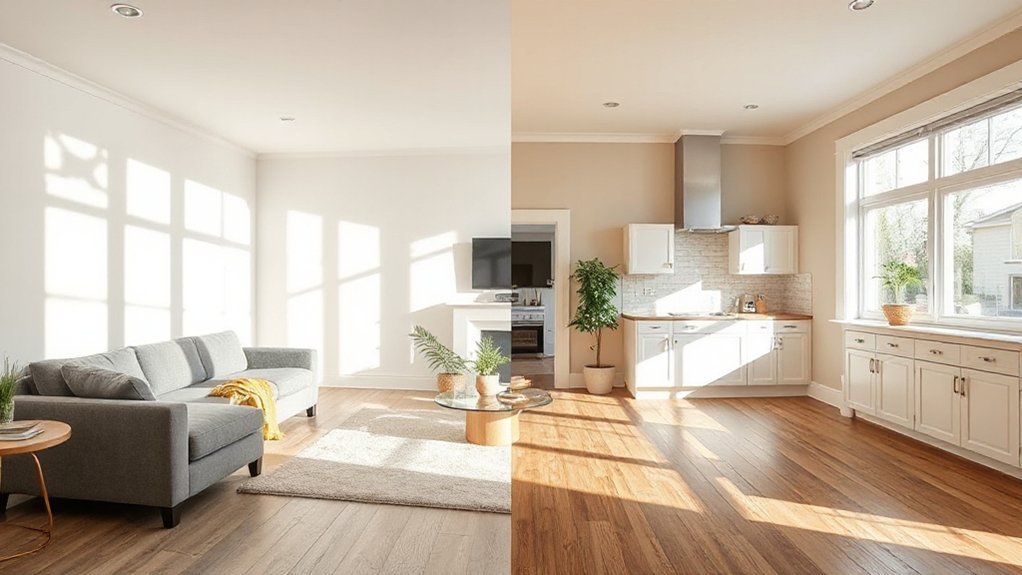
Deciding when to renovate versus refresh comes down to cost timing, expected payback, and your climate and usage patterns. A disciplined budgeting approach helps you choose the right scope and avoid overinvesting.
Consider these levers:
- Historical preservation constraints that limit materials or methods, affecting cost and schedule
- Aesthetic consistency with existing architecture to protect value and market appeal
- Payback horizons based on local demand, resale expectations, and maintenance costs
- Contingency allowances for surprises and permitting, reducing delayed project completion
Decision Framework: A Practical, Step-by-Step Checklist
To determine whether you should renovate or refresh, use a practical, step-by-step checklist that translates data into action. Begin with a crisp objective: align scope with target value and timeline.
Gather quantitative inputs: current condition scores, ROI estimates, and budget ceilings.
Next, assess design trends to ensure relevance; flag items with risk of obsolescence within 3–5 years.
Evaluate material sourcing: availability, lead times, and cost volatility.
Prioritize changes by impact-to-cost ratio, using a matrix to categorize quick wins versus strategic investments.
Validate constraints: structural limits, permitting, and neighborhood norms.
Develop a phased plan if needed, detailing sequence and dependencies.
Finally, set measurable success metrics and a post-implementation review schedule to verify value delivery.
Frequently Asked Questions
How Long Does a Full Refurb Typically Take Versus a Refresh?
A full refurb typically takes several weeks to a few months, while a refresh usually finishes in a few days to a couple of weeks.
You should factor in sourcing delays, permits, and trades coordination.
For timing considerations, plan a detailed project timeline and build in buffers.
In renovation scheduling, allocate milestones for design, demolition, and finishes.
You’ll stay on track by monitoring progress daily and adjusting trade crews as needed to hit your target completion date.
Which Projects Fail to Boost Resale Value Significantly?
Indeed, many projects fail to boost resale value substantially: cosmetic improvements that aren’t backed by demand, and luxury upgrades that overshoot the market. You’ll see diminishing returns if finishes aren’t aligned with buyer expectations or the neighborhood.
Focus where data shows impact—kitchens, baths, and energy efficiency—rather than speculative luxury. You’ll maximize value when you balance cosmetic upgrades with practical, durable improvements that buyers in your market actually crave.
What Are Hidden Costs in a Full Refurbishment?
Hidden costs in a full refurbishment include budget planning overruns, contingency needs, project management fees, and permit or compliance expenses. You’ll face potential delays, material waste, and trades’ price fluctuations, which eat into your margins.
Plan for 10–20% extra, track changes, and lock rates where possible. For contractor selection, verify warranties, compare detailed bids, and assess past timelines.
With precise budgeting, you’ll avoid surprises and keep your project aligned with client-focused, data-driven goals.
How to Prioritize Rooms for Maximum ROI?
What should you tackle first for maximum ROI? Prioritize high-traffic, high-impact spaces, starting with kitchens and bathrooms, then living areas.
You’ll boost value by upgrading durable finishes, fixtures, and layouts while minimizing disruption.
Allocate budget to Furniture upgrades in key rooms and plan Landscaping improvements to boost curb appeal.
Throughout, track costs against projected resale lift, compare to regional benchmarks, and adjust pacing to keep milestones on schedule and your client’s goals in sight.
Are Permits Required for Common Refurbishments?
Yes, permits are often required for common refurbishments. You should check your local building permits and renovation regulations before starting.
If you DIY or hire pros, you’ll reduce risks by confirming scope, timelines, and approvals upfront.
You’ll typically need permits for structural, electrical, or plumbing changes, and sometimes even cosmetic upgrades in regulated areas.
Always verify with your city or condo board to avoid fines and guarantee compliant, value-driven work.
Conclusion
In short, choose the path that aligns with market demand, budget, and timeline. A full refurbishment often yields higher value and longer-term ROI by modernizing systems and finishes, while a light refresh delivers quicker appeal at lower cost. Base the decision on expected resale or rent uplift, disruption tolerance, and energy savings. Example: a 3-bedroom condo in a rising market sold faster and at a higher price after a full electrical, plumbing, and cosmetic overhaul versus a superficial refresh. Data-driven, client-focused results.
About the Author