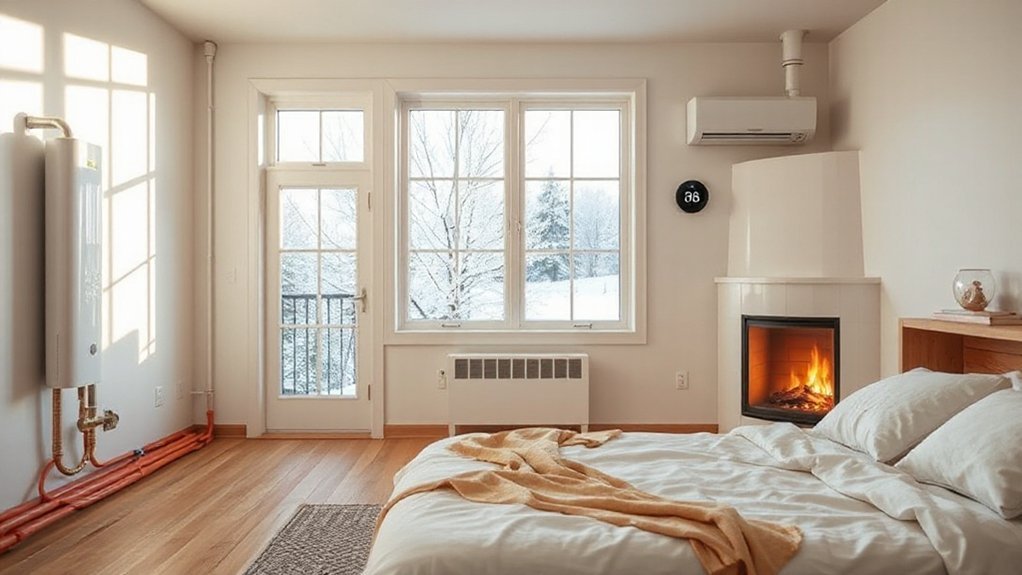
You’ll dramatically cut winter bills by pairing high-performance insulation and air sealing with precisely designed, zoned heating. Start with the envelope—attic, walls, rims, and exterior sheathing—before mechanical changes. Upgrade to high-efficiency, cold-weather rated heat pumps or furnaces, and optimize airflow and zoning to avoid short cycling. Add HRV for balanced ventilation and humidity control. Use smart thermostats linked to zoning, plus regular maintenance. If you keep going, you’ll uncover how to tailor upgrades for your climate and budget.
How to Prioritize Upgrades for Maximum Winter Savings
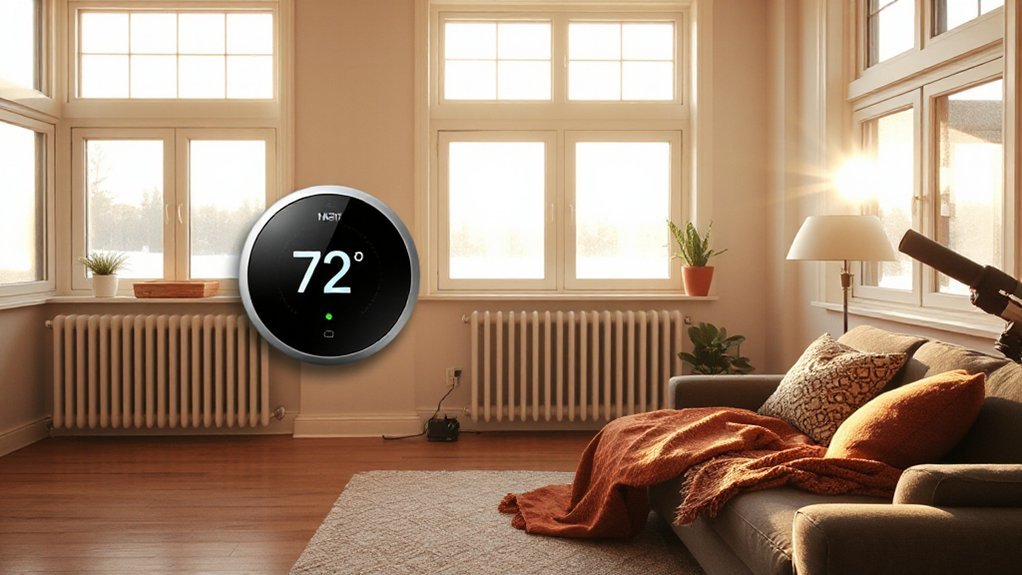
To maximize winter savings, start by identifying the heat losses with a baseline assessment and target upgrades that deliver the largest energy bang for the buck. You’ll rank interventions by payback, performance, and compatibility with your home’s design.
Prioritize insulation improvements—attic, walls, and rim areas—to reduce conductive losses before addressing mechanical systems.
Tighten envelopes with air sealing to minimize drafts and improve indoor comfort.
Then evaluate heating equipment upgrades, selecting options with high seasonal efficiency and proven reliability.
Consider renewables where site conditions allow, integrating solar-assisted heat or heat pumps to lower operating costs over time.
Throughout, track indoor air quality implications, ensuring ventilation remains adequate as envelope tightens.
Align choices with long-term energy strategy and available renewable energy incentives.
Smarter Thermostat Setups That Cut Your Winter Bill
Smart thermostat setups can cut your winter bill by translating a home’s patterns into precise, automated control of heating loads. You’ll design a logic layer that maps occupancy, profiles, and weather data to dynamic setpoints, reducing tailpipe heat and cycling loss.
Implement temperature zones so zones with lower comfort needs run cooler when unoccupied, while priority zones maintain comfort with minimal energy use.
Use adaptive algorithms that respond to real-time feedback, learning routines over weeks to minimize overshoot and overshoot penalties.
Confirm device compatibility with your HVAC system, heat pump, or boiler, and enable away modes that preserve efficiency without sacrificing safety.
Document staging sequences, verify sensor placement, and monitor performance dashboards for incremental gains and predictable bill reductions.
Choosing a High-Efficiency Furnace or Boiler: Is It Worth It?
Choosing a high-efficiency furnace or boiler hinges on balancing upfront cost with long-term savings, so you can evaluate whether the payback period justifies the investment.
We’ll quantify efficiency gains, explain how fuel use drops with better AFUE ratings, and outline where longevity and reliability influence life-cycle cost.
Cost Versus Savings
Investing in a high-efficiency furnace or boiler delivers measurable long-term savings, but the value hinges on upfront costs, energy prices, and system compatibility. You weigh capital expense against predictable operating cost reductions, factoring in installation complexity, warranty coverage, and service access.
Payback periods vary with fuel type, climate, and rates, so model scenarios using current tariffs and potential price volatility. Design emphasis should target system match: radiant zones, boiler hydraulics, and venting constraints influence performance more than nameplate efficiency alone.
Consider integration with energy storage and the smart grid, enabling demand-responsive operation that stabilizes monthly bills. Reliability, condensation management, and filter/air quality impacts shape total cost of ownership.
A disciplined appraisal balances upfront, maintenance, and projected savings to inform a prudent, future-ready choice.
Efficiency Gains Explained
Upgrading to a high-efficiency furnace or boiler can reduce operating costs and improve comfort, but the real gains come from how you engineer the system rather than the label on the equipment. You’ll optimize performance by matching boiler or furnace efficiency to load profiles, selecting modulating controls, and designing low-standby losses.
Pay attention to heat distribution, zoning, and ductwork or hydronic layout to minimize short cycling and temperature swings. System efficiency isn’t just a label—it’s in how components interact: sensors, pumps, and valves must coordinate for steady, responsive response.
Consider indoor air quality impacts from filtration and humidity control, not just boiler efficiency. Smart home integration enables precise scheduling and fault detection, enhancing reliability and energy awareness without compromising comfort.
Longevity and Reliability
Prioritize units with modular maintenance access and long-term serviceability, since ease of component replacement preserves uptime. Consider corrosion resistance, electrical protection, and sensor redundancy that guard against drift during rapidly changing loads.
In retrofit scenarios, guarantee compatibility with existing ductwork and outdoor conditions, as improper matching induces inefficiency and wear. Indoor plants and humidity control relate to system sizing: stable humidity reduces condensate risk and helps maintain consistent performance, extending reliability across seasons.
Heat Pumps in Cold Climates: When They Make Sense
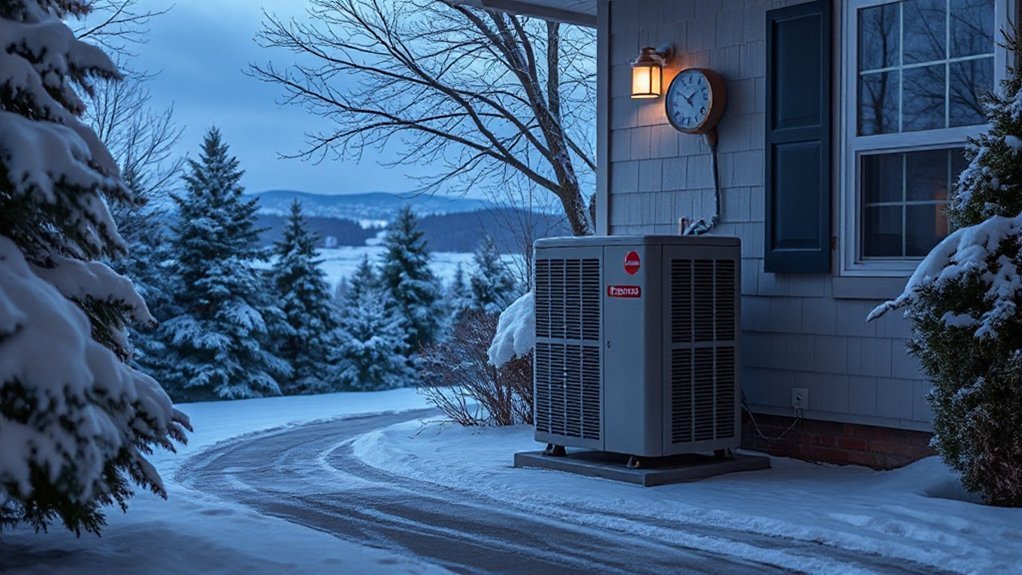
Cold climate efficiency hinges on how well a heat pump delivers reliable performance when outdoor temps drop, so you’ll want to weigh system sizing, refrigerant strategy, and defrost logic against your backup heating needs.
Consider how much warming power you’ll require at the coldest design conditions and whether a supplemental heat source is justified for peak events.
Finally, assess the total cost versus benefit, including installation, maintenance, and potential grid or fuel savings, to determine if a heat pump fits your design goals.
Cold Climate Efficiency
In cold climates, heat pumps can still deliver dependable comfort, but their efficiency hinges on equipment selection, system design, and operating strategy tailored to subfreezing conditions. You’ll maximize performance by pairing high-efficiency outdoor units with advanced refrigerant controls, ensuring stable indoor air quality and humidity control throughout extreme swings.
Properly sized air handlers and zoning prevent short cycling and heat loss, while smart controls optimize fan speed, defrost cycles, and setback strategies without sacrificing comfort.
- Select cold-weather rated heat pumps with high COP at subfreezing temps
- Design airflow and zoning to maintain consistent indoor air quality
- Integrate humidity control to prevent condensation and comfort gaps
- Employ advanced defrost and controls to sustain efficiency across conditions
Backup Heating Needs
You’ll design for humidity control and indoor air quality by ensuring proper ventilation and dehumidification alongside comfort heating. Consider staged or dual-stage heat pumps with auxiliary heat that activates only at critical loads, preserving efficiency.
Integrate controls that optimize performance across temperatures, including smart thermostats and zoning strategies. Smart home integration should coordinate backup modes with occupancy, profiles, and weather data, reducing standby losses.
Finalize with redundancy that preserves comfort during extreme conditions while maintaining predictable energy use and dependable indoor environments.
System Cost vs Benefit
System costs and expected benefits must be weighed to determine when heat pumps in cold climates are advantageous. You’ll compare upfront equipment and installation costs against long‑term savings, reliability, and reduced fuel volatility.
In cold‑climate applications, system durability and installation complexity drive total value as much as efficiency ratings. A well‑selected unit with proper auxiliary controls can minimize service calls and maximize year‑round comfort, but you must assess payback with local utility incentives and climate data.
Consider performance at design conditions, refrigerant lifecycle costs, and potential heat loss reductions. The goal is a balanced solution that preserves comfort without overreach.
1) Equipment cost versus annual savings
2) Climate‑driven performance and degradation risk
3) Installation complexity and contractor competency
4) Long‑term durability and maintenance expectations
Insulation Upgrades That Cut Winter Bills
Are you maximizing energy savings this winter with strategic insulation upgrades? Upgrading insulation thickness and material selection directly lowers heat flux, reducing demand on your heating system without compromising comfort.
Focus on continuous cavity insulation, high-performance mineral wool or closed-cell spray foams, and proper density to limit thermal bridges at studs, joists, and corners.
Prioritize exterior envelope improvements—rigid foam sheathing, upgraded attic hatch sealing, and under-roof insulation—to curb heat loss from the top and sides of the house.
Pair these upgrades with controlled ventilation to maintain indoor air quality and avoid moisture buildup.
For smarter outcomes, coordinate with smart home integration to monitor temperature gradients and energy use, enabling precise adjustments that sustain comfort while reducing operating costs.
Air Sealing Techniques That Stop Drafts Fast
Air sealing quickly stops drafts by targeting the largest leakage paths identified during insulation upgrades. You’ll focus on pathways where heat loss is highest, applying proven techniques that preserve interior comfort without compromising design.
Prioritize airtight fixes that work with your home’s envelope and existing finishes.
- Seal gaps around windows and doors with low-expansion foam, then trim for a clean, integrated look.
- Use door thresholds and weatherstripping on movable joints to minimize cold inflows and draft transfer.
- Address electrical outlets and switch plates with gaskets or foam gaskets behind covers.
- Consider draft insulation strategies for attic hatches and recessed lighting to prevent radiant loss.
Draft insulation and window treatments complement these methods, balancing efficiency with aesthetics.
Duct Sealing and Airflow Improvements for Even Heating
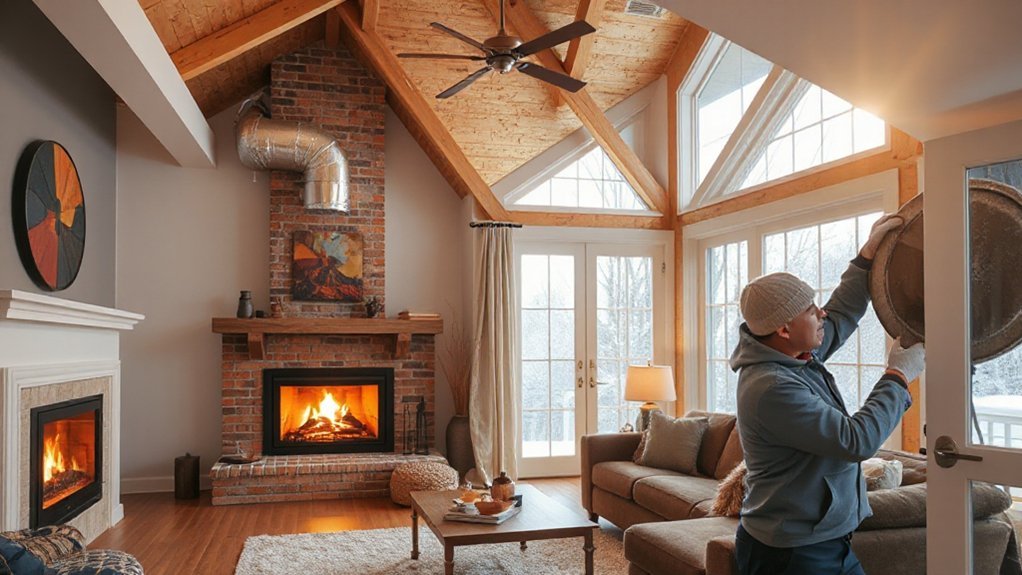
You’ll seal gaps and optimize ductwork to minimize losses, ensuring conditioned air reaches every room with minimal leakage.
By balancing ducts and tuning airflow, you’ll achieve consistent temperatures and improved system efficiency.
This design-focused approach sets the foundation for even heat distribution across the space.
Seal Gaps, Improve Airflow
Seal gaps and optimize airflow to guarantee consistent heat distribution throughout the space. You’ll reduce losses, guide conditioned air where it matters, and support equipment efficiency via targeted sealing and logical airflow paths. This approach emphasizes precision, not perimeter fluff, and centers on durable materials, proper fasteners, and careful access planning.
Airflow optimization and draft prevention become measurable goals, enabling tighter control over temperature zones and occupant comfort. Implementing these steps improves system response time and minimizes heat stratification near ceilings.
4 practical steps below provide a concise framework to start upgrading today:
1) Identify high-leak zones with smoke or infrared testing
2) Seal envelope penetrations and joints with compatible materials
3) Verify return path integrity and minimize under-vented spaces
4) Re-check after ductwork modifications for consistent airflow.
Balance Ducts for Even Heat
Once gaps are sealed and airflow paths are set, the next step is to balance the ductwork so heat is distributed evenly across zones. You’ll verify trunk and branch ducts meet design-mandated pressures, then adjust dampers to equalize flow to each room.
Use diagnostic tools to map temperature rise and airflow, confirming that supply and return paths align with zone loads. Implement targeted changes, prioritizing consistent air velocity without increasing noise or drafts.
Integrate duct insulation where exterior runs or unconditioned spaces exist to minimize heat loss between supply points. Pair balance adjustments with thermostat calibration to ensure control sequences reflect the adjusted airflow, preventing short cycling and overshoot.
This disciplined approach yields predictable comfort, improved energy efficiency, and a durable, design-forward system.
Heat-Recovery Ventilation and Fresh-Air Strategies
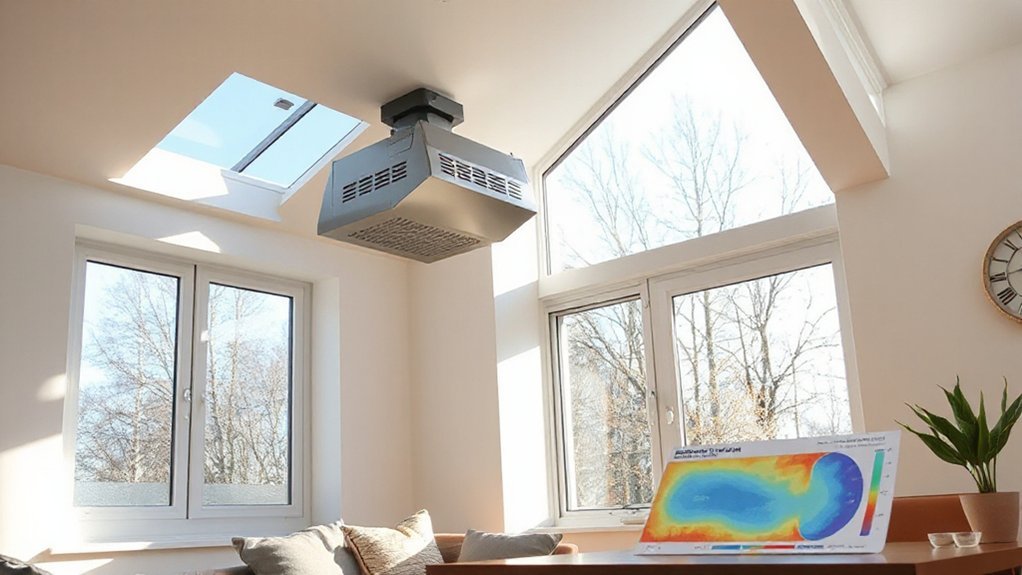
How can a building maintain high indoor air quality without sacrificing energy efficiency? Heat-recovery ventilation (HRV) and heat-reauf ventilation strategies deliver fresh air while reclaiming Heat, reducing loads on heating systems. You optimize performance with high-efficiency cores, balanced airflow, and smart controls that modulate rate based on occupancy and indoor pollutants.
Integrating indoor plants and strategic decorative radiators can complement filtration and diffusion, enhancing perceived comfort without compromising energy metrics. Choose systems with low-pressure drop, maintainable filters, and predictable maintenance intervals to sustain performance year-round.
- Assess ventilation rates to meet ASHRAE guidelines without over-ventilating.
- Pair HRV with demand-controlled ventilation to match occupancy.
- Schedule pre-warm or pre-cool air for transitory loads.
- Integrate intuitive commissioning and monitoring dashboards for ongoing optimization.
Zoning Basics: Targeting Comfort by Area
Zoning basics build on controlled ventilation strategies by allocating conditioned air where it’s most needed. You implement clear area boundaries to balance load, optimize comfort, and reduce oversupply.
Zoning systems separate spaces by occupancy, use, and exposure, then modulate supply via dampers, controllers, and communication with the heat source. In practice, you pair zoning with reliable sensing—temperature, humidity, and occupancy—to prevent drafts and cold spots while preserving intake air quality.
You’ll tune setpoints by zone, prioritizing rooms with higher usage or tighter envelopes. Smart thermostats interface with zoning hardware to coordinate schedules and respond to real-time conditions, enhancing efficiency without sacrificing comfort.
The result is targeted comfort, improved system runtime, and better energy performance through deliberate, area-specific control.
Energy-Efficient Water Heating Options for Winter
You’ll evaluate energy-efficient water heating options for winter, focusing on how tankless systems and solar hot water can reduce standby losses and ramp times.
In this discussion, we’ll compare performance, installation implications, and design compatibility with cold-climate loads.
Start by framing how each option meets winter demand while optimizing space, efficiency, and long-term operating costs.
Tankless Water Heating
1) Choose units with a verified first-hour rating aligned to your peak load, ensuring reliable hot water delivery during cold snaps.
2) Compare energy factors and burner technology to optimize efficiency and minimize standby losses across rooms.
3) Align installation with ventilation and combustion requirements to protect indoor air quality.
4) Integrate with smart controls for scheduling, weather compensation, and water conservation.
Note: Focus on design impact, not solar options.
Solar Hot Water Options
Design focus should center on placement, tilt, and shading analysis to sustain output on low-angle days, while integrating back-up heaters for peak demand. Implement solar panels with anti-freeze loop routing and frost protection to guarantee continuous operation.
Conduct an energy audit to quantify baseline losses and verify system performance post-install. Prioritize durable materials, corrosion resistance, and seamless integration with existing plumbing and heat sources.
Ensure maintenance schedules are explicit, enabling predictable annual performance and measurable reductions in conventional fuel use.
Supplemental Heat Options Worth Considering This Winter
What supplemental heat options are most effective this winter depends on your home’s envelope, climate, and existing heating system. When selected thoughtfully, supplementary heat can boost comfort without overloading your primary system.
Prioritize controllability, efficiency, and installation quality to maintain comfort zones and prevent heat loss. The following options offer precise, design-minded gains:
- Zone-focused space heaters with smart controls for target rooms
- Heat pump supplements paired with a smart thermostat to modulate demand
- Radiant floor or panel heaters installed with proper insulation and duct considerations
- Supplemental boilers or mini-splits configured for backup or intermediate heating
Consider duct insulation and system coordination to minimize losses and maximize performance at marginal costs. Proper sizing and integration are essential for reliable, quiet operation.
Costs, Payback, and Financing Your Upgrades
Use a disciplined financial planning approach: estimate upfront expenditures, maintenance needs, and expected energy reductions based on system performance targets and local climate data.
Compare scenarios for different equipment, controls, and insulation improvements to identify the most cost-effective path.
Financing options influence overall value, so assess loan terms, rebates, and tax credits against your return timeline.
Contractor selection matters: verify scope, warranties, and commissioning plans to ensure reliable performance verification and documented savings.
Align decisions with long-term resilience and budget certainty.
Prioritizing Upgrades by Climate: What to Tackle First
Prioritizing upgrades by climate requires a targeted, climate-informed sequence that maximizes impact on energy use and comfort. You’ll align actions with local temperature profiles, humidity, and sun exposure to avoid overinvestment and optimize performance.
Start where climate dictates largest savings or comfort gains, then escalate to complementary upgrades that reinforce the core system. Design-focused choices should harmonize with outdoor decor and seasonal gardening, extending usable outdoor spaces while reducing heat loss.
1) Map climate-driven load shifts to weatherize first, then augment thermal envelopes.
2) Target glazing, shading, and insulation to exploit sun angles and seasonal cooling needs.
3) Phase HVAC controls and zoning to align with occupancy and outdoor transitions.
4) Integrate outdoor living features to reduce exposed heat load without sacrificing aesthetics.
Maintenance Habits That Keep Your System Efficient
Regular maintenance is your first line of defense against wear and inefficiency, ensuring the system operates at peak performance year-round. You optimize reliability by routine checks, prioritizing airflow, combustion, and heat transfer integrity.
Start with the air filter: replace or clean on a schedule that matches usage, architecture, and dust exposure, preventing airflow restriction and coil fouling.
Inspect belts, motors, and electrical connections for signs of wear, misalignment, or looseness, corrective action, and documenting findings.
Test for proper combustion and venting, watching for abnormal fuel-air ratios and carbon monoxide indicators; address issues immediately to avoid safety risks.
Calibrate controls and draft settings to maintain stable temperatures with minimal energy draw.
Implement a concise maintenance log to guide future service windows and design-driven upgrades.
Real-World Case Studies: Winter 2025 Upgrades
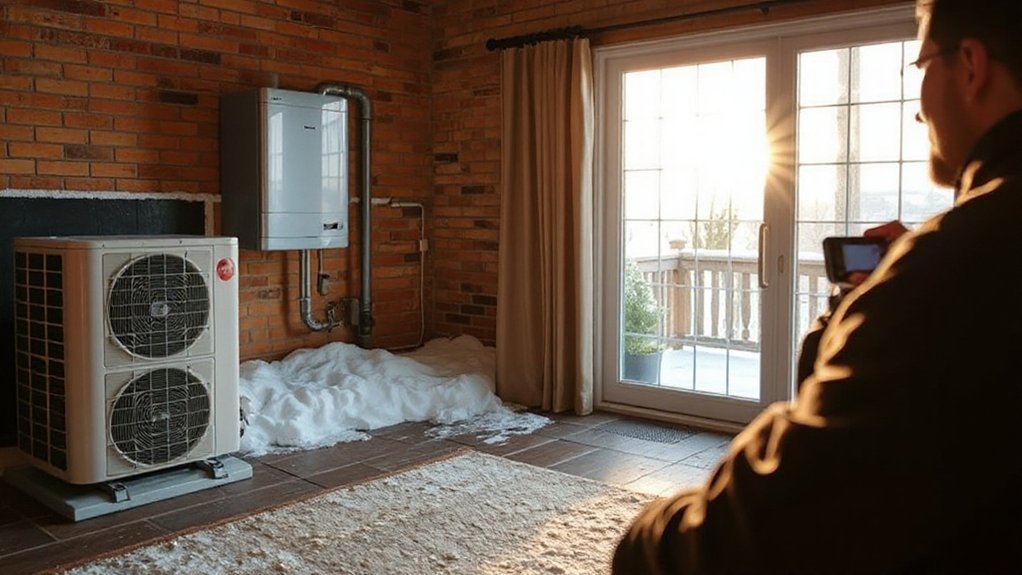
Winter 2025 upgrades demonstrate how targeted changes—insulation improvements, more efficient heat exchangers, and advanced controls—translate into measurable performance gains. In real-world case studies, you’ll see how energy audits identify heat losses, then guide precise interventions.
Seasonal maintenance schedules keep systems responsive, preventing efficiency drops during peak cold spells. You’ll assess retrofit impact with quantified metrics, from reduced boiler run time to improved indoor comfort at lower thermostat setbacks.
Design teams emphasize compatibility, lifecycle cost, and compatibility with existing ducts and radiant zones. Below, four representative scenarios highlight practical realities, performance banners, and decision paths.
- Retrofit heat exchanger optimization yields measurable furnace efficiency gains.
- Enhanced insulation reduces transmission losses, stabilizing setpoints.
- Modulating controls optimize boiler cycling and fuel use.
- Regular energy audits track ongoing savings and maintenance intervals.
DIY vs. Pro Upgrades: Planning Your Path
DIY upgrades can save you money, but the choice between DIY and professional installations hinges on system complexity, risk tolerance, and required outcomes.
To plan your path, map your current load, wiring, and compatibility with smart thermostats and control arrays. Assess the indoor air quality and ventilation goals to determine if fan control, zoning, or heat recovery features are needed.
For DIY repairs, target noncritical components first, document specifications, and follow manufacturer guidance to minimize warranty conflicts.
When complexity rises—multi-zone hydronic systems, radiant floor loops, or high-velocity ducts—prioritize professional assessment, load calculations, and code compliance.
Design focus should balance performance goals with safety margins, install quality, and future serviceability, ensuring upgrades deliver reliable efficiency without compromising system longevity.
Frequently Asked Questions
How Soon Will Upgrades Repay Their Cost in Winter Savings?
Upgrades repay in as little as one to three winters, depending on climate and usage. You’ll save faster with Smart thermostats and insulation improvements that reduce heat loss, optimize comfort, and lower boiler cycling and standby waste.
Which Upgrades Are Essential for Extreme Cold Climates?
“Measure twice, cut once.” You need Thermostat optimization and insulation improvements for extreme cold climates, as they directly reduce heat loss, stabilize indoor temperatures, and improve system efficiency in your design-critical, technically disciplined winter strategy.
Do Zoning Changes Require Licensed Electrical/Hvac Work?
Yes, zoning changes typically require licensed electrical or HVAC work. You’ll need electrical permits and HVAC licensing to guarantee compliance, safety, and proper integration with existing systems. Obtain permits before modifications to avoid fines and project delays.
Can Homeowners DIY Major Heating System Upgrades Safely?
Yes, you can’t safely do major heating upgrades yourself. DIY safety demands licensed professionals for critical work; upgrade planning should start with code-compliant design reviews, proper permits, and system testing. Trust experts over DIY shortcuts for reliability.
What Rebates or Incentives Specifically Apply This Winter?
This winter you can access rebates for smart thermostats and insulation improvements, with utility programs and federal incentives often stacking. You’ll maximize savings by documenting efficiency upgrades, meeting ENERGY STAR targets, and coordinating with utility-approved installers.
Conclusion
When you upgrade smartly, you cut winter energy use without sacrificing comfort. Prioritize insulation and thermostat strategy first, then look at high-efficiency furnaces, heat pumps, and boilers as climate-appropriate bets. A standout stat: homes with programmable thermostats save up to 10% on heating bills. Maintenance keeps those gains, so schedule annual tune-ups and filter changes. DIY tweaks plus professional installs balance cost and performance, delivering enduring efficiency through winter 2025 and beyond.
About the Author