

When you’re choosing a contractor, you must ask the right questions up front—about licenses, insurance, and local compliance; proof of experience with similar projects; clear proposals with scope, milestones, and transparent costs; timelines, payment terms, and how changes are handled; and how they’ll communicate, manage the build, and stand behind workmanship with warranties. Skipping these details invites risk. Start with solid criteria, then press for specifics that separate reliable pros from risky bets.
Key Takeaways
- Verify licenses, insurance, and permits, and confirm credentials with state boards and associations to ensure legal compliance.
- Assess experience with similar projects, review measurable results, and check references for reliability and communication.
- Demand a clear proposal with defined scope, milestones, acceptance criteria, and a documented change-control process.
- Establish transparent timelines, cost breakdowns, payment terms tied to milestones, and lien waivers on final payments.
- Evaluate communication quality, project management practices, warranties, and post-project support to ensure ongoing accountability.
Why Choosing the Right Contractor Matters

Choosing the right contractor matters because the outcome hinges on their skills, reliability, and professionalism. You’ll feel the impact from the first meeting through project completion, so you want clarity, consistency, and accountability.
A strong contractor reputation signals consistent performance, realistic timelines, and solid problem‑solving under pressure. It’s about how they communicate, handle changes, and honor commitments.
Prioritize evidence, not excuses, and verify that they’ve earned trust with colleagues, suppliers, and past clients. Rely on client testimonials to gauge satisfaction, response times, and whether issues were resolved promptly.
Demand measurable milestones, transparent pricing, and written agreements that protect both sides. When reputation aligns with your expectations, you reduce risk, minimize rework, and increase the likelihood of a smooth, on‑time finish.
Verify Licenses, Insurance, and Compliance
To verify licenses, insurance, and compliance, start by confirming the contractor’s credentials with the relevant state licensing board and any professional associations. You’ll want current licenses, proper classifications, and active status.
Request proof of Insurance, including liability and workers’ compensation, and verify coverage dates. Check that the contractor holds any required local permits for your project and that license numbers match public records.
Do a quick Licensing verification via state portals or the board’s lookup tool to confirm no suspensions or fines. Ask for the company’s tax ID and ensure workers are covered under a valid policy.
Document all confirmations, keep records, and beware red flags like vague answers or expired documents. Contractor credentials should align with project scope and local codes.
Assess Experience for Your Project Type
To assess experience for your project, start by matching the contractor’s recent work to your type of project and its complexity.
Look for explicit examples of similar scopes, outcomes, and any measurable results they achieved.
Ask how their team’s specific skills and certifications apply to your project’s unique requirements, and request references that speak to that exact work.
Experience Relevance Match
Experience relevance matters because the contractor’s past work should directly align with the scope and challenges of your project. You’ll judge fit by examining project types, scales, and environments in which they’ve delivered similar results.
Start with a precise list of your core requirements, then compare token-by-token against the contractor’s portfolio. Look for repeat patterns: delivery speed, budget adherence, and problem-solving under comparable constraints.
Skill assessment is essential—test for technical proficiency, workflow compatibility, and tool familiarity. Review client testimonials to gauge reliability, communication quality, and post-completion support.
Ask for references you can contact directly about how closely outcomes matched promises. Require documented case studies that show measurable outcomes relevant to your goals.
This approach narrows options to those with proven relevance, not just general capability.
Project Type Specialization
Confirm their specialization focus by asking for project portfolios that mirror yours, and verify outcomes, not claims. Look for industry expertise that translates into problem-solving on similar sites, materials, and regulatory environments.
Probe the nuances: design reviews, permitting hurdles, inspection histories, and delivery schedules unique to your project type.
Validate staff continuity on the project, subcontractor reliability, and risk management plans tied to this specialization.
A contractor with precise, relevant experience will reduce surprises, improve quality, and accelerate closeout.
Request Clear Proposals: Scope and Milestones
Start by defining clear deliverables so you know exactly what the contractor must produce and by when.
Then map project milestones to track progress and manage expectations, tying each milestone to specific dates and outcomes.
Finally, specify payment triggers tied to measurable milestones to keep incentives aligned and avoid ambiguity.
Define Clear Deliverables
To define clear deliverables, you must request proposals that spell out the scope, milestones, and acceptance criteria in precise terms.
You’ll evaluate a contractor’s ability to deliver measurable results, not vague promises.
Focus on contract scope and deliverable clarity, ensuring every item has a concrete description, owner, due date, and acceptance test.
Require explicit success metrics, deliverable formats, and review cycles, plus a defined process for handling changes.
Insist that proposals specify risks, assumptions, and dependencies affecting delivery timelines.
Ask for a sample deliverable to gauge quality and alignment with your expectations.
Verify that milestones are logically sequenced, testable, and tied to payment triggers.
Demand a documented change-control procedure and a clear communication plan to prevent scope creep and misaligned outcomes.
Map Project Milestones
Establish a milestone-driven timeline that aligns every deliverable with concrete due dates, owner assignments, and testable acceptance criteria. You map project milestones by breaking the project into phases, then assign clear owners and measurable criteria for each phase.
Specify start and finish dates, dependencies, and review gates to prevent scope creep. Include creative design milestones early to validate concept viability, then shift to technical milestones tied to procurement and construction readiness.
For each milestone, document accepted delivery formats, approval steps, and sign-off authority. Tie all milestones to material sourcing constraints, including lead times, vendor contingencies, and quality benchmarks.
Maintain a centralized tracking method, update weekly, and rehearse escalation paths for delays. This disciplined approach earns precise proposals and minimizes surprises for all stakeholders.
Specify Payment Triggers
Define what constitutes completed work, tested functionality, or approved inspections, and specify documentation required for each draw. Include a clear schedule (e.g., 25% upfront, 25% after framing, 25% at rough-in, 25% on final handover) and link each amount to acceptance criteria.
Require change-order procedures that adjust milestones and costs when scope shifts. Insist on payment triggers that are objective, verifiable, and time-bound to prevent scope creep and disputes, while preserving contractor motivation and project momentum.
This approach minimizes risk and enhances project predictability.
Understand Timelines and Scheduling Realities
Understanding timelines and scheduling realities starts with a realistic plan. You’ll set clear milestones, factor in weather, permit reviews, and lead-time for material orders.
Ask how long each phase typically takes and what could cause delays, then build buffers into the schedule.
Prioritize Scheduling flexibility by confirming the contractor’s ability to adjust crew size, shift hours, and sequencing without sacrificing quality.
Document expected start dates, daily targets, and finish deadlines, plus concrete criteria for weather or supply interruptions.
Hold the team accountable with weekly progress checks and status updates.
Guarantee Timeline commitments are mutually agreed, posted, and traceable, so you can foresee conflicts early and protect your overall project window.
Avoid vague promises; insist on precise, measurable timelines.
Review Cost Breakdowns and Payment Terms
Ask for a formal cost breakdown in writing, with unit prices and any contingencies clearly identified. Verify how changes affect the total and who authorizes scope additions.
Clarify payment milestones tied to measurable progress, not calendar dates, and insist on a final lien waiver upon receipt of all funds.
Look for cost transparency in every line item and request explanations for any unusually high marks or vague estimates.
Discuss payment flexibility options, such as staged draws, retainage limits, or early payment discounts, and confirm their impact on the project timeline and quality.
Evaluate Communication and Project Management
How well a contractor communicates and manages the project largely determines whether your job stays on track. You’ll want clear expectations, timely updates, and visible progress. Focus on practical signals that matter in daily work.
- Observe contractor responsiveness: how quickly they acknowledge inquiries and resolve issues.
- Check project communication: the method, frequency, and accuracy of status reports and photo updates.
- Confirm escalation protocols: who you contact for delays, changes, or budget questions, and how fast responses come.
Clear communication reduces misalignment and costly rework. A contractor who stays proactive about scheduling, milestones, and documentation helps you predict outcomes and adjust plans promptly.
Prioritize partners who demonstrate consistent, transparent, and respectful dialogue throughout the project.
Assess Workmanship Standards and Warranties
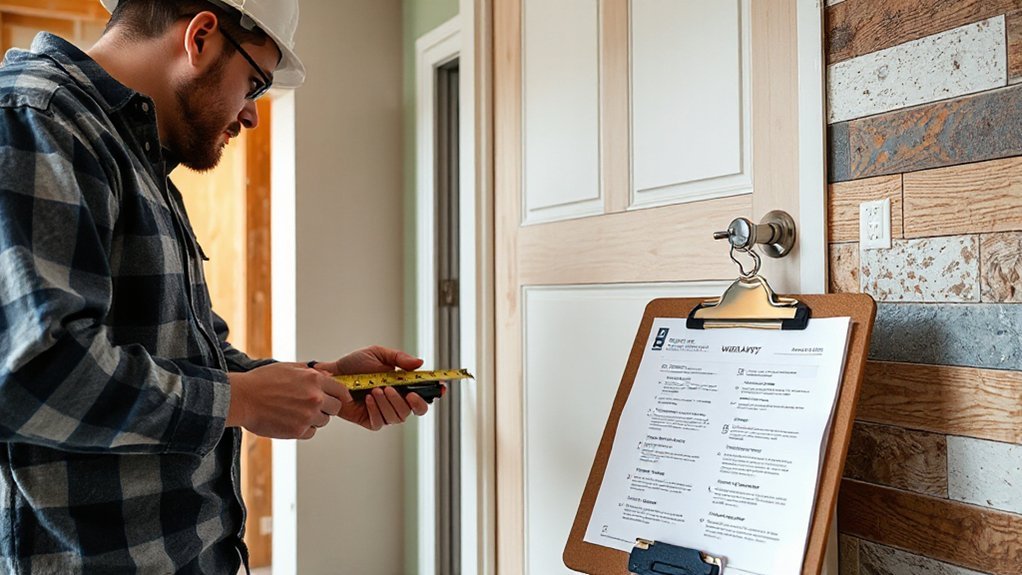
When you assess workmanship standards and warranties, start by defining the quality benchmarks you expect and confirming how they’ll be measured. You should specify tolerance levels for finish, alignment, and material consistency, plus inspection intervals and acceptable defect rates. Clarify who performs tests, what tools are used, and how results are documented.
Seek explicit expectations for workmanship quality, including adherence to industry codes and manufacturer installation guidelines. For warranty coverage, request terms that outline duration, covered components, and what constitutes a valid claim. Confirm response times, repair or replacement procedures, and any maintenance requirements to preserve coverage.
Be sure the contract ties warranty terms to measurable milestones and accepts transferability if you change contractors. Document, compare, and prioritize warranty coverage alongside proven track records of consistent results.
Red Flags in Bids and How to Compare
Once you’ve set clear workmanship standards and warranty expectations, the next step is to scrutinize bids for red flags and compare offerings with precision. You’ll spot inconsistencies, vague labor descriptions, and missing materials lists that invite price inflation.
Focus on value, not just the bottom line, and look for bid discrepancies that signal poor estimating or scope gaps.
- Compare scope and quantities side by side to ensure apples-to-apples pricing.
- Check for hidden costs, change orders, or improbable timelines that inflate totals.
- Evaluate track record, warranties, and proposed materials to gauge long-term value.
Key terms to watch: pricing pitfalls and bid discrepancies. A clear, detailed bid protects you from overcharges and misrepresented work.
Frequently Asked Questions
How Do You Handle Permits and Code Compliance During the Project?
You handle permits and code compliance by coordinating with your contractor to secure permits, track approvals, and schedule inspections. You confirm permit procedures upfront, ensure plans meet local codes, and document changes promptly.
You verify that inspections occur on time and any corrections are addressed to avoid delays. You maintain a clear record of submissions, keep all stakeholders informed, and insist on ongoing Code adherence throughout the project to protect safety and avoid fines.
What Is Your Process for Change Orders and Associated Costs?
One interesting stat: 70% of overruns come from scope changes.
For change orders, you lock in a written change request, cost estimates, and a revised timeline before starting. You’ll track each change, approve the budget adjustments, and document impacts to avoid surprises.
I’ll use clear Change management processes, with itemized line items, unit costs, and contingencies. You’ll get updated schedules, and you’ll monitor progress to minimize disruption and stay on budget.
How Will Subcontractors Be Managed and Supervised Onsite?
You’ll implement clear subcontractor oversight with defined roles, schedules, and deliverables, plus on-site supervision to guarantee progress and quality.
You’ll require daily briefings, site access controls, and task checklists, with a designated supervisor coordinating trades.
You’ll enforce safety protocols, inspect work before payment, and document issues promptly.
You’ll track subcontractor performance, address delays swiftly, and maintain a log of RFIs.
Subcontractor oversight hinges on accountability and disciplined on-site supervision to keep the project on track.
Can You Provide a Detailed Project Timeline With Milestones?
“Time is money,” so here’s a detailed project timeline with milestones you can follow. You’ll map phases, set start and finish dates, and align critical path tasks.
Include budget planning and material selection checkpoints, with decision gates at each milestone. Assign owners, dependencies, and buffers for delays.
Track progress weekly, update stakeholders, and adjust as needed. You’ll keep tight control on scope, costs, and schedule, ensuring on-time delivery and quality outcomes.
What Post-Completion Follow-Up and Warranty Support Do You Offer?
Post-project support includes prompt remedy of issues that arise after completion, plus scheduled check-ins to guarantee everything functions as promised.
We offer clear warranty coverage details, with duration, what’s covered, and how to file claims. You’ll receive a dedicated contact for follow-ups and a streamlined process for service calls.
You’ll know the response times and costs upfront, and we’ll document all repairs, ensuring accountability and ongoing performance beyond project closeout.
Conclusion
Choosing a contractor isn’t just about price; it’s about peace of mind. You’ll want clear licenses, solid insurance, and local compliance, plus proven experience on similar projects. By requesting precise proposals, timelines, and transparent cost breakdowns, you safeguard milestones and avoid surprises. Maintain open communication, expect defined workmanship standards, and confirm warranties. If a bid feels vague, tread cautiously. When you align expectations and verify references, you’ll nearly guarantee a smoother, more trustworthy project journey—without unnecessary friction.
About the Author