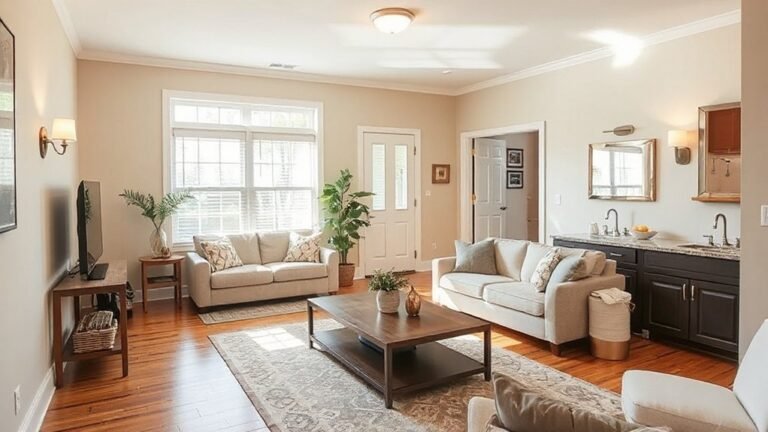
When you’re choosing a sofa for a small living room, start by setting clear goals and measuring precisely, then prioritize a compact silhouette with durable, easy-clean fabric and smart storage or modular options. Think about flow, clearance, and a cohesive color story that brightens the space without adding clutter. Ready to map your space and test layouts, you’ll uncover practical tweaks that keep comfort in reach while you refine the room’s personality.
Key Takeaways
- Prioritize compact silhouettes with slim arms, low backs, and shallow seat depths to maximize space and comfort.
- Map space accurately: measure doors, alcoves, and traffic flow before selecting any sofa.
- Consider modular or sectional options that reconfigure for different layouts and guests.
- Choose durable, easy-clean fabrics and maintain a neutral base to brighten and extend room cohesion.
- Plan budget and logistics (delivery, assembly, returns) early to avoid impulse buys and mismatches with space.
Define Your Small-Space Sofa Goals
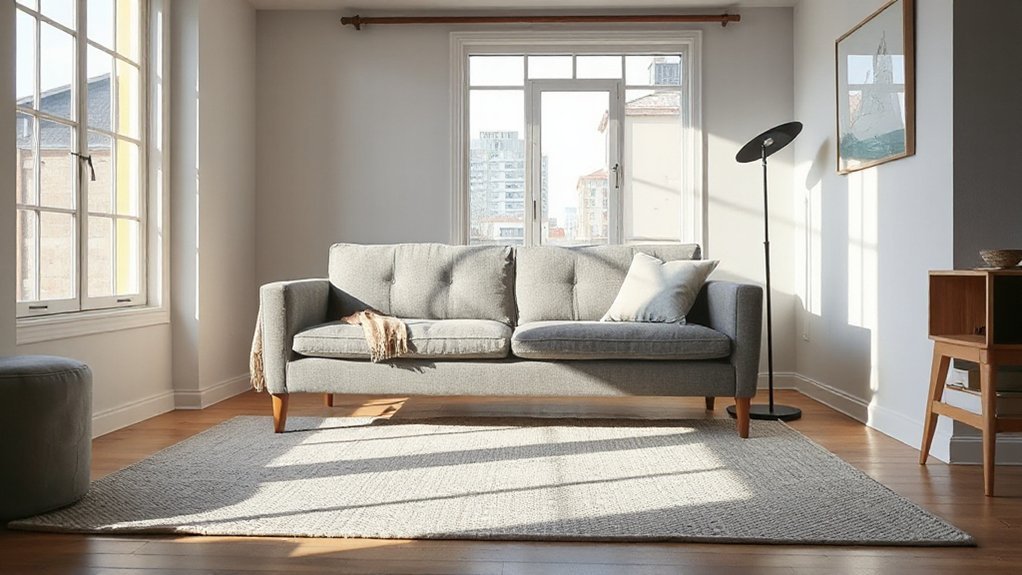
When you’re choosing a sofa for a small space, start by defining your goals: what must the sofa accomplish, and what trade-offs are you willing to make? You’re balancing footprint, comfort, and function.
Prioritize sofa ergonomics: ensure seat depth, back height, and cushion support align with how you sit, relax, and entertain.
Consider how the piece will flow with traffic, and whether a compact profile, modular sections, or a sofa bed best suits daily use.
Evaluate upholstery durability for high-traffic areas and routine cleaning; choose fabrics with stain resistance and abrasion tolerance.
Clarify upholstery colors and textures that hide wear while harmonizing with existing decor.
Finally, verify assembly ease, warranty coverage, and delivery logistics to minimize setup friction.
Measure Like a Pro for a Perfect Fit
Ready to lock in the best chair size? Start by measuring your space precisely.
Then jot down ceiling height, door widths, and any obstructions you’ll encounter.
Keep a tool checklist handy for accuracy—measuring tape, pen, and a notebook—so you can compare sofa dimensions against your plan without second-guessing.
Measure Your Space Precisely
To measure your space like a pro, start by mapping the key floor plan: note wall lengths, door openings, and any fixed fixtures that could block a sofa’s placement.
Next, draft rough measurements for alcoves, window treatments, and trim or baseboard offsets that affect depth.
Establish a scale, then sketch multiple layout options focusing on clear traffic paths and seating comfort.
Check ceiling height to validate tall backrests clear light fixtures and molding.
Consider sofa ergonomics: measure seat depth and chair-to-sofa clearance to maintain natural alignment with focal points.
For upholstery durability, capture substrate type and access for cleaning, so future spills won’t derail the plan.
Finally, verify measurements on site with a helper, returning to adjust before buying.
Tool Checklist For Accuracy
You’ll tighten accuracy with a practical tool checklist that keeps every measurement consistent. Gather a soft tape measure, a rigid ruler, a writing surface, and a pencil.
Use the tape for overall lengths, widths, and diagonals; the ruler handles small, precise gaps. Mark your starting point clearly and note unit type, inches or centimeters.
Calibrate a carpenter’s square to verify right angles at corners. Bring a laser level for wall-to-ceiling references when placing the sofa footprint, and keep a fabric-less mock-up to test upholstery alignment.
Record sofa ergonomics considerations—seat depth, back height, arm width—and note any fabric stretch. Check upholstery durability by documenting fabric type, weave, and maintenance requirements.
Finally, double-check all figures before ordering to avoid misfits.
Choose Compact Silhouettes That Maximize Seating
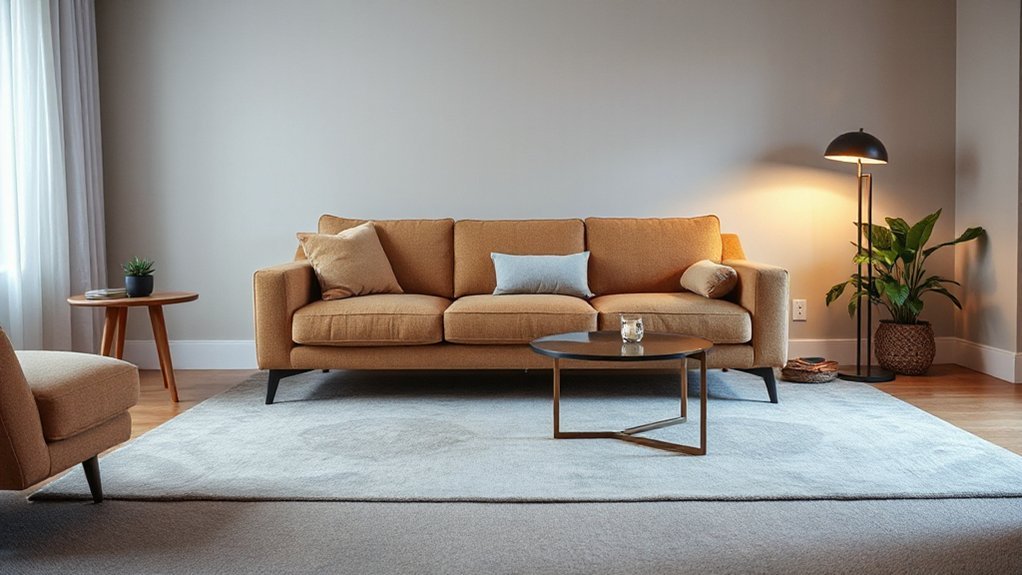
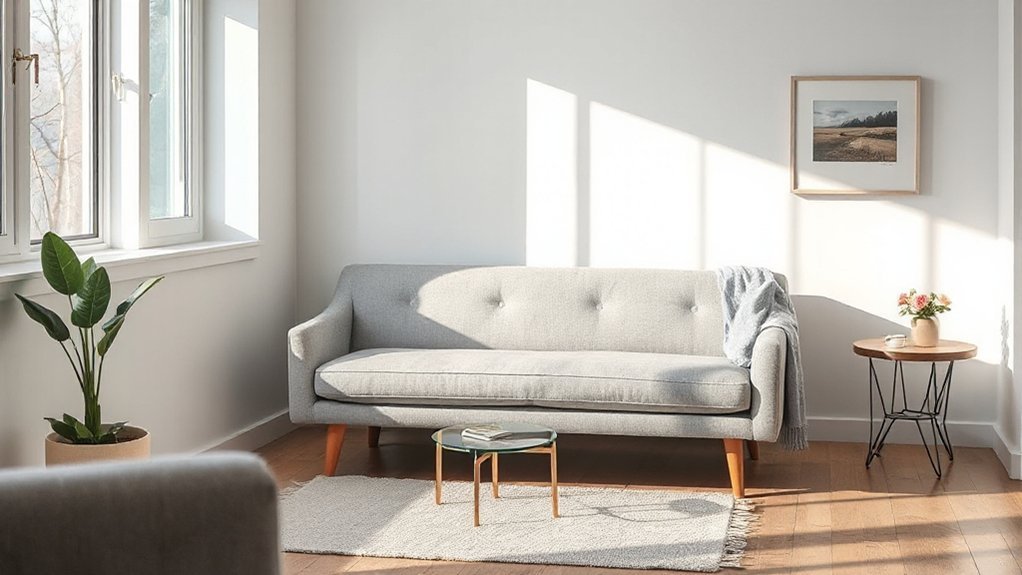
Compact sofas pack a lot of seating into small footprints, so prioritize pieces with slim arms, low backs, and a shallow seat depth to maximize usable space without sacrificing comfort. You’ll balance sofa ergonomics with practicality by choosing silhouettes that support natural posture and easy access for foot traffic.
Focus on materials that endure daily use while staying comfortable; verify seat depth and cushion firmness align with your preferred seating style. Let durability guide frame and upholstery choices to minimize wear over time, especially in high-traffic spaces.
- Choose slim-armed designs to preserve floor area while maintaining seating density
- Prioritize low backs for an open, breathable feel without sacrificing support
- Test cushion depth to ensure long-term comfort and posture alignment
- Inspect fabric and frame construction for material durability and resilience
Explore Modular and Sectional Sofas
Modular sofas adapt to rooms and traffic, so start by evaluating your space and how modules can reconfigure for daily use and entertaining.
Consider sectional layout options that maximize seating with clear sight lines, and plan for traffic flow around aisles and entrances.
Coordinate color across modules for a cohesive look, using a limited palette that ties cushions, frames, and rugs together for a seamless, practical finish.
Modular Flexibility and Fit
Flexible layouts let you tailor a sofa to your space and routines. When you’re choosing modular options, you gain precise fit and future adaptability without sacrificing comfort. Look for pieces that interlock cleanly, align with doorways, and avoid awkward gaps.
Prioritize low-profile arms, compact depths, and modular units you can rearrange in minutes. Consider how you’ll accessorize: built-in storage, hideaway pillows, and decorative accents can transform a corner into a multitask zone.
If you anticipate guests, pick configurations that convert easily to sleeping spaces, like sectional modules with concealed storage or a sofa bed mechanism. Measure wall lengths and traffic paths to prevent obstructions.
Your goal is flexible, stable, and scalable seating that grows with your needs, not against them.
- Choose interlocking modules for easy reconfiguration
- Verify clearance around doors and pathways
- Select convertible beds for guest-ready versatility
- Plan for decorative accents that unify the look
Sectional Layout Options
Choose modular sofas that adapt—armless sections for flexibility, chaise modules to extend lounging without crowding, and corner units to fill awkward nooks. Prioritize clean lines for Modern minimalism, avoiding oversized arms that invade walkways.
For a touch of Vintage charm, mix a refined wood-toned frame with fabric textures or a statement welt. Measure doorways, window clearances, and return paths to prevent pinch points.
Test fabrics in real lighting, noting durability and stain resistance. Finally, plan seating density to maintain openness while maximizing seating, then tailor configurations to daily rituals and entertaining needs.
Seamless Color Coordination
Color coordination across modular and sectional sofas should start with a clear palette map: pick a dominant hue, then anchor with two supporting tones for depth and cohesion. You’ll create a flowing, intentional look that stays calm in small spaces while remaining expressive.
Use color contrast to emphasize shapes and separations, and let accent hues highlight focal points like cushions or throws.
- Choose a dominant color and two supporting tones that echo architectural features
- Use contrast to define modular boundaries without visual clutter
- Reserve bold accent hues for a few key accessories
- Test with fabric swatches under different lighting before finalizing
This approach keeps the room balanced, adaptable, and visually coherent as you mix modular and sectional elements.
Select Multifunctional Sofa-Area Pieces
When you’re selecting multifunctional sofa-area pieces, start by mapping how each piece will be used and by whom. Prioritize modular designs that adapt to daily routines and guest needs, so you don’t cluster your space with single-use furniture.
Look for convertible beds and seating that can transform without noise or fuss, keeping traffic flow smooth. Storage compartments are non-negotiable in small rooms; choose ottomans, benches, or sofa trunks that hide blankets, chargers, and toys while remaining accessible.
Measure doorways, angles, and clearance for unfolding or sliding components, ensuring you won’t block pathways. Favor pieces with easy-clean fabrics and durable hardware.
Finally, sketch a quick layout to visualize zones, then test real-life scenarios like movie night or workspace conversion.
Choose Fabrics and Colors to Brighten a Small Room
Looking to brighten a small room? You can lift the space with fabrics and color choices that reflect light and feel inviting. Prioritize fabric durability for high-traffic areas, choosing tight-weave or performance blends that resist stains and wear.
Opt for colors with positive energy and clear saturation that don’t overwhelm, leaning toward cooler neutrals and pale cool tones to reflect light. Use small pops of color as accents rather than large swaths, so the room reads larger and clearer.
Consider color psychology: blues and greens calm, yellows energize, and off-whites amplify brightness without glare. Balance texture with smooth upholstery and a few tactile throws to add depth without crowding.
- Select durable, light-reflecting fabrics for main seating
- Balance cool neutrals with restrained color accents
- Use bold accents sparingly to avoid visual clutter
- Layer textures to enhance perceived space without adding bulk
Arrange for Flow: Spacing, Rugs, and Focal Point
Arrange for flow by imagining how people will move through the room and where they’ll gather. Begin with clear sightlines from entry to seating, so traffic doesn’t cross the main conversation zone.
Position the sofa to anchor the focal point, usually a TV, fireplace, or a large window, while leaving at least 18 inches of clearance for walking and unobstructed access to seating.
Use rugs to define zones without breaking lines of sight; a runner under a coffee table often works in tight spaces.
Choose wall decor that reinforces the main focal point without cluttering pathways.
Consider lighting options that brighten work areas and soften corners; layered light keeps the room functional and inviting.
Maintain tidy surfaces to preserve flow and—when possible—minimal furniture for easy movement.
Coordinate Color, Texture, and Pattern for Cohesion
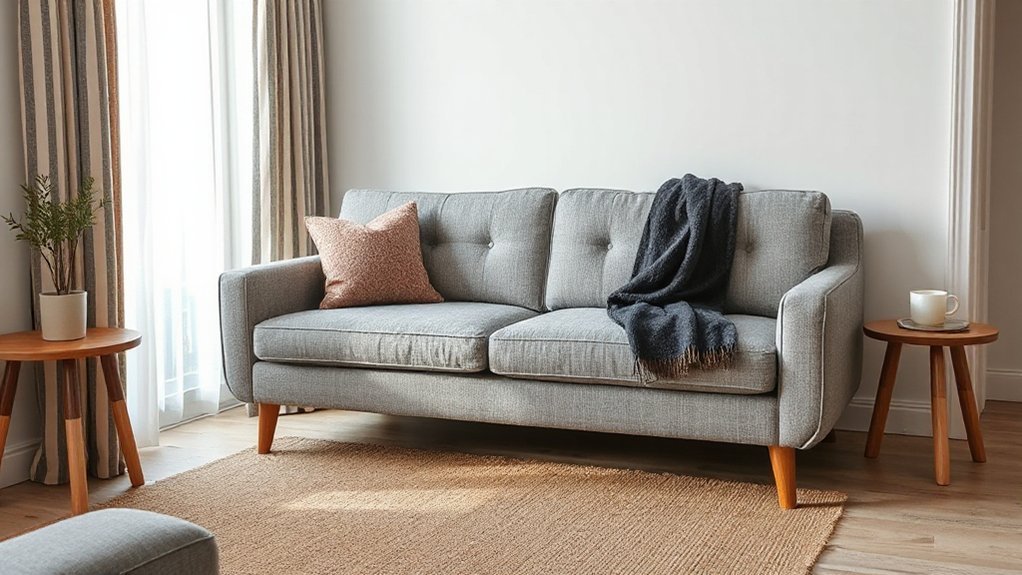
Coordinate color, texture, and pattern intentionally to create a cohesive look that supports flow and comfort. You’ll build a unified space by choosing a dominant color, then anchoring with textures and a few deliberate patterns. Aim for color harmony across furniture, textiles, and accents to avoid visual chaos.
Use pattern mixing sparingly: pair a bold print with subtler motifs and solid neutrals to balance energy and calm.
- Select one anchor hue and repeat it in at least three elements for consistency.
- Introduce one contrasting pattern via a throw or pillow to add interest.
- Layer textures (linen, velvet, boucle) to deepen depth without clutter.
- Ground the scheme with a neutral base to keep the room breathable.
This approach keeps Color harmony and Pattern mixing intentional and practical.
Budget, Timing, and Where to Shop for Small-Space Sofas
Balancing budget, timing, and where to shop matters just as much as choosing the right sofa. You’ll start with a clear budget and a defined purchase window, so financial planning guides every decision. Set a maximum price, include delivery, assembly, and potential returns, and treat cushions and warranty as separate line items.
Next, map timing to sales cycles: off-season discounts, holiday promotions, and end-of-quarter clearance can save you 10–30%. Prioritize shopping strategies that fit your space: measure doorways, consider modular designs, and test seat depth for comfort without clutter.
Compare retailers on price, policies, and delivery fees, then consolidate purchases at a single seller to minimize trips. Finally, track total costs, read reviews, and avoid impulse buys to protect your budget and your space.
Frequently Asked Questions
Can I Fit a Sofa in a Corner Without Blocking Pathways?
Yes, you can fit a sofa in a corner without blocking pathways. Plan your Room layout so the sofa sits flush in the corner, leaving at least 3 feet of clear traffic flow through main walkways.
Choose a compact, right-angle or L-shaped piece that angles into the room rather than into a path. Use a low back or legs for visibility, and test with door openings to guarantee uninterrupted traffic flow.
Which Sofa Depth Suits Tiny Living Rooms Best?
Tiny living rooms thrive with a shallow sofa—aim for 72 inches or less in depth to keep sightlines clear and pathways open.
You should prefer a compact profile with a tight seat and exposed legs for a lighter look.
Choose Minimalist design lines and avoid bulky cushions.
Color coordination helps—stick to a single neutral and add a bold accent pillow.
Prioritize functionality, easy cleaning, and, yes, versatile placement for maximum, practical impact.
Are Sofa Storage Options Practical in Small Spaces?
Yes, sofa storage options are practical in small spaces. You’ll gain hidden bins, lift-top benches, and sofa beds that save floor area when used strategically.
Pick pieces with built-in compartments to minimize clutter, and choose low-profile designs to keep sightlines open.
Consider your decorating styles and color schemes to unify storage with your room.
Plan layouts that keep traffic clear, maximize seating, and still showcase texture, pattern, and color without feeling cramped.
How Do I Test Sofa Fabric Durability at Home?
“Rome wasn’t built in a day,” so you’ll test sofa fabric durability at home with patience. Start by inspecting seams, then run a 5–10 minute abrasion test on inconspicuous area, noting wear.
Do Fabric cleaning spot checks, spill simulations, and color-fastness in bright light. Check durability by rubbing a cloth with mild detergent, then wipe and dry.
Record results, compare to specs, and repeat across cushions. This practical approach guarantees lasting comfort and durability testing.
What Are Practical Slipcover Ideas for Small Spaces?
Slipcovers for small spaces? Go lightweight with breathable fabrics, like cotton blends, and use color schemes that mirror your walls to blend in.
Opt solid neutrals for base covers, then add pattern choices with cushions or a single accent pillow to avoid bulk.
Choose a tailored fit, stretch it neatly, and hide seams with upholstery tape.
Consider machine-washable options for quick refreshes, and pick a length that works with your sofa’s arms.
Conclusion
Ready to put it into action? You’ve got a clear plan: pick a compact sofa with slim arms and low back, measure precisely, and consider modular or multifunctional options. Choose durable, stain-resistant fabric in light tones to brighten the space, and weave in cohesive colors and textures. Don’t forget traffic flow, rug placement, and a clear focal point. With smart budgeting and timely shopping, you’ll enjoy a small room that feels spacious, organized, and inviting—so why wait to start?
About the Author