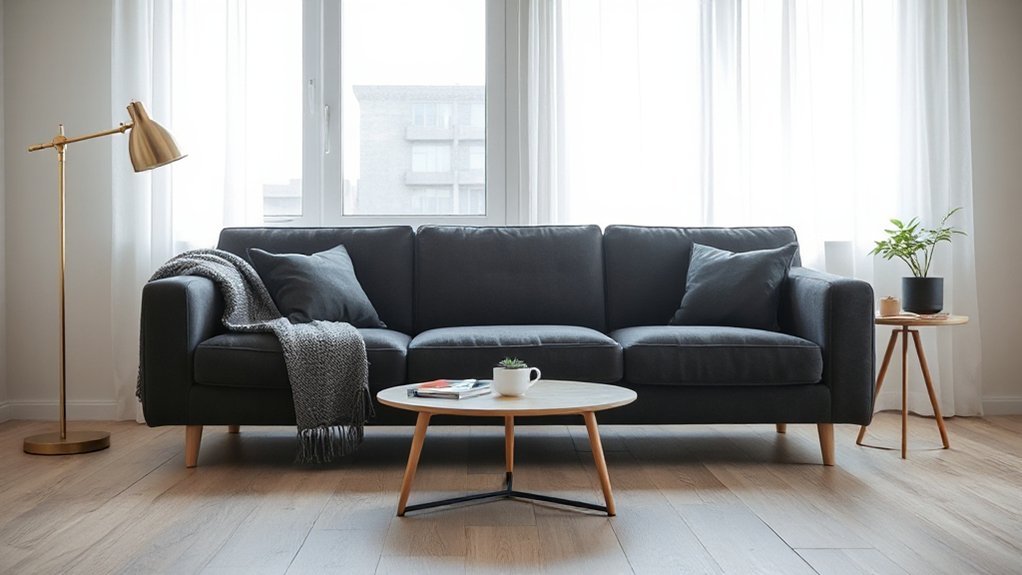
Choosing the right sofa starts with how you’ll use it and the room it sits in. You’ll assess space, doorways, and traffic flow, then match a style, scale, and fabric to your decor and daily needs. Prioritize durable construction and comfort, and plan around your budget without compromising quality. Get practical with a quick fit check and a realistic seating plan, then weigh color and texture choices before you commit—the next step could reshape the whole room.
Key Takeaways
- Define the sofa’s role (seating, focal point, or lounging) to guide style, size, and layout decisions.
- Measure doorways, corridors, and turning radii; draft a scale layout to ensure smooth navigation and access.
- Align material, construction, and warranty with durability needs and maintenance expectations.
- Prioritize sightlines, traffic flow, and modular options to fit existing furniture and daily activities.
- Set a budget that reflects long-term value, including maintenance, repairs, and warranty coverage.
Define Your Sofa’s Role in the Room
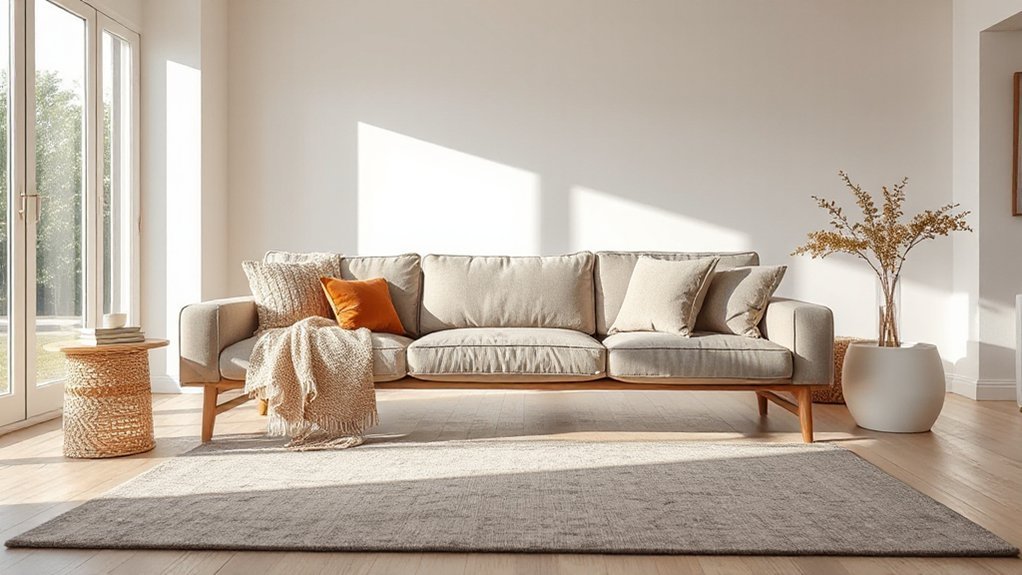
Defining your sofa’s role is the first step in selecting the right piece. In this phase, you identify how the sofa contributes to daily use and overall design. Consider whether your priority is seating capacity, focal point, or casual lounging.
Visualize the living room layout and how traffic flows through the space, noting primary sightlines from entry doors and seating positions. Align the sofa with other furniture so that conversations remain natural and interaction is effortless.
Assess fabric durability, color, and texture in relation to lighting and adjacent accents. Determine whether you need a sectional, loveseat, or standard sofa to optimize furniture placement without crowding pathways.
A precise role clarifies selection criteria and accelerates a cohesive, functional setup.
Measure the Space and Doorway Clearances
Measure doorways ahead of time to confirm that the sofa fits through each access point with minimal maneuvering.
Follow corridor clearance guidelines to guarantee you can pivot and position the piece without obstructing traffic or vents.
Plan sofa orientation now, considering door widths, hallway turns, and the target seating angle for maximum use.
Measure Doorways Ahead
To avoid delivery surprises, measure your doorways and the surrounding space before selecting a sofa. You must capture doorway width and hinge clearance, then compare them against the sofa’s largest dimensions.
Document each threshold, swing direction, and any obstructions like trim, banisters, or archways that could constrain passage. Use a tape measure to record clearances at multiple heights, including the center, top, and bottom of door frames, since clearance can vary with hinge positions.
Note any recessed handles or recessed panels that reduce usable width. Record the sofa’s maximum width, depth, and height, and consider angled entry paths if doors open inward.
Reconfirm all measurements after removing protective packaging, ensuring a straight, unobstructed route from entry to final placement.
Corridor Clearance Guidelines
Corridor clearance is critical for smooth sofa passage and accurate placement. You measure the available width along the route from doorway to room, including any turns. Document the narrow hallways you must negotiate and record the tightest clearance encountered.
Assess doorway thresholds for potential snag points; note swing direction and hinge protrusions that reduce passage width. Calculate the maximum sofa width that can traverse each segment with the cushions compressed, if applicable.
Consider turning radii around corners—mark the smallest turning space required to rotate the sofa without contact with walls or trim. Maintain clearance safety by reserving stray gaps for hands, tools, and protection pads.
Use these measurements to compare models, ensuring compatibility with doorframes, walls, and planned furniture layout.
Sofa Orientation Planning
Before you begin placing the sofa, assess how space and door clearances will affect orientation. Measure room dimensions precisely, including wall lengths and the locations of doors, windows, and built-ins. Note fixed furniture that limits movement paths and guarantee a minimum clearance for opening doors and the sofa’s swing.
Plan traffic flow routes to minimize obstructions and avoid corner placement that traps foot traffic. Consider window alignment to optimize natural light and viewing angles, avoiding glare on screens or reflections.
Verify sofa width against entryways to prevent commissions or reassembly. If possible, draft a scale layout to test positions.
Prioritize functional access, clear sightlines, and balanced room symmetry, then refine orientation based on usage patterns and focal points.
Pick a Style That Matches Your Vibe and Furniture
Choose a style that aligns with your vibe and existing furniture to create a cohesive look.
Consider how your aesthetic translates to scale with space, ensuring the sofa fits both visually and functionally.
Pair fabric and texture deliberately to reinforce the vibe while balancing comfort and durability.
Match Your Aesthetic
Establish a consistent color palette across upholstery, accents, and nearby surfaces to minimize visual noise. Prioritize timeless silhouettes when possible, then reinforce your choice with material finishes that support durability and ease of maintenance.
Consider line harmony: straight edges convey modernity; curves suggest softness; mid-century forms balance warmth and structure.
Confirm texture variety to add interest without clashing. Finally, verify that your chosen aesthetic supports practical needs, like seating for entertaining or lounging, without sacrificing the room’s overall cohesion.
Scale With Space
Ground your choice in room dimensions and traffic patterns to guarantee the sofa scales with the space and your lifestyle. Begin by mapping clear sightlines and walkways, then select a silhouette that preserves function without crowding adjacent zones.
Consider scale proportion relative to other furniture and architectural cues—avoid overpowering a small room or vanishing in a large one. Measure effective seating depth and back height to ensure comfort without sacrificing flow.
If your space centers on conversation, opt for a compact, modular piece that can reconfigure. For open-plan areas, a larger, anchored unit may anchor room harmony.
Prioritize low-profile arms for visual lightness in tight layouts. Validate choices with physical samples and mock placements to confirm proportional balance and seamless integration.
Fabric And Texture Pairing
Consider texture contrast to emphasize form: pairing a smooth leather or microfiber with a nubby weave or velour creates visual depth without overpowering the silhouette.
Durability matters: choose fabrics with cleanability, abrasion resistance, and stain performance appropriate for your environment. Weight, weave, and pile influence feel and maintenance; higher-pile fabrics add warmth but require more care.
In lighting, softer textures read warmer; reflective surfaces emphasize crisp lines.
Balance scale between cushions and upholstery density to preserve shape over time. Aim for a cohesive, low-maintenance combination that supports your room’s style and function.
Plan Scale and Seating for Smooth Traffic Flow
When planning sofa layout, guarantee the scale and seating arrangement support smooth traffic flow through the room. You’ll balance primary seating with clear pathways, ensuring at least 35–40 inches of walking space around furniture.
Prioritize sightlines to doors and entry points, and place lighting accordingly to avoid shadowed or congested zones. Storage options can reduce clutter and preserve flow, especially near passages between zones.
Consider modular pieces that reconfigure for events or daily use.
- Assess room geometry and disable impediments to movement.
- Allocate seating along major walls while preserving central corridors.
- Integrate lighting considerations to illuminate paths and avoid glare.
- Select storage options that minimize visual bulk without sacrificing access.
Color, Fabric, and Cushion Strategy for Comfort
Color and texture choices should align with room lighting and usage patterns, guiding you toward fabrics and cushions that balance durability, comfort, and aesthetics. You evaluate color coordination across primary surfaces, ensuring contrast or harmony with walls, flooring, and accents.
Prioritize fabric durability for high-traffic zones, selecting blends with abrasion resistance and easy-care finishes. Cushion strategy hinges on density, fill technology, and layering; choose high-resilience foam cores paired with responsive down or synthetic toppers to maintain shape.
Consider weave structure and finish as they affect dirt visibility and cleaning frequency. Align seat depth and back support with your body posture, pairing upholstery with spring systems to optimize long-term support and perceived softness.
Documented testing and standardized care guides help preserve colorfastness and structural integrity over time.
Budget and Quality Cues for Smart Shopping
Balancing budget with quality starts with clear priorities and honest trade-offs. You’ll assess value by durability indicators, not just price, then confirm claims with data. Focus on construction, materials, and warranty as quality cues.
- Price comparison shows total cost of ownership, not just sticker price.
- Brand reputation reveals consistency in materials and post-purchase support.
- Frame and spring tests predict long-term resilience under daily use.
- Upholstery and seams reveal fabric integrity and finish quality.
Ground your choices in objective metrics, then verify with reviews and test seating comfort. Don’t rely on marketing alone; compare available warranties and repair options.
Balance looks with longevity, ensuring you don’t pay for short-term trends. Consider return policies and delivery costs to avoid hidden expenses.
Quick Test-And-Decide Checklist Before You Buy
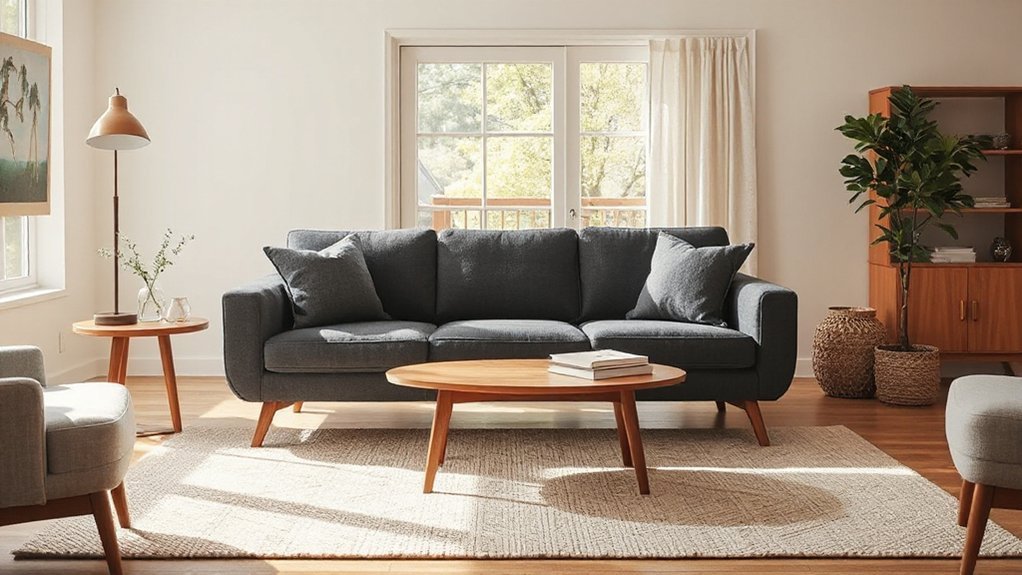
To decide quickly, run this concise testing sequence while you’re shopping: sit on the sofa in your typical posture, shake gently to assess frame stability, and press the upholstery to check fabric tension and seam integrity.
Use this checklist to confirm fit for your space and routine. Evaluate seat depth and back support against your daily activities, making certain you won’t slump or strain. Observe the arm height for reachability and comfort during tasks, and test the recline if offered.
Consider furniture placement implications: make sure doorways, hallways, and traffic flow aren’t obstructed. Assess color coordination with existing pieces and lighting, confirming it aligns with your palette and storage approach.
Record results, compare fabrics, and verify warranty terms before proceeding.
Frequently Asked Questions
How Long Will the Sofa Retain Its Shape Over Time?
A sofa will retain its shape well with proper use and care, but gradual sagging is normal. Cushion resilience and frame longevity depend on construction quality and materials.
Expect cushions to soften slightly after initial use, then stabilize, while high-density foam or feather-blend cores maintain form longer.
Rotate cushions regularly and avoid oversized guests.
Use a sturdy frame, reinforced joints, and kiln-dried wood. Proper support minimizes creasing, preserving shape for years.
What Warranty Coverage Does the Sofa Include and for How Long?
“Every cloud has a silver lining,” and this sofa’s warranty proves it. You’ll receive warranty details outlining coverage duration, exclusions, and claim steps.
You’re protected for 5 years on frame integrity and 2 years on cushions, springs, and upholstery for normal use. If defects arise from manufacturing, these items are covered; wear and tear isn’t.
Keep your receipt to validate coverage duration and guarantee timely service, replacement, or repair.
Are Pet Scratches or Stains Factored Into Fabric Durability?
Pet scratches and stains aren’t automatically factored into fabric durability unless the material is engineered for pet use.
Look for pet friendly fabrics and stain resistant materials, which are designed to resist claws and mishaps.
Durability then depends on fiber content, weave, and coatings.
Choose high-clarity performance ratings, and test abrasion resistance.
How Easy Is It to Reupholster or Resell Later?
Reupholstering or reselling later is doable but varies by sofa construction. You’ll find easier options with loose covers, modular frames, and accessible springs.
For reupholstery, expect higher labor costs on tight weaves or nailed trims.
When reselling, choose durable fabric options and avoid proprietary cushions.
Consider color choices that age well and fabric options that balance spot-cleaning with comfort.
Plan for disassembly, and document fabric care to preserve resale value.
Does the Sofa Allow Modular Upgrades or Rearrangement Options?
Yes, it offers modular flexibility and reconfiguration options that adapt with you. You can snap components together, rearrange sections, and rotate modules to redefine your layout in minutes.
This system supports modular flexibility for evolving spaces, and reconfiguration options let you tailor seating density and sightlines without tools.
You’ll enjoy scalable performance, quick upkeep, and future-proof versatility, keeping your setup dynamic, efficient, and aligned with your changing needs.
Conclusion
You’ve checked size, style, traffic flow, and fabric like a logistics oracle. Now, shop with the discipline of a QA engineer: insist on precise measurements, sturdy construction, and clear delivery paths. If a feature sounds luxurious but falls apart in practice, reject it. Sit, test, and measure again—twice if you must. In short: choose durability that doesn’t bankrupt your foyer ego, and let your sofa be the quietly efficient co-pilot of daily life, not a showroom prop.
About the Author