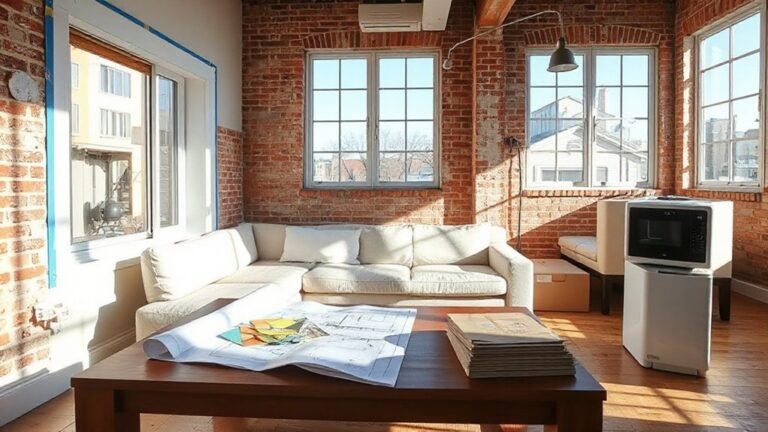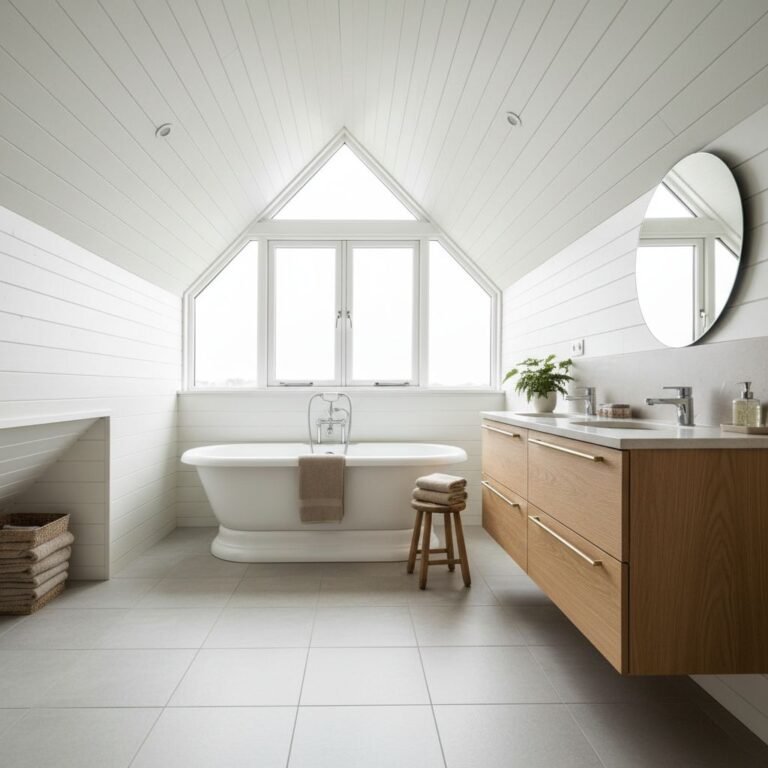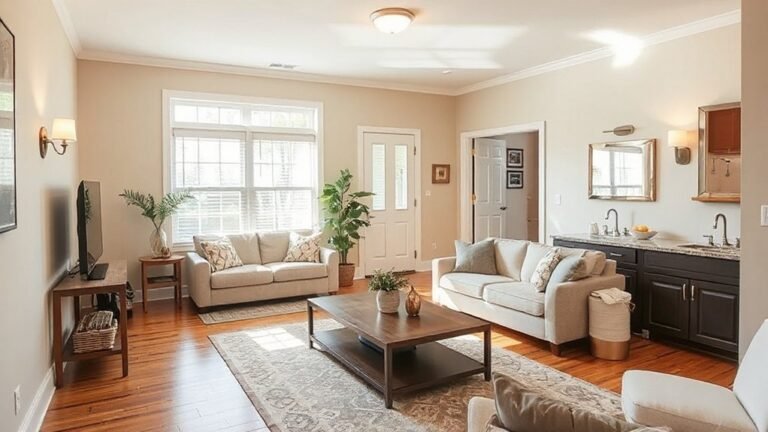
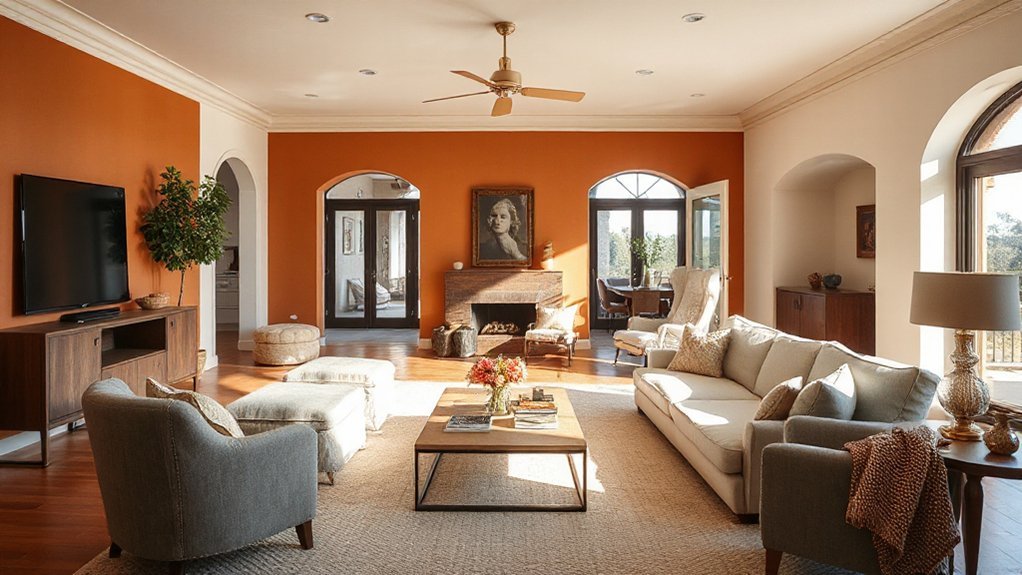
You walk through your home and feel a quiet thread running from room to room, like a shared whisper of color and texture. Start with a single unifying idea you can carry everywhere—palette, style, or material focus—and let every choice reinforce it. Build rhythm by repeating tones and finishes, tune lighting to reveal the right textures, and make certain the scale feels balanced from foyer to loft. If you’re ready to test the thread, the next step awaits.
Key Takeaways
- Establish a core idea (material, color, or style) and build a clear guiding statement to align all spaces.
- Develop a unified color and material scheme with a dominant, secondary, and accent, plus repeat materials for continuity.
- Use texture, finish, and transitions to create hierarchy and cohesive edge details across rooms.
- Optimize lighting to reveal material shifts, unify shadows, and reinforce transitions throughout the home.
- Ensure overall flow with deliberate repeats, balanced transitions, and intentional material, finish, and lighting choices.
Define a Single Unifying Design Concept for Your Entire Home
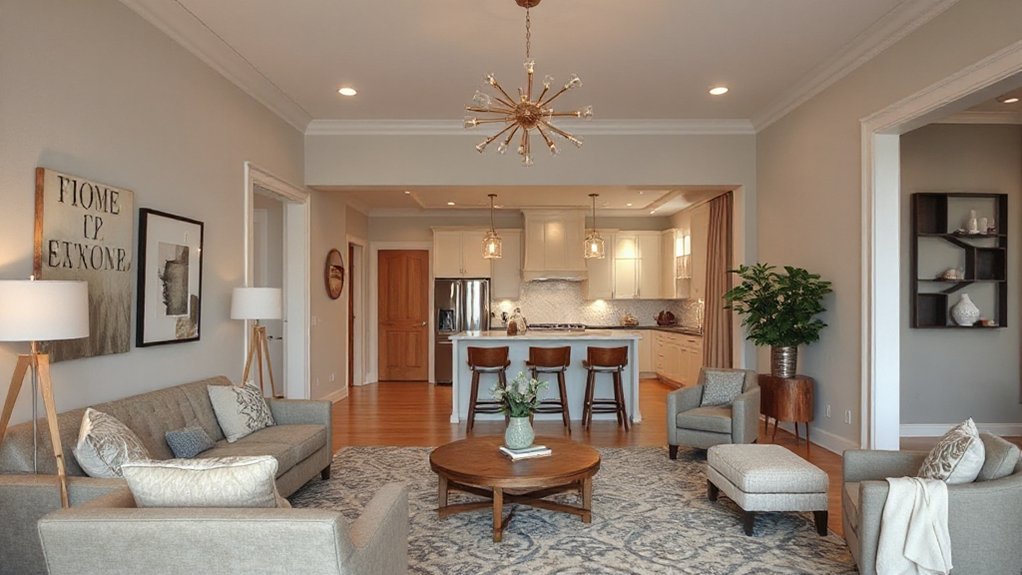
Choosing a single unifying design concept sets the tone for every room, so start by identifying a core idea—be it a material, color family, or architectural style—and use it as your compass for all decisions. You’ll translate that idea into a clear guiding statement, then map each space to it with intentional choices, not random aesthetics.
Thematic storytelling becomes your narrative thread, linking textures, forms, and finishes through consistent motifs. Conceptual harmony emerges as you limit variables, ensuring progression elements support the core concept rather than clash with it.
In practice, evaluate fixtures, furniture silhouettes, and surface treatments through that lens, trimming optional details that dilute focus. This disciplined approach yields a cohesive flow, where rooms converse in purpose, energy, and memory, strengthening your home’s overall voice.
Build a Cohesive Color Palette That Flows Across Rooms
A cohesive color palette starts with a core set of hues and a clear plan for how they traverse every room; use this framework to guide your selections, not chase trends.
You’ll map a base trio—one dominant, one secondary, one accent—and define how each room uses them.
Let lighting dictate tone: warmer whites and soft ambers read differently at daybreak versus dusk.
Choose a unifying neutral as your backbone, then layer with accents that echo across spaces.
Use accent walls sparingly to anchor focal points without segmenting flow.
Test swatches on large samples under multiple lighting scenarios to verify consistency.
Apply color to furniture, textiles, and built-ins in repeating ratios to maintain harmony.
For recovery and depth, reference the lighting fixtures you’ll install to ensure cohesive brightness and mood.
Choose Consistent Textures and Materials for a Unified Feel
Select textures and materials that read uniformly across rooms, so your spaces feel intentional rather than fragmented. Choose a limited set of core materials—wood, metal, stone, and fabric—and repeat them in varying weights and finishes to establish continuity.
Aim for textural layering that adds interest without introducing chaos; pair smooth surfaces with tactile textures to keep rooms inviting. Consider material contrast to anchor focal points: a warm oak floor against a cool concrete countertop, for example.
Keep finishes cohesive: choose two to three hues that appear across furniture, hardware, and textiles. Avoid mismatched patinas or wildly different scales. Your goal is a disciplined, unified feel where each room echoes the same material story, reinforcing flow while remaining distinctly functional.
Align Scale, Proportion, and Furniture Rhythm Across Spaces
Now that you’ve established a cohesive material narrative, align the scale, proportion, and rhythm of your furniture across spaces so the flow feels intentional, not stitched together. Start by matching chair and sofa proportions to room size, then repeat the same visual weights in adjacent rooms to create continuity.
Maintain furniture placement that favors clear sightlines, balanced gazes, and functional paths, so traffic feels purposeful rather than incidental. Consider vertical rhythm—vary ceiling heights, lamp scales, and artwork sizes to guide the eye through each area without jarring shifts.
Use lighting design to emphasize focal points and unify shadows, ensuring consistent glow from room to room. Keep anchoring pieces steady while rotating accessories to preserve cohesion across the whole home.
Tailor the Central Concept to Each Room’s Function and Mood
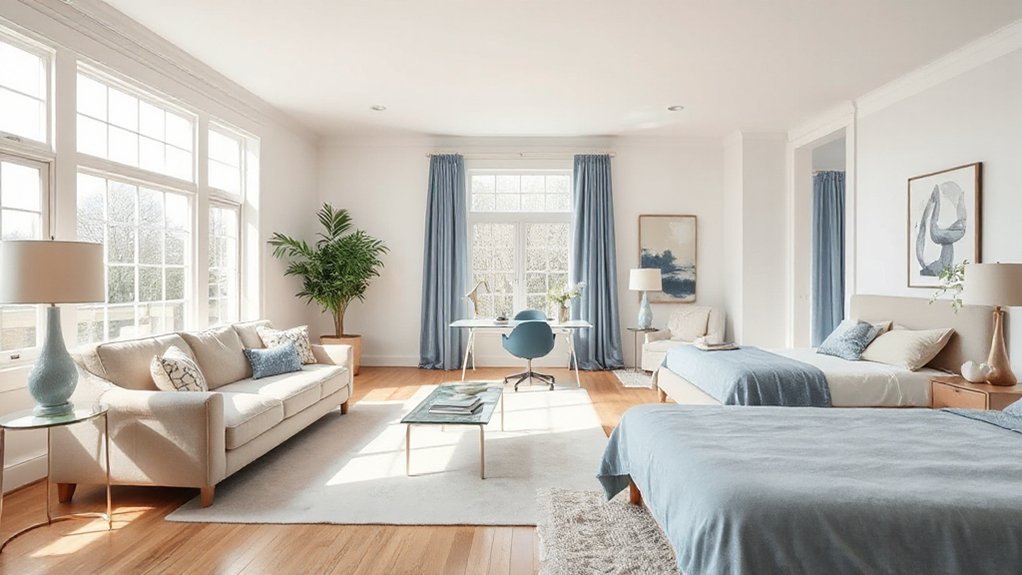
Start by aligning each room’s mood with its function, so the central concept adapts to how you’ll actually use the space.
Maintain room-specific material harmony while keeping the overall theme coherent, ensuring textures and colors reinforce purpose.
Aim for scale and rhythm consistency across zones, so progressions feel intentional rather than imposed.
Function-Driven Mood Alignment
- Align lighting layers with function, not just aesthetics
- Choose decorative accents that echo a shared palette
- Maintain deliberate contrast to guide attention and flow
Room-Specific Material Harmony
To tailor material harmony to a room’s function and mood, start by identifying the core activities and emotional tone the space must support. Then select textures, finishes, and colors that reinforce those cues.
In a living room, balance between tactile warmth and visual calm guides material choices. Combine soft textiles with clean stone or wood, ensuring edges feel approachable yet refined.
In kitchens and baths, prioritize durable, low-maintenance surfaces that still read cohesive with adjacent areas. Introduce Vintage accents sparingly to anchor the palette without overpowering modern components.
Eclectic patterns can enrich focal zones, but keep scale and contrast controlled to avoid visual clutter. Align all materials to a unified temperature, ensuring progression feel intentional and seamless.
Scale and Rhythm Consistency
Have you aligned scale and rhythm with a room’s function and mood to create a cohesive flow? You’ll tailor proportion and repetition to support each space’s purpose, ensuring furniture, textures, and focal points read as a unified language.
In living areas, vary scale thoughtfully to promote conversation while reinforcing cadence through repeat patterns and guiding lines.
In sleep zones, soften contrast and employ consistent lighting techniques to calm the eye, then punctuate with decorative accents that feel intentional rather than fussy.
Maintain continuity across progressions by repeating a few core motifs and finishes, subtly shifting intensity as needed.
- Match scale to function, then harmonize rhythm with intentional repeats
- Use lighting techniques to shape mood while reinforcing flow
- Select decorative accents that unify spaces without overpowering them
Practical Checks to Avoid Common Cohesion Mistakes
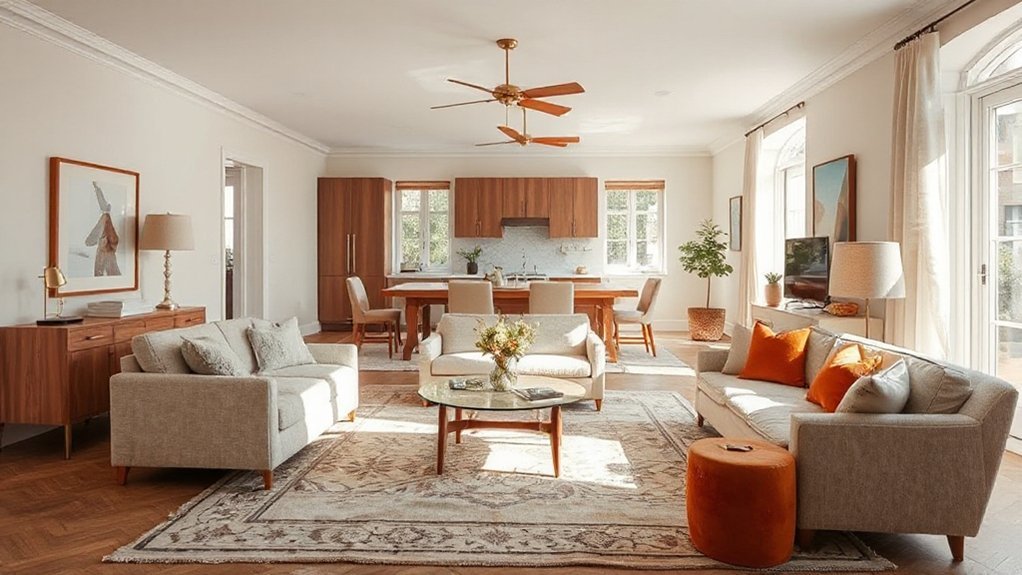
Start by locking in a consistent color palette across textures, furniture, and fabrics to prevent jarring shifts.
Make certain the focal points feel balanced, so no single piece dominates and the eye moves smoothly through each space.
Check that materials shift subtly from surface to surface, avoiding abrupt contrasts that break the cohesion.
Consistent Color Palette
A consistent color palette acts as the backbone of any cohesive design, guiding how each element relates to the others. You’ll align hues across rooms, materials, and finishes so nothing feels out of sync.
Color psychology informs mood choices, while lighting effects reveal true tones and depth, so test samples under different light.
Maintain a primary base and use accents sparingly to keep balance intact.
- Choose a universal base and 2–3 accent tones for harmony across spaces
- Test colors under daylight and artificial lighting to avoid surprises
- Reserve bold hues for purposeful focal points rather than all surfaces
Balanced Focal Points
Check that your main Focal point aligns with the room’s purpose and traffic flow, so Visual hierarchy guides attention without shouting. Avoid multiple competing centers; limit distinct focal points to one strong feature and a couple of subordinate accents.
Use scale, contrast, and placement to direct the eye naturally. Test with a quick line of sight pass from each entry; if you’re torn, consolidate elements toward the strongest focal point.
Maintain rhythm by repeating a few motifs at varying scales, so the eyes travel deliberately. Document changes to preserve cohesion as you evolve your space.
Material Transitions Smoothly
You’ll notice that the way materials meet in a room shapes its rhythm as strongly as any color or texture. To guarantee transitions feel intentional, check joints, edge details, and finish consistency across surfaces.
Aim for a clear hierarchy where texture contrast guides the eye, not clashes. Balance warmth, durability, and light by matching underlying undertones and sheen levels. Consider how lighting variations reveal or mute material shifts, adjusting spacing or trim to keep a calm, cohesive flow.
If you spot abrupt changes, unify them with a unifying trim, shared grain, or a deliberate repeat of color.
- Align edges and edges’ finishes for seamless flow
- Use texture contrast to create interest without disruption
- Preview lighting variations across times of day for balance
Frequently Asked Questions
How Do I Start a Unifying Concept With Limited Furniture?
Start with a clear unifying concept, then build from there. Start simple: pick a dominant color, a core material, and one furniture style you’ll repeat.
Use furniture placement to create sightlines and flow, avoiding clutter. You’ll be surprised how far you can go with a few pieces.
Maintain color continuity across rooms by repeating the main hue in textiles, art, or accessories. This strategy keeps spaces cohesive even with limited furniture.
Can a Neutral Palette Still Feel Cohesive Across Bold Rooms?
A neutral palette can still feel cohesive across bold rooms, because color harmony ties everything together. You balance textures to maintain rhythm, layering warmth with varied surfaces for texture balance.
You’ll keep one unifying element—perhaps a consistent lighting style or a shared material—to unify the strong rooms. In practice, you pair bold accents with soft neutrals, using deliberate contrasts and proportional spacing to preserve flow and clarity throughout your home.
How Should Lighting Influence the Cohesive Design Plan?
Ambient lighting should guide your cohesive plan by shaping mood and color perception. You’ll want consistent color temperature across rooms, with warmer temps for lounging and cooler for work zones, to unify the space.
Integrate dimmable fixtures and layered layers—ambient, task, and accent—so progressions feel deliberate. Use nodes of light to highlight your palette’s rhythm, ensuring ambient lighting reinforces your chosen contrast, rather than competing with it.
Adjust intensity to preserve flow and readability.
What Budget Tips Keep Cohesion Without Stifling Personality?
You can keep cohesion on a budget while preserving personality by prioritizing color coordination and thoughtful texture layering. Set a firm overall palette, then sprinkle accent colors in key rooms.
Invest in one quality staple item per space, and reuse it across areas to unify the look.
Use affordable textures—plants, throws, woven rugs—to add warmth.
Track costs, DIY where possible, and rotate accessories to refresh without breaking cohesion.
How Often Should I Refresh Accessories to Maintain Flow?
You should refresh accessories every 4–6 weeks for momentum, but adjust to your space’s pace. Prioritize intentional updates: swap a few pieces rather than everything at once.
Focus on accessory placement to maintain flow, keeping color consistency across rooms. Rotate textiles, art, and counter decor to refresh mood without breaking cohesion.
Use a system, so each change supports the whole-home scheme and doesn’t disrupt the design rhythm you’ve established.
Conclusion
You’ve got the core idea, the palette, the textures, and the rhythm—everything threads together. But as you near completion, a subtle doubt creeps in: will the flow hold at the edges? Pause, test a shift between rooms, adjust a hue in the accents, and let lighting reveal the truth. When the last piece clicks into place, you’ll sense it—cohesion that’s quietly powerful. Step back, breathe, and let your home tell one unified story.
About the Author