Design a stylish, practical patio for a small garden by prioritizing multifunctional, weather-ready pieces that save space, then layer vertical growth and smart storage to keep the area clean. Choose a cohesive palette with textured surfaces, use lighting to define zones, and plan layouts that balance flow with comfort. Stay mindful of maintenance and budget-friendly updates that preserve line and function. Start by mapping sun, wind, and footprint, and you’ll see where the clever ideas fit best.
Key Takeaways
- Assess space constraints, sun/IP wind patterns, and privacy needs to shape layout and seating with deliberate circulation.
- Use compact, modular, and multi-use furniture with built-in or movable storage to maximize flexibility and space.
- Zone the patio into dining, lounging, and pathways, using furniture placement and height variation to guide flow.
- Integrate vertical gardening and trellises for greenery without crowding, plus smart storage for tools and essentials.
- Layer lighting for ambiance and safety, maintain surfaces seasonally, and apply budget-friendly upgrades like cushions and affordable décor.
Assess Your Space: Footprint, Sun, and Weather Constraints
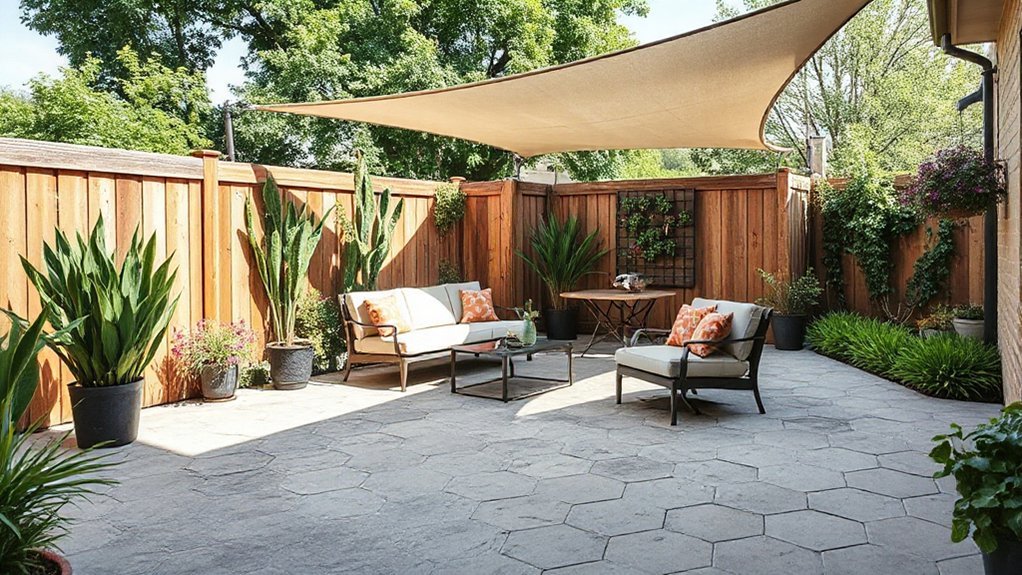
Assess your space by noting the footprint, sun exposure, and typical weather patterns. You’ll map boundaries, noting any slopes, drains, or obstacles that affect scale. Measure widths and lengths, then sketch a simple grid to visualize functional zones without crowding.
Consider outdoor privacy: screens, planters, or partially enclosed corners can shape circulation while keeping sightlines comfortable. Analyze sun paths to time seating and plant choices, ensuring morning shade where you relax and afternoon sun for warmth if desired.
Capture prevailing winds and rain exposure to position seating away from drafts and damp patches. Evaluate acoustic factors: hard surfaces amplify noise, so plan softer textures or planting to mellow patio acoustics.
Finally, identify weak spots to address early, like drainage fixes or shade gaps, before furnishing.
Pick Space-Saving Furniture That Lasts
When space is at a premium, you’ll want furniture that both fits max function and stands up to weather. Choose compact, modular pieces you can rearrange for entertaining or quiet mornings.
Look for durable materials: powder-coated aluminum, teak, or all-weather wicker resist sun, rain, and humidity without warping. Opt folding options or stackable designs to reclaim floor space after use.
Prioritize built-in storage or lightweight items you can move solo. Select outdoor seating that’s comfortable without bulk, such as slim benches or armless chairs paired with a small table.
For patio accessories, pick weatherproof cushions, quick-dry fabrics, and covers that seal against dust and debris. Invest once in a cohesive, low-maintenance setup to maximize everyday usability and longevity.
Smart Storage That Stays Tidy and Accessible
Smart storage keeps a small patio usable and inviting. You’ll prioritize pieces that blend form and function, so snag benches with hidden bins or cubic chests that double as side tables. Opt for weatherproof materials and uniform hardware to reduce visual clutter.
Keep a single, accessible storage zone near the door to minimize trips and keep outdoor seating ready for spontaneous moments. Group frequently used items at eye level, and label containers for quick retrieval.
Use clear, stackable bins for greenery basics, and reserve a compact utility cart for tools and decorations—easy to move, easy to tidy.
Integrate patio decor with storage: a rug-surface bin, a foldable tray, and a slim, weatherproof cabinet create calm, organized spaces.
Vertical Gardening Without Crowding Your Patio
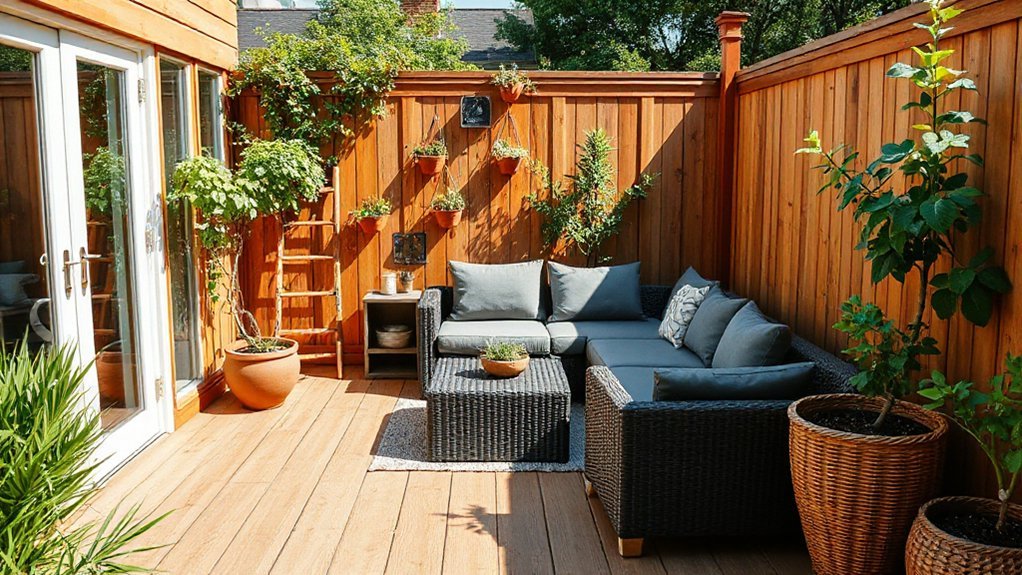
You can stack greenery with vertical planting techniques that maximize height without crowding floor space. Consider space-saving trellis ideas that let sun-loving and shade-tolerant plants share a wall, while keeping pathways clear.
Keep sun and water needs in mind to pair plants that thrive together and minimize maintenance.
Vertical Planting Techniques
Vertical planting lets you maximize a small patio by stacking life up rather than out. You’ll use lightweight, modular systems that fit your space and support plant health without crowding feet or furniture.
Choose shallow, well-draining containers for herbs and ornamentals, paired with compact root varieties that thrive in vertical setups. Attach planters to railings, walls, or free-standing frames so airflow remains brisk and disease pressure stays low.
Watering can be efficient with drip lines or self-watering pockets, reducing runoff and effort.
When planning, think about light: position sun-loving Balcony planting where sun dominates, and shade-tolerant options where it doesn’t.
Consider rooftop gardens or balcony pockets as complementary scales, ensuring weight limits and access paths stay clear for daily use.
Schedule seasonal refreshes to maintain significance.
Space-Saving Trellis Ideas
Creative trellis setups let you reclaim patio floor space while keeping plants accessible and healthy. You’ll lean on vertical grids, wall-mounted planters, and lattice panels that translate vertical growth into real floor savings.
Opt for modular trellis units you can rearrange seasonally, so herbs or climbers don’t crowd seating zones. Install sturdy anchors to support heavier vines, and pair with narrow shelves to hold small pots without stacking dirt higher than eye level.
Use trellises as room dividers, which creates distinct micro-areas for dining, lounging, and planting. Hidden storage can tuck tools, potting mix, or garden hoses behind a panel, keeping the area tidy.
For texture and definition, place outdoor rugs beneath seating to ground the space.
Sunlight and Watering Needs
Do vertical gardening upholds plants’ needs by balancing sunlight exposure with efficient watering, and that balance begins with smart placement. You’ll map sun paths across your patio, placing sun lovers where they receive steady light and shade-tolerant varieties where shadows linger. Use reflective surfaces to maximize Sunlight exposure without crowding roots.
Watering frequency should align with plant type, pot size, and container drainage, not a fixed calendar. Install a drip system or self-watering reservoirs to prevent overwatering while ensuring consistent moisture. Group plants with similar needs, easing irrigation planning and reducing evaporation losses.
Check soil moisture before each session; mist or water deeply but infrequently to encourage deep roots. With disciplined scheduling, you maintain vigor without sacrificing space or style.
Color, Texture, and Pattern: Layered Styling for Small Areas
Layered color schemes guide the eye across your patio, balancing bold accents with soft neutrals to create depth in a compact space.
Pair textures—smooth pavers with rough textiles or crisp foliage—with deliberate contrast to emphasize form without clutter.
Use simple patterned surface effects, like a subtle trellis or tiled run, to add rhythm while keeping the area cohesive.
Layered Color Schemes
Use a dominant base color—sand, taupe, or muted gray—and introduce a single accent hue to draw the eye without overpowering the space. Vary the saturation across elements: outdoor cushions, planters, and rugs should echo the accent and base tones in different intensities.
Incorporate texture through woven textiles, matte finishes, and ceramic or concrete surfaces to create visual interest without visual noise. Keep patterns minimal and purposeful, avoiding busy repeats that compete with the garden’s natural rhythm.
Garden furniture complements, plant containers integrate, and the scene remains inviting.
Textural Pairing Techniques
Texture is the backbone of a small patio’s layered styling, so pairing materials with care creates depth without crowding the eye. You’ll optimize textural contrast by pairing smooth surfaces with tactile, rough accents, guiding sight without shouting.
Use material blending to connect zones: a wooden deck edge against porcelain pavers, or a gravel path meeting a concrete slab. Keep scale in mind; repeat a single texture across adjacent features to unify the space.
Introduce a subtle sheen contrast—mat for seating, gloss for planters—to create visual interest without glare. Limit variances to three textures total to avoid clutter, and let shadows choreograph the pattern rather than printed repetition.
This approach yields cohesion, tactility, and a refined, practical charm.
Patterned Surface Effects
Consider staggered or herringbone layouts for movement, but balance them with wide joints to soften progressions. Incorporate subtle color shifts through stone, concrete, or tile that reflect garden hues without overwhelming greenery.
Texture matters too: a mix of smooth slabs and ribbed or brushed finishes adds tactile interest underfoot. Patterned surface effects guide circulation and focal points, maximizing perceived space while delivering durability and style.
Decorative paving choices should align with maintenance expectations and climate.
Lighting and Ambiance to Make a Tiny Patio Feel Bigger
Strategic lighting can make a tiny patio feel larger by defining zones and drawing the eye outward. You should layer outdoor lighting to avoid harsh glare, combining soft ground lighting with discrete overhead accents.
Place warm, dimmable fixtures along walkways to guide steps and create a safe, inviting flow. Use string or festoon lights sparingly above seating areas to cultivate a gentle ambient atmosphere without overpowering the space.
Hidden LEDs under planters or decking edges deliver subtle depth, making borders recede. Consider task lighting for cooking or reading nooks, but keep brightness lower than living-room levels.
Select fixtures with corrosion resistance and a neutral color finish to blend with gardens. Aim for a cohesive palette, balanced contrast, and a sense of extended outdoor living.
Flow and Zoning: Layouts That Support Comfort and Use
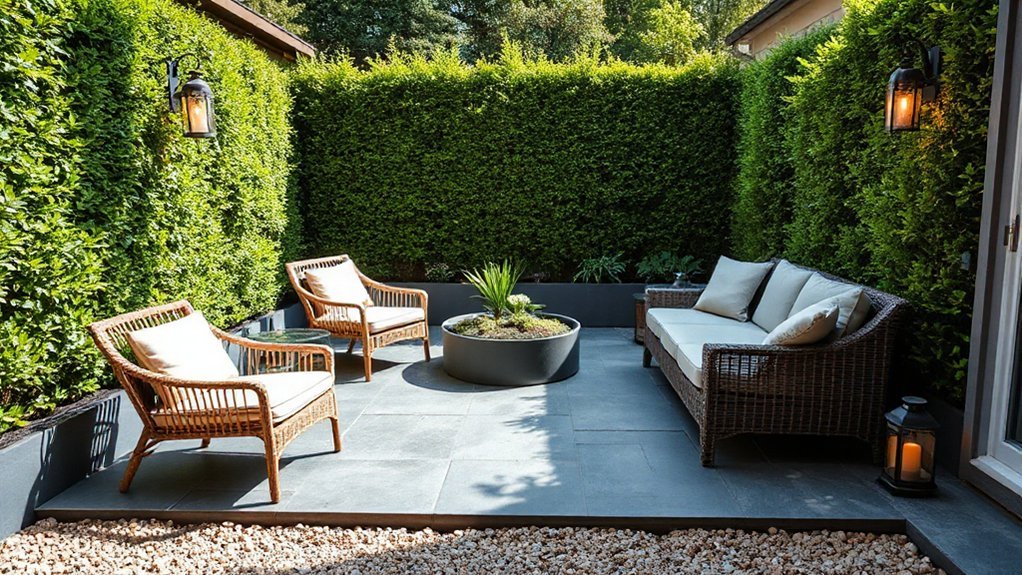
Flow and zoning aren’t afterthoughts—they’re the framework that makes a small patio feel liveable and inviting. You shape spaces by grouping activities into lanes: dining, lounging, and movement should flow without bottlenecks.
Define zones with subtle cues—furniture alignment, rug edges, and plant height—to guide steps and reduce clutter. Prioritize sightlines that balance openness with coziness, so you can monitor kids, pets, or guests without feeling exposed.
Use outdoor decor elements to reinforce function: a compact dining nook near the kitchen door, a shaded lounging corner, and a clear circulation path around planters. Integrate privacy screens where needed to create intimate moments, without isolating you from the garden.
The result is efficient, comfortable, and adaptable to daily rhythms.
Budget-Friendly Upgrades That Elevate Comfort
Want to upgrade your small patio without breaking the bank? Start with thoughtful, budget-friendly changes that boost comfort and usability.
Swap in compact, multi-purpose garden furniture pieces that fold or stack for easy storage, preserving space without sacrificing function. Elevate seating with weatherproof cushions in durable fabrics to add cozy vibes without a full redo.
Use affordable outdoor decor accents like string lights, planters, and a small rug to define zones and soften hard surfaces. Choose neutral tones with a few bold color pops to refresh the look without costly overhaul.
Prioritize durable materials: metal, resin, or treated wood resist weather and wear. Reassess lighting, switching to solar or LED options for efficiency.
Simple, well-placed upgrades create a more inviting, functional patio.
Seasonal Care and Maintenance for a Stylish Patio
Seasonal care keeps your stylish patio welcoming year-round. Throughout the year, inspect surfaces for wear, reseal timber, and refresh cushions or covers before weather shifts.
In spring, clean debris, prune plants, and set planters for efficient drainage to prevent mold.
Summer tasks focus on irrigation efficiency, shading, and pest checks; keep pathways clear and avoid standing water to deter insects.
Autumn requires leaf removal, gutter clearance, and protective covers for furniture ahead of storms, plus reseating containers to balance weight and airflow.
Winter maintenance centers on frost protection for furnishings and sealing joints in benches or walls.
Consider wildlife attraction by planting native, pollinator-friendly species away from seating areas to minimize disturbances.
For pest control, install deterrents and rotate repellents, pairing physical barriers with routine cleaning to maintain a tidy, inviting space.
Frequently Asked Questions
How Can I Maximize Shade Without Heavy Structures?
You can maximize shade without heavy structures by layering lightweight, movable options. Start with tall, slender outdoor lighting to cast low, cool shadows and guide shade placement.
Use fabric sails or tensioned canopies that you can reposition as needed.
Incorporate privacy screens that double as shade, like vertical lattices with climbing plants.
Add planters with dense foliage on the sunny side, and position seating to stay in dappled light for comfort.
What Low-Maintenance Plant Combos Work Best?
Low-maintenance combos you’ll love are herbs with compact ornamentals, plus hardy perennials that self-seed lightly. Try chives, thyme, and oregano alongside lavender or salvias for blankets of color with minimal care.
Pair container gardens with trailing petunias for soft edges, and use vertical planting to maximize height without crowding.
Choose drought-tolerant grasses as accents. Water deeply, mulch, and prune after bloom to keep everything tidy and thriving.
Which Durable Fabrics Resist Weather and Fading?
Outdoor furniture deserves fabrics that endure like legends—think acrylic-coated or solution-dyed textiles, plus UV-resistant blends. You’ll want fabrics with high tensile strength and mildew resistance for long-term use.
In practice, choose outdoor fabrics with proven fabric durability ratings and tight weaves. You’ll notice colors stay vivid, textures remain soft. You’ll get fewer replacements, more investment confidence.
Fabric durability meets weather resistance when you select reputable, rated materials designed for harsh sun, rain, and humidity.
How Do I Hide Clutter Without Crowding Space?
You can hide clutter without crowding space by using smart storage solutions that blend into the décor. Choose bench seats with built-in storage, wall-mounted cabinets, and nested ottomans to maximize surface area.
Opt for clutter concealment with matching bins tucked under tables and magnetic organizers on walls. Keep cords out of sight with cord concealers, and label storage so you can grab what you need quickly.
This approach stays tidy, functional, and visually light.
What Are Quick, Budget-Friendly Drainage Fixes?
Rainwater management is easier than it sounds when luck nudges you: you notice a puddle, then install a simple gravel path with a shallow swale.
Quick, budget-friendly drainage fixes include downspout extensions, splash blocks, and a DIY French drain with perforated pipe.
Align the outlets to slope away from your footprint, and you’ll reveal better drainage solutions, saving space and preventing erosion.
You’ll gain efficiency, resilience, and a surprisingly calm yard after every storm.
Conclusion
You’ve designed smarter, smaller, and supremely usable outdoor space. Choose foldables, built-ins, and verticals that stretch function without crowding. Keep storage tidy, lighting warm, and zones clearly felt. Layer texture with cohesive color, and refresh cushions or lights as seasons demand. Stay proactive with maintenance to preserve looks and longevity. It’s a garden retreat you can rely on—remember, good things come to those who plan ahead. Adage: measure twice, cut once.
About the Author