

Before you list your home, focus on practical, high-impact steps to raise your EPC rating fast. Seal leaks, upgrade lighting, and declutter to boost natural light, then tackle insulation and draft-proofing where it counts. You’ll want a clear plan for cost vs. payoff, plus expert input to spot subsidies and smart upgrades. The right combination can cut bills and attract buyers, but you’ll need a realistic budget and a solid timeline to make it stick. Let’s map out your approach.
Key Takeaways
- Present the EPC with context: show typical bills, potential savings, and efficiency features to attract buyers.
- Prioritize quick, cost-effective upgrades like sealing leaks, improving insulation, and upgrading lighting and thermostats.
- Invest in high-impact improvements first (doors, windows, HVAC efficiency) with clear cost–benefit and fast payback.
- Consider renewable options (solar where viable) and proper ventilation, moisture control, and hot-water efficiency.
- Plan, budget, and track progress with input from assessors/tradespeople, re-evaluating ROI as bids and performance data arrive.
What an EPC Rating Means for Sellers

An EPC rating tells buyers how energy-efficient a property is and roughly what your running costs will look like. As a seller, you’ll use this rating to set expectations and position your home in the market.
A higher rating signals lower ongoing expenses, which can attract more buyers and support a stronger offer. Energy efficiency directly influences perceived value, so you’ll want to be clear about how the score translates to monthly costs and comfort.
While it won’t determine every decision, it does affect property value in buyers’ eyes, especially among energy-conscious buyers or budget-focused investors.
Present the EPC with practical context: typical bills, potential savings from improvements, and any features that boost efficiency. Be prepared to discuss feasibility and timelines for upgrades if asked.
Quick, Cost-Free Upgrades You Can Start Today
You don’t need to wait for contractors or big budgets to boost your EPC rating today. Focus on quick, cost-free actions that move the needle.
Start with interior decor: declutter rooms, align lighting with energy-efficient bulbs, and use reflective surfaces to maximize natural light. Repaint in light, neutral tones to enhance perceived space and insulation.
Next, garden landscaping matters more than you think; trim shrubs away from walls, plant low-water species, and seal gaps around doors leading to outdoor spaces to cut drafts.
Conduct a simple thermostat check, set schedules, and ensure radiator valves aren’t blocked by furniture.
Finally, seal leaks around outlets and switches with affordable weatherstripping. These tweaks require no major investment but can yield measurable improvements on your next EPC assessment.
How to Prioritize Upgrades by Impact and Budget
Start by identifying upgrades with the biggest EPC impact relative to cost.
Use a simple cost-benefit ranking to separate high-impact, budget-friendly options from big-ticket fixes.
Focus your plan on those top-ranked upgrades to maximize value before you sell.
Prioritize by Impact
To maximize return, start by weighing upgrades by their impact on energy performance and resale value, then factor in your budget. You’ll want to separate high-impact, mid-impact, and low-impact changes, focusing first on those that cut energy use, boost comfort, or shorten cooling and heating cycles.
Prioritize improvements with broad appeal and quick payback, such as sealing leaks, upgrading insulation, and selecting efficient systems or appliances. When evaluating decor choices, align with long-term efficiency gains rather than trend-driven costs.
For exterior gains, invest in sturdy, low-maintenance elements like durable doors or efficient windows, plus landscape features that require minimal irrigation. Balance improvements with your timeline, avoiding overoutlay on items with limited EPC impact or resale leverage.
Home decor and landscaping features should support, not overshadow, the core energy upgrades.
Budget-Conscious Upgrades
Start with energy efficient lighting to slash wattage drops and improve daylight use; swap bulbs, install dimmers, and add motion sensors where appropriate.
Next, integrate smart home devices that streamline controls and monitoring, like thermostats and smart plugs, to curb phantom loads.
Focus on tasks with simple installation and fast returns, such as sealing leaks, improving insulation in key areas, and boosting HVAC efficiency.
Keep a short list, set a budget range, and track savings to verify impact before adding luxuries. Your EPC gains come from targeted, affordable upgrades.
Cost-Benefit Ranking
Now that you’ve identified affordable upgrades, you’ll rank them by cost-benefit to maximize impact within your budget. Start by estimating each upgrade’s effect on property valuation and market appeal, then compare against cost.
Use a simple scoring: high, medium, low for both impact and expense, and prioritize items with high impact and low-to-moderate cost.
Consider ROI over time: energy upgrades often boost appraisal value and reduce operating costs, while cosmetic fixes may lift first impressions without lasting value.
Create a short list with expected performance, installation time, and any disruption.
Eliminate options that offer marginal gains.
In your final ranking, target the top two to four upgrades that deliver the strongest price-per-dollar improvement, ensuring you can market a well-valued, attractive property.
Insulation and Draught-Proofing: Essential Fixes
Boosting your insulation layer pays off: it keeps heat in, cuts energy use, and raises your EPC rating.
Start by sealing gaps around doors, windows, and pipes to prevent drafts. Then upgrade draft-proofing where needed to lock in warmth.
With better insulation and tighter seals, you’ll save energy and see a quicker, more decisive improvement in overall efficiency.
Insulation Layer Benefits
Insulation matters most when it keeps heat in and drafts out, so investing in a solid insulation layer and effective draught-proofing pays off in comfort and lower bills. You’ll notice steadier temperatures and fewer cold spots, especially in living rooms and bedrooms.
A well-installed layer reduces heat loss through walls, ceilings, and floors, letting you use less energy for the same comfort level. Pair insulation with door and window draught-proofing for maximum gains.
This approach complements an energy-conscious setup, including energy efficient lighting and smart home devices, which optimize when and how heat and electricity are used.
Seal Gaps, Save Energy
Ever wondered how small gaps can drain your energy—and your wallet? You can stop the leakage by sealing obvious cracks and treating draughts as a priority. Start at doors and windows, where weather-stripping and quality seals cut drafts without costing the earth.
Roof and cavity walls deserve attention too; use foam or mineral wool to fill voids and improve overall insulation. When you plan fixes, choose sustainable materials that perform well and last.
Pair sealing with smart thermostats to optimise heating; they adjust to occupancy and reduce wasted energy. Insulation upgrades, done with care, compound savings over time.
Upgrade Draft-Proofing Decisively
You’ve started sealing gaps, so now tighten the envelope with robust draft-proofing and insulation upgrades. First, target obvious leaks: doors, letterboxes, loft hatches, and plumbing penetrations. Fit brush or foam seals and door sweeps; add loft insulation and cavity fills to minimize heat loss.
Use draft-proofing tape on windows, and consider secondary glazing in key rooms for extra resilience. Prioritize an airtight layer beneath existing walls, then boost insulation values in the roof and walls to cut heating demand.
Pair these fixes with a smart thermostat to optimize comfort and costs, and position the system to control zones efficiently. If you’re planning new energy features, run the solar panels scenario to confirm year-round gains and EPC impact.
Heating Options to Cut Bills and Boost EPC Scores
Want to lower energy bills and lift your EPC score? Prioritize efficient heating options that pay off. Start with smart thermostats to optimize comfort and minimize waste; schedule temperatures to match occupancy and season.
Use zoning where possible so you heat only occupied rooms. Regular boiler maintenance keeps efficiency high and reduces unexpected costs.
Consider Renewable energy options, such as a solar PV system, to offset daytime usage and lower net energy drawn from the grid.
Insulation improvements and airtight seals support your heating strategy by keeping heat in.
When choosing gear, opt for high-efficiency boilers or heat pumps suited to your property and climate.
Track annual energy use and EPC impact, then adjust settings for sustained gains.
Domestic Hot Water: Efficient Options That Pay off
Smart and efficient hot water handling can shrink bills just as effectively as optimizing heating. You’ll improve EPC by targeting domestic hot water usage and appliance efficiency.
Start with an instant or on-demand water heater if your current system runs constantly or lacks proper insulation; these units cut standby losses and deliver hot water when you need it, boosting energy savings.
Insulate hot water pipes and the tank, reducing heat loss on every run. Set the thermostat to a sensible 120 degrees Fahrenheit to prevent scalding and waste.
Consider high-efficiency or low-flow fixtures, which reduce hot water demand without sacrificing comfort.
Finally, schedule regular maintenance—descaling, vent checks, and an annual service—to sustain hot water performance and energy savings.
Windows and Doors: Seal for Energy Savings
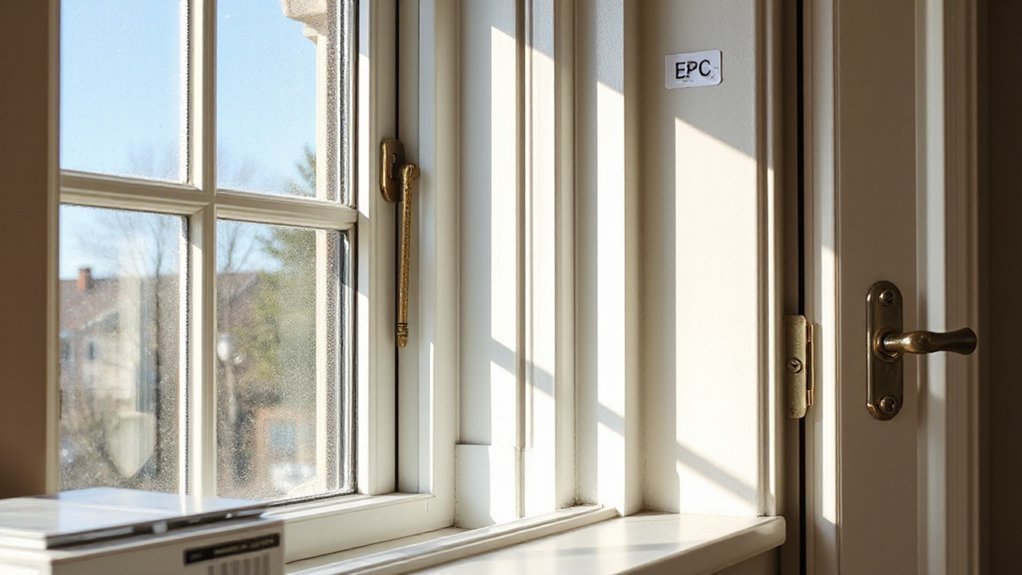
Seal gaps around windows and doors first to stop heat loss. Then upgrade panes or frames if you still notice drafts.
Start with high-quality seals or weatherstripping and test for leaks with a simple candle or an incense stick.
If needed, upgrade windows to more energy-efficient options to maximize the savings.
Seal Gaps Efficiently
Windows and doors are common sources of heat loss, so start by sealing gaps to prevent drafts and improve energy efficiency quickly. You’ll want to identify obvious cracks around frames, sill joints, and damaged weatherstripping, then seal with appropriate materials.
Use caulk for narrow gaps and weatherstripping for moving parts; replace worn seals on doors and windows. Add foam or backer rods where needed, and consider door sweeps to stop drafts at the bottom.
After sealing, recheck for drafts by running a hand along frames on a windy day. Pair this with energy habits: choose energy efficient appliances and optimize HVAC use.
Integrate smart home technology to monitor temperatures and automate seals, keeping comfort steady and bills lower. This approach boosts your EPC without invasive upgrades.
Upgrade Windows If Needed
If your windows are old, warped, or drafty, upgrading them can dramatically cut heat loss and lift your EPC rating. Start by evaluating whether you need double or triple glazing, low-emissivity coatings, or insulated frames.
A window upgrade can reduce drafts, improve comfort, and lower monthly energy bills. Choose units with high energy efficiency ratings and airtight seals to minimize infiltration. Install features like trickle vents only where necessary, and guarantee proper flashing and sealing around frames during fitting.
Consider integrating secondary glazing if full replacement isn’t feasible. Regular maintenance—clean tracks, check seals, and replace worn weatherstripping—supports lasting performance.
Prioritize energy efficiency, and document specifications for your EPC assessment to maximize impact.
Ventilation and Moisture Control for a Compliant EPC
Good ventilation isn’t optional when you’re aiming for a compliant EPC; it directly affects indoor air quality and energy performance.
Ventilation and moisture control keep damp spots from hurting ratings. You’ll balance ventilation with drafts, using controlled airflow and humidity management to prevent mold and condensation. Prioritize air circulation by avoiding closed, stagnant spaces and leveraging short, frequent airing cycles.
Use extractor fans in kitchens and bathrooms and guarantee sensible extraction rates. Monitor humidity levels; aim for stable indoor moisture to protect structure and belongings.
Indoors, consider low-maintenance measures like air-quality checks and selective natural ventilation with plants.
- Improve air circulation through purposeful, regular airing
- Use targeted exhausts and humidity control in moisture-prone areas
- Monitor humidity and address condensation promptly
- Integrate indoor plants to support air quality trends
Are Solar and Renewables Worth It Before Selling?
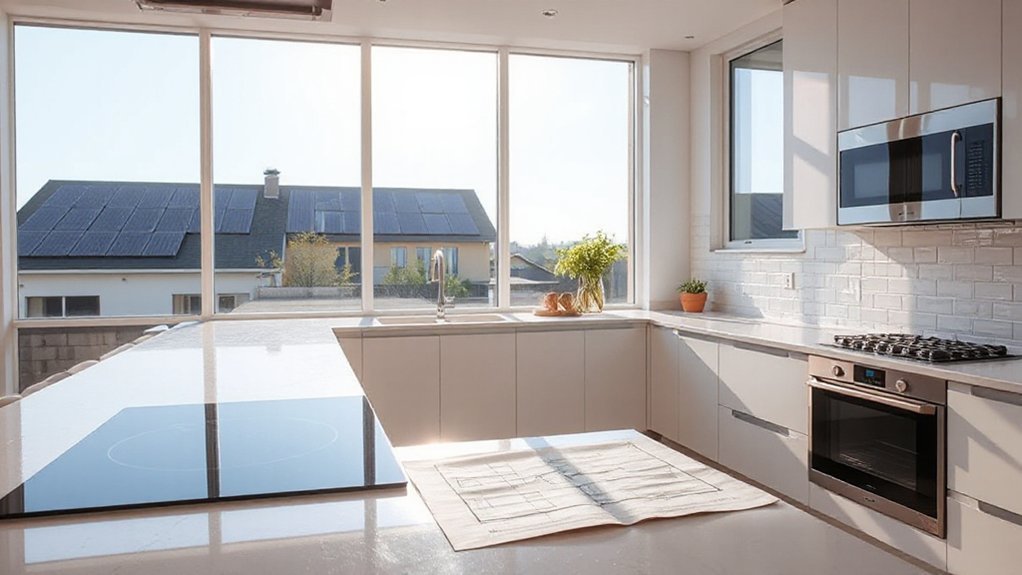
Solar panels and other renewables can pay off before selling, but it depends on your home’s location, energy prices, and how you use them. You’ll need to assess upfront costs, incentives, and the local electricity market to gauge payoff timing.
In practice, install where you have sun exposure and predictable usage patterns; oversized systems waste capacity, while undersized setups miss savings.
Renewable energy can boost your EPC by reducing grid dependence and emissions, improving benchmark scores.
Consider battery storage if you frequently run off-grid or during peak rates, but factor in added complexity and maintenance.
Before committing, compare ongoing savings to depreciation, expected energy price trends, and any selling-point benefits for buyers.
If the math stacks up, solar panels and renewables strengthen your value proposition.
Estimating ROI and Setting a Sensible EPC Budget
Estimating ROI hinges on a clear, numbers-first approach: start by projecting the total cost of needed EPC improvements and then compare that to the expected savings over the ownership period.
- Prioritize upgrades with the fastest payback that align with your home decor style and use of space
- Quantify cost vs. energy savings, maintenance, and potential resale lift for garden landscaping and interior changes
- Set a realistic budget cap and build in a contingency for trades and unexpected issues
- Track milestones and re-evaluate ROI as bids firm up and actual performance data arrive
Questions to Ask Your Energy Assessor and Tradespeople
When you meet your energy assessor and tradespeople, come prepared with a clear list of questions that pin down scope, costs, and outcomes. Ask for a written plan showing specific energy efficiency improvements and expected EPC impact.
Inquire about home insulation needs, retrofit timelines, and any disruption to daily life. Request itemized quotations, warranty terms, and who handles permits.
Clarify whether assessments cover air leakage, thermal bridging, and heat loss areas, plus any potential subsidies or grants. Seek performance targets, measurement methods, and post-installation verification.
Confirm maintenance requirements and follow-up support. Probe risks, such as mould or condensation, and how improvements affect resale value.
Guarantee you understand payback periods and financing options, so your decisions align with a realistic, cost-effective path to a better EPC rating.
A Practical 6-Week Plan to Raise Your EPC Rating
Getting your EPC rating up in six weeks is about a focused, practical plan you can execute start-to-finish. You’ll implement a tight schedule, target high-impact measures, and track progress weekly.
Begin with a quick audit to identify cost-effective upgrades, prioritizing energy-saving fixes that show fast results.
Integrate home automation for smart controls, improving efficiency without major remodeling.
Boost insulation, seal drafts, and upgrade lighting to LEDs.
Consider exterior landscaping improvements that reduce heat gain and improve shading, lowering cooling loads.
Throughout, document work for the assessor to verify improvements.
- Prioritize quick wins with measurable impact
- Schedule upgrades to minimize downtime and maximize rebates
- Use home automation to optimize energy use
- Plan exterior landscaping for passive cooling and comfort
Frequently Asked Questions
How Soon Can EPC Improvements Affect Selling Price?
Energy efficiency improvements can affect selling price quickly, often within weeks to months as buyers factor lower running costs into their offer. If you upgrade insulation, windows, or heating, you may see incremental boosts in home valuation at appraisal or market listing.
While exact impact varies by market, timing matters: prompt improvements can create a stronger initial impression and higher bids.
Focus on evident energy efficiency features to influence buyer perception and overall home valuation positively.
Which Upgrades Deliver the Best ROI per Pound?
Upgrading to energy efficient windows and installing solar panels deliver strong ROI per pound. Energy efficient windows reduce heat loss and demand on heating systems, cutting bills and boosting EPC.
Solar panel installation cuts energy costs, often with incentives, and increases appeal to eco-conscious buyers.
Prioritize high-quality, properly installed windows first, then solar if budget allows.
Choose reputable installers, oversized gains, and monitor savings to maximize impact on your home’s value.
Do Landlords’ Energy Standards Apply to Home Sales?
Yes, landlords’ energy standards can affect home sales. You’ll see implications in property valuation and energy compliance, especially if rental history or upcoming regulations are flagged during due diligence.
You should verify current requirements, gather EPC data, and confirm any necessary improvements are noted or completed.
If you’re selling, highlight compliant aspects and plan for potential upgrades to avoid delays.
Energy compliance protects buyers and sustains value, so stay proactive.
Can I Sell With a Low EPC if I Disclose?
Yes, you can sell with a low EPC if you disclose. You must follow disclosure requirements and share your Energy Performance Certificate details with buyers.
Be transparent about energy efficiency, explain any improvements you’ve planned, and provide realistic expectations for running costs.
While a low rating may affect demand, clear information helps buyers assess value and risks.
Make certain all required documents are included, comply with regulations, and consult a solicitor if needed.
Are Local Grants Available for Energy Upgrades?
Yes, local grants exist for energy upgrades, including insulation and renewable energy projects. You’ll often find schemes tied to energy companies or local councils, so check your area’s listings and apply promptly.
You can couple insulation grants with renewable energy incentives to maximize savings. Coordinating your upgrades now means you’ll benefit later, and you might access additional tax relief or rebates.
Stay proactive, document energy losses, and compare grant amounts to choose the most cost-effective path.
Conclusion
You can lift your EPC rating fast by sealing leaks, upgrading LEDs, and smart heating tweaks, so you sell with confidence. A striking stat to mention: homes with energy-efficient upgrades can cut heating bills by up to 30%—a compelling edge for buyers. Prioritize high-impact, low-cost fixes first, plan a 6-week schedule, and consult your assessor for subsidies. Stay practical, track progress, and don’t overinvest before you’ve tested the market response.
About the Author