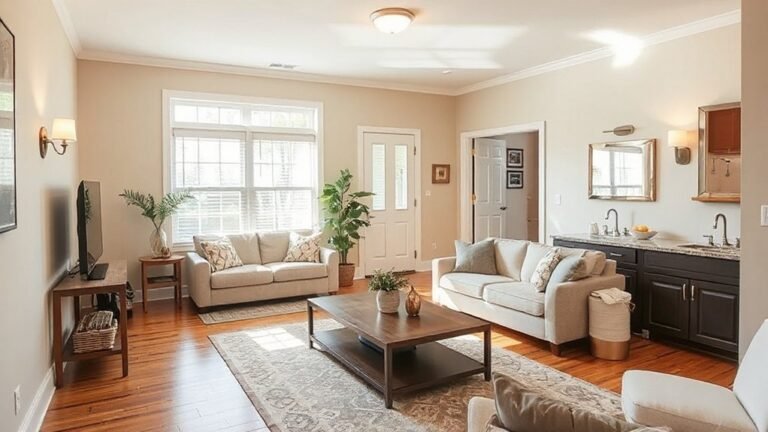
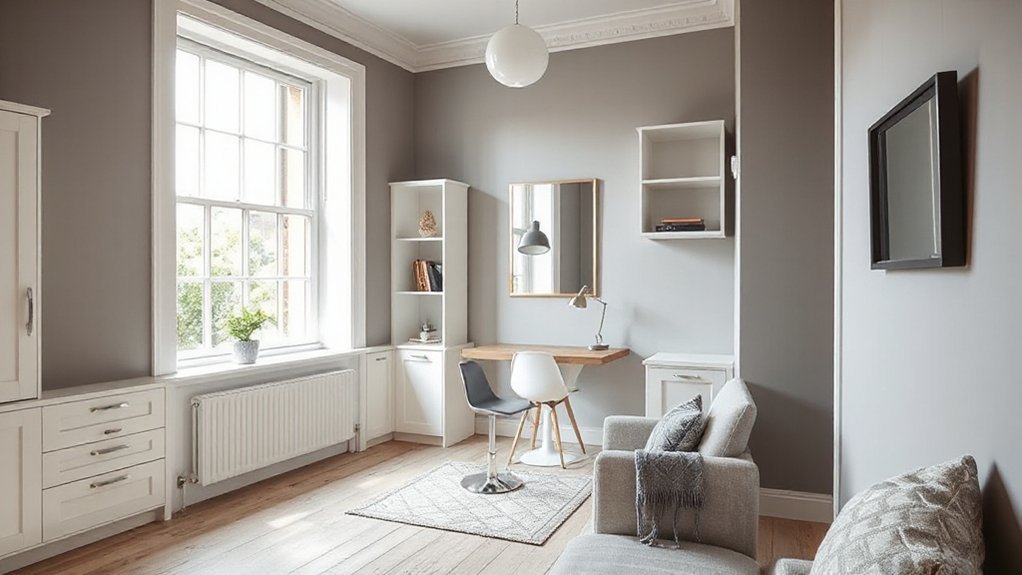
Maximise every inch by prioritising vertical storage and multi-functional furniture. Use walls for shelves, hooks, and slim organizers, and opt for modular units that can reconfigure as your needs change. Create zones with lightweight dividers that don’t block light, and keep clutter out of sight with hidden compartments and under-stair storage. Improve space perception with mirrors and layered lighting, plus weather‑friendly finishes for British homes. Ready to start optimizing your layout and storage strategy? There’s more to discover.
How to Make Small UK Apartments Work Smarter
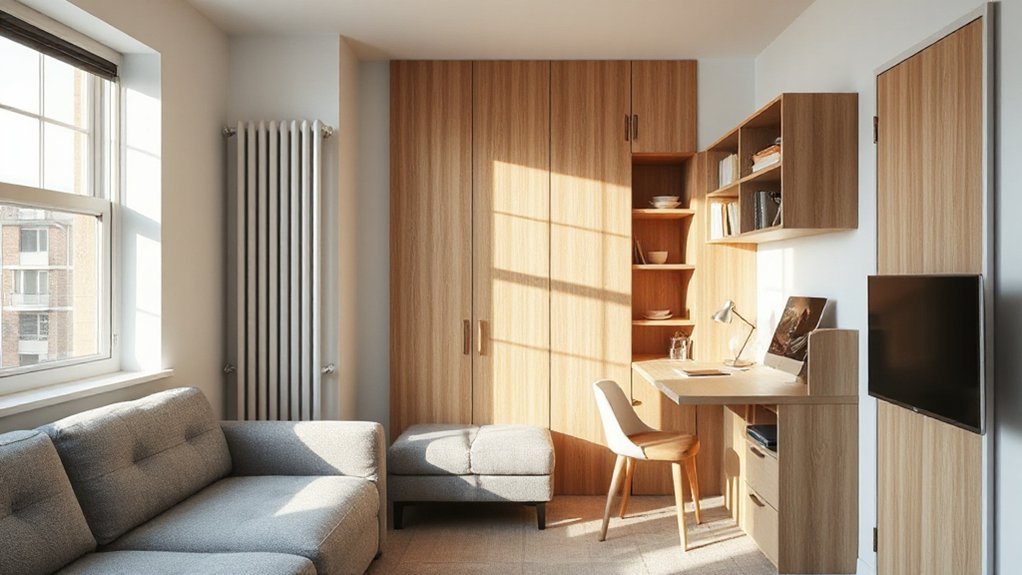
Small UK apartments demand smart habits, not just clever furniture. You maximize space by pairing layout with purpose. Prioritize multiuse furniture, but keep circulation clear and doors functional. Use vertical surfaces for storage and display to free floor space for daily activities.
Integrate Smart tech to automate lighting, climate, and alerts, reducing energy waste and clutter. When choosing urban gardens, opt for compact planters that fit balconies or sunny windows, letting you grow herbs without sacrificing living areas.
Deploy collapsible or stackable items in every room, so you can reconfigure quickly for guests or work. Keep surfaces uncluttered with hidden storage and labeled bins for quick tidying.
Consistency in decluttering prevents momentum loss, ensuring you maintain a calmer, more efficient home.
Prioritise Vertical Storage in Tight UK Spaces
Vertical storage pays off when you treat walls as real estate—prioritize vertical storage principles to free floor space.
Use shelving efficiency tactics and ceiling utilization strategies to maximize every inch without clutter.
You’ll create room for essentials while keeping items easily reachable and visually tidy.
Vertical Storage Principles
To make the most of a tight UK space, prioritize vertical storage first and foremost. You’ll free floor area by using walls as active storage surfaces rather than adding bulky furniture.
Start with floating shelves at varying heights to create zones for books, decor, and everyday essentials. Place lightweight items on higher rails to keep counters clear, and reserve lower shelves for frequently used items.
Install wall-mounted hooks in entryways, kitchens, and behind doors to keep coats, bags, and utensils off horizontal surfaces.
Use tall, slim organizers in corridors to store paperwork and accessories without crowding rooms.
Aim for modular units that can be adjusted as needs shift, maintaining clean sightlines and easy access.
Regularly reassess to prevent dead space from developing.
Shelving Efficiency Tactics
Shelving efficiency hinges on maximizing vertical space without cluttering sightlines. You’ll prioritise tall, slim units and wall space, picking modular components you can reconfigure as needs shift.
Use wall mounted solutions to free floor area and keep pathways clear; mount shelves at varying heights to accommodate tall items and shallow essentials without overloading one level. Opt for open-front designs for quick access, but blend in discreet storage where possible.
Integrate hidden compartments behind framed panels or within wardrobe sides to tuck away documents or seasonal belongings. Label everything with a simple system so you regain order instantly.
Choose materials with a lightweight yet sturdy profile to avoid sagging. Regularly reassess spacing as your collection grows, and maintain a clean, cohesive line across rooms.
Ceiling Utilization Strategies
If you’re short on floor space, look up and make the ceiling work for you: prioritize vertical storage to keep rooms airy yet functional. Ceiling utilization lowers clutter by using overhead zones for essentials, freeing floor real estate without sacrificing access.
Install discreet ceiling fixtures that blend into the room’s design while increasing storage options—think shallow hanging shelves above doorways or in alcoves. Integrate loft insulation-aware solutions to prevent temperature swings that prompt extra storage demands.
Choose modular units you can reconfigure, so you’re not stuck with one setup. Guarantee installation avoids structural interference and keeps walking lines clear.
- Install recessed or rail-mounted shelves near the ceiling for lightweight items
- Use above-door容量 solutions to store seasonal gear
- Pair with loft insulation considerations to maximize energy efficiency
Multi-Functional Furniture for British Living Habits
Multi-functional furniture is a practical must in British small spaces, where every square foot counts and every room serves multiple purposes. You prioritise versatility, so choose pieces that switch roles with ease and endure daily use.
Focus on compact dimensions, built-in storage, and sturdy mechanisms that feel reliable rather than delicate. Convertible sofas offer a quick bed option for guests without sacrificing living-room practicality; look for taut cushions and smooth unfolding to avoid bulk.
Hidden compartments keep clutter out of sight, preserving a clean, calm environment while expanding storage for essentials like linens, cables, and seasonal items.
In tight hallways, opt for nesting tables and wall-mounted options to reclaim floor area. Measure doorways carefully, guarantee easy access, and balance aesthetics with function.
Room Dividers That Create Zones Without Clutter
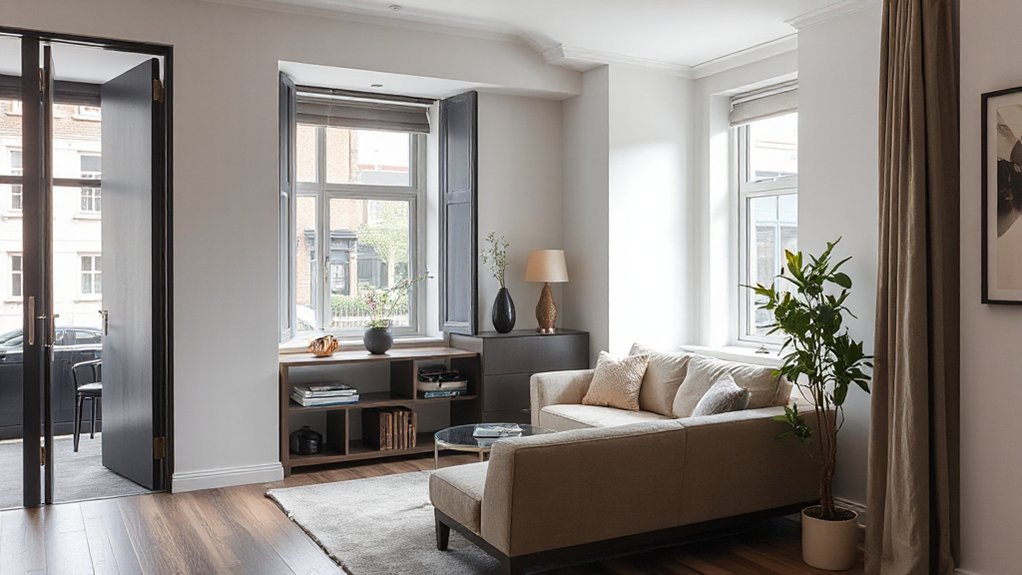
Room dividers can carve distinct zones without adding clutter, so choose options that emphasise openness and storage. You want room zoning that separates functions without walling off space, so pick lightweight, breathable dividers with built‑in storage or shelves.
Opt for screens, bookcases, or frosted panels that let light flow while defining areas. Use vertical space to keep surfaces clear, and match tones to your walls to preserve a cohesive feel.
Favor versatile pieces you can relocate as your needs shift, maintaining clutter control through intentional placement and scale. Keep cables and small items hidden behind clever panels or baskets.
- Open-back shelving that sections areas while holding essentials
- Folding screens or curtains for flexible zoning
- Low, translucent dividers that don’t visually shrink the room
Lighting Tricks That Make Rooms Feel Bigger
Spruce up any room by brightening with mirrors to bounce light across tight spaces.
Pair that with layered ambient lighting to create depth without adding clutter. You’ll instantly feel more openness as shadows recede and every corner reads brighter and bigger.
Brighten With Mirrors
Mirrors do more than reflect; they multiply light and space, making a small UK apartment feel brighter and larger. You’ll use mirrors strategically to amplify natural light and create a sense of openness without bulk.
Choose mirror placement that captures daylight from windows and bounces it into darker corners. Leaning or wall-mounted options work best where you can control glare. Opt for reflective surfaces with minimal frames to keep a clean, airy feel.
- Position a tall mirror opposite a window to double incoming light
- Use elongated, horizontal mirrors above consoles to visually extend walls
- Combine mirrored panels with light, neutral surroundings for cohesive brightness
Focus on proportion and placement, not decoration.
Layered Ambient Lighting
Start with a soft overhead then add task lamps near work zones to avoid shadows. Use dimmable fixtures to adjust mood and perceived space, lowering glare while keeping depth.
Place wall sconces opposite mirrors or light-colored walls to bounce light and widen the room visually.
Avoid relying on a single bright source; instead, balance ambient layering with focused accents, such as under-shelf LEDs, to carve zones without crowding.
Choose compact fixtures that deliver ample lumens without bulk for a tidy, airy feel.
Decluttering Habits for UK Homes: Daily Routines That Stick
Decluttering isn’t a one-off task—it’s a set of daily habits that fit into a busy UK home. You’ll lean on simple routines that prevent buildup, keeping spaces calm and usable. Focus on rapid decisions, like “keep, bin, or donate,” and reset surfaces each evening. Build consistency with short, repeatable actions that reinforce organisational habits and clutter reduction without drama.
- Process inbox and surfaces in under five minutes each day
- End-of-day reset: clear flat surfaces before bed
- Weekly 15-minute sweep: assess and remove unnecessary items
These micro-habits compound, month after month, transforming how you live in tight spaces. You’ll waste less time hunting things, feel calmer, and preserve usable square footage for what matters.
Optimising Kitchen and Dining in Compact Flats
In a compact UK flat, your kitchen and dining areas live at the intersection of function and space. You streamline layouts by choosing compact, multi-tasking appliances and keeping work zones clearly defined: prep, cook, and clean.
Prioritize wall-mounted storage, drop-down surfaces, and a slim dining solution to preserve floor area. Embrace Smart appliance integration to automate timers, energy use, and maintenance alerts, reducing clutter and decision fatigue.
Opt for minimalist decor techniques: a restrained color palette, hidden cables, and uniform cabinetry to create visual continuity that makes the space feel larger.
Use vertical space for magnetic strips, hanging pots, and peg rails. Keep countertops clear with closed storage, and designate a dedicated, easy-clean dining spot for quick meals.
Efficient Storage Solutions for Bedrooms and Hallways
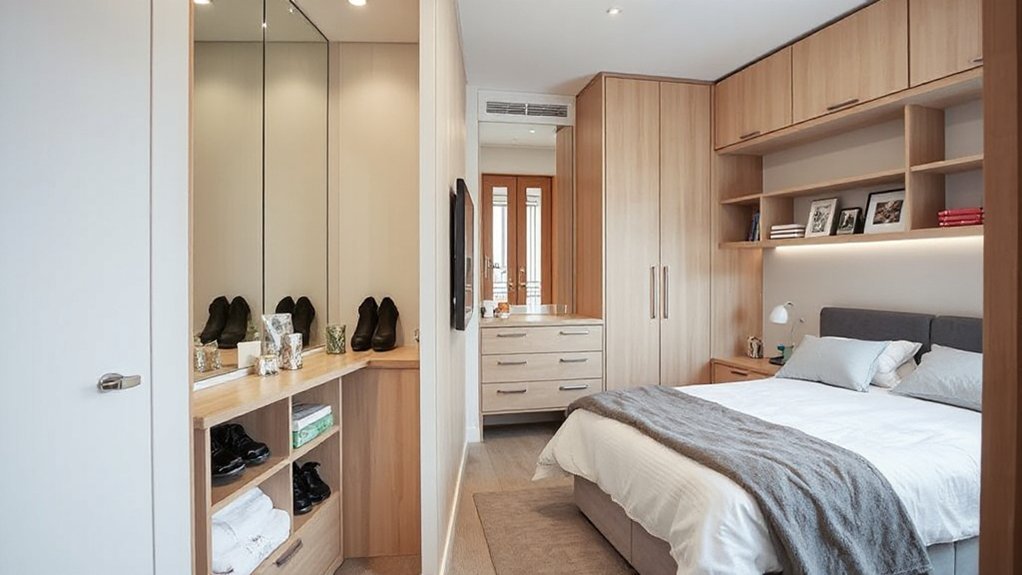
Consider how bespoke wardrobe hacks can tailor hanging space to your daily needs, turning awkward gaps into usable storage.
Use understairs storage tricks to reclaim dead space without encroaching on room flow.
Start with a quick audit of your bedrooms and hallways to identify high-impact, low-effort solutions.
Bespoke Wardrobe Hacks
A bespoke wardrobe can transform a cramped bedroom or hallway by maximizing every inch of available space. You’ll tighten loose ends with smart configuration, measured to your flow and routine. Focus on verticality, sliding doors, and deep shelves to reduce clutter and keep garments accessible at a glance.
Bespoke wardrobe organization hinges on zones: daily wear, seasonal storage, and folded items, all clearly delineated. Opt for adjustable, modular components that adapt as priorities shift, rather than fixed solutions that outgrow you.
Prioritize a clean, light interior to reflect space, and integrate lighting for quick visibility. Embrace a cohesive aesthetic through consistent hardware and finishes, reinforcing the sense of order.
- Maximize vertical storage with adjustable rails
- Use pull-out baskets and clear, labeled bins
- Create dedicated sections for each wardrobe category
Understairs Storage Tricks
Hidden storage under the stairs is a smart way to reclaim wasted space in bedrooms and hallways, so you should start by measuring clearances and planning zones for coats, shoes, and seasonal gear.
You’ll convert empty depth into usable storage with a discreet access hatch or pull-out drawers. Use hidden compartments for small items like hats, gloves, or chargers, keeping surfaces clutter-free.
Install a shallow hinged lid to conceal seasonal boxes without obstructing foot traffic.
For daily use, choose a multifunctional bench that lifts to reveal a hidden tote or baskets, and doubles as seating near the entry.
Label bins inside, rotate gear seasonally, and maintain a tidy exterior.
Regularly re-evaluate layout as needs shift, ensuring efficient, accessible space.
Finishes and Materials for British Weather
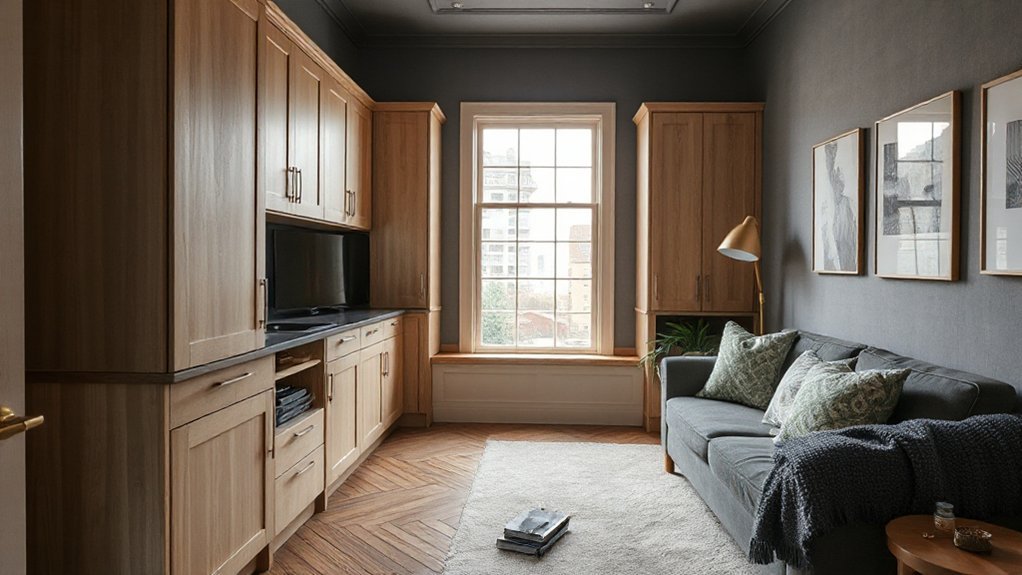
When you choose finishes and materials for British weather, prioritize durability, moisture resistance, and low maintenance. In a compact space, pick weather resistant finishes that resist damp, scuffing, and mould.
Opt for British climate materials known for stability in temperature shifts and humidity swings, like vinyl, coated laminates, and moisture-tested timber.
Seal joints and use wipe-clean surfaces to cut upkeep. Choose light reflective surfaces to maximise natural light and reduce heat buildup in summer.
- Weather resistant finishes that stand up to rain, condensation, and laundry humidity
- British climate materials with low expansion, warping, and mould resistance
- Finishes that wipe clean, resist stains, and require minimal sealing
This approach keeps areas durable, easy to maintain, and space-efficient without sacrificing style.
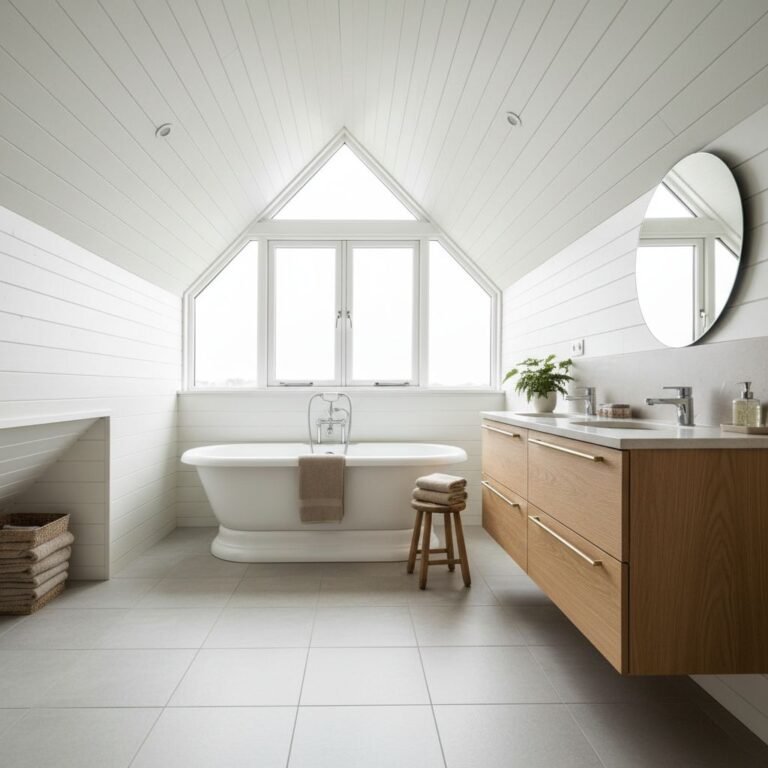
Small Bathroom Ideas That Maximise Usability
Small bathrooms punish clutter, so start by prioritising layouts that free up space and keep essentials within easy reach. You’ll want compact fixtures that fit without crowding, like a wall-hung basin and a compact toilet, freeing floor space for a slim vanity or storage niche.
Use recessed shelving above the bath or shower to avoid bulky cabinets, and install a frameless shower screen to visually enlarge the enclosure. Keep surfaces simple and wipe-clean to reduce maintenance time.
Implement water saving tips such as low-flow taps and a dual-flush mechanism to cut daily usage. Choose pale tones with strategic mirrors to reflect light and create depth.
Plan heat and humidity control with a compact extractor fan positioned above the doorway for efficiency.
A Practical Starter Plan: Audit, Plan, Implement
A practical starter plan starts with a clear audit, then moves to lean planning and focused implementation. You’ll map every zone, note function, and measure furniture against walls to reveal true footprint.
From there, you create lean plans that prioritize essentials, discard duplicates, and set achievable milestones. Implement with discipline: test layouts, track results, and adjust quickly.
You’ll need to think about Garden furniture and Outdoor decor as movable elements, using them to define zones without overloading spaces. Use bright, single-purpose pieces that fold or stack when not in use.
- Audit by area, list functions, and photograph constraints
- Plan with modular, multipurpose pieces that shift between rooms
- Implement in small runs, measure impact, tweak for flow and light
Maintenance Routines to Sustain a Spacious Feel
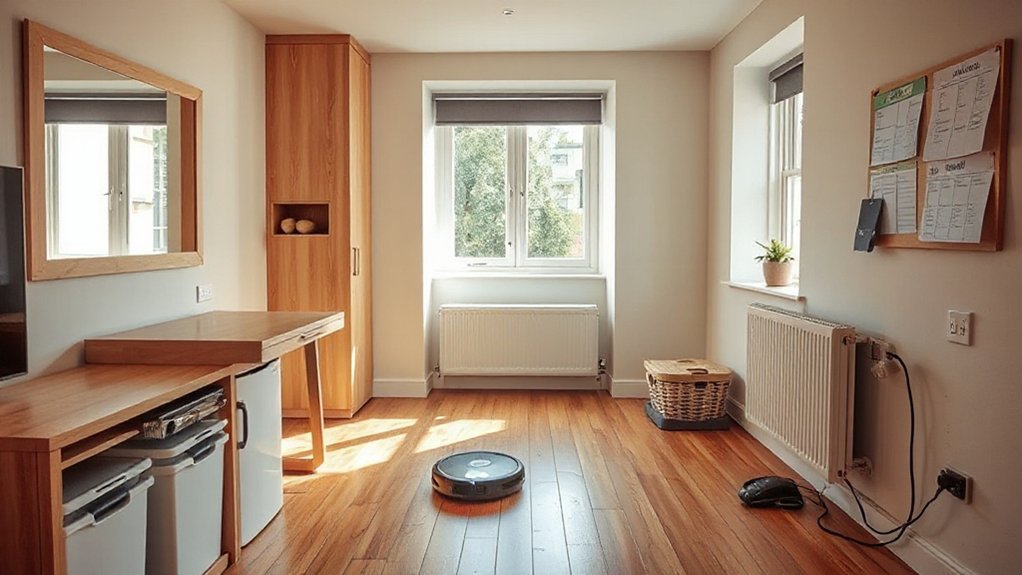
Maintaining a spacious feel in a small UK apartment starts with simple, repeatable routines. You’ll keep surfaces clear by daily 5-minute resets: wipe, dust, and store, so clutter never accumulates.
Schedule weekly checks for bins, laundry, and mail, then batch tasks to minimize interruptions. Create a dedicated maintenance calendar that aligns with seasonal needs, like garden maintenance and outdoor decor upkeep, while keeping indoor routes open.
Prioritize multi-use storage and smart layouts; label boxes and shelves so items return to their homes after use.
Protect air quality with a quick vent and filter swap, and track humidity to prevent mold. Maintain window cleanliness to preserve light.
Plan outdoor care alongside interior chores to sustain a cohesive, spacious impression.
Frequently Asked Questions
How Much Can I Realistically Save by Space Planning?
You can realistically save hundreds to a few thousand pounds by space planning. You’ll optimize furniture arrangement and maximize natural light, reducing wasted space and costly rearrangements while keeping your living area practical, cozy, and energy-efficient.
Which Colors Visually Expand Small UK Rooms Best?
Choose light, cool neutrals like whites and pale grays; they visually expand spaces. Use color psychology to favor airy tones. Pair with reflective surfaces and light enhancements to maximize brightness and perceived room size.
Can Under-Stair Space Be Repurposed Effectively?
Yes, you can repurpose under-stair space effectively. Hidden storage hides clutter, while smart staircase design adds utility. You’ll install slim drawers or a concealed cabinet, plus pull-out shelves, transforming that awkward nook into practical, organized extra space.
What Are Inexpensive, Durable Vertical Storage Options?
Wall mounted shelves offer cheap, durable storage, while stacking bins maximize capacity without widening footprints. You’ll install them along walls, rotate items as needed, and keep surfaces clear, making your vertical space practical, precise, and endlessly reusable.
How Do I Maintain a Clutter-Free Home With Kids?
Ever thought you can keep chaos at bay with simple routines? You can maintain a clutter-free home with kids by prioritizing toy organization and kid friendly furniture, setting clear zones, and daily 5-minute tidy-ups for calm, functional spaces.
Conclusion
You can make a UK flat feel bigger by treating space like a resource you manage daily. Start with a quick audit, then plan with vertical storage and multi‑functional furniture. Use room dividers sparingly to carve zones without crowding. A few lighting tweaks can open up corners, and choose finishes that suit damp weather. Case in point: a compact London studio added a wall‑hung desk, foldaway bed, and slim wardrobes, gaining a surprising three extra square metres of usability.
About the Author