Did you know Victorian homes still rely on roughly 60-year-old wiring on many streets, even as energy codes tighten? You can modernize without gutting it, if you plan in phases, shield original finishes, and coordinate trades to minimize downtime. Start with the roof and windows, then tackle plumbing and wiring discreetly, while keeping living patterns in mind. The key is clear comms with your team and a flexible timetable that preserves character while improving comfort. Curious how to map that out.
Key Takeaways
- Plan a phased renovation with preservation-ready demolition, structural fixes, and finish-out to minimize disruption and clearly sequence trades.
- Use discreet, compatible modern systems (wiring, plumbing, HVAC) and high-performance insulation to reduce impact on historic interiors.
- Prioritize period-appropriate yet efficient upgrades (windows, roofing, cladding) that respect Victorian character while boosting performance.
- Define a cohesive aesthetic using a restrained palette of timber, plaster, brick, and tile with careful sightlines and daylight strategies.
- Communicate clearly with contractors and neighbours, schedule work to limit interference, and protect heritage features throughout.
Define Your Baseline Must-Haves for a Victorian Terrace
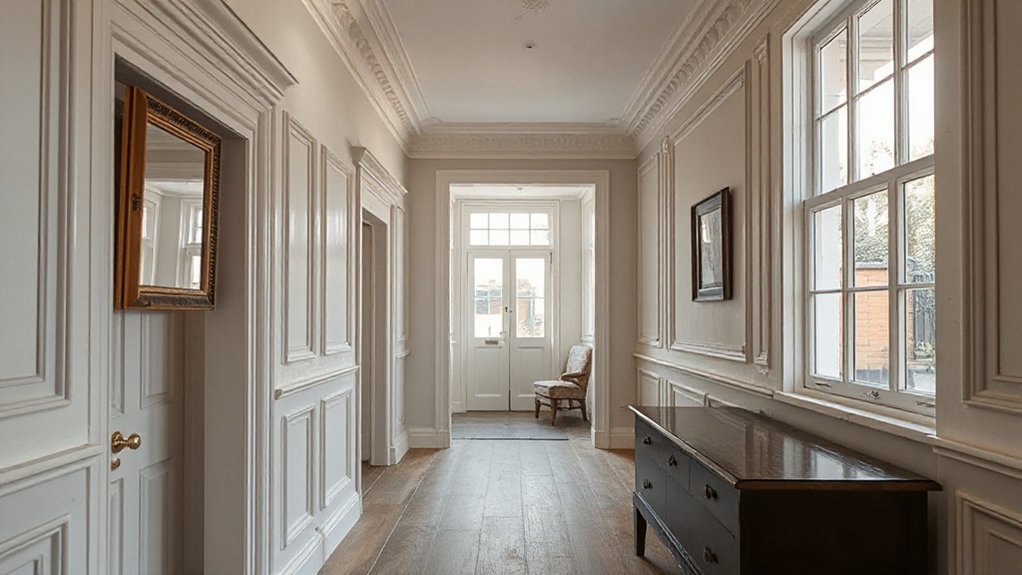
Before you start any changes, define your baseline must-haves for a Victorian terrace. You map essential elements first: scale, proportion, and materials that honor the period without overreliance on nostalgia.
Identify fixed constraints—structural limits, ceiling heights, and wall thickness—that shape feasible upgrades. Prioritize critical systems: electrical, plumbing, insulation, and ventilation, but frame them to preserve historical accuracy.
Decide on a concise palette rooted in authentic timber, plaster, brick, and tile tones, aiming for aesthetic consistency across rooms and exterior facades.
Establish a functional core layout that remains legible to a Victorian eye, even as you modernise.
Document non-negotiables, like feature stair balustrades or timber joinery, and separate them from adjustable details. This clarity guides future decisions and maintains integrity throughout the project.
Create a Phased, Low-Disruption Upgrade Plan
A phased upgrade plan keeps disruption to a minimum by sequencing work around your daily life and seasonal constraints. Begin with a master timeline that aligns with living patterns, then break tasks into distinct phases: preservation-ready demolition, structural fixes, and finish-out.
Map dependencies so you don’t double-handle trades or materials. Prioritize changes that facilitate later stages—for example, install concealed services or modular systems that can be swapped with minimal fuss. Integrate time-saving, reusable components to reduce waste and downtime.
Maintain historical accuracy while introducing modern amenities; choose finishes and fixtures that echo the era without overreaching. Document decisions, budget buffers, and inspection checkpoints.
Communicate clearly with contractors and neighbors, and reassess quarterly to keep the plan lean and purposeful.
Prioritize Energy-Efficient Upgrades With Period Flair
Prioritize energy efficiency with period-appropriate detail: insulate where it matters, select efficient systems that fit the scale and tongue of the Victorian terrace, and add subtle touches that read as intentional design rather than retrofit.
Start with snug insulation, then choose quiet, efficient appliances and heating, cooling, or ventilation that don’t shout modern.
Keep the rhythm of the home intact by pairing performance upgrades with period-accurate materials and finishes.
Insulation With Style
Insulating a Victorian terrace with style means blending modern efficiency and period character from the start, not afterthoughts. You achieve this by selecting discreet, high-performance materials that respect the shell and reveal nothing garish. Focus on airtightness, thermal breaks, and breathable yet efficient barriers to minimize heat loss without compromising interior lines.
- Choose slim-profile insulation in roof and walls that maintains ceiling heights and reveals no drastic bulk.
- Install interior and exterior insulation with careful detailing to preserve cornice lines, skirting, and period reveals.
- Pair with heritage-compatible seals, secondary glazing, and controlled ventilation to sustain comfort.
Keep period appropriate furnishings and historical accuracy in view as you specify finishes and details, ensuring the upgrade reads cohesive, yet modern.
Efficient Systems, Subtle Touch
Efficient systems quietly elevate comfort without interrupting period character. You optimise without excess, targeting energy use without sacrificing charm. Start by selecting smart technology that learns your routines, reducing consumption while maintaining climate comfort.
Pair it with well-insulated zones and programmable controls to avoid overcooling or overheating. In living spaces, install modern fixtures that blend with detailing yet perform at high efficiency, ensuring hidden ducting or radiators remain discreet.
Favor heat-recovery ventilation to preserve air quality without drafts. Choose efficient boilers or heat pumps sized for the terrace, with intelligent thermostats that respond to occupancy.
Consider smart lighting and sensors to minimize waste. Keep hardware minimal, finishes timeless, and wiring neat, so upgrades stay unobtrusive and durable.
Space-Shaping Tactics: Layouts and Light That Honour History
You’ll shape spaces that respect history while maximizing light and flow. Start with deliberate sightlines and flexible zones that echo Victorian layout cues without clutter.
Prioritize luminance plus purposeful partitions to balance heritage charm with modern usability.
Space-Shaping Light
- Align rooms to the home’s axial rhythm, opening views toward key historic features.
- Use controlled glazing and mirrors to amplify daylight without flooding delicate finishes.
- Select minimalist fixtures that illuminate without creating glare or distraction.
This approach preserves character while enhancing usability, guiding movement through space with intent.
Focus on daylight first, then secondary lighting to accent texture, timber, and plaster, ensuring a coherent, respectful transformation.
Layouts That Honour History
Use light shelves, transoms, or carefully placed glazing to frame heritage without overpowering it, and guarantee sightlines respect historic axes. Choose furniture layouts that emphasize readable room proportions, avoiding overclutter that hides historic details.
When introducing new storage or kitchens, conceal them behind discipline-compliant cabinetry that remains visually aligned with existing finishes. Prioritize architectural authenticity with selective material choices and restrained detailing.
Apply preservation techniques to retrofit services, ensuring discreet access. This approach sustains legacy while delivering modern practicality, clarity, and quiet elegance.
Refresh Kitchens and Bathrooms With Historic-Style Details
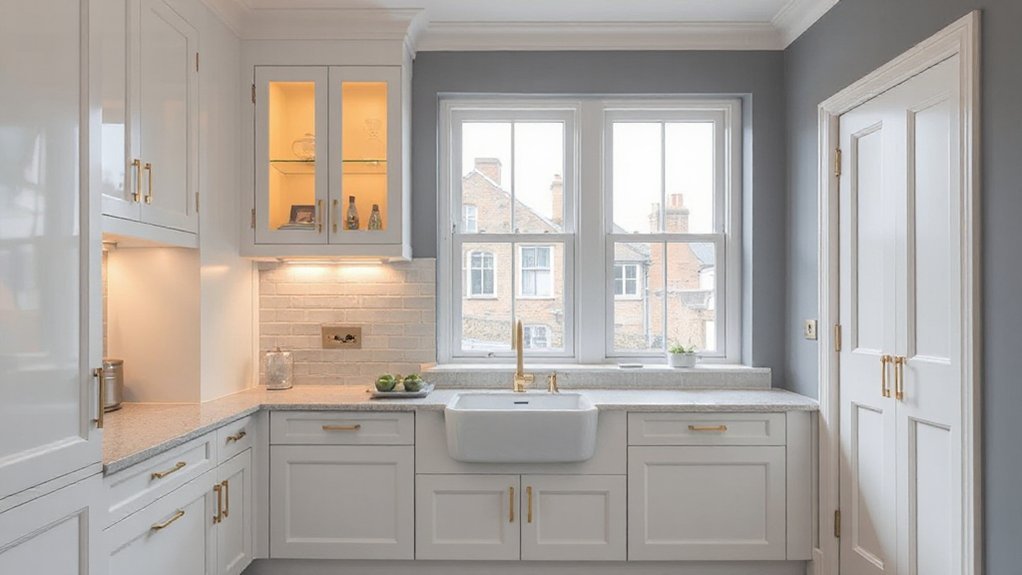
To refresh kitchens and bathrooms with historic-style details, prioritize period-accurate materials and streamlined layouts that modern users expect. You’ll balance charm with efficiency, ensuring every choice serves practical use while nodding to Historical authenticity and Period restoration.
- Select fittings and fittings finishes that echo era character without compromising water efficiency or ease of cleaning.
- Retain or recreate simple geometry, like panel doors and apron-front sinks, to reinforce authentic silhouettes.
- Integrate concealed storage, ample task lighting, and compact fixtures to keep spaces feeling airy and functional.
Focus on clean joints, tight tolerances, and test runs to avoid mismatched gaps. This approach yields a refreshed kitchen and bathroom that read as period-aware, not period-locked.
Choose Cohesive Materials and Finishes for Timeless Charm
Choosing cohesive materials and finishes ties the whole Victorian terrace together, so pick a restrained palette that unifies floors, walls, and fixtures. You’ll want material selection that prioritises durability, ease of maintenance, and subtle contrast rather than showy variety.
Start with a neutral base—timber, stone, or ceramic—then layer through consistent grain, texture, and sheen. Limit timber species to two options and align the tile widths and grout tones across rooms to reduce visual noise.
Finish coordination matters: match ironmongery, hardware, and sanitary fittings to a single metal or finish family. Aim for tactile contrast through texture rather than color, such as a matte plaster wall paired with a satin-finish cabinetry.
This restraint yields timeless cohesion without feeling dated. Material selection decisions guide long-term harmony and preserve period character.
Frequently Asked Questions
How Can I Budget for Unexpected Victorian-Era Plumbing Issues?
You should budget for unexpected Victorian-era plumbing by assuming a contingency of 15–20% on your total project. Start with a precise line item for inspections, shutoffs, and compliant fittings.
Track potential fixes like cornice leaks or hidden pipes, and set aside a buffer for costly redistributions.
Prioritize essential upgrades, document all estimates, and review monthly.
Victorian plumbing risks can spike quickly, so you’ll protect milestones, avoid delays, and keep your design-focused goals on track with confidence.
Which Permits Are Typically Required for Internal Alterations?
You’ll typically need building permits for internal alterations, plus possible approvals from your local planning authority if walls are load-bearing or affect historic fabric.
Start with a structural assessment to confirm feasibility, then apply for the necessary permits.
Keep your plan precise, pragmatic, and design-focused, documenting changes and impacts.
Think of it as a proactive briefing: engage early with the authority and your engineer, because permits and assessments set your project on solid footing.
It’s a smart, no-surprises approach.
How Can I Preserve Original Plaster While Rewiring?
You can preserve original plaster while rewiring by routing cables carefully and using low-impact methods. Start with a professional assessment of plaster work, then choose surface-murring or hollow-wall routes where possible.
Use UK-approved, slimline conduit and micro-trunking to minimize damage. Keep disclosures about Victorian preservation intact, and document every step.
Re-plaster only where unavoidable, matching thickness and finish, so internal wiring remains hidden yet compliant with Victorian preservation goals.
What Stealthy, Non-Invasive Insulation Options Exist?
I’ll pause in awe of a whispering corridor, then answer directly: stealthy, non-invasive insulation options include thermal barriers behind existing plasterboard, blown-in mineral wool in cavities, and tight-fit pipe and duct insulation.
You’ll also consider soundproofing solutions like resilient channels, acoustic seals around sockets, and door sweeps.
Prioritize minimal disruption, opting for retrofits that preserve plaster while shrinking heat loss and noise transfer.
Aim for continuous, layered performance with precise detailing and accessibility in mind.
Can Modern Kitchens Be Installed Without Altering Room Proportions?
Yes, you can install a modern kitchen without altering room proportions. Opt for compact cabinetry and island-free layouts that maintain the original scale.
Use open plan layouts where possible to widen perceived space, and integrate Smart storage solutions to keep surfaces clear.
Choose slimline appliances and multifunction units to conserve footprint.
Prioritize cohesive materials and clean sightlines, so the kitchen reads as contemporary without expanding the footprint.
Focus on proportion, flow, and purposeful detailing.
Conclusion
Picture your renovation as a quiet bridge, span by span across a living room of history. You lay the first plank—roof, windows, and service lines—while the old walls keep their whispers. With each phase, you navigate like a careful cartographer: preserving essence, adding efficiency, revealing light. The upkeep becomes a choreography, not a demolition. In the end, you cross to a modern, comfortable home that still speaks in timeless tones. Preservation, pragmatics, and purpose meet.
About the Author