You can control a home extension budget by setting clear goals and a realistic price cap before you start, then slicing the project into must-haves and nice-to-haves. Budget for structure, finishes, and permits, add a 10–15% contingency, and lock in phased milestones to curb scope creep. Choose a transparent contractor and track costs weekly, adjusting as needed. Keep decisions documented and stay flexible when plans shift; the next step is where most budgets either hold steady or blow.
Key Takeaways
- Define budget, goals, and contingencies up front, with clear must-haves and a 10–15% contingency for unforeseen costs.
- Design for cost efficiency by simplifying structure, using standard sizes, durable finishes, and efficient layouts to cut long-term expenses.
- Track permits, fees, and soft costs separately, budgeting 10–15% for hidden expenses and maintaining organized records.
- Select a trustworthy contractor with clear bids, warranties, and detailed line items; use phased builds with strict change control.
- Track expenses daily, forecast weekly, and adjust by reallocating funds or deferring upgrades to prevent scope creep.
Plan Your Budget and Goals Up Front
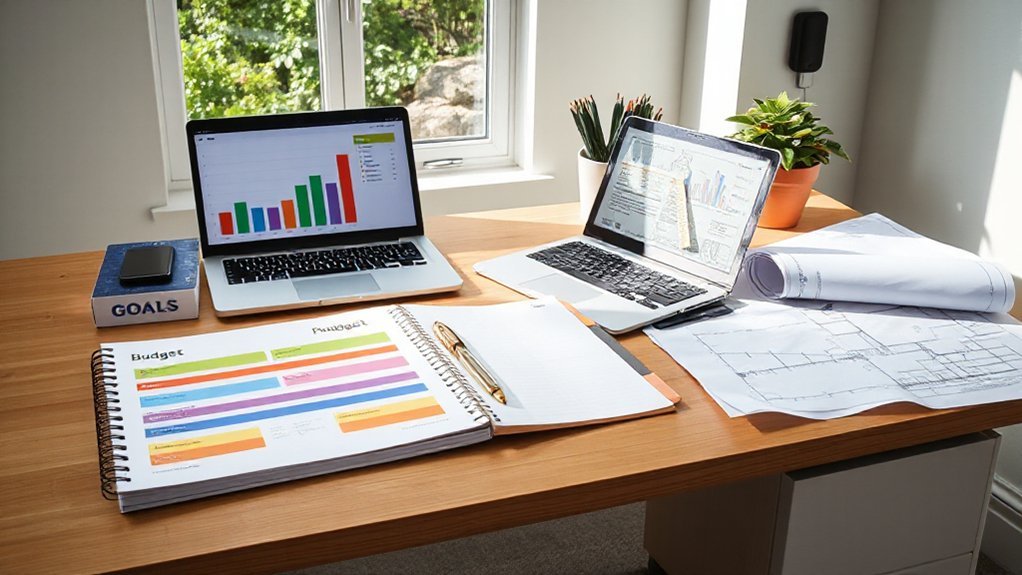
Setting a clear budget and goals from the start helps you avoid scope creep and money stress later. You’ll define total cap, plus a contingency, so surprise costs don’t derail plans.
List your must-haves, nice-to-haves, and timing, then map them to a rough floor plan.
Allocate funds by category: structure, services, finishes, and permits, with precise price estimates.
Prioritize decisions that affect value, like layout and natural light, to maximize return.
Track expenses weekly and adjust as needed, not when you’re already over.
Consider landscaping options and interior decor early to align aesthetics with budget.
Build a simple decision log for changes, so you stay accountable.
Communicate updates with your contractor to avoid misinterpretations and costly rework.
Design for Cost Savings: Smart Choices That Matter
To start saving, focus on structural savings first—keep load-bearing decisions simple and reuse existing foundations where possible.
Be material cost conscious by choosing standard sizes, bulk quantities, and durable but affordable finishes that reduce long-term maintenance.
Plan efficient space layouts now, so every square meter serves a clear purpose and minimizes wasted space and future remodeling.
Prioritize Structural Savings
If you want to cut costs without compromising structure, start by prioritizing load-bearing and framing choices that stay within your budget. Focus on framing systems that scale with your needs, avoid over‑design, and simplify connections.
Start with a clear load bearing analysis to identify essential supports and reduce unnecessary redundancy. When evaluating foundations, consider modest reinforcement where required rather than wholesale upgrades; this keeps materials and labor predictable.
Choose standard dimensions and commercially available materials to minimize fabrication time and costs. Where possible, align walls and openings to reduce complex framing, and reuse existing structural elements if feasible.
Keep contractors honest about workmanship variance, and document changes that affect structural performance. Foundation reinforcement and load bearing analysis should guide decisions, not drive speculative upgrades.
Material Cost Consciousness
Material costs can make or break a budget, so you’ll want to choose materials with an eye on price, performance, and availability. You’ll evaluate options for material durability and long-term value, not just upfront price.
Prioritize items that resist wear and require less maintenance, and negotiate with suppliers to secure bulk or timing discounts. Use a simple, apples-to-apples comparison to avoid hidden costs, and favor readily stocked materials to reduce lead times.
- Durable, low-maintenance options that stay true to your budget
- Negotiated terms that lower total cost, not just unit price
- Readily available materials with predictable delivery windows
Efficient Space Planning
Start with furniture arrangement as your blueprint: place major pieces to define zones, ensure clear circulation, and avoid awkward gaps that require costly adjustments later. Prioritize shared services—bathroom, kitchen, and storage—along a single utility spine to simplify trades and reduce trenching or wiring runs.
Lighting design matters too: layer ambient, task, and accent lighting to avoid overprovisioning fixtures. Favor scalable builds and modular elements, so you can adapt without major reworks if needs shift.
Plan revisions early; cost savings compound through confident decisions.
Permits, Fees, and Hidden Costs: What to Budget
Permits, fees, and hidden costs can surprise you if you don’t plan ahead, so start by listing every potential expense from the outset. You’ll budget for permit regulations, application fees, plan review charges, and inspection costs, then add contingency for hidden expenses that commonly pop up mid‑project.
Track exact amounts, deadlines, and required approvals to avoid speed bumps. Keep a clear ledger that separates soft costs (design changes, surveys) from hard costs (materials, labor). Visit your town hall early to understand local requirements and timelines, and confirm whether impact fees apply.
Build a 10–15% contingency into the budget to cover surprises. Stay organized, document every receipt, and reassess monthly to keep your extension on track.
- Clear permit path with timelines
- Itemized fee and inspection list
- Contingency for hidden expenses
How to Pick a Contractor You Can Trust?
Look for clear trust signals—references, licensing, and a solid warranty—and weigh them against transparent, cost-conscious hiring factors like upfront estimates and fixed-price options.
Check client reviews and past projects to gauge consistency, not just applause.
Ask direct questions about timelines, change orders, and contingencies to guarantee you’re getting measurable accountability.
Trust Signals To Check
When choosing a contractor, start by spotting trustworthy signals that actually matter: clear communication, verifiable references, and transparent pricing. You’ll want evidence of a solid contractor reputation, responsive updates, and documented agreements.
Trust signals show up in how they handle questions, timeline milestones, and changes to scope, so watch for consistency between promises and receipts. Look for full licenses, insurance, and safety records as proof they’re accountable.
You’ll also benefit from measurable guarantees and a track record of completed projects similar to yours. Prioritize clarity over charm, and don’t skip references or site visits.
- A well-maintained online profile with recent client feedback
- Consistent, detailed communications and written estimates
- Visible licensing, insurance, and warranty terms for each job
Cost-Conscious Hiring Factors
Cost-conscious hiring starts with clear, apples-to-apples comparisons. You’ll compare bids on a like-for-like basis, not just total price, and demand itemized line items for materials, labor, permits, and cleanup.
Check credentials, licenses, and insurance, then verify past projects and client references. Prioritize contractors who partner in value, not just cheapest upfront.
Ask about budget-friendly materials that don’t undermine quality, and confirm timelines align with your schedule.
Seek firms offering affordable design options—efficient layouts, modular approaches, and cost-saving construction methods—without sacrificing safety or durability.
Request detailed procurement plans, including material sources and substitutions if prices shift.
Finally, establish written milestones, payment triggers, and a clear change-order process to avoid surprises as you move toward a successful, budget-smart extension.
Phased Build Plan: Budget Control Across Stages
A phased build plan helps you control costs by spreading work across clear, scheduled stages, so you can reassess budget and scope before each milestone. You’ll lock in priorities early and prevent scope creep from quietly siphoning funds.
Each phase creates a checkpoint where you compare actuals to estimates, adjust orders, and reallocate contingency. By separating design, permitting, and construction into distinct blocks, you gain transparency and rollback options if prices shift or delays occur.
This approach keeps you nimble, reducing the risk of large, unexpected bills at the end. Stay disciplined with change control and supplier quotes, using phased build as your budget control framework.
- Clear stage gates with decision points
- Tight, up-front vetting of suppliers and materials
- Contingency reserved for each phase
phased build, budget control
Track Spending and Adjust: A Practical Budget Routine
Track spending daily and adjust as you go. You’ll establish a simple daily log, noting budgeted vs. actual costs, time spent, and any variances. Use a dedicated sheet or app labeled for the extension, so you can quickly see trends without digging through receipts.
Prioritize budget tracking by category: permits, materials, labor, contingency, and furnishings. When a line item overshoots, perform a quick expense adjustment: cut nonessential finishes, defer upgrades, or reallocate funds from lower-priority areas.
Update forecasts weekly, not monthly, to catch drift early. Communicate changes with contractors and clients to avoid scope creep.
Keep receipts organized, back up data, and review savings opportunities regularly. This routine reduces surprises and keeps your project on track.
Common Pitfalls to Avoid in Extensions
Common pitfalls in extensions often catch homeowners off guard because small missteps compound over time. You’ll want to spot issues early, avoid scope creep, and keep plans aligned with your budget. Prioritize practical design ideas that fit your site, your daily life, and your long-term goals.
Quick decisions on layout, windows, and access can create costly reworks later, so validate every choice against costs and usefulness. Don’t underestimate the impact of material choices on installation time, durability, and upkeep.
Regular checks with your builder prevent miscommunications, and a clear schedule reduces surprises. Stay focused on value, not vanity, and document decisions to avoid confusion.
- Unclear scope leads to price creep and delays
- Poor material choices raise long-term maintenance
- Inflexible design ideas force retrofits later
Contingency Planning: Prepare for the Unexpected
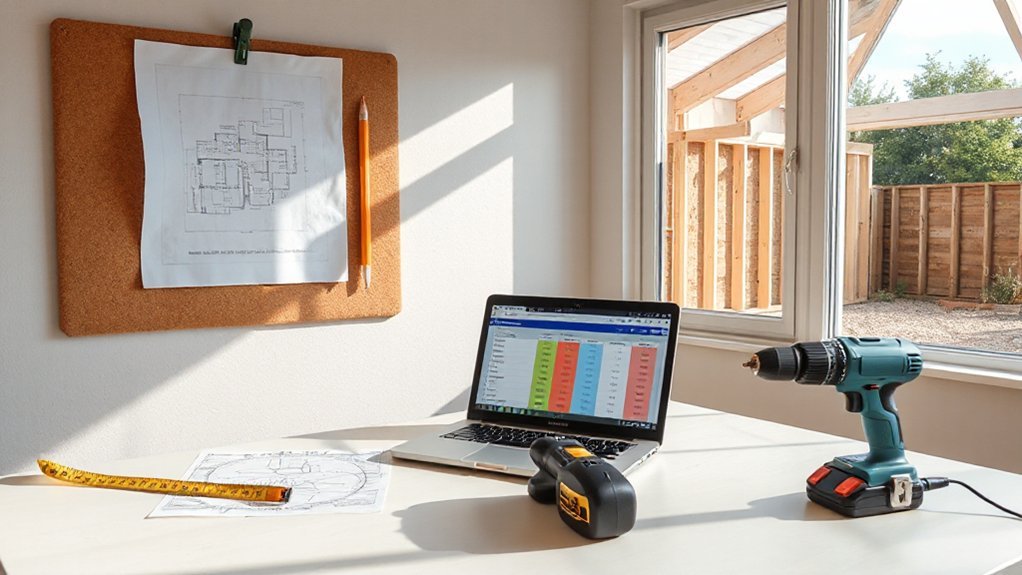
Contingency planning isn’t optional—it’s essential. You should treat unforeseen issues as normal, not as failures. Build a clear plan that identifies likely risks, assigns owners, and sets decision points, so you act fast when things shift.
Start with a realistic cost buffer—aim for 10–15% of your projected budget—and justify it with specific scenarios: permits delays, material backorders, weather stoppages. Track every assumption and review weekly, adjusting as facts change.
Maintain a separate, accessible fund you can tap without derailing payments for essential trades or permits. Monitor supplier lead times and contractor schedules daily to spot early warnings of unexpected delays.
If a risk materializes, use your emergency funds to cover urgent, value-preserving steps rather than expensive, last‑minute changes.
Frequently Asked Questions
How Long Does a Home Extension Typically Take From Start to Finish?
A typical home extension takes about 8 to 12 weeks for design and approvals, then 8 to 16 weeks for construction, depending on size and complexity.
You’ll speed things up by having clear plans, a fixed budget, and timely approvals.
During interior design, you’ll lock in finishes, lighting, and layout early.
Material selection matters too—choose durable, available options to avoid delays.
Coordinate trades, monitor progress weekly, and stay flexible to keep the project on track.
What Credit Options Help Finance a Home Extension?
You can finance a home extension with several options: personal loans, home equity loans, HELOCs, or a cash-out refinance. Each affects loan eligibility differently, so check rates, terms, and fees.
A secured loan usually boosts eligibility, while credit cards aren’t ideal for big projects.
Start by gathering income, debt, and asset details to gauge loan eligibility, then compare lenders.
Financing options vary; consult a lender early to identify the best fit for your project and budget—don’t delay.
Can You Reuse Existing Fixtures to Reduce Costs?
Yes, you can reuse existing fixtures to reduce costs. Fixture reuse can deliver real cost savings by avoiding new purchases and complex fittings.
Start with a survey of what’s in good condition, then plan around compatible dimensions and finishes.
Prioritize essential updates, patch and repaint to blend old with new, and source matching items secondhand when needed.
Document fixtures you’ll repurpose and verify plumbing and electrical compatibility to maximize cost savings.
How Does Neighborhood Approval Affect Project Timelines?
When you think of it, neighborhood approval is the gatekeeper—it can slow you down or keep things smooth. It often adds weeks or months, depending on feedback cycles and required tweaks.
If you secure early input and designate a point person, you minimize project delays.
Neighborhood approval matters, so build in a buffer, maintain documentation, and respond quickly to any requests to keep your timeline as tight as possible.
What Are the Most Common Post-Construction Adjustments?
Post-construction adjustments you’ll encounter include finish tweaks, appliance relocations, lighting rewires, and expanded storage fixes.
You’ll prioritize design considerations and material selection to avoid costly overruns, so plan for minor reworks in the contractor’s schedule.
After completion, you’ll need documentation updates and potential code inspections.
You’ll adjust trims, paint, and hardware selectively, focusing on high-impact areas.
Stay practical: document issues, request phased fixes, and track costs to keep the project resourceful and on target.
Conclusion
You stand at your doorway, plans in hand, as light spills across fresh chalk lines and taped measurements. With budget tucked tight, you thread costs through every door frame like a careful craftsman. Each decision—smart spacing, brighter windows, phased work—brightens the future rooms while keeping receipts in check. When surprises pop, you pull out the contingency and adapt, keeping the project calm and on course. By design, you finish with more room and fewer regrets.
About the Author