You want a room that feels calm yet shines with purpose. Start by mapping how you actually move through the space, then layer lighting from ambient to task to accent to create balance you can control. You’ll set goals for mood, color temperature, and brightness, choose core fixtures, and add smart controls to fine‑tune every area. If you’re unsure where to begin, the next steps reveal how to cover every corner without overdoing it.
Key Takeaways
- Assess natural light and room layout to determine where ambient, task, and accent layers will be most effective.
- Map zones for each layer to ensure balanced coverage without glare or shadows.
- Plan fixture types and placements (downlights, wall washes, task lamps, accents) for flexibility and depth.
- Set targets for color temperature and brightness per zone to maintain cohesive mood and function.
- Implement dimming and smart controls with scene presets to adapt layers to activities and time of day.
Understand the Three Living Room Lighting Layers: Ambient, Task, and Accent
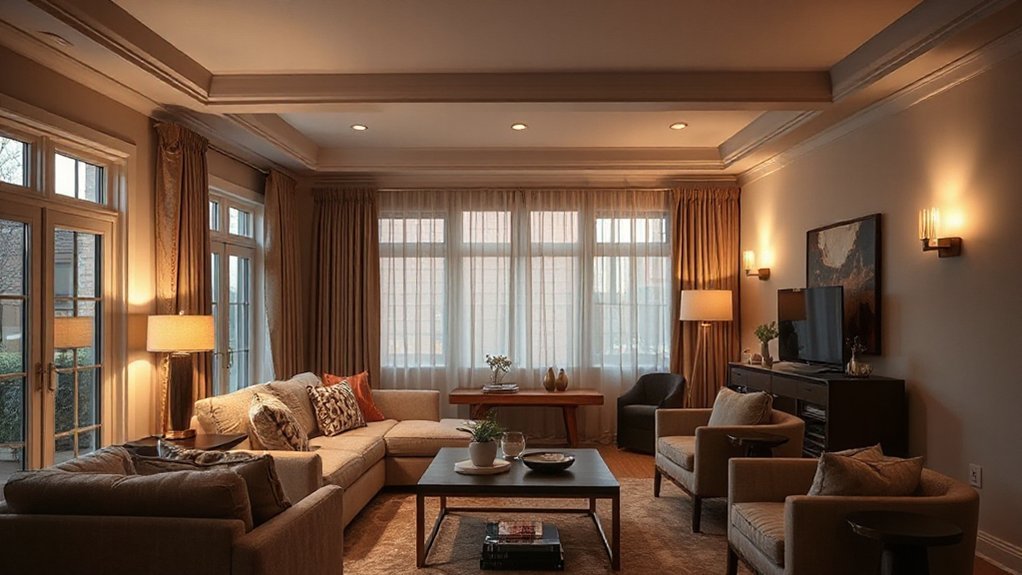
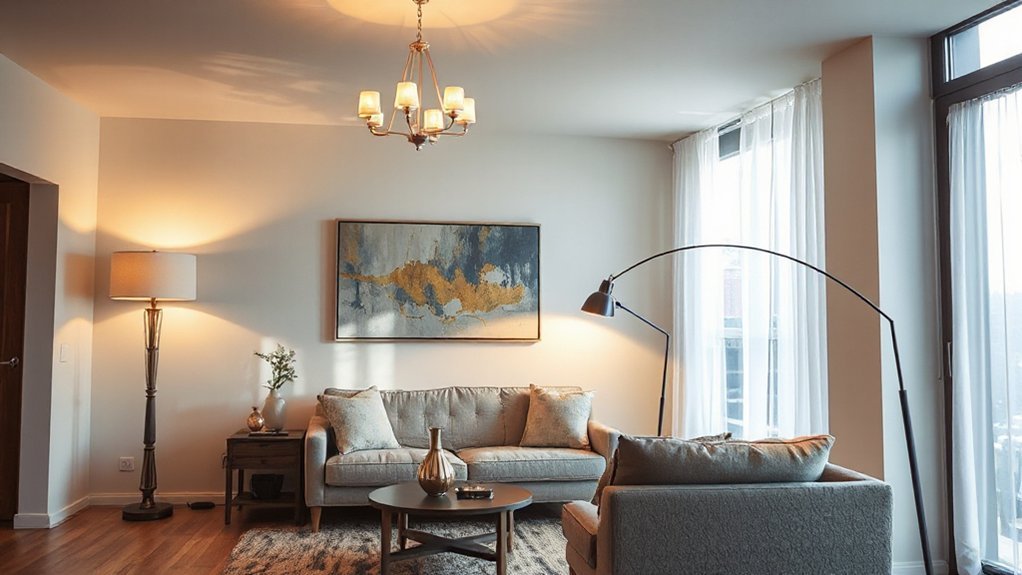
There are three lighting layers you should combine in a living room: ambient, task, and accent. You’ll plan with intent: ambient provides overall brightness, setting the room’s mood and preventing harsh shadows.
Task lighting targets specific activities, like reading or cooking prep, so you stay productive without glare.
Accent lighting highlights architectural features, artwork, or textures, adding depth and contrast to the space.
To optimize living room ambiance, balance color temperature and intensity across layers, using adjustable fixtures where possible.
Choose lighting color that complements your decor and skin tones, avoiding extreme shifts that jar perception.
Map each layer to zones: general seating, reading nooks, and focal displays.
Keep a cohesive rhythm, ensuring no single layer overwhelms the others.
Assess Your Living Room’s Natural Light
Natural light shapes how you balance the three layers, so start by mapping how sun, windows, and room layout interact with your space. Observe where daylight enters, how it shifts through the day, and which areas stay dim or bright. Note cardinal direction and window size, glass treatments, and any obstructions.
Track sunlight patterns across walls and furniture, identifying spots that benefit from shade or glare control. Assess whether daylight feels even or uneven, and whether screens, drapes, or blinds alter intensity.
Record how natural tones reflect off surfaces and how color interacts with brightness. This assessment guides how you layer lighting later, ensuring your plan respects natural light, avoids harsh contrasts, and leverages sunlight patterns for efficiency and comfort.
Set Your Layering Goals: Ambience, Color Temperature, and Brightness Targets
To set effective layering goals, define your targets for ambience, color temperature, and brightness right from the start. You’ll establish a baseline for cozy evenings and focused tasks by specifying an ambience level, a compatible color temperature range, and precise luminance targets for each zone.
Aim for a balance where warm tones support relaxation yet keep tasks clear, adjusting kelvin values to suit mood shifts. Set brightness targets by room area: dimmed corners for ambience, brighter focal points for reading, and subtle task lighting for screens.
Consistently check color harmony across fixtures, ensuring the palette harmonizes rather than clashes. Verify fixture compatibility early, so your planned layers integrate smoothly without rewiring.
Clear targets prevent overlayering and guide efficient fixture selection.
Choose Core Ambient Fixtures for the Space
Core ambient fixtures set the foundation for your living room lighting, so pick options that deliver steady coverage without glare. Consider how these fixtures establish baseline brightness and color consistency.
Then layer additional ambient elements for depth. With a clear view of the core—and how it interacts with layered ambient lighting—you’ll guide the space toward comfort and functionality.
Core Ambient Fundamentals
Choosing the right core ambient fixtures sets the tone for the room and guides how you perceive every other layer of lighting. You want a balanced base that’s comfortable, evenly distributed, and adaptable to tasks and mood.
Select fixtures with broad, diffuse light to minimize harsh shadows and glare. Favor fixtures that deliver consistent color temperature and CRI so skin tones read accurately across activities.
Prioritize controllable options—dimmable LEDs, smart bulbs, or centralized controls—so you can shift ambience without changing fixtures.
Consider wattage and lumen output to avoid over‑illumination or dim corners; aim for even brightness across zones.
Prioritize Lighting technology and energy efficiency, choosing efficient sources that meet your lighting needs while reducing consumption.
Verify compatibility with your ceiling height and room scale for a cohesive, enduring base.
Layering Ambient Lighting
Start with a ceiling ambient light that provides general brightness without glare, then add a secondary layer to soften shadows and support color accuracy. Consider fixture placement to maximize coverage and minimize glare on screens or glossy surfaces.
Use color mixing principles to guarantee the base color temperature remains consistent, typically around 2700–3000K for living rooms. Maintain proportional brightness so the core layer doesn’t overpower task or accent lights.
Document placement and wattage estimates, then test and tweak to optimize comfort, visibility, and spatial perception.
Pick Task Lighting for Daily Activities
Task lighting should match each daily activity zone, so you can illuminate reading nooks, desk work, and kitchen-pass-throughs without glare.
Identify the specific roles of task lighting—directional, ambient-assisted, and focused accent—so you cover clear needs in every area.
Start by mapping where you perform tasks most often and select fixtures that deliver the right light levels, color, and flexibility for those zones.
Task Lighting Roles
Good task lighting supports daily activities by directing light exactly where you need it, so you can read, cook, and work without glare or eye strain. Task lighting roles focus on function over ambiance, guiding you to the right activity zone with purpose.
Use directional fixtures to highlight work surfaces, like desks, counters, and craft areas, and guarantee beam angles minimize shadows on the task area. Maintain consistent color temperature to avoid visual fatigue during extended tasks.
Place lighting placements to align with the activity flow—near seating and workstations without creating glare on screens. Choose decorative fixtures that are sturdy and glare-controlled when used near eyestrain-prone tasks.
Prioritize adjustable or dimmable options for flexibility and accuracy in every daily activity.
Daily Activity Zones
Position fixtures so you can finish a page, follow a recipe, or trim a project without shifting shadows onto work surfaces. Use adjustable brightness to fine‑tune intensity for different tasks and times of day.
Color mixing matters: pair cool light for precise work with warmer tones for conversation and unwinding, creating clear visual cues between zones.
Mood setting comes from layering: dimmable lamps, under‑cabinet rails, and wall washes that respond to needs. Keep control simple, with quick adjustments that keep circulation clear and activities uninterrupted.
Add Accent Lighting to Highlight Drama and Style
Accent lighting defines drama and anchors style without overpowering the room. You add accent to draw eyes to art, architecture, or textiles, not to light the space evenly. Use deliberate contrast and precise fixture placement to guide attention and maintain balance with ambient light. Aim for a narrow beam or adjustable head to control shadow depth and focal point without glare.
- Emphasize Color contrast with high-contrast hues or saturated artwork, ensuring shadows enhance texture.
- Place fixtures to frame focal pieces, creating galleries that feel curated rather than scattered.
- Use dimming controls to vary intensity and preserve atmosphere across activities.
- Protect sightlines by spacing lighting so bright elements don’t compete with seating zones or windows.
Choose Color Temperature: Warm, Neutral, or Cool
Choosing color temperature is about how warm or cool the light feels, not just how bright it is. You’ll choose between warm, neutral, and cool options to shape the room’s lighting mood and functionality.
Warm light (roughly 2700–3000K) creates coziness and intimacy, ideal for living areas and evenings.
Neutral light (around 3500–4100K) offers balanced rendering for everyday tasks without harsh contrast.
Cool light (about 5000–6500K) enhances alertness and modern direction, good for reading or work zones.
Consider room activities, furniture finishes, and wall color to align color temperature with the intended mood.
Layering multiple sources helps maintain flexibility; use one primary temperature as the baseline and add accent lights at complementary temps if needed.
This approach yields cohesive ambiance and predictable color rendering for daily life.
Implement Dimming and Smart Controls for Flexibility
Smart controls and dimming go hand in hand with the color-temperature choices you’ve set, giving you real-time flexibility to match activity, mood, and time of day. Implementing dimming and smart controls is practical, precise, and efficient, helping you tailor ambience while saving energy.
Use voice control to adjust scenes quickly, without reaching for switches, and guarantee compatibility with your preferred hub for reliable automation. Energy efficiency improves when you dim lights during lower-activity periods, reducing wasted power while maintaining visibility.
- Choose compatible dimmers and smart switches
- Create scene presets for activities (tv time, reading, dining)
- Integrate voice control for quick adjustments
- Monitor energy usage and refine dim levels
Plan Layout for Full Coverage Across the Room
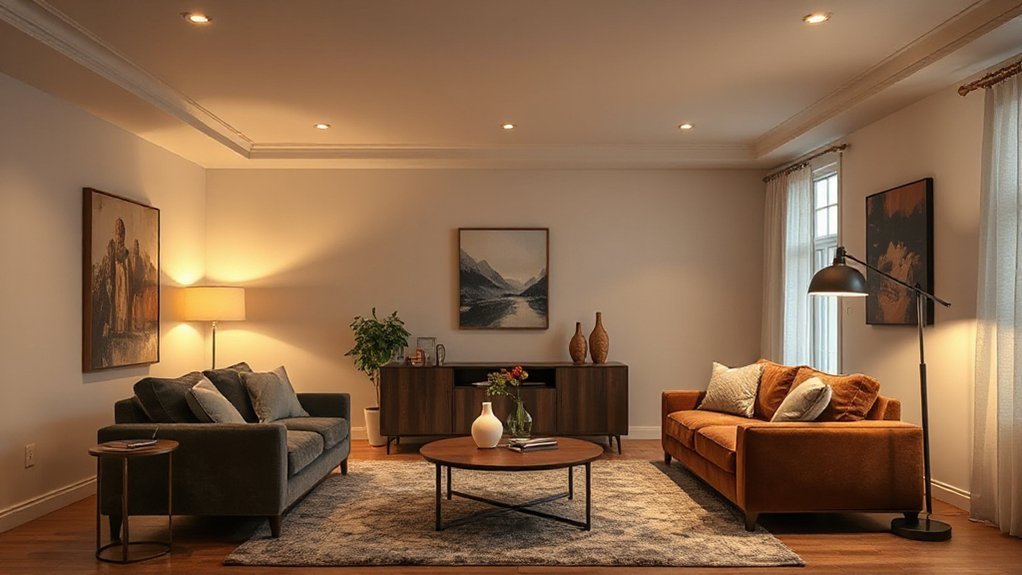
To guarantee full room coverage, map lighting layout so every zone receives appropriate brightness without hotspots or shadows. Begin with a ceiling grid plan that places downlights to form an even base layer. Then add wall washes to soften edges and reduce glare.
Identify task zones—reading corners, seating areas, and entryways—and assign dedicated luminaires that avoid direct glare toward eyes. Use layering principles: general, ambient, task, and accent.
Position fixtures to illuminate key surfaces, like coffee tables and art, without creating dark pockets between fixtures. Incorporate decorative fixtures to complement the room’s color schemes while maintaining uniform intensity.
Verify the plan through a mock run using dimmed presets to confirm even coverage and comfortable progression. Refine spacing to prevent overlap gaps and assure cohesive illumination throughout.
Balance Budget With Fixture Options: Style Meets Value
Balancing budget with fixture options means prioritizing value without sacrificing design intent. You’ll optimize every dollar by pairing durable builds with thoughtful aesthetics, ensuring longevity and appeal in daily use.
Focus on how fixture durability and material selection influence long-term cost and satisfaction, not just upfront price.
- Choose durable finishes and tested components to minimize replacements over time.
- Favor materials with timeless textures that blend with multiple styles, reducing future swaps.
- Compare energy efficiency and maintenance needs to lower ongoing costs.
- Cap your mix with a few statement pieces that maximize impact without overspending.
Troubleshoot Common Layering Mistakes and Fixes
Common layering mistakes undermine lighting plans, but fixes are straightforward. You’ll spot misfires when rooms feel flat, shadows creep, or task areas glare.
First, assess Lighting design goals against current layers; if a key function is dimmed or imbalanced, adjust before adding fixtures.
Next, rethink Fixture placement to avoid overloading one zone or competing sources. Place ambient sources evenly and anchor task lights near work surfaces, not in line with seating.
Trim excessive uplight or glare by orienting fixtures away from eyes and walls. Use dimmers to modulate intensity and preserve depth.
If color temperature feels off, calibrate with a primary light in the 2700–3000K range and supplement with cooler accents.
Correct planning, refined placement, and controlled brightness restore harmony and usability.
Frequently Asked Questions
How Many Lumens per Square Foot Should I Aim For?
You should target about 20–25 lumens per square foot for general ambient lighting.
If you’re adding task illumination, raise the total to around 30–40 lumens per square foot in the zones where you read or work.
Balance remains key: layer ambient lighting with focused task illumination, avoiding glare.
Adjust by room function, ceiling height, and trims.
Use dimmers and consider energy efficiency, color temperature around 2700–3000K for a warm, comfortable feel.
Can I Mix Modern and Traditional Lighting Styles Effectively?
Yes, you can mix modern and traditional lighting styles effectively. Start with a foundation of vintage fixtures and add contemporary designs for contrast. Layer light: ambient, task, and accent, so each type complements the other.
Choose finishes that bridge eras—brass with matte black, or aged copper with polished nickel. Keep scale and rhythm in mind, and guarantee dimmers for mood control. The result feels intentional, diverse, and surprisingly cohesive.
Do Ceiling Fans Affect Lighting Layering Performance?
Yes, ceiling fans can affect lighting layering performance. Ceiling fan efficiency influences how much air movement you get without wobble or noise.
Fan blade design affects generated airflow patterns that interact with lighting glare and shadow.
To optimize, choose a high-efficiency motor, guarantee blades are balanced, and position lighting to avoid direct glare from blades.
Use dimmable LEDs, and adjust blade pitch or speed to maintain consistent illumination while circulating air efficiently.
How Often Should I Replace Bulbs for Color Accuracy?
You should replace bulbs every 1 to 2 years to maintain color accuracy. Bulb longevity depends on use and quality, so monitor brightness and color consistency.
Choose bulbs with stable color temperature, ideally 2700–3000K for warm rooms or 3500–4100K for work areas, and avoid frequent switching.
Regularly check for color shifts or dimming, and stock a few spares of the same type to guarantee consistent lighting and true color rendering over time.
What Is the Best Placement for Sconces vs. Floor Lamps?
Sconces should flank seating at eye level, evenly distributing wall light, while floor lamp positioning anchors corners for soft ambient glow. You’ll place sconces about 60 to 66 inches high, with the lower edge around seated eye level.
Space sconces 6–12 inches from artwork or mirrors for balance. Position floor lamps behind sofas or at room ends, ensuring 3–4 feet of clear space for safe circulation.
Use sconce placement and floor lamp positioning to shape contrast.
Conclusion
A well-planned lighting scheme makes your living room feel complete, flexible, and inviting. Keep the three layers—ambient, task, and accent—balanced, and tailor them to your daily routines and natural light. Use dimming and smart controls to adjust mood without overhauling fixtures. Plan layout so every corner gets covered, then refine brightness and color temperature for comfort. Remember: slow and steady wins the race—practice good layering, and your space will glow with confidence.
About the Author