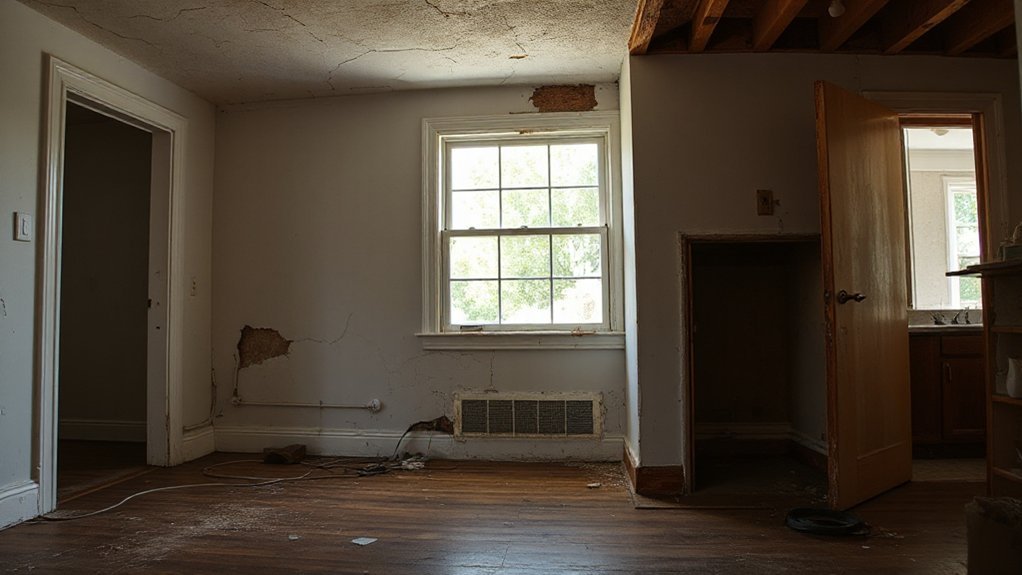
Could it be subsidence causing that crack or just poor plasterwork? Learn How to Spot a Home With Hidden Structural Issues, so you don’t end up with a moneypit!
Think of a home as a garden: a small weed can signal rot beneath the soil. On a walk-through, you’ll notice uneven floors, misaligned doors, or cracks that follow framing lines. Moisture clues—peeling paint, mold, damp spots—are hard to ignore. Tap walls for hollow sounds, and watch for cracks that widen over time. Exterior tunnels or frass point to infested timber. These signs matter, and the next steps involve sharp questions and skilled eyes that you’ll want to pursue.
Key Takeaways
- Look for stair-step or horizontal cracks, especially near doors/windows, indicating settling or pressure.
- Check for door/window misalignment, uneven floors, and sagging ceilings signaling structural shifts.
- Trace load paths from roof to foundation and note misalignments or weak links.
- Test for hollow sounds in floors/w walls and inspect for rot or termite damage.
- Monitor moisture signs, mold, and staining as hidden water intrusion that can compromise structure.
Step-By-Step: Diagnose Foundation Cracks During a Walk-Through
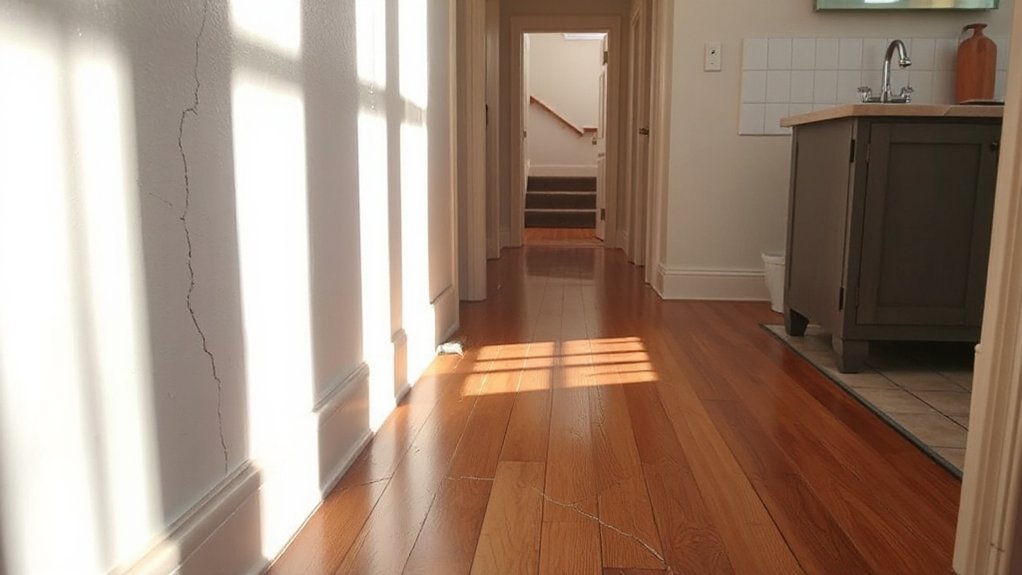
Begin your walk-through by noting all visible cracks, starting at the foundation and moving upward. You’ll perform a methodical Foundation inspection, documenting width, length, and orientation of every crack. Note whether cracks are hairline or widening, and whether they intersect doors or windows. Track changes in drywall seams, tile shifts, or mortar gaps that hint at movement.
Prioritize patterns: stair-step cracks suggest settling; horizontal cracks can indicate pressure on a wall. Assess whether cracks are active or cosmetic by pressing gently near the edge to test for movement.
For a Structural assessment, compare crack positions to framing lines and joist alignment. Record moisture exposure signs near openings, and check for previous repairs.
Conclude with a summary of risk level and recommended next steps.
Spot Moisture Risks: Signs of Water Intrusion and Why They Matter
Watch for visible damp signs like staining, peeling paint, and musty odors. Then note any areas that stay wet after a rain.
Hidden moisture risks lie behind walls, under sinks, and in basements, so pay attention to erratic humidity, condensation, or cool, damp patches.
Recognizing these signals helps you assess potential damage and prioritize further inspection.
Visible Damp Signs
- Paint peeling around corners or ceilings, especially after rain
- Mold growth in bathrooms, basements, or closets, with musty odor
- Discoloration or staining on walls, floors, or trim
- Moist patches that persist despite ventilation and cleaning
Hidden Moisture Risks
Check bathrooms, kitchens, and laundry rooms for elevated humidity or condensation on surfaces that shouldn’t stay damp. In basements, assess basement ventilation: poor airflow traps moisture and fuels hidden mold growth.
Use a moisture meter on drywall seams and wood framing to confirm elevation beyond normal ranges. Document suspected issues and plan a targeted mold remediation approach if tests prove intrusion.
Address sources like leaking pipes or roof defects promptly, then guarantee proper ventilation and drainage to prevent recurrence.
Assess Structural Integrity: Framing and Load Indicators You Can Read
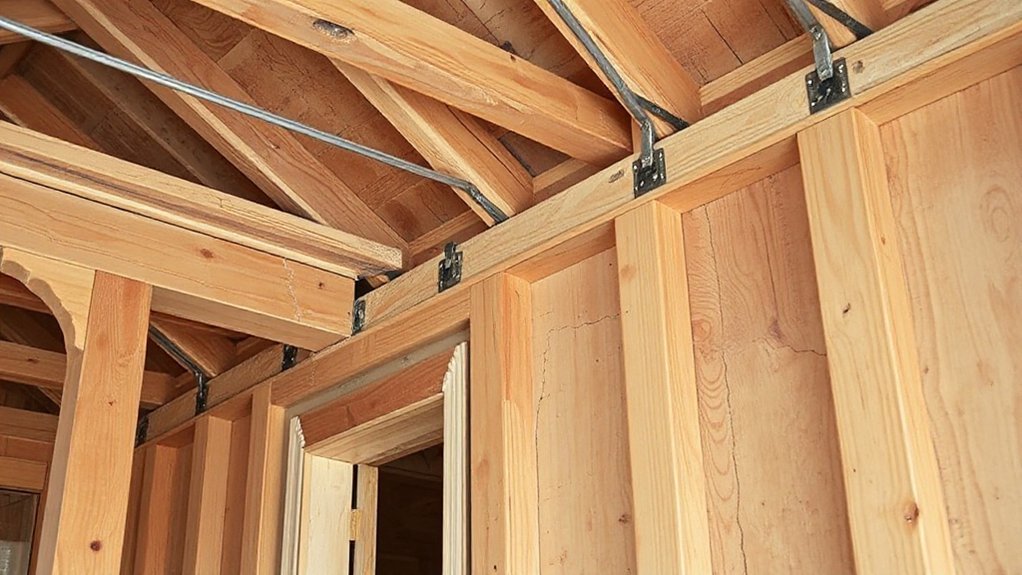
You’ll check for visible framing defects, like out-of-square walls, cracked studs, or bowed joists. Note how these flaws affect load transfer.
Look for clear load path indicators—softer or sagging areas, mismatched supports, and nonstandard bracing that could signal compromised strength.
Keep foundation stress signs in mind too, such as cracks at corners, shifting slabs, or new gaps that hint at movement under load.
Visible Framing Defects
1) Look for uneven walls and doors that jam or latch poorly.
2) Check for cracked or bowed studs and sliced or crushed headers.
3) Inspect ceiling lines for sags, плен-like dips, or visible gaps at joints.
4) Observe roofing join points, especially where roof sagging or shifting seems to pull on walls.
Use a careful touch to avoid exaggeration, and connect findings to load transfer rather than mood. Remember: roof sagging and electrical wiring can coexist with framing stress, so document what you see clearly, avoiding speculation while you note patterns and inconsistencies.
Load Path Indicators
When you’ve spotted framing quirks, you’re not done—you’ve just set the stage to verify load paths. Start by tracing how loads travel from roof and floors to the foundation. Look for continuous members that align from rafters to studs to sill plates; any misalignment hints at hidden splits or weak links.
Focus on load bearing walls and their connections to beams, joists, and columns. Check for obvious sagging or unintended transfers, like drywall cracking over doors or ceilings that appear crooked. Roof sagging nearby can signal compromised rafters or supports—note where these cues converge with wall alignment.
Photograph and map each intersection, then compare to design intent. If paths seem disrupted, plan a closer inspection or professional evaluation to confirm structural integrity.
Foundation Stress Signs
1) Cracks tracking across multiple walls
2) Doors and windows sticking seasonally or unevenly
3) Sagging or warped beams, buckled drywall, or trim gaps
4) Uneven foundation seams, cracks widening with time
Address moisture-driven clues promptly, since poor drainage issues can worsen framing stress. Note changes after heavy rain, irrigation, or landscaping shifts.
Document discrepancies and prioritize professional assessment if you see persistent movement.
Detect Hidden Decay and Termites Before You Buy
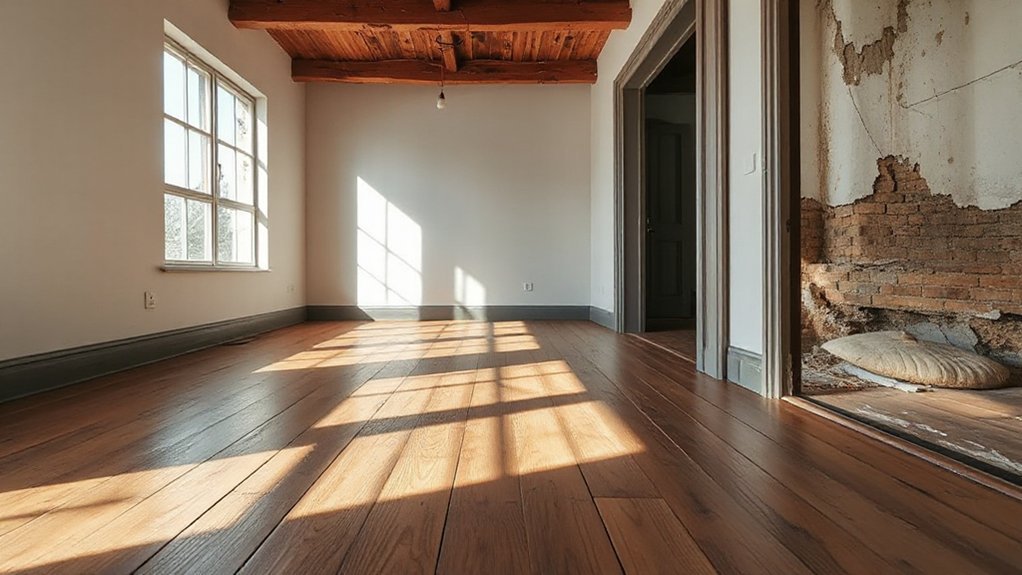
Hidden decay and termite damage can hide in plain sight, so start with a careful, methodical check of the house’s structural indicators. You’ll inspect for soft spots, hollow-sounding boards, and suspicious nail pops along floors, walls, and ceilings. Tap corners and columns to hear dull or hollow tones that signal rot.
Look for blistered paint, warped trim, or misaligned doors that refuse to latch, which can indicate Structural Weakness beneath the surface. Inspect crawl spaces and basements for subterranean dampness, mold, or frayed joists.
Check exterior soffits and siding for tunnels or frass near entry points. Document suspect areas, photos, and any stains.
If you suspect Termite Damage, call a licensed inspector before you buy to confirm findings and assess repair scope.
Interpret Layout Shifts: Clues That Foundations Moved
If you notice doors that don’t close snugly, windows sticking, or walls that lean, you’re seeing layout shifts that can reveal foundation movement. You can detect subtle signs by tracking how space feels when you walk through rooms and by noting recurring gaps or cracks. Focus on patterns rather than single glitches; systemic changes signal structural misalignment, not a cosmetic hiccup.
- Observe door gaps changing over days
- Check window sashes for binding at the weather stripe
- Examine floor seams for persistent rises or dips
- Compare adjacent walls for consistent tilt and crack direction
Recognize that these cues point to movement beneath the surface. Document the exact locations, measurements, and times you notice them to aid a professional assessment of foundation movement and structural misalignment.
How to Talk to Contractors: Essential Questions and When to Hire a Pro
When you’re talking to contractors about potential structural issues, steer the discussion toward concrete, verifiable facts and a clear plan. Start with a written scope: describe observed problems, expected causes, and desired outcomes.
Ask for contractor credentials, licenses, insurance, and recent project references to gauge reliability and accountability.
Request a site visit for an on-site assessment and a detailed written report.
Probe essential questions: What’s the suspected timeline, potential failure points, and contingencies for surprises? How will you verify structural integrity, and what tests or measurements will you perform?
Compare cost estimation formats—itemized breakdowns, labor vs. materials, allowances, and potential add-ons.
Hire a pro when estimates align with documented findings, credentials check, and a transparent schedule.
Avoid vague promises; demand measurable milestones.
Frequently Asked Questions
What Are Common Non-Structural Red Flags in Old Homes?
Common non-structural red flags in old homes include interior mold and electrical hazards. You’ll notice persistent musty odors or discolored walls signaling moisture and hidden mold growth.
You might see dated wiring, flickering lights, or warm switch plates indicating overloaded circuits.
Check for peeling paint on trim, uneven floors, or door gaps from poor framing.
You’ll want a professional to inspect HVAC, plumbing, and insulation, and to test for radon and asbestos where applicable.
How Do Seasonal Changes Affect Foundation Movement Indicators?
Seasonal changes can reveal foundation movement indicators through patterns like hairline cracks widening or doors sticking more during wet months.
You’ll notice soil expansion when ground moisture rises, pushing walls slightly, while moisture intrusion may worsen gaps after thaw cycles.
Track temperature shifts, freeze-thaw cycles, and soil moisture changes to assess movement.
Monitor fencing, slabs, and basement walls for repeat seasonal stress, and document timing to distinguish temporary from persistent shifts.
Which Local Permits or Records Indicate Prior Structural Work?
You should check local building department records to see what permits or records indicate prior structural work. Look for permit history, issued dates, project scope, and any stamped plans.
Building codes compliance notes and inspection approvals reveal whether work met standards. Verify whether changes were executed under permitted processes, and note any variances or corrections.
This meticulous review helps confirm what structural alterations occurred and if they align with current code requirements.
Can Cosmetic Repairs Hide Serious Structural Issues?
Yes, cosmetic repairs can hide serious structural issues. You might see quick cosmetic fixes, patches, or surface alignments that gloss over deeper problems. Don’t rely on cosmetic tricks alone; look for cracks widening, doors or floors that don’t stay plumb, or unexplained settlement.
Inspect framing, listen for creaks, and check for moisture. Budget for a professional evaluation, because cosmetic tricks rarely reveal the root causes, even if superficial fixes look convincing.
What Budget Range for Major Structural Repairs Is Realistic?
One startling stat: major structural repairs cost an average of 6% to 15% of home value. You’ll likely see ranges widen by age and scope.
For a practical target, expect a Budget estimation in the low five figures for moderate fixes, up to six figures for extensive work.
Plan conservatively, get multiple bids, and verify line-item repairs.
Repair cost should include foundations, framing, and drainage; don’t overlook permits and contingencies.
Conclusion
You walk away with a map, not just a purchase. See the hints, feel the unseen weight in walls, and trust your spidey senses about dampness and hollow taps. When in doubt, don’t guess—call in a pro. A creature of caution is your best ally: measure cracks, track changes, read framing like a ledger. With disciplined eyes and careful steps, you guard your future home from hidden storms and unseen costs. Your caution today preserves peace tomorrow.
About the Author