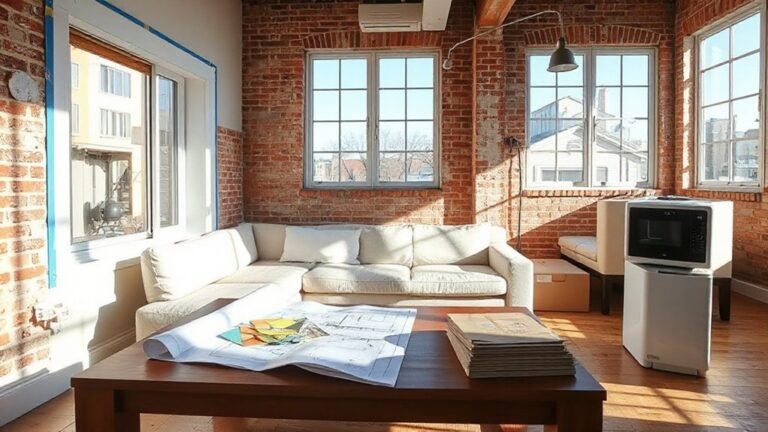
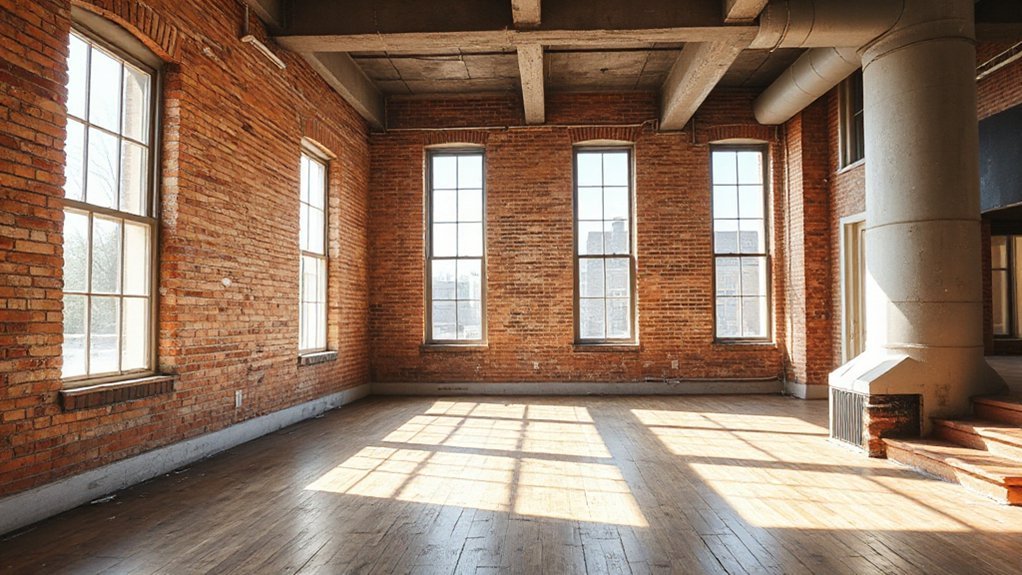
Imagine a dated 1960s bungalow with a bright, open floor plan hidden behind a burned-out facade; you notice natural light flooding the rear living space and a solid foundation, yet the roof and wiring scream for upgrades. You weigh layout flow, daylight, and visible structural cues against zoning options and market signals, sizing each renovation to lift value without overreaching. The moment you see scalable potential—and the guardrails to avoid costly fixes—you’ll want to map a concrete plan that keeps risks in check.
Key Takeaways
- Assess structural integrity early: check foundation, load-bearing walls, and evident cracks to gauge renovation feasibility and risk.
- Evaluate renovation potential vs. cost: compare baseline attributes to market demand and estimate ROI with clear budgets and contingencies.
- Prioritize high-impact spaces: focus on kitchens, baths, and energy efficiency upgrades that drive value and appeal.
- Analyze daylight and layout: seek open connections, good window exposure, and sightlines to maximize natural light and flow.
- Verify zoning and permits: confirm setbacks, use limits, and permit history to prevent scope creep and hidden costs.
Decide If a Property Is Worth Renovating: Core Criteria
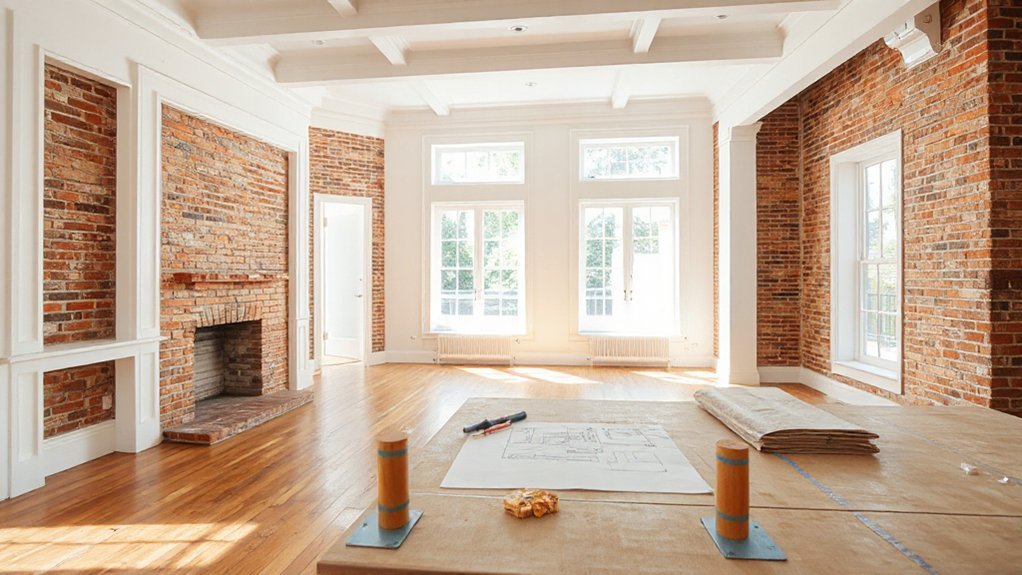
Evaluating whether a property is worth renovating hinges on clear, data-driven criteria you can act on. You size up structure, footprint, and layout early, then layer in zoning and market signals. Property zoning informs allowable uses, setbacks, and density, so you know practical expansion or adaptation limits without overhauling fundamentals.
You map visible condition against renovation cost curves, highlighting essential fixes first—structural integrity, moisture control, and mechanicals—before cosmetic work. Then you compare baseline attributes to neighborhood demographics to forecast demand and price trajectory.
Visuals help: floor plans with square footage, aging systems with replacement timelines, and location heat maps showing nearby schools, transit, and amenities. You record objective thresholds for ROI, cash flow, and hold period, ensuring decisions stay data-driven rather than sentimental.
Spot a Flood-of-Light Layout You’ll Love
A flood-of-light layout instantly signals livability: look for an open-plan connection between living spaces and exterior windows, with large west-, south-, or north-facing exposures that maximize daylight hours. You’ll notice how natural lighting spills across floors, guiding furniture placement and traffic flow.
In practice, prioritize open floorplans that reduce barriers between kitchen, dining, and lounge areas, supporting easy sightlines from entry to exterior views. Scan for window-to-wall ratios, skylights, and glass doors that extend daylight deeper into the home.
Favor properties with consistent daylight throughout most days, not just mornings or evenings. Practical metrics matter: sustained lumen levels, obstruction-free angles, and minimal artificial-light reliance.
This approach helps you gauge renovation feasibility without overhauling structure.
Check Structural Soundness in Minutes
You’ve spotted a bright, open layout, now you’ll pivot to what matters beneath the surface: structural soundness. In minutes, assess by spotting visible cues: crack patterns, door jams that stick, and sloped floors hint at deeper issues.
Check foundation stability by looking for diagonal cracks in basement walls, uneven concrete, or fresh mortar gaps around sill plates. Inspect load bearing walls as you move through rooms—these walls should run uninterrupted from foundation to roof and align with beams above.
Note floor joists and beam sizes from accessible panels; misaligned or undersized members flag risk. Record elevations with a level tool and compare to original plans if possible.
Your goal is a concise, visual snapshot that signals whether repairs are necessary before you price renovations.
Read Market Timing Signals for Appreciation
You’ll start by watching timing signals like price momentum, days-on-market, and rents versus purchase costs, all laid out in a clear, data-driven view.
See how market cycles push gains and when inventory tightens, framing the potential appreciation window with concrete visuals and trend lines.
Use these appreciation triggers ahead—seasonality, migration patterns, and policy shifts—to gauge when a renovation can ride the next upswing.
Timing Signals To Watch
Timing matters: watch for cyclical shifts, rising prices, and shrinking inventory as signals that appreciation potential is accelerating. You’ll see price momentum in nearby comps, with day-to-day volume changes mapped against seasonal expectations.
Track days-on-market trends, not just final sale prices, to gauge demand vigor. Look for tighter spread between asking and realized prices, plus rising cash buyer activity that reduces contingencies.
Visualize the data with a simple dashboard: price per square foot, inventory turnover, and month-over-month growth.
Consider how a well-planned garden layout might influence curb appeal, reinforcing value in renovation-ready pockets.
Assess neighborhood amenities: new shops, transit options, schools improving or expanding services. These signals help you separate temporary hype from durable, location-driven upside.
Market Cycles And Gains
Market cycles shape when gains materialize, so understanding where we’re in the cycle helps you time renovations for max value. You’ll see how market fluctuations influence buyer demand, cap rates, and price momentum, guiding practical bets for investment timing. This approach keeps renovation plans aligned with real-time trends rather than guesswork.
- Assess compression or expansion in housing turnover to gauge urgency.
- Track price per square foot trends across neighborhoods you target.
- Compare vacancy rates and rent growth to implied demand shifts.
- Align your capex plan with anticipated demand surges, not past peaks.
Appreciation Triggers Ahead
Appreciation doesn’t just happen; it follows measurable triggers you can spot before a project starts paying off. You’ll track price trajectories, days-on-market shifts, and comp-adjusted growth across adjacent neighborhoods to gauge timing.
Historical context matters: you’ll compare past cycles, noting how recessions or booms altered renovation premiums and rent-to-value ratios.
Visual signals include rising shell counts, multiunit conversions, and new-build activity nearby that foreshadows demand absorption.
Data-informed checks show permit velocity, variance in appraisal gaps, and financing appetite from lenders targeting upgraded stock.
Consider zoning restrictions: when approvals release density, you gain upside bandwidth; when constraints tighten, you calibrate budgets and timelines.
Align site advantage with infrastructure upgrades, school borders, and transit plans to maximize the appreciation window.
Identify Scalable Renovation Opportunities
To identify scalable renovation opportunities, start by mapping the property’s existing layout and structural framework against scalable upgrades that deliver measurable value. You’ll look for adaptable spaces, load-bearing considerations, and ceiling heights that enable vertical or periodic expansions, all anchored by data-driven benchmarks and visual cues.
1) Prioritize edits that facilitate multiple uses—open-plan zones, flexible partitions, and utility shafts for future tech integration.
2) Align improvements with historical significance and potential architectural accents, guaranteeing aesthetic authenticity while enabling scalable modernization.
3) Screen for zoning restrictions that either enable or constrain growth, noting setback, height, and use variances affecting scalability.
4) Validate each idea against daylight, traffic flow, and maintenance costs to assure measurable value over time.
Estimate Renovation Costs and Potential ROI
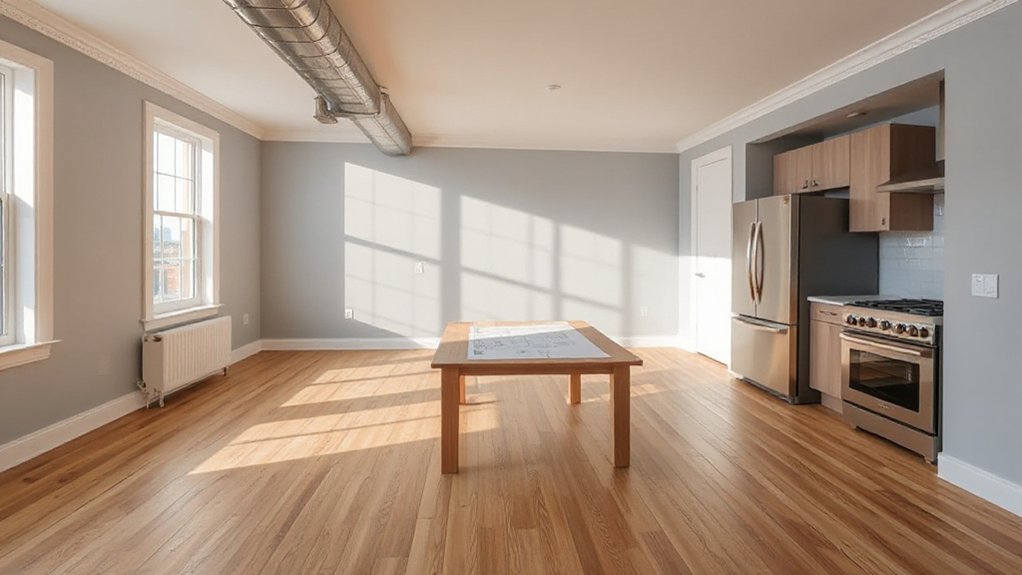
You’ll estimate renovation costs quickly by cataloging finishes and labor hours from the latest bids, then map those figures to a visual budget frame you can trust.
Use a predictive ROI lens by modeling how each upgrade shifts resale value and utility, supported by concrete data like price-per-square-foot and project timelines.
Keep the focus tight on efficiency and clarity, so you can compare options at a glance and forecast ripple effects on overall profitability.
Estimate Costs Efficiently
Wondering how to estimate renovation costs and ROI quickly and accurately? You’ll base your approach on precise data and clear benchmarks, layering estimates with real-world visuals like floor plans, adjacencies, and finish levels. Your method centers on disciplined budgeting and informed contractor selection, ensuring every line item ties to tangible outcomes.
1) Compile a detailed scope with photos and measurements, then attach unit costs from current market bids.
2) Separate hard costs (materials, labor) from soft costs (permits, inspections) to avoid surprise overruns.
3) Build a conservative contingency (5–10%) and stress-test with scenario ranges.
4) Compare bids on both price and assumed productivity, not only lowest cost.
This process keeps you aligned with budget planning, while you evaluate ROI potential through reliable, data-driven projections.
Predictive ROI Analysis
Bridging from precise cost estimation, predictive ROI analysis translates those figures into tangible investment outcomes. You translate line items into projected gains, using scenario modeling to map renovation choices to after-renovation value.
Detail matters: specify unit costs, labor rates, and contingency buffers, then layer in expected vacancy shifts and carrying costs. Visualize outcomes with charts that compare baseline resale value, renovation caps, and target cap rate across multiple timeframes.
Ground your projections in historical trends, ensuring you account for market cycles and seasonality. Consider zoning regulations as a constraint that can alter permissible scope and timelines, adjusting ROI accordingly.
Use sensitivity tests to show how small changes in cost or sale price impact profitability, and document margins for risk-adjusted decision making.
Quick Feasibility Checks You Can Do Now
If you want a quick read on renovation feasibility, start with a tight, data-driven checklist: assess current layout vs. desired flow, note structural limitations, and estimate rough costs by region using recent contractor quotes.
- Compare the current footprint to your targeted flow, highlighting walls to remove or relocate and potential beam requirements.
- Check architectural styles and identify features that must be preserved or can be modernized, noting how risky changes affect vibe and resale.
- Review zoning restrictions for intended use, setbacks, and parking, plus any variance hurdles.
- Gather local cost benchmarks by region, factoring permitting, design fees, and contingency.
Keep visuals tight: floor plan sketches, photo references, and a concise budget snapshot.
Red Flags That Kill Great-Potential Deals
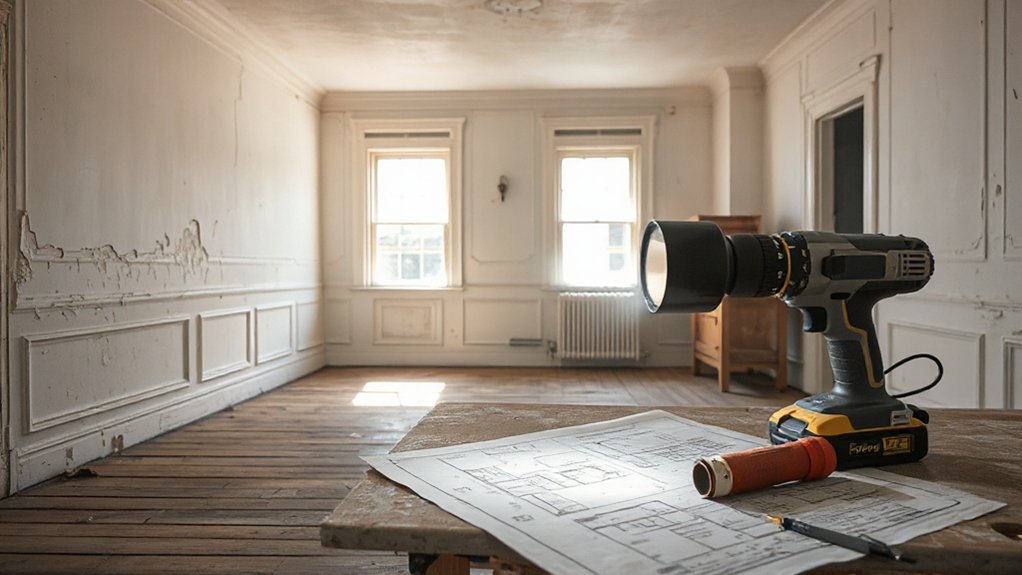
Red flags can derail even the best-renovation potentials, so flagging them early keeps your focus razor-sharp. You scan the property with a tape measure and a critical lens, flagging inconsistencies in floor plans, hidden moisture, and structural gaps that scream cost overruns.
Visual cues matter: sagging joists, mismatched cabinetry, and abrupt level changes signal ongoing drama you don’t want. Historical context informs risk—older builds often hide labor-intensive surprises beneath cosmetic skin.
Zoning restrictions can cap scope or reheat costs, so you verify setback, height, and use limits before you fall in love. Data-informed checks improve certainty: permits closed without final approvals, unusual lien activity, and incongruent utility data point to red flags.
Trust your due diligence, not optimism, when red flags appear.
Craft a Concrete Renovation Plan That Adds Real Value
You’ve spotted the red flags; now bring clarity to action with a concrete plan that adds real value. You’ll translate insight into measurable steps, balancing aesthetics with budget, timeline, and ROI.
Start with a tight scope, anchored by design trends and durable materials, plus a phased schedule that minimizes disruption. Track progress with data dashboards and cost tallies for every decision, so you can defend every upgrade.
- Define non-negotiables: must-have rooms, loads, and finish levels that align with market demand.
- Prioritize high-impact updates: refreshed kitchens, baths, and energy efficiency to boost value.
- Optimize material sourcing: compare suppliers, negotiate bulk pricing, verify warranties, and confirm delivery windows.
- Schedule with contingencies: build buffers for permitting, inspections, and sequencing to avoid delays.
Frequently Asked Questions
How to Assess Neighborhood Risk Beyond Market Indicators?
You assess neighborhood risk beyond market indicators by analyzing neighborhood demographics and local amenities, then triangulating data with firsthand observations.
Look at age distribution, income bands, and turnover rates to gauge stability.
Check crime trends, school quality, and projected infrastructure.
Visit at different times to observe foot traffic and noise.
Compare nearby amenities like parks, transit, and grocery options.
Visualize data on dashboards, and trust converging signals rather than single metrics.
What Hidden Zoning Limits Could Restrict Renovations?
Hidden lines dot the map: zoning restrictions bite early, limiting weight, height, and uses, so renovations can’t take a misstep. You check setbacks, allowable floor area, and historic overlays before drafting plans.
You’ll map parcel data, historic district rules, and public works notes, comparing them to your renovation constraints. This data-informed view helps you forecast permit timelines, costs, and feasibility, letting you adjust design choices before you buy.
Can Hiring Delays Derail Renovation Timelines and Costs?
Yes—hiring delays can derail renovation timelines and spike costs. When you face slow starts, you’ll feel budget pressure as procurement shifts and crews stack, increasing overhead.
To mitigate this, secure renovation financing early and lock in contractor selection with clear milestones, penalties, and flex permits.
Create a visual plan with phased milestones, then monitor daily progress data, adjust schedules, and keep contingency funds ready to absorb unexpected delays.
Your proactive, data-driven approach minimizes disruption.
Which Permits Most Commonly Block Early Project Momentum?
Echoes of caution loom: permits around foundation, framing, and occupancy usually block early momentum. You’ll hit the biggest snags with zoning variances, building permits, and seismic or mechanical approvals delaying work and inflating costs.
In renovation myths, crews chase approvals longer than expected, while property staging hides value dips until permits surface.
You spot delays by mapping permit timelines against your schedule, budgeting for extensions, and tracking approval bottlenecks to keep momentum steady and data-driven.
How to Verify Contractor Reliability and Past Project Quality?
You verify contractor reliability by checking their credentials and reviewing past project reviews, then triangulate with现场 visits and written warranties.
Start with contractor credentials, confirming licenses, insurance, and trade certifications, and ask for a current, verifiable list.
Next, examine past project reviews for detail: timelines, budgets, change-order frequency, and quality outcomes.
Request portfolios with before/after photos, dig into timelines, and compare to your scope.
Visit sites, ask for references, and verify they completed similar projects on time and within budget.
Conclusion
You’ve spotted the right property when structure, layout, and location align with your goals. Visuals—cracks, floor sag, natural light—tell a story alongside zoning signals and market timing. You’ll see scalable upgrades, clear cost taps, and solid ROI scenarios, all backed by data like recent comps and renovation benchmarks. Do quick feasibility checks, flag red flags, then craft a concrete plan that adds real value—hit your target, and don’t miss the window, or you’ll miss the boat.
About the Author