A simple shift in how you light a room can double its apparent size without moving a single wall. You’ll learn how to pair a light, cohesive palette with layered lighting and smart storage to tame clutter while maximizing daylight, then apply practical layouts that carry traffic smoothly. Curious how to choose textures and mirrors that reflect space back into the room, you’ll find step-by-step tweaks you can implement this weekend. Let’s start with the basics and build from there.
Key Takeaways
- Use light, cohesive color palettes with pale neutrals and cool accents to visually raise ceilings and expand space.
- Layer lighting (ambient, task, accent) and place mirrors opposite windows to maximize brightness and reflectivity.
- Choose slim-profile, multi-functional furniture and maximize vertical storage to keep floor area open.
- Prioritize unobtrusive textures and small-scale patterns to reduce visual clutter and create calm depth.
- Install lightweight partitions, pocket doors, and recessed shelving to improve flow and free sightlines.
Why UK Rooms Feel Small and How Design Opens Them up
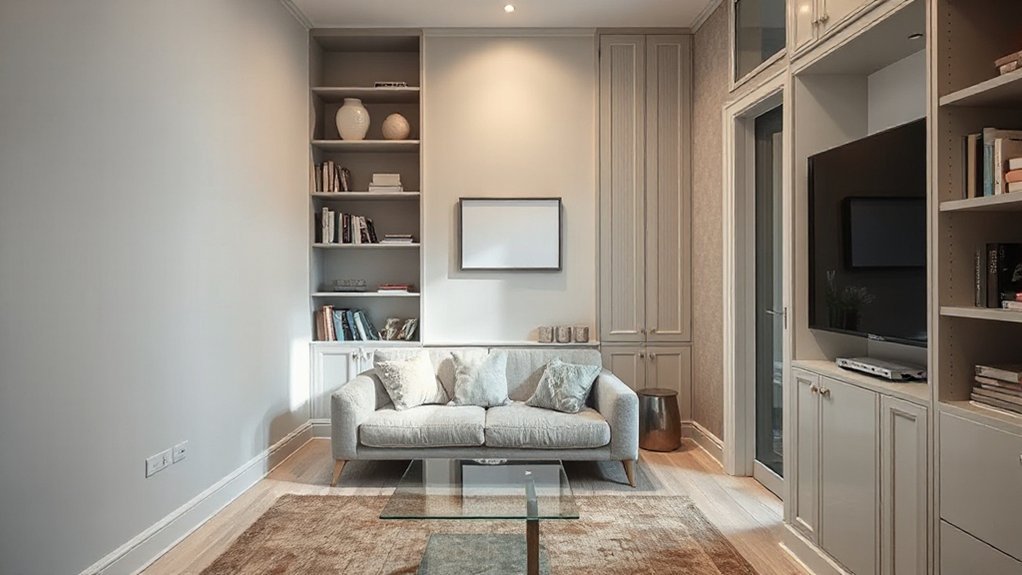
UK rooms often feel small because their dimensions and layouts cap how we move and place furniture. You’ll notice that long, narrow footprints, low ceilings, and fixed alcoves trap sightlines and create cluttered experiences.
Design opens them up by redefining scale, flow, and focal points, not by chasing space. Historical influences shape room proportions, window placements, and built-in storage, so you’ll balance period features with modern constraints.
Cultural variations show up in furniture size, upholstery, and decorative density, guiding you to select pieces that reinforce air and function rather than crowding walls.
Use consistent gaps, reflective surfaces, and strategic lighting to extend perceived depth.
You act by prioritizing route clarity, eliminating visual noise, and assigning primary tasks to clearly defined zones.
Consistent rhythm and deliberate restraint yield room feel that’s brisk, not cramped.
Color Palettes for Light and Air in Compact UK Spaces
Color can make or break the sense of light and air in compact UK spaces. You’ll want palettes that read as cohesive and airy, with deliberate contrasts to guide the eye. Use color psychology to select tones that promote calm and openness, such as pale blues, soft greens, and warm neutrals, avoiding heavy saturations that compress ceilings.
Choose paint finishes that maximize reflectivity—matte on walls with a subtle satin on trim—so light rolls through without glare. Keep swatches large and test in daylight, not store lighting.
Pair walls with lighter ceilings to elevate height, and add small accents in cooler tones to create depth. Balance warmth and coolness to prevent dullness or clinical sharpness.
- Use light, airy base colors guided by color psychology
- Opt for high-reflectivity paint finishes on walls
- Test colors in natural daylight before committing
- Elevate ceilings with a lighter ceiling color
- Introduce restrained cool accents for depth
Lighting Tricks to Visually Expand a Compact Room
Lighting is your fastest way to read a small room as larger. You should exploit brightness and direction to sculpt perceived space.
Use layered lighting: ambient for overall glow, task lighting for work zones, and accent lights to highlight architectural features.
Opt for cool-white or daylight bulbs to mimic natural daylight, which minimizes shadows and enlarges depth cues.
Position lamps and ceiling fixtures to avoid glare off glossy surfaces and to preserve wall color continuity.
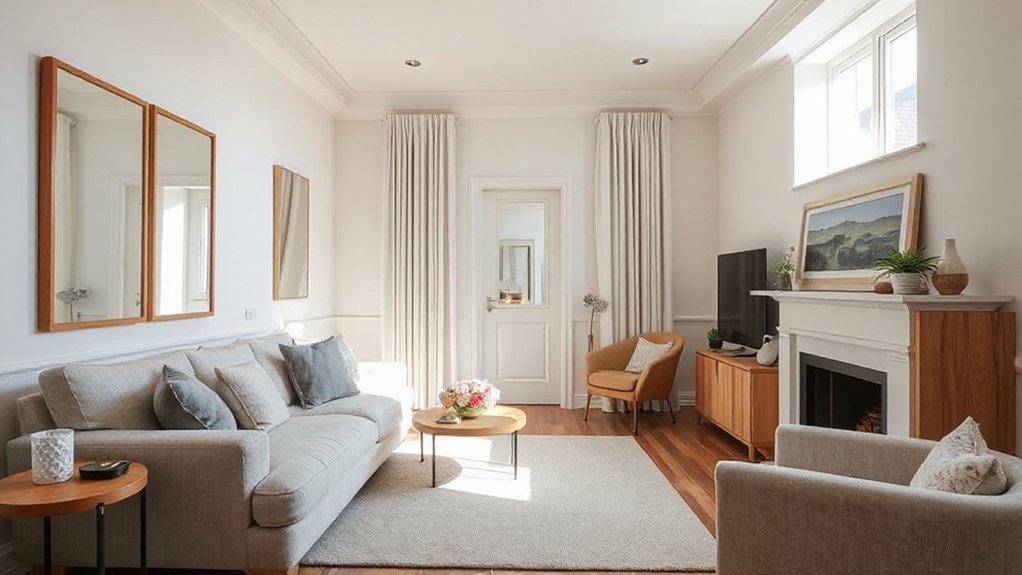
Mirror placement matters: place a mirror opposite a window to bounce natural light across the room, doubling perceived luminance.
Choose minimal, unobtrusive fixtures with clean lines to prevent visual clutter.
Keep cords hidden and fixtures proportional to ceiling height to maintain spatial rhythm.
Compact-Friendly Furniture That Stays Cozy
You’ll want compact yet cozy furniture that pulls double duty without crowding your space. Think multi-functional pieces with slim profiles that still feel warm and inviting.
Start with clutter-free choices that maximize seating, storage, and flexibility for everyday living.
Compact Yet Cozy
Compact-friendly furniture means choosing pieces that maximize seating and storage without consuming floor space. You want items that feel substantial without crowding, so opt for compact sofas with exposed legs, nesting tables, and ottomans that tuck away.
Prioritize clean lines, multifunctional storage, and scaled lighting to maintain openness. Finish with wall art and ceiling decor that draw the eye up, creating perceived height while keeping vibe cozy.
- Choose a compact sofa with slim arms for extra space
- Use nesting tables that slide together when not in use
- Add an ottoman that doubles as storage
- Select wall art sized to fit walls without overpowering
- Install subtle ceiling decor to add height and warmth
Multi-Functional Pieces
Opt for storage beds, ottomans with hidden compartments, and coffee tables that pull out or fold away. Look for seating that doubles as guest beds or desks that convert to dining surfaces without bulk.
Prioritize compact footprints with smart detailing—hidden hinges, slim legs, and shallow profiles. Use modular units that can rearrange for different occasions, maintaining flow and openness.
Label everything and keep surfaces clear to reinforce space saving solutions. By integrating thoughtful multipurpose items, you maintain warmth and practicality without sacrificing roominess.
multi functional furniture, space saving solutions.
Slim Profile Furniture
- Slim sofas with low profiles and exposed legs
- Narrow consoles that hide storage behind doors
- Wall-mounted shelves for vertical gains
- Compact coffee tables with clean geometry
- Vintage-tinged hardware and lighting accents
Layout Patterns for Smooth Traffic and Openness
Think about traffic as a design feature, not an afterthought, and map how people move through the room first.
Use clear, unobstructed paths with predictable routes and avoid crossing zones tuned for function.
Prioritize open sightlines and strategically placed furniture to guide flow without creating bottlenecks.
Smooth Traffic Flows
Efficient layouts guide movement naturally, so plan core paths first and place furniture to avoid bottlenecks. In small UK rooms, think in zones and keep traffic clear across major axes. Use furniture arrangement to create gentle, continuous flows, not sharp interruptions, so you can move fluidly between seating, dining, and work areas.
Favor low-profile pieces and smooth edges that don’t trap sightlines. Use color psychology to cue micro-paths; warmer tones near entryways invite you forward, cooler hues recede, widening perceived space. Highlight focal points with lighting rather than bulky furnishings.
Maintain at least 90 cm walkways where possible, and stagger back-to-back furniture to prevent collisions.
- Prioritize clear main corridors
- Align seating with entrances
- Use rugs to define paths
- Choose compact, leggy furniture
- Light strategically to guide movement
Open Space Navigation
Prioritize sightlines from entry points to main zones, ensuring doors, furniture, and rugs don’t break flow. Use consistent floor heights and aligned edges to reinforce continuity, while avoiding clutter that crowds the corridor.
Position seating and storage along walls, keeping central areas free for passage. Incorporate artistic murals and statement ceilings as focal anchors that orient rooms without hindering circulation.
Test routes by walking them with your chosen furniture in place, adjusting for pinch points. A pragmatic approach balances openness with defined zones, delivering effortless navigation and a more spacious, cohesive feel.
Subtle Architectural Touches That Make UK Rooms Feel Bigger
Subtle architectural touches can instantly expand a UK room without knocking down walls. You’ll feel the space breathe when you highlight Hidden structural features and apply decorative architectural accents that don’t overwhelm.
Use scale-appropriate details that draw the eye upward and along walls, not outward in chaos.
- Emphasize ceiling cornices or pilasters in contrasting but restrained tones
- Reveal structural beams with matching finishes to unify rooms
- Install slim picture rails to create vertical rhythm without bulk
- Choose door surrounds and architraves as subtle focal points
- Integrate recessed niches for lighting and display, avoiding clutter
Texture and Pattern to Reduce Visual Clutter
You can reduce visual clutter by mixing subtle patterns with calm textures, keeping surfaces cohesive while adding depth. Use restrained textures and soft, unobtrusive patterns to create visual calm.
Then layer with a few focused accents to guide the eye. Implement clear contrast where needed and employ texture variety strategically to prevent flatness without overwhelming the space.
Subtle Patterns, Calm Spaces
Textural calm starts with choosing understated patterns and soft, uniform tones that recede rather than command attention. You create calm spaces by prioritising subtle patterns that don’t fight your light sources, then pair them with textures that feel cohesive, not busy.
Aim for surfaces and fabrics that blur edges and reduce visual noise, so the room reads larger and cleaner.
- Choose low-contrast patterns that blend with the background
- Favor matte finishes over glossy to minimize reflections
- Use a consistent color palette to unify different zones
- Introduce gentle textures (linen, cotton, wool) for depth without clutter
- Limit pattern scale to small-to-mid for harmony, not distraction
Texture Mix for Depth
Texture mix matters because depth comes from how different surfaces interact with light and shadow. You create this depth by pairing materials with distinct textures while keeping a restrained palette.
Use texture layering to add dimensionality without increasing visual clutter: place a smooth painted wall alongside a softly woven textile and a matte wood surface. Maintain consistency in scale so patterns don’t fight each other.
Choose one tactile element as the anchor, then support it with secondary textures to expand the sense of space. Prioritize tactile contrast over busy prints; a crisp ceramic pair with a linen-covered sofa can read richer without overwhelming.
Visual Clutter Reduction Techniques
Visual clutter hides in busy patterns and competing textures; by pairing restrained patterns with calm textures, you can create a calmer, more spacious feel.
- Apply solid or low-contrast fabrics on major seating to simplify visual load.
- Use a single bold accent item, counting as decorative accessories, to focus attention.
- Choose furniture with clean lines and unified legs to reduce visual noise.
- Limit throw pillows and rugs to complementary tones rather than competing prints.
- Group decor in a single zone, keeping other surfaces clear for breathing space.
This approach supports furniture placement that emphasizes sightlines and balance, while decorative accessories stay purposeful and sparse, avoiding overload.
You’ll preserve texture depth without clutter, making small spaces feel larger and more organized.
Doorways, Storage, and Partition Ideas That Gain Inches
Doorways, storage, and partitions are your shortcuts to floor-space perception: smartly designed openings, efficient cabinets, and slim dividers can gain you precious inches without widening walls. You leverage doorframe illusions to visually reduce door bulk and enhance flow, making entryways appear wider than they are.
Choose pocket or jamb-less doors where possible to eliminate swing space, and align hardware for uninterrupted sightlines. For storage, prioritize vertical use and recessed shelving; incorporate closet organization systems that maximize every inch and keep surfaces clear.
Partition ideas should be lightweight and translucent when feasible, preserving light. Use mirrored backs in wardrobes and narrow freestanding units as visual breathers. Maintain consistency of depth and finish to avoid crowded corners; restraint yields room to breathe.
Weekend Fixes You Can Implement Now for UK Small Spaces
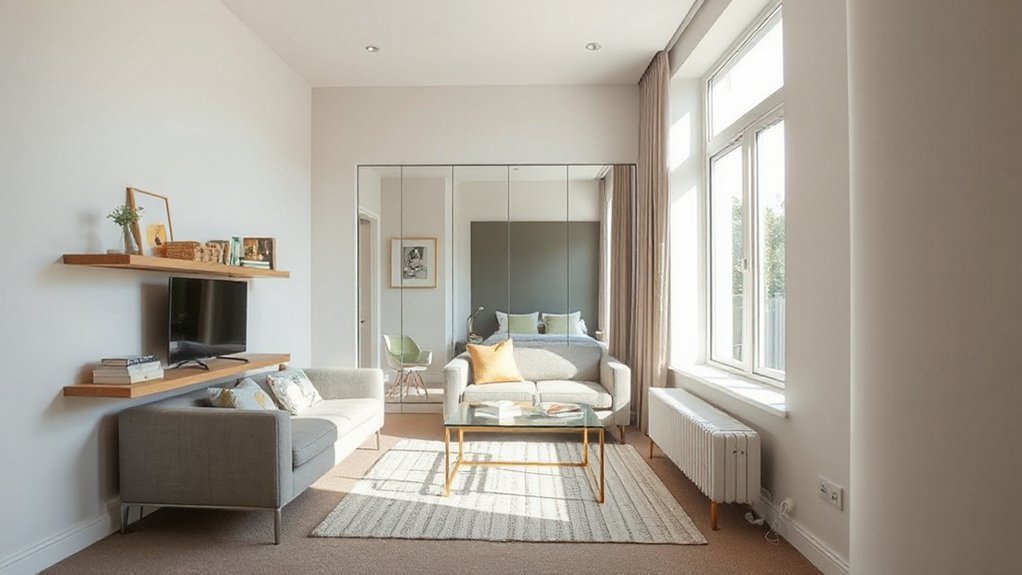
Weekend fixes you can implement this weekend for UK small spaces are all about quick wins that don’t cost a fortune or disrupt your daily routine.
- Declutter with purpose: remove non-essentials, store seasonal items out of sight, and use uniform boxes for a cohesive look.
- Maximize lighting: swap to bright LEDs, add a slim floor lamp, or mirror opposite a window to bounce daylight.
- Elevate perceived space: install floating shelves and hang curtains close to the ceiling for height.
- Practical accents: integrate a British garden motif in textiles or art, plus subtle Victorian influences in hardware.
- Consistent color weighting: stick to a light, neutral base with two accent tones to avoid visual clutter.
Real Uk-Room Makeovers: Before/After You Can Replicate
From real UK rooms to proven results, these before/after makeovers show exactly how simple tweaks can transform small spaces. You’ll see practical, replicable steps that you can apply in your own home, not flashy trends.
Start with layout: reclaim floor area by reconfiguring furniture and widening sightlines, then add mirrors to double perceived depth.
Choose light, neutral palettes for walls, with a single bold accent to anchor the room.
Storage should be smart and hidden; think deeper shelves, built-ins, and furniture with integrated compartments.
Lighting matters: layer ambient, task, and accent to avoid shadows that shrink spaces.
In the British garden or within historic architecture elements, pull cohesive cues—natural textures, restrained ornament, and period-inspired hardware—to unify small areas without clutter.
Practical, repeatable results await.
Frequently Asked Questions
How to Measure Room Proportions Quickly for Redesign?
To measure room proportions quickly, you’ll start with the doorway as your baseline, then note wall-to-wall lengths and ceiling height in meters.
Use a tape measure, track three key ratios (length:width, ceiling height:floor), and sketch a simple grid.
Apply color contrast to emphasize depth and choose furniture arrangement that frees pathways.
Keep measurements consistent, annotate distances, and circularly test with your hands to confirm scale.
This guarantees precise, practical redesign decisions.
Which Ceiling Height Tricks Maximize Perceived Space?
Ceiling height tricks: paint the ceiling a lighter shade than the walls to visually lift the space, and use a bright, flat finish for maximum airiness. You’ll gain perceived height by avoiding strong contrast.
Add crown molding with a slim profile or none at all; it draws the eye upward without breaking line continuity.
Consider lighter furniture and strategic lighting to enhance depth.
Ceiling color and crown molding work together to emphasize vertical scale.
Can Multi-Functional Furniture Fit Narrow UK Rooms?
Yes, multi-functional furniture can fit narrow UK rooms. Picture your space transforming as you slide a wall of custom storage into a hallway nook, then convert that area into a work zone with a foldaway desk.
You’ll create multi-use zones that collapse to free floor space. Choose modular pieces, built-in seating with hidden storage, and extendable tables.
This approach keeps traffic clear while delivering practical, efficient design.
Do Mirrors Really Double Room Size in Practice?
Yes, mirrors can visually double room size in practice when used correctly. Place a large mirror opposite a window to bounce natural light and create depth, boosting lighting ambiance.
Choose a frame that complements your scheme and avoid clutter; keep reflections clean.
Pair mirrors with balanced color schemes to prevent harsh echoes.
Use multiple smaller mirrors if needed, but align edges for cohesion.
This practical approach adds perceived space without structural work.
What Budget-Friendly Hacks Create Instant Openness?
Instant openness comes from light, color, and uncluttered sightlines. Choose pale color schemes and cool neutrals to reflect more light, and use accent colors sparingly to avoid heaviness.
Optimize Lighting techniques: layer light with overhead, task, and ambient sources, plus sheer window treatments to maximize natural glow.
Add mirrors strategically to extend views without crowding walls.
Clear clutter, invest in multi-functional furniture, and keep vertical lines clean for a crisp, breathable feel.
Conclusion
You now know how to make UK rooms feel larger with light palettes, layered daylight, and slim, multi-functional furniture that hugs walls. Keep clutter out with hidden storage and smart shelving, and mirror windows to bounce light across the room. Will your space feel instantly more open when you test these tweaks and watch the shadows fade as texture and pattern add gentle depth? Start with a weekend fix and replicate a proven before/after in your own home.
About the Author