Every dollar you save feels like a design win when you can get a designer-inspired kitchen without the premium. You’ll start by setting a clear budget and practical goals, then pivot to high-impact, low-cost updates like refaced cabinets, new hardware, and coordinated finishes. But the real payoff comes from layering lighting, smart backsplashes, and thoughtful decluttering—small moves that read as luxe. Keep going to map out ideas that fit your space and wallet without sacrificing style.
Key Takeaways
- Set a pre-purchase budget with clear goals, categories, and weekly reviews to prevent impulse buys and guide decisions.
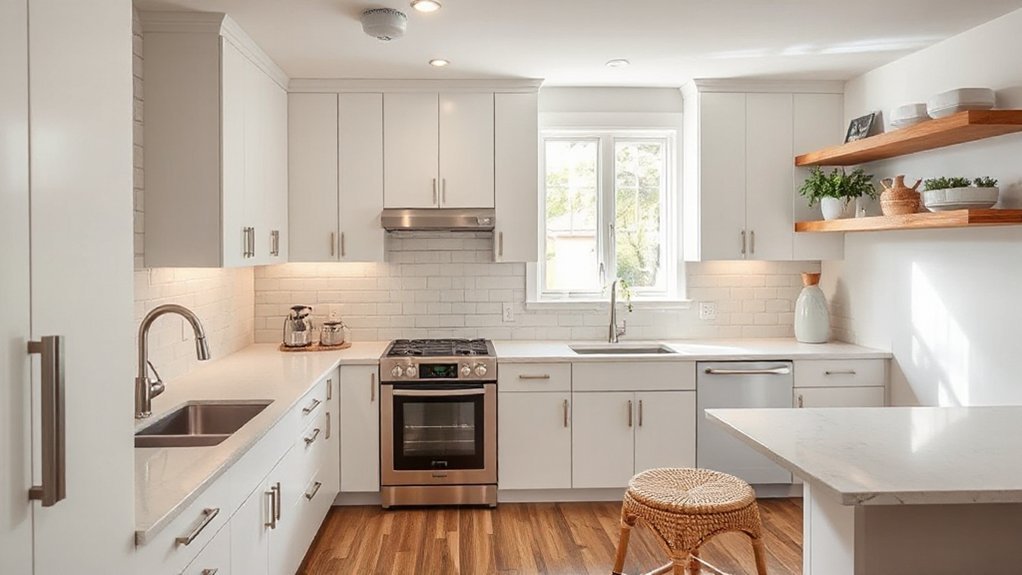
- Consider cabinet refacing or resurfacing, updated hardware, and a simple backsplash for high-end looks at lower cost.
- Use affordable countertop options (ceramic/porcelain, light quartz, or high-pressure laminate) paired with cohesive backsplashes and hardware.
- Elevate visuals with strategic hardware/style changes, cohesive finishes, layered textures, and targeted bold accents.
- Optimize layout and lighting: clear sightlines, under-cabinet LEDs, layered lighting, and minimal clutter for a luxe feel.
Set Your Budget Ceiling and Designer Goals
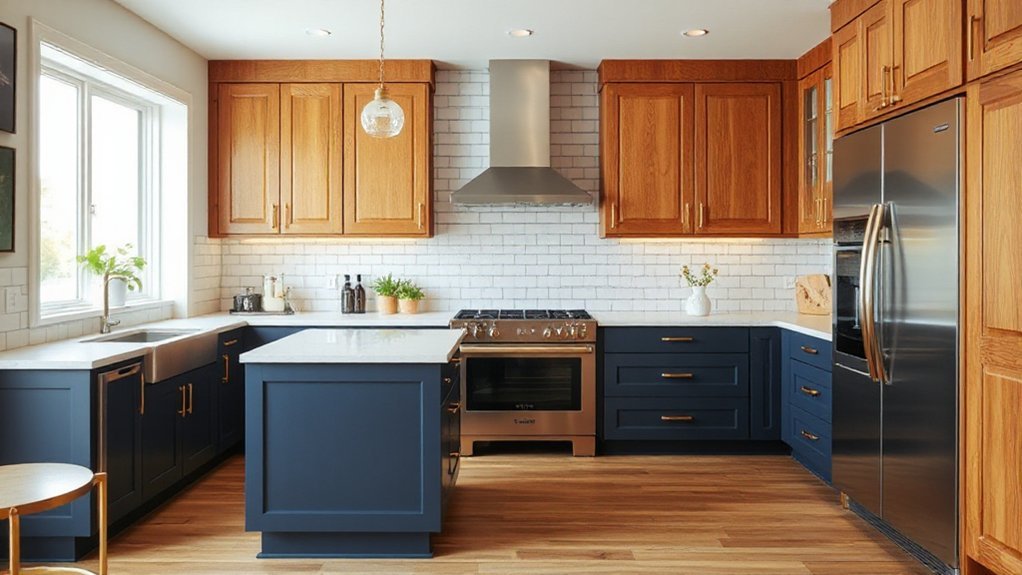
Set your budget ceiling before you pick any fixtures or finishes. You’ll set a realistic cap that guides every later choice, so don’t skip this step.
Begin with budget planning by listing all must-haves and negotiable items, then assign dollar limits to each category. This clarity prevents impulse buys and helps you compare options quickly.
Define designer goals in concrete terms: desired aesthetic, durability, and return on investment. Translate those goals into measurable criteria, like a specific material grade, warranty length, or energy efficiency.
As you refine, ask: does this option fit the budget and still meet the goal setting criteria?
Revisit the numbers weekly, trimming or reallocating as needed. With a firm ceiling and clear goals, you maintain control and stay focused on value.
Refacing Cabinets: Instant Impact Without Replacement
Refacing cabinets gives you a fresh look without the expense of replacement. It’s a low-cost, high-impact upgrade that revitalizes your kitchen fast.
With a quick cabinet makeover, you gain style and storage practicality in one practical update.
Fresh Look, Low Cost
If you want a fresh kitchen without the cost and disruption of a full remodel, cabinet refacing delivers an instant upgrade. You’ll keep existing structures, doors, and hardware, but swap faces, stain, or paint for a dramatically new tone.
Choose durable veneers or acrylic finishes in colors that echo your color schemes and accent neighboring surfaces. The result feels like a new cabinet line, yet the process stays brisk and predictable.
Plan around existing dimensions to minimize adjustments; refacing generally takes a day or two, with minimal dust and downtime.
Pair the refreshed cabinetry with smart hardware updates and a restrained backsplash to preserve cohesion. Align furniture arrangements and countertop accents to sustain a unified, high-end look without the expense.
Quick Cabinet Makeover
Want a fresh kitchen effect fast? Quick cabinet makeover lets you upgrade without a full replacement. Start by inspecting doors and frames; if they’re solid, refacing or resurfacing is your best move.
Choose a durable paint finish that suits your space—matte for forgiving fingerprints, semi-gloss for ease of cleaning. Prep surfaces: clean, sand lightly, and prime where needed to guarantee even coverage.
Replace cabinet hardware to sharpen the look; brushed nickel or oil-rubbed bronze adds instant contrast and polish. If doors are worn, consider new doors or a veneer kit for dramatic change at a fraction of the cost.
Plan a tight schedule, seal edges, and apply two even coats. Finish with adjustable shelves and smart storage tweaks for maximum function.
Swap Hardware, Color, and Texture for Luxe Vibes
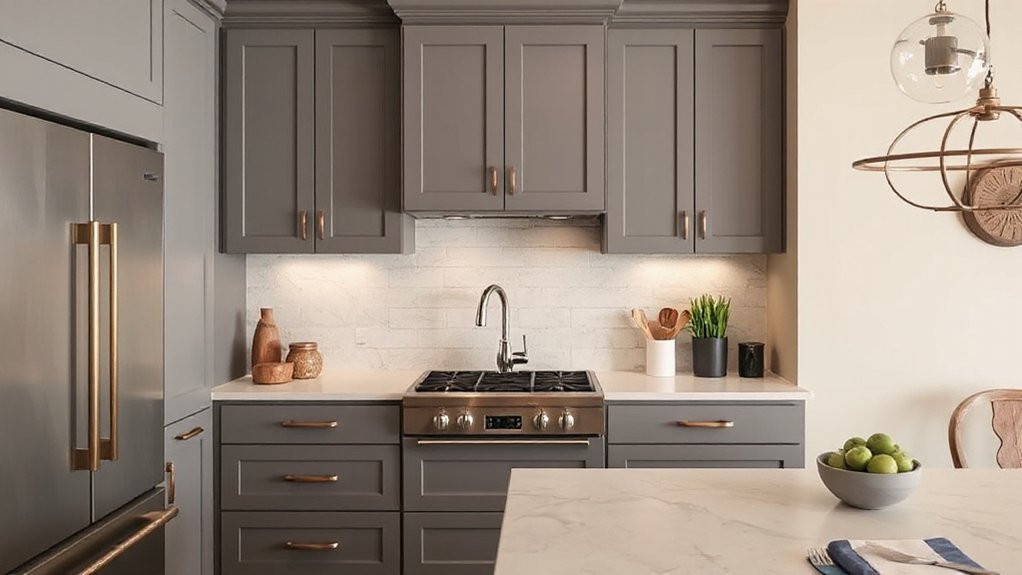
A simple hardware swap, a fresh coat of color, and a touch of texture can transform your kitchen vibe without a full remodel. You’ll start with hardware swaps that suit your space: matte black pulls, brass accents, or satin nickel handles, chosen for grip comfort and visual weight.
Next, pick color strategically: swap in a cabinet shade two tones lighter or add a bold accent door to create depth without repainting all surfaces.
Texture layering matters too—introduce a woven rug, wood grain, or a subtly raised backsplash tile to catch light and add interest.
Keep finishes cohesive across faucet, cabinet hardware, and fixtures for a unified look.
Practical tip: test swatches, then finalize, ensuring durability and easy cleaning.
Budget-Backsplashes: Smart Materials and Install Tips
Backsplash budget boredom ends with smart material choices. You’ll boost style without overspending by selecting practical backsplash materials that perform well and look high-end.
Choose subway or stainless-look panels for grout-friendly maintenance, and prioritize heat- and moisture-resistant options.
For a warm, custom feel, mix glass accents with ceramic tiles, or opt for durable resin sheets that mimic stone at a fraction of the cost.
Install tips focus on prep: clean the wall, check plumb, and mark a level line.
Use adhesive rated for your chosen material, and set joints with minimal grout to reduce upkeep.
Measure precisely, cut cleanly, and dry-fit before bonding.
Finish with a simple sealant if needed, and you’ll enjoy lasting, designer vibes.
Lighting That Creates Depth on a Budget
Layering light is the simplest way to add depth without breaking the budget. You can start with a primary ceiling light for general visibility, then add task and accent layers to sculpt the space.
Use under-cabinet LEDs to brighten counters, reducing glare while enhancing depth. Install dimmers on main fixtures so you control mood and warmth as you cook.
Choose warm, consistent color temperatures to avoid harsh contrasts. Plan lighting zones: work zone, prep area, and display alcoves, tying them with a unified style.
Incorporate ambient shadows by placing wall sconces opposite windows, creating dimension without new fixtures.
Aim for layered illumination that highlights architectural features and textures, not just brightness, and you’ll achieve a designer look on a budget.
Countertop Substitutes That Look Premium
If you loved layering light on a budget, you’ll appreciate how you can keep that cost-conscious mindset when choosing countertop substitutes that look premium.
Start with granite alternatives that mimic depth and movement but cost less; polished ceramic or porcelain slabs can deliver that stone-like look with low maintenance.
For a balanced blend of durability and price, explore quartz options in lighter veining or consistent tones—these resist scratches and stains and install like real stone.
Consider laminate engineered to resemble stone, especially high-pressure laminate with edge treatments that read upscale.
Don’t overlook solid surface composites for seamless sinks and joints.
Finally, pair any choice with a coordinated backsplash and coordinated cabinet hardware to maximize perceived quality without blowing your budget.
Paint and Finishes That Elevate the Space
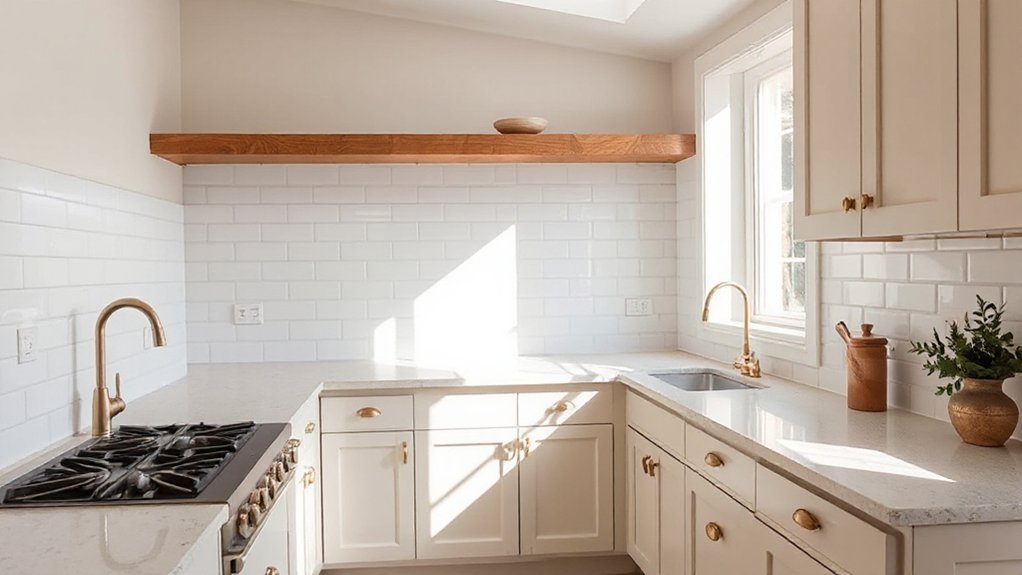
Paint may be the most budget-friendly upgrade that dramatically changes the feel of your kitchen. Choose color schemes that reflect your lighting and cabinets, not just trends. Start with a neutral base to widen your space, then add a bold accent wall or doorway trim for contrast.
Matte finishes read modern and hide imperfections, while satin offers easier cleanup for high-traffic areas. For cabinetry, consider a two-tone approach: lighter upper cabinets with darker lowers to ground the room.
If you’re repainting, test swatches under morning, noon, and evening light to avoid surprises. Finish options matter: consider low-VOC paints for better air quality and starter kits that include primers and sealers.
This keeps your project affordable, durable, and revitalizingly polished.
DIY Tactics and Tools to Save Without Sacrificing Quality
Ever wonder how to stretch your budget without sacrificing quality on a kitchen remodel? You’ll maximize impact with smart DIY tactics and precise tool choices.
Start with measuring twice, plan once, and invest in reusable or rental tools for expensive gear. Use painter’s tape, a quality caulk gun, and a level to avoid costly errors during installs.
Focus on practical upgrades: decorative accents that elevate style without a full overhaul, and appliance upgrades that improve efficiency rather than size.
Learn fast, glossy finishes on existing surfaces with durable sealants, reducing contractor time.
Tackle simple projects yourself, like faucet swaps or cabinet hardware, to save minutes and dollars.
Keep a detailed checklist, stay organized, and reserve professional help for critical tasks.
Smart Shopping: Discounts, Bundles, and Budget Hacks
Smart shopping can stretch your budget without sacrificing quality. You’ll compare prices like a pro, focusing on real value rather than the lowest sticker.
Begin with discount strategies: watch for seasonal sales, member rewards, and open-box or gently used options that meet safety standards for appliances and tools. Don’t overlook outlet sections and manufacturer refurbishments, which often carry substantial savings with warranty.
Next, consider bundle deals: combine fixtures, hardware, and essential accessories from the same retailer to lock in a single, lower price and simplify delivery. Read return policies and verify compatibility before you commit.
Plan purchases around need-to-have items first, delaying nonessential add-ons until a surge in discounts or coupons appears. Document, compare, and execute with disciplined timing for maximum effect.
Declutter and Layout Strategies for Instant Luxe Perception
Start by decluttering to instantly expand the feel of your kitchen, keeping only everyday essentials within easy reach.
Use smart layouts that create clear sightlines and balanced negative space, which read as luxe without costing more.
Focus on purposeful placements and a few high-impact accents to elevate the room with minimal effort.
Declutter for Perceived Space
Clear space reads as luxury, so start by trimming clutter and choosing a simple layout that reinforces open sightlines. You’ll curb surface chaos first: store infrequently used items in closed cabinets, drawers, or rationalized pantry parcels. Embrace storage solutions that hide rather than show—think pullout organizers, labeled bins, and vertical shelving that frees counter real estate.
Next, reduce visual noise by pairing down decor and choosing uniform, matte finishes. In practice, prioritize minimalist design cues: monochrome tones, clean edges, and only essential tools on display.
Create pathways that feel expansive by keeping a single, functional workstation and aligning appliances with sightlines. Measure every item’s footprint, then group like items. The result: calmer space, sharper perception of roominess, and easier maintenance.
Layout Tricks for Luxe Feel
Strategize your kitchen layout to read as luxe without a full upgrade: place essentials along a single, uninterrupted sightline and use negative space to cue sophistication. You’ll maximize perceived value by clustering under-counter appliances and keeping counters clear, so every action feels deliberate.
Implement open shelving to display curated essentials, adding texture and color without bulk, but pace it with closed storage to avoid clutter.
Zone the workspace: prep, cook, clean, and store in predictable digital-like order, so movement stays efficient.
Choose a statement wall sparingly—one bold backsplash or a refined color behind a focal area creates depth without overwhelming.
Mirror light with reflective surfaces and under-cabinet lighting to enhance airiness.
Finish with consistent hardware and a neutral base to reinforce a polished, intentional feel.
Frequently Asked Questions
How Long Does a Budget Kitchen Remodel Typically Take?
A budget kitchen remodel typically takes 1 to 3 weeks, depending on scope and local permits. You’ll move quickly if you plan well, shop smart, and coordinate deliveries.
You can start with a clear layout, then tackle paint, hardware, and organization tweaks first.
For durable results, prioritize Appliance upgrades in phases and seal low-traffic days for installs.
Expect time buffers for cabinets and counters, and keep the workflow tight to minimize disruption and stay on budget.
Can I Achieve a High-End Look With Laminate Countertops?
Yes, you can—laminate countertops can look luxe. Start with a high-quality laminate that mimics stone or quartz, pair it with a cohesive color scheme, and choose luxe-looking edges.
Prioritize material durability by selecting thicker laminates and sealed joints. Use complementary luxury finishes, like brushed hardware and matte backsplashes.
A well-executed layout, under-cabinet lighting, and clean seams amplify the effect. You’ll achieve a refined, budget-friendly result that’s practical and durable.
Is DIY Safer for Plumbing and Electrical Updates on a Budget?
Yes, DIY isn’t safer for plumbing and electrical updates on a budget. You’ll face plumbing safety risks and electrical hazards if you skip permits or don’t shut off power properly.
Hire licensed pros for critical tasks, or at least consult them first. Use proper tools, test outlets, and follow code.
Budget-conscious tip: plan inspections, buy surge-protected components, and document fixes.
Prioritize safety, then tackle small projects you can confidently manage.
What’s the True Cost Range for a Designer-Style Kitchen Makeover?
A designer-style kitchen makeover typically runs from about $20,000 to $60,000, depending on scope and materials. You’ll likely pay more if you pursue luxury materials or full custom cabinetry, and less with standard finishes.
Don’t assume you can’t achieve it—prioritize durability and function first, then upgrade selectively. You can blend high-impact pieces with smart, budget-friendly options, choosing efficiency, durability, and thoughtful layout to maximize value.
Do I Need Permits for Minor Remodel Changes?
Yes, you generally need permits for minor remodel changes, because permit requirements vary by locality and scope. You should check with your city or county to confirm remodeling regulations before starting.
Even small updates can trigger safeguards, so apply early to avoid delays. Gather plans, snapshots, and site details for your permit application.
Failing to secure permits can cost you time and money, but staying compliant keeps your project safe and insured.
Conclusion
You can nail a designer look without blowing your budget—starting with a clear goal, smart upgrades, and a well-planned budget. Refacing cabinets, chic hardware, and budget backsplashes give instant lift, while layered lighting and cohesive finishes sell the luxe feel. An eye-catching stat: up to 40% of a kitchen’s perceived value comes from finishes and lighting. Stay practical: declutter, plan layouts, shop smart, and DIY where it saves money without compromising quality. Affordable luxury is absolutely within reach.
About the Author