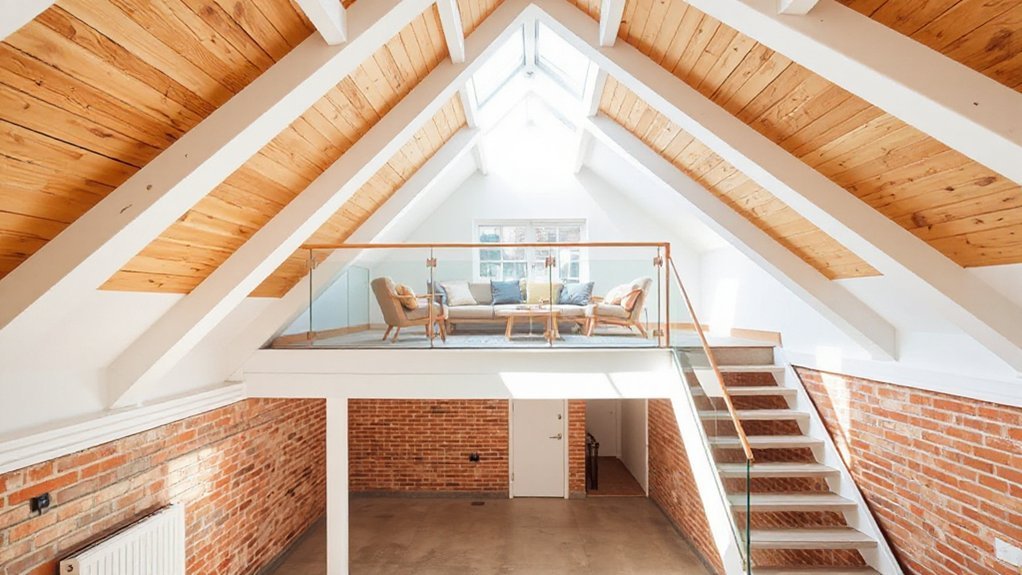
You’ve probably seen a skylit attic become a surprise asset, and that quiet potential is real. You’ll shape a bright, functional space with dormers, open layouts, and smart storage that fits your family’s changing needs. Think durable finishes, eco-friendly materials, and finishes that keep resale value in sight. The trick is balancing usability with future-proof design, so you’ll want to explore layouts that adapt as life shifts—and keep opportunities open for the moment you decide to move.
Key Takeaways
- Create flexible loft layouts with dormers and skylights to boost usable space, natural light, and resale appeal.
- Prioritize energy-efficient designs and open plans to improve comfort and long-term value.
- Incorporate smart storage under slopes with built-in wardrobes and modular systems to reduce clutter.
- Use durable, low-maintenance finishes (engineered oak, terrazzo, porcelain) to cut upkeep and boost value.
- Implement strategic lighting and hidden storage features to enhance ambiance and functionality.
How Loft Conversions Boost Space and Value
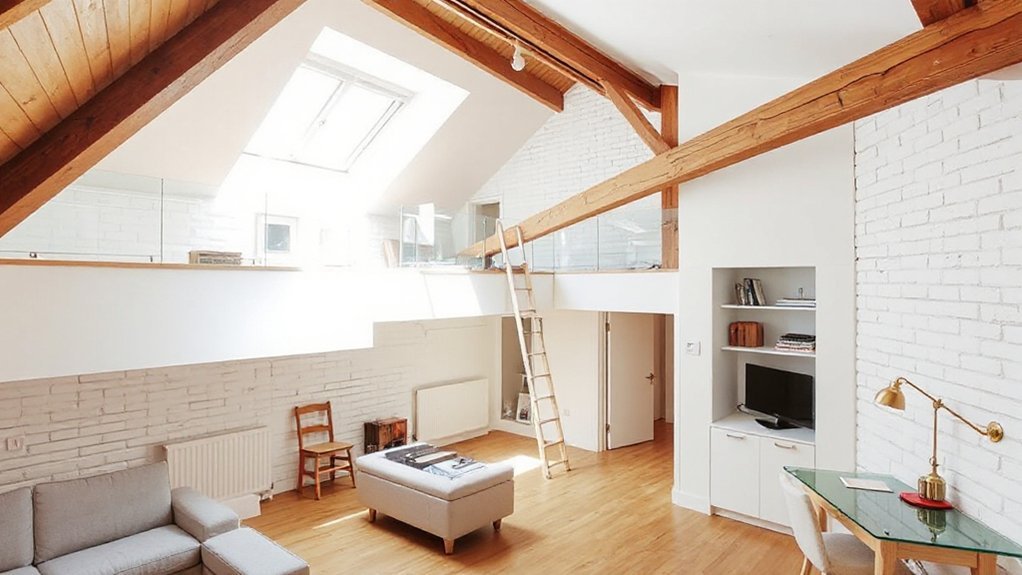
Loft conversions instantly open up underutilized space, turning attic nooks into functional rooms you’ll actually use. You’ll gain square footage without expanding your footprint, boosting usable areas for living, storage, or welcome guests.
Practical design choices translate to real value: a well-insulated attic preserves comfort year-round, while strategic floor plans maximize usable height and flow. Loft insulation lowers energy bills and reduces seasonal drafts, making each new room feel comfortable from day one.
HVAC integration matters too; coordinated ducting, zoning, and vents minimize noise and maintain even temps across levels. Builders can adapt eaves, joists, and stair access to meet modern code and market expectations, increasing appraisal points.
The payoff isn’t just space—it’s a tangible rise in resale appeal and functional appeal.
Bright Loft Living: Dormers, Skylights, and Open Layouts
Dormers open extra headroom and usable floor space, giving you room to add built-in storage or a compact workspace without losing ceiling height.
Skylights flood the room with natural light, boosting daylight quality and reducing electric needs while enhancing mood and perceived space.
With an open layout, you’ll feel a brighter, more connected loft that supports flexible living zones and future room reconfigurations.
Dormer-Driven Space Increase
Dormers instantly boost usable space and daylight, transforming a cramped attic into a bright, functional floor that feels larger and more inviting. You’ll gain practical square footage without a full rebuild, and furniture can finally breathe with natural light from extended windows.
Focus on two levers: Dormer styles and Roof modifications. Align your choices with the roof line, structural constraints, and budget, so each addition serves purpose rather than ornament.
- Optimize headroom with shed or hipped dormers to maximize usable floor area
- Choose egress-compliant designs that suit climate and aesthetic
- Plan insulation, vapor barriers, and flashing to prevent leaks and drafts
This approach keeps the upgrade efficient, scalable, and aligned with resale value, while delivering bright, functional space.
Skylight Brightness Enhancements
Natural daylight can transform a cramped attic into an open, inviting space, and skylights are the fastest route to that brightness without major rebuilds.
You’ll optimize brightness by choosing high-performance panes, properly sized units, and ridge-to-sky layouts that maximize skyward views. Use glazing with low emissivity and UV protection to reduce glare while preserving color fidelity.
Position skylights to chase sun paths, creating daylight amplification without overheating rooms; consider tubulars for narrow corridors or stair voids where traditional panes don’t fit. Install shading options like dimmable blinds or exterior venetian shutters for control.
Pair skylights with light shelves and white interiors to bounce light deeper. This approach yields brighter mornings, balanced illumination, and a more livable, resale-friendly loft.
Smart Storage Solutions for Sloped Ceilings
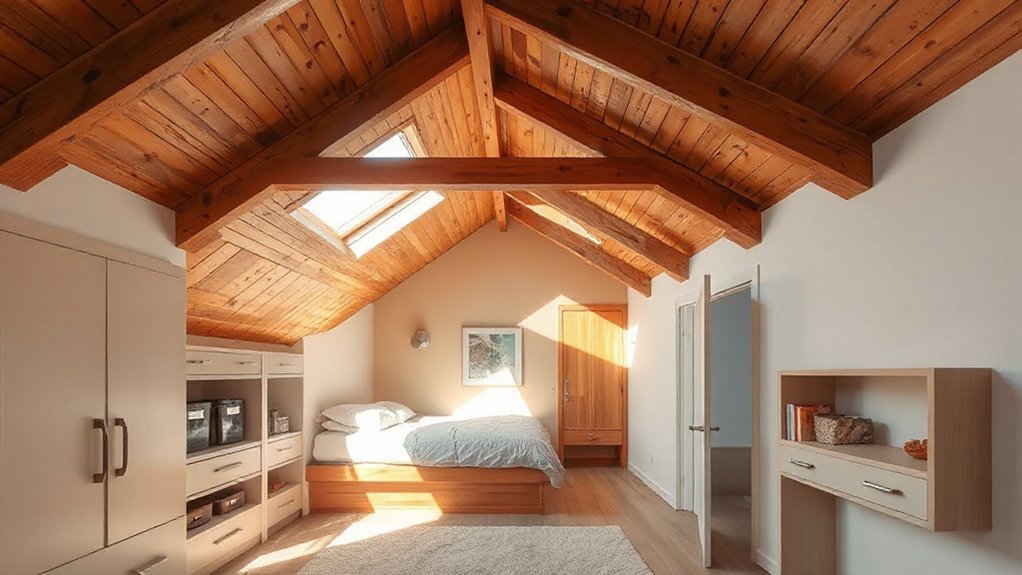
Think through clever loft storage ideas that turn sloped ceilings into usable space without crowding the room. You’ll optimize every angle with built-in wardrobes, low-profile drawers, and modular units that fit under the slope.
This keeps pathways clear. This approach keeps clutter at bay while envisioning a streamlined, functional loft with crisp, intentional storage.
Clever Loft Storage Ideas
Look up and get organized: sloped ceilings can be a design obstacle, but with clever loft storage you convert every inch into usable space. You’ll optimize nooks with hidden compartments and modular shelving that adapts to angles, not against them.
Think low-profile drawers under eaves, built-in benches with lift lids, and hanging rails tucked beside dormers for clothes, tools, or toys. Prioritize modular, scalable systems so you can reconfigure as needs shift, keeping pathways clear and rooms bright.
- hidden compartments integrated into benches and stairs
- modular shelving that snaps to angled walls
- pull-out organizers for tight recesses and edge spaces
Sloped Ceiling Organization
Sloped ceilings don’t have to limit storage. You’ll optimize every nook with purpose-built solutions that respect geometry while maximizing utility.
Begin by surveying the longest, least-accessible runs and turning them into low-profile wardrobes, drawers, or cubbies that fit snugly under the slope. Use modular, height-adjustable units to accommodate changing needs, and install pull-out steps or ladders for safe access to higher shelves.
Consider ventilated bins for seasonal items to keep attic insulation dry and dust-free. For vertical constraints, hang rail systems along the highest wall portions to hold frequently used gear.
Label zones clearly to reduce rummaging and reclaim floor space with slim, continuous storage runs. Sloped ceiling design becomes a framework for organized, scalable stealth storage.
Built-In Wardrobe Solutions
When you’re shaping built-in wardrobe solutions for sloped ceilings, start by mapping the longest, hardest-to-reach runs and turning them into low-profile wardrobes, drawers, and cubbies that fit the slope. Think modular, adjustable, and space-saving—so you gain clothes storage without sacrificing headroom or flow.
Use eco friendly materials for durability and a smaller footprint, and pair with vintage decor accents to add character. Choose shallow pull-out drawers under eaves and hinged doors that swing within the slope. Let lighting be integrated to reveal items clearly and reduce clutter.
This approach creates a practical, scalable system you can refine over time.
- Maximize every angle with flexible configurations
- Use eco friendly materials for longevity and reduced impact
- Tie in vintage decor for warmth and charm
Budget-Smart Loft Upgrades: High-Impact, Low-Cost Ideas
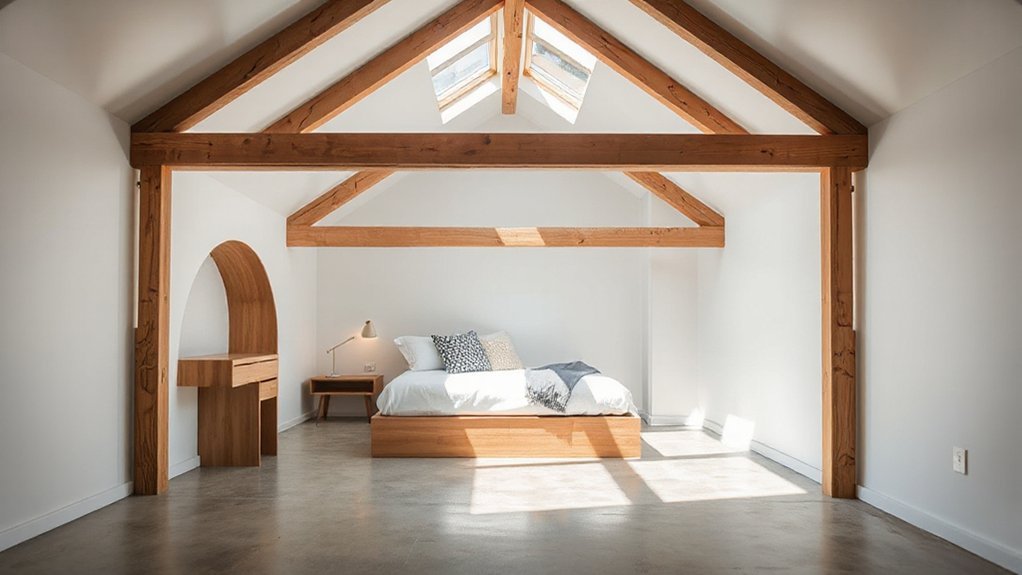
If you’re upgrading a loft on a tight budget, focus on high-impact changes that don’t break the bank. Prioritize lighting, insulation, and storage to transform space without major upheaval.
Install slimline LED strips along eaves and stairs; they illuminate without consuming ceiling height. Add removable, modular shelving above knee walls to maximize storage without framing walls.
Choose Eco friendly materials for flooring, plywood, and low-VOC paints to preserve air quality and cut long-term costs. Refurbish existing features instead of replacing them; sand and re-stain timber beams, upgrade hardware, and reuse salvaged windows for charm.
For aesthetic impact, blend Vintage decor elements—grainy wood, patina metals, and retro textiles—with modern silhouettes to elevate atmosphere without a premium price tag.
Plan upgrades in phased, budget-tracking steps for measurable gains.
Functional Zoning for Day-to-Day Living and Resale
Start by mapping daily flows: designate a clear, adaptable zone for living, working, and relaxing that aligns with your routines and family size, while reserving a separate, future-ready area that can enhance resale value.
You’ll create distinct zones that minimize idle wandering and maximize natural light, cross-ventilation, and outdoor access for easy fresh-air moments. Use flexible furniture, partial partitions, and smart lighting to adapt as needs shift—kids home, guests, or a growing hobby.
Prioritize energy efficiency with insulation, seals, and an efficient HVAC loop. Plan for resale by sizing the adaptable area to accommodate potential home offices or wellness spaces.
- Outdoor access becomes a daily extender of living space.
- Layouts emphasize energy efficiency and low-energy use.
- Flexible zones invite easy reconfiguration for future value.
Finishes That Stand the Test: Durable, Timeless Loft Details
Durable, timeless loft details start with materials that age gracefully and perform under daily use, so you can enjoy a refined look without constant upkeep. In practice, choose timeless finishes that resist scratches, stains, and fingerprints, like oiled or matte solids and low-emission sealants.
Opt for durable materials that tolerate humidity, temperature swings, and foot traffic, such as engineered oak, terrazzo, and porcelain. Prioritize seamless *flows* between kitchen, living, and sleeping zones to reduce maintenance and show extra value.
Use hidden fasteners and hand-finished edges to keep lines clean and durable. Plan for long-term upkeep with easy-care coatings and replaceable panels.
Balance texture and light with muted palettes and strategic lighting, ensuring timeless finishes remain inviting as styles evolve.
Frequently Asked Questions
How Long Does a Typical Loft Conversion Take From Start to Finish?
A typical loft conversion takes about 6 to 10 weeks from start to finish, depending on size and complexity. You’ll plan carefully, get surveys, and secure building regulations approval before you start.
Installation pacing matters: framing, insulation, roof repair, and roof insulation all need attention. Expect 2–3 weeks for insulation and finishes, plus a few weeks for plumbing, electrics, and fittings.
Keep schedule realistic, coordinate trades, and guarantee compliance with building regulations throughout.
What Permits or Approvals Are Needed for a Loft Conversion?
Building regulations and planning permissions are required, yes—no sneaking through a loophole here! You’ll typically need building regulations approval for structural, fire safety, and insulation standards.
Plus, planning permissions if your loft change affects size, roof slope, or dormers. You might also require party-wall notices if you share walls.
Check local authority guidelines, prepare sketches, and apply before you start. Then you’ll move intelligently, ensuring compliance, safety, and a future-ready space.
How Much Value Can a Small Loft Add to Resale Price?
A small loft can add you several tens of thousands in resale value, often 5–15% more, depending on finish and lighting. You’ll maximize it by clever storage optimization and lighting enhancements that feel seamless.
You’ll see value rise as usable space grows, niches become wardrobes, and floors glow with warm LEDs. You’ll also notice buyers appreciate reduced clutter and brighter rooms, making the loft feel larger, more functional, and a standout selling point.
Are There Energy Efficiency Upgrades Essential for Lofts?
Yes, energy efficiency upgrades are essential for lofts. You’ll save on bills as you gain comfort, especially when you prioritize insulation upgrades first.
Then consider solar panel integration to cut future costs and boost value. You’ll notice coincidence in design: tight air sealing pairs with reflective roofing, creating a durable envelope.
You’ll feel steadier temperatures, fewer drafts, and smarter venting. Plan methodically, measure gains, and iterate for a practical, visionary improvement.
Which Trades Are Most Important to Hire Early in the Project?
You should hire the essential trades early, focusing on the contractor selection and design planning. Lock in a licensed carpenter, electrician, plumber, and structural engineer first, so your layout, roof access, and joist checks align with a solid plan.
Guarantee early drawings, cost estimates, and permit scopes are documented. Communicate milestones, material timelines, and safety standards, then integrate HVAC and insulation early.
This keeps your project predictable, minimizes changes, and fuels confident, strategic progress.
Conclusion
A loft conversion isn’t just extra space—it’s future-ready living. Nearly 20% of homeowners report a resale premium after converting an attic, and that gap only grows with thoughtful design. With dormers for brightness, smart storage under sloped ceilings, and durable finishes, you create flexible zones that adapt to changing needs. Stay practical: plan for daylight, ventilation, and low-maintenance materials. Visionary stride: reconfigure as life evolves, and your loft pays dividends in comfort and value.
About the Author