You might think loft conversions in terraced houses always require full planning permission, but the truth is more nuanced: many small changes fall under permitted development, yet exterior alterations or changes to roof profiles often trigger approvals. If you proceed without confirming, you could face delays or enforcement actions. There’s a balance to strike between internal updates, insulation tweaks, and the design constraints of height, symmetry, and elevations—and you’ll want to know exactly where each line is drawn before you proceed.
Key Takeaways
- Check if permitted development rights cover terraced lofts; many cases allow internal alterations and some roof changes without full planning permission.
- Ensure height, width, and volume stay within limits and avoid affecting neighboring light or privacy beyond thresholds.
- For conservation areas or listed terraces, expect stricter controls and possible need for planning consent.
- Consider party wall and access rights; obtain notices and agreements before starting work to prevent delays.
- Gather plans, elevations, and design rationale early to support quick approvals or pre-application advice.
Do You Need Planning Permission for a Terraced Loft? A Quick Check
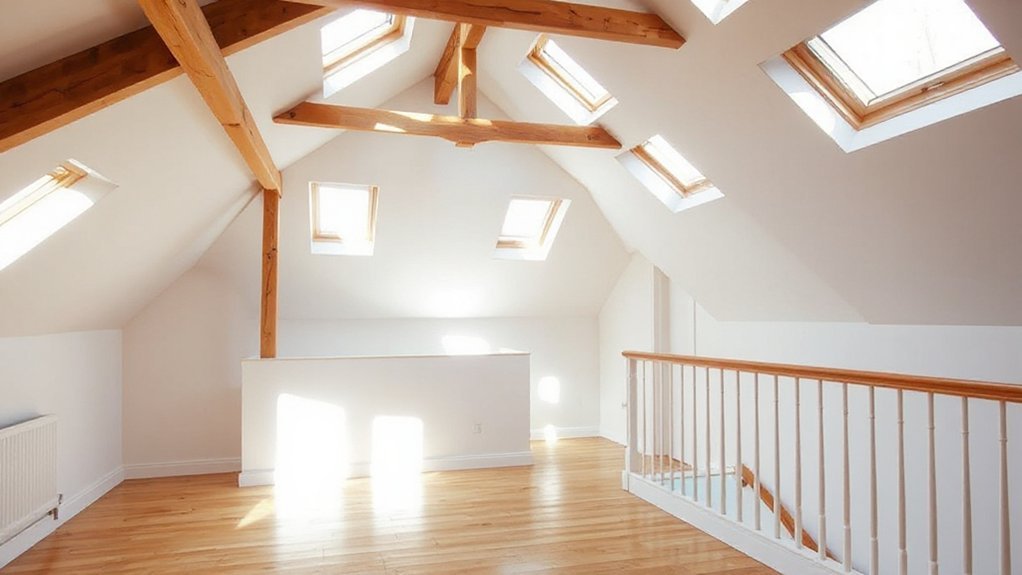
If you’re planning a loft conversion on a terraced house, you often don’t need full planning permission. Instead, you should assess whether your project fits permitted development or requires a prior approval process.
Start by confirming height and volume limits, eaves and ridge constraints, and the alteration of the roof slope. You’ll want to guarantee no additional openings affect neighboring light or privacy beyond permitted thresholds.
Practical checks include existing stair access, fire escape routes, and structural capacity for the added load. Plan interior lighting to avoid overheating and glare, and specify Building insulation to meet current energy standards.
Keep documentation ready: plans, elevations, and a concise statement of compliance for a quick decision. If in doubt, consult the local authority early.
Terraced Loft Conversions: What Counts as Permitted Development
Terraced lofts fall under specific Permitted Development thresholds, so you’ll need to confirm volume limits, footprint changes, and the overall size of your extension before planning.
We’ll cover how volume caps, height restrictions, and material choices interact with these thresholds, plus what counts as permitted surface areas and projections.
You’ll also assess potential neighbour impact, including any noise, overshadowing, or visual effects, to determine if you stay within permitted development boundaries.
Permitted Development Thresholds
- Distinguish between interior alterations that don’t affect external envelope and those that do.
- Confirm roof alterations stay within height and width restrictions.
- Verify loss or alteration of original features doesn’t exceed thresholds.
- Plan for interior lighting and roofing materials that comply with permitted standards while maintaining daylight and insulation quality.
Volume and Materials Limits
You’ll compare added usable floor area against the original footprint, noting that increases mustn’t exceed defined thresholds for terraced properties.
Material durability matters because you must demonstrate that finishes and structural elements remain compatible with fire safety, insulation performance, and long-term stability.
When selecting materials, you prioritize lightweight yet durable options, reducing weight on shared walls and rafters.
You document thickness, fire resistance ratings, and installation methods to prove conformity with permitted development rules and avoid unauthorised work.
Neighbour Impact Considerations
Neighbour impact is a critical factor in determining whether a terraced loft conversion falls within permitted development. You assess how your addition affects neighbours’ light, outlook, and noise, aiming to minimize disruption while meeting rules.
Focus on visual intrusion, eaves height, and structural sound transmission, since these drive privacy concerns and consent likelihood. You should document mitigation steps and maintain clear communication with adjacent households to avoid disputes.
Use a measured approach to compliance, balancing your design with neighbours’ rights.
- Visual impact assessment: height, window placement, and potential overlooking
- Light and shade changes affecting neighbouring rooms
- Noise generation and insulation considerations
- Privacy safeguards: screening, facade treatment, and schedule respect
What You Can Do Without Permission: The Key Permitted Changes
You can start with small-scale loft changes that don’t require permission, focusing on permitted alterations that don’t raise the roofline or reduce structural integrity.
Consider how height limits and space allowances apply to what you install, such as fixed storage, insulation, or non-structural finishes.
We’ll examine these key changes to determine what you can do safely and legally without planning consent.
Permitted Loft Alterations
In most terraced houses, you can make certain loft improvements without planning permission, provided they meet height, width, and eaves constraints and stay within the building’s envelope.
You’re allowed practical alterations that don’t extend the structure, affect exterior elevations, or exceed permitted volume. Focused work stays within existing roof space, enabling straightforward upgrades like insulation and accessible storage.
For safety and efficiency, plan around mechanical routes, skylight placement, and ventilation.
- Loft insulation upgrades that improve thermal performance without altering dormers or skylights
- Small, non-loadbearing internal partitions for storage or access
- Roof repairs that don’t change roof plane or materials
- Installation of fixed loft ladders or hatches that comply with regulations
Note: Prioritize airtightness, moisture control, and compliant hatch design.
Height and Space Allowances
When planning loft work in terraced homes, height and space allowances define what you can do without planning permission. You’ll operate within prescribed limits for total building height, depth, and floor area when converting roof spaces.
Guarantee ceiling heights meet minimal habitable requirements after insulation and lining, or you risk denials or later complications. In practical terms, you may adjust internal layouts, install slim window units, and fit stairs that don’t alter external walls beyond permitted dimensions.
Key considerations include interior insulation choices that preserve usable space while meeting thermal standards and avoiding excessive bulk. Roof ventilation must remain sufficient to prevent condensation and moisture buildup, preserving structure and comfort.
Document compliance measures for any future inspections or potential permissions.
Core Constraints for Terraced Rows: Height, Eaves, and Symmetry
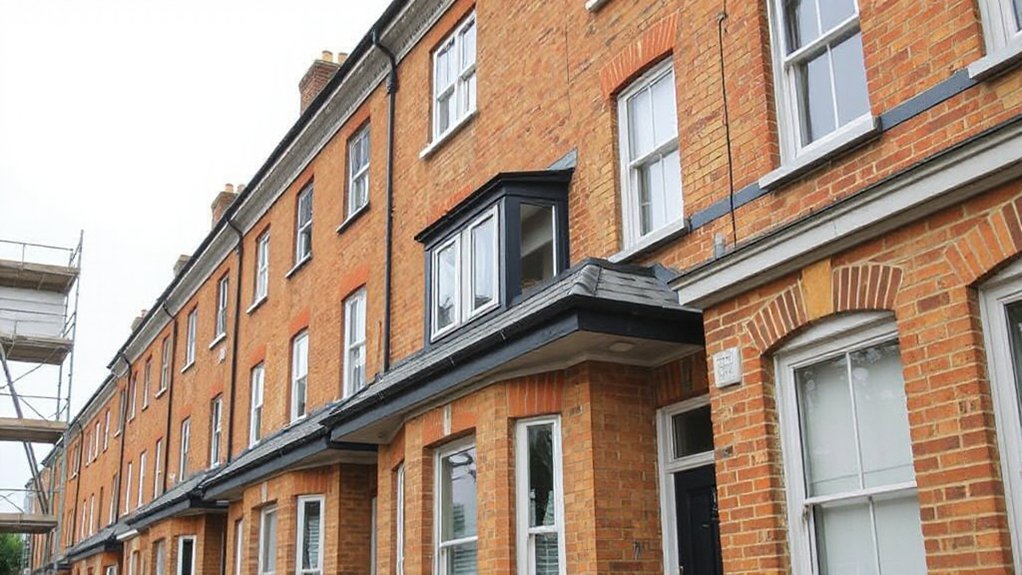
Height, eaves, and symmetry are the core constraints you’ll encounter with terraced rows. You’ll need to evaluate how height limits, eave lines, and the overall silhouette affect planning permissions and neighbour effects.
Practical decisions hinge on consistent ridge height, compliant eaves projection, and preserving uniform roof parapets across the terrace.
- Maintain uniform ridge height to avoid visual discord and potential planning objections
- Limit eave overhang to stay within envelope and drainage requirements
- Preserve symmetry with adjacent properties to satisfy design guidance
- Plan internal layouts that support interior decoration and energy efficiency without breaching external constraints
Apply these parameters early to streamline approvals, protect property values, and ensure a tight, compliant loft conversion strategy.
Front and Side Elevations: What You Can Change and What You Can’t
Front Elevation Restrictions limit what you can alter in the visible facade, so you’ll need to plan changes within height, profile, and material harmonization.
Side Extent Modifications determine how far you can extend or alter the wings without impacting alignment with neighboring roofs and boundaries.
Start by identifying what’s permissible on the front and side elevations, then map compliant options to your loft conversion goals.
Front Elevation Restrictions
- Maintain sympathetic window and door profiles to match existing rhythm.
- Avoid enlarging openings that alter fire escape routes or fire ratings.
- Preserve roofline silhouette and eaves, unless you secure consent.
- Plan lighting that complies with planning guidance and avoids glare.
This framework keeps elevations cohesive while you implement practical, code-aligned upgrades. Remember, changes here influence compliance, not just aesthetics or access.
Side Extent Modifications
If you’re reworking the side extents of a terraced house, you must distinguish between changes that are permissible within typical planning norms and those that require consent. Side extensions, setbacks, and projection limits determine eligibility for permitted development, while alterations to party wall boundaries or visible external materials may trigger notices.
You can usually adjust depth within established footprint tolerances without full planning, provided you maintain alignment with neighboring façades and avoid increasing overall volume beyond limits. Any exterior modification that alters proportion, materials, or eaves height should be reviewed for consent.
Prioritize structural reinforcement to support new loads and preserve roof integrity. Consider interior insulation implications and party-wall responsibilities early to prevent later disputes.
Document drawings, elevations, and impact assessments for a concise approval pathway.
Regional Rules: England, Scotland, Wales, and Northern Ireland Compared
In England, Scotland, Wales, and Northern Ireland, planning permissions for loft conversions follow distinct regional frameworks, so you should compare each jurisdiction’s rules to determine whether you need formal consent or if permitted development rights apply.
- England: PD rights vary by local authority and housing type; check extensions, eaves, and roof height limits.
- Scotland: Permit-dependent on house type and proximity to boundaries; consents may be required for dormers.
- Wales: Some schemes rely on prior approval; material changes to exterior often need planning consent.
- Northern Ireland: Permissions depend on construction scale and listed status; consult local planning authority early.
Practical focus: assess architectural styles and material durability to ensure compliant, durable outcomes.
Conservation Areas and Listed Status: Special Rules for Terraced Loft Conversions
Conservation areas and listed status impose stricter controls on terraced loft conversions, so you must assess designation first and then plan accordingly. In these zones, you’ll encounter additional consent requirements beyond standard planning permission, focused on protecting historic preservation and architectural heritage.
Confirm whether the property sits in a conservation area or is statutorily listed, and identify special conditions that apply to demolition, alterations, and exterior work. You’ll need to consult your local planning authority early, map impact on streetscape, and evaluate materials, rooflines, and window treatment for compatibility.
Expect potential pre-application advice, design guidelines, and possible requirement for energy efficiency measures that don’t compromise heritage values. Prepare a precise design rationale demonstrating how your loft conversion maintains tradition while meeting contemporary needs.
Party Walls and Access: Rights, Notices, and Disputes
Party walls and access rights are a critical practical hurdle in terraced loft projects, because disputes can stall work and push up costs. You must understand who owns the party wall, who bears costs, and the notice procedures that trigger legal protections.
When you plan, you rely on formal notices for access, indemnities, and timing to minimize hold-ups. Missteps here invite delays and compensation claims, so precise record-keeping matters.
- Identify the party wall owner and applicable access rights before work begins
- Serve correct notices and document responses, keeping deadlines
- Obtain consent or follow dispute resolution steps promptly
- Maintain clear access routes and safeguarding to prevent escalation
Clear, compliant communication reduces risk, supports smoother progress, and protects your project timeline. Party wall, access rights.
Practical Design Tips for Tight Terraced Constraints
When space is at a premium in terraced houses, every design decision must maximize usable area without compromising structural integrity or future flexibility. You optimize layout by prioritising vertical circulation and avoiding unnecessary beams or bulkheads, preserving ceiling height where possible.
Use multi-functional furniture and built-in storage to eliminate clutter and reduce transferred loads. Creative storage should be integrated into eaves, stair voids, and under stairs, with shallow pull-outs and hidden compartments that don’t encroach on habitable space.
Plan interior lighting to flatten shadows and extend perceived space; combine layered sources—ceiling, wall, and task lighting—with dimming controls to adapt for occasions.
Guarantee ventilation remains unobtrusive and compliant, and document changes for future access. Maintain clear fire escape routes and check hidden-services routing during the design phase.
The Approval Process: Documents, Consultations, and Timelines
The approval process for loft conversions in terraced houses involves gathering the right documents, coordinating consultations, and tracking timelines to avoid delays. You’ll assemble planning drawings, a design statement, and compliance certificates, then submit via your local planning authority.
Expect pre-application advice to shape filings, and prepare for possible conditions on interior finishes and energy efficiency. You’ll engage with conservation or building control teams as needed, responding promptly to requests for amendments.
Timelines vary, so monitor milestones for validations, public notifications, and decision dates. Clear records help you defend decisions and secure permissions efficiently. Stay organized with a document log, address feedback quickly, and confirm any implementation conditions post-approval.
- Documentation checklist
- Consultation steps
- Submission milestones
- Compliance follow-through
Speeding Up Approvals: Pre-Application Advice and Essential Checks
Pre-application advice speeds approvals by clarifying requirements up front and preventing costly back-and-forth.
You should prepare a concise brief outlining proposed loft layout, structural changes, and ventilation, then submit early for zoning, party-wall, and building-code checks.
Confirm acceptable interior lighting plans, ensuring glare, fire safety, and energy-efficiency meet policy expectations.
Request guidance on roofing materials, especially weight, insulation, and waterproofing compatibility with existing terraced-wall construction.
Bring up access constraints, egress routes, and any impact on adjoining properties to avoid later revisions.
Use a checklist to verify dimensions, drainage implications, and service routes for plumbing and electrical.
Document anticipated carbon and thermal performance to streamline consent.
Timely, targeted information reduces revision cycles and speeds overall approvals.
Pitfalls to Avoid: Common Mistakes That Cause Delays
Common mistakes in loft conversions for terraced houses often trigger delays: unclear scope, missing party-wall notices, and inadequate structural analysis. You’ll slow the project if you don’t pin the design brief, confirm shared-wall responsibilities, and assess load paths early.
Focus on interior insulation and airtightness to meet Building regulations, not as afterthoughts. Misjudging headroom, fire precautions, or egress also stalls approvals, forcing redesigns and resubmission.
Proactively document materials, finishes, and interfaces with neighbouring properties to avoid later disputes. Ensure surveys address timber decay, damp, and structural movement before construction starts.
- Clarify scope and design intent with all parties
- Verify party-wall notices and consent
- Include thorough structural analysis and load paths
- Plan interior insulation and Building regulations-compliant details
Frequently Asked Questions
Can Loft Conversion Affect Neighbors’ Rights and Lighting?
Yes, loft conversions can affect neighbors’ rights and lighting. You assess neighbor privacy and potential structural impact early. You’ll consider overlooking, bulk, and shadowing to minimize intrusion on your adjacent properties.
You should check party-wall impacts and guarantee proper undermining doesn’t compromise structure. You’ll document how you protect neighbor privacy, address noise during construction, and verify structural impact with a qualified professional to avoid rights disputes and ensure compliance.
Are There Council-Specific Fees for Terraced Lofts?
“Time is money.” Are there council-specific fees for terraced lofts? Yes, some councils charge development, building-control, or planning fees, plus potential fees for insulation checks. You’ll want to confirm exact amounts with your local authority.
You must also account for building materials and insulation requirements, ensuring compliance with insulation thickness, vapour barriers, fire safety, and airtightness.
Prepare detailed spec sheets, request upfront quotes, and document licensing to avoid unexpected costs or delays.
Do Party Wall Agreements Always Require a Surveyor?
You don’t always need a surveyor for party wall agreements, but you probably should. If you value building codes compliance and structural safety, a surveyor helps guarantee accurate notices, fair access, and minimizes dispute risk.
In many cases, a party wall award is streamlined with professional input; DIY can miss nuances. You’ll benefit from documented measurements, timeline clarity, and adherence to Building codes, reducing potential structural issues around shared walls.
Can Daylight or Ventilation Standards Mandate Changes?
Yes, daylight and ventilation standards can require changes. You must guarantee natural light and air circulation meet current regulations for loft conversions.
Start with precise calculations: window sizes, room dimensions, and minimum daylight factors for each space.
You may need additional openings or modified eaves to boost light, plus vents or mechanical systems to improve air circulation.
If standards aren’t met, plans will be rejected or require amendments before approval.
What Are Post-Approval Conditions Commonly Imposed?
Post-approval conditions typically require you to meet specified building materials and interior design standards. Guarantee work follows approved plans, and complete any associated certifications.
You’ll need detailed finishing schedules, fire safety measures, and ventilation provisions within the interior design scope.
Expect controls on hours of work, handling of demolition waste, and site access.
You must notify changes to contractors promptly, document inspections, and provide as-built drawings, material samples, and compliance certificates for final sign-off.
Conclusion
If you stay within your permitted development rights, you can loft-convert with minimal fuss—but don’t assume it’s automatic. Check height, eaves, symmetry, and proximity rules early, and consult your local authority to avoid delays. An estimated 60% of terraced lofts gain quick approval when you’ve mapped changes to front elevations and adhered to volume limits. Gather drawings, confirm listings/ Conservation Area status, and lock in pre‑application advice to streamline the process and minimize revisions.
About the Author