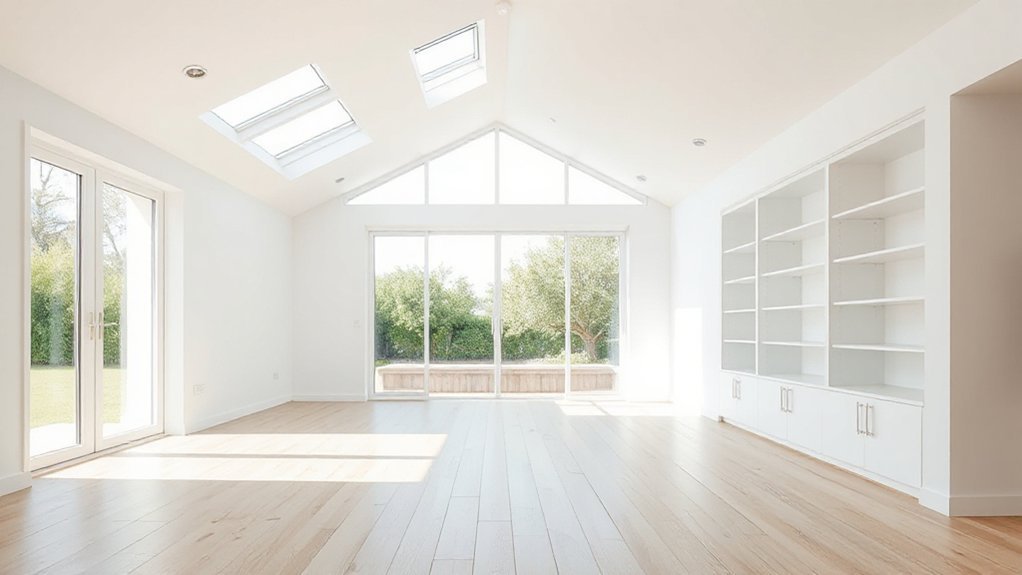
You’ll want to test the claim that rooflights and sliding doors alone can maximize daylight without compromising comfort. In practice, you’ll need precise alignment with sun paths, glazing choices, and thermal properties to avoid glare and heat gain. If your current design ignores these factors, you’re likely missing key gains in brightness and energy efficiency. Consider the trade-offs now and how strategic placement and materials could shift outcomes in your space.
Key Takeaways
- Align rooflights and sliding doors along cardinal axes to capture low winter sun while avoiding overheating in summer.
- Use staggered glazing and large glass panels to maximize daylight while minimizing glare and heat gain.
- Choose high-transmittance glazing with low-emissivity coatings or dynamic/ electrochromic options to manage glare and heat.
- Integrate shading, privacy, and security features without compromising daylight and sightlines.
- Plan room-specific placement based on activity patterns, reflectance paths, and ventilation needs to sustain circadian-friendly light.
How Rooflights and Sliding Doors Boost Daylight
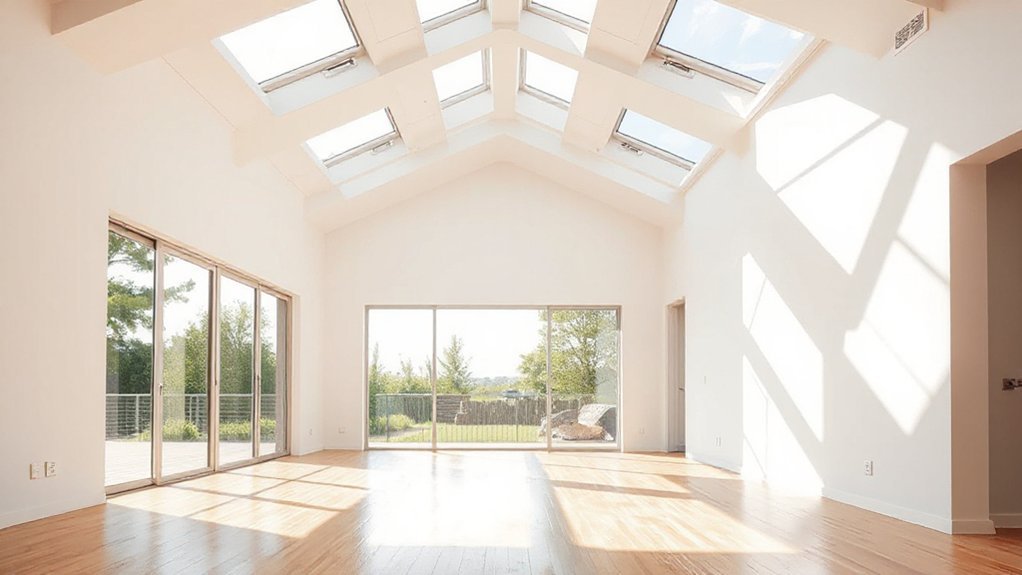
Rooflights and sliding doors are primary tools for capturing daylight and expanding perceived space. You assess orientation, glazing type, and frame performance to maximize light transmittance without glare.
Rooflights channel daylight deeper into interiors, while sliding doors extend sightlines and bring external brightness inward when opened or angled. You select high-transmittance glass with low-emissivity coatings to stabilize interior illumination and reduce heat gain.
Guarantee seals and flashing prevent leakage, preserving acoustic insulation and thermal comfort. Consider interior decor as a factor in light diffusion—light-colored surfaces and matte finishes reflect rather than absorb, sharpening contrast and perceived brightness.
Precisely align operable elements to minimize obstructions and control privacy. Documentation should specify maintenance protocols, warranty terms, and installation tolerances for long-term daylight performance.
Aligning Layouts to Maximize Sun Exposure
Align windows and doors along cardinal axes to capture low-angled winter sun while avoiding overheating in summer, using staggered glazing where needed. Consider corridor daylighting and living areas with open sightlines to maximize penetration without glare.
Structural integration guides ensure load paths remain intact while enlarging or relocating openings. Interior aesthetics coordinate with function, so finishes and color reflectivity support bright environments.
This disciplined approach sustains consistent illumination, supports energy goals, and preserves architectural coherence.
Glazing Options for Light, Energy, and Comfort
Smart glazing adapts transmission with ambient conditions, reducing cooling loads while maintaining daylight quality. Consider dynamic coatings or electrochromic layers to minimize glare during peak sun without compromising visibility.
Acoustic insulation matters in open-plan contexts; choose laminated or multi-layered glazing to dampen noise ingress while preserving light transmission.
Compatibility with rooflights and sliding doors is essential to avoid thermal bridges. Verify long-term durability, frame compatibility, and maintenance needs to guarantee consistent performance across seasons.
Privacy, Security, and Shade Without Blocking Daylight
Is privacy really attainable without sacrificing daylight? Yes, with deliberate design and disciplined material choices. Rooflights and sliding doors should be paired with shading-integrated solutions that preserve sightlines while reducing exposure to external views.
Use high-performance glazing to limit heat gain and glare. Then add controlled tinting or selective frosted patterns on peripheral areas to maintain brightness inside.
For privacy concerns, position operable panels and privacy screens so passive surveillance is minimized without full enclosure.
Security features must complement daylight strategies; include robust locking mechanisms, laminated glass, and impact-resistant substrates where risk warrants.
Combine motorized shading with smart controls to adjust opacity by time or occupancy.
Verify certifications, ensure weather seals, and maintain clear drainage paths for longevity.
Practical Placements by Room for Rooflights and Doors
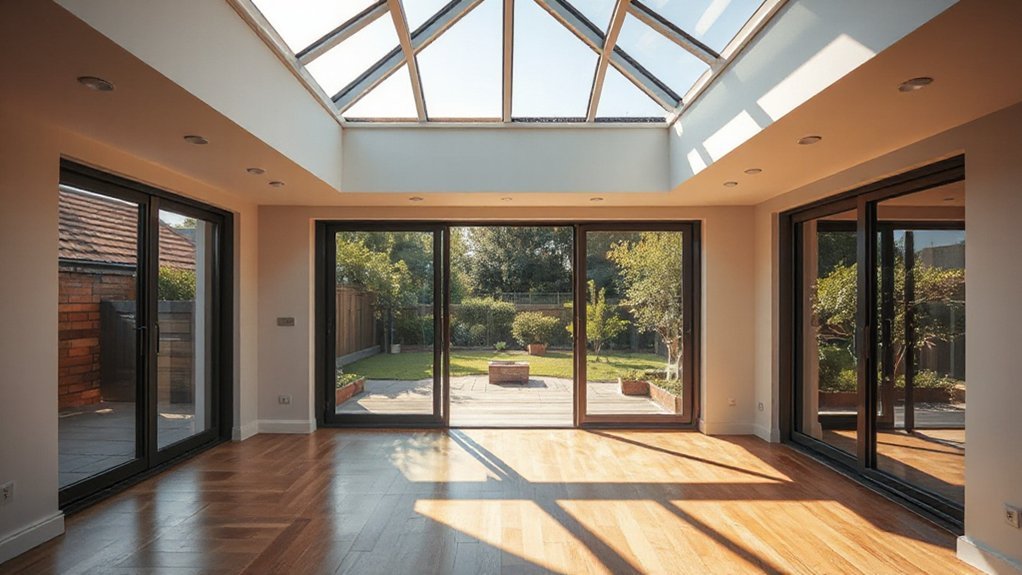
You’ll map room-specific light needs to rooflight and door positions, aligning apertures with typical usage patterns and reflectance paths. Consider how rooflights and doors influence daylight distribution in each space.
Prioritize openings that maximize usable daylight while minimizing glare and heat gain. Use clear placement ideas to guide early design decisions, linking light strategies to functional room requirements.
Room-Specific Light Strategies
To maximize natural light by room, practical placements for rooflights and doors must align with each room’s function, occupant patterns, and existing circadian needs. You’ll optimize daylight by targeting work planes, vertical sightlines, and glare control, ensuring comfort without compromising privacy.
For each room, apply the following principles:
- Align light with primary activity zones to enhance task performance.
- Position openings to balance daylight distribution and reduce contrast shocks.
- Integrate controls and shading to maintain consistent ambience and acoustic performance.
This approach supports interior decoration goals while preserving acoustic considerations, so light becomes a functional design element rather than a passive feature.
In living spaces, kitchens, and work areas, document daylight metrics to verify performance against objectives and comfort targets.
Rooflight and Door Placement Ideas
Rooflight and door placement should be approached with room-specific logic, aligning openings to the primary activity zones and circadian timing established earlier.
In living spaces, position rooflights to maximize dynamic daylight without glare, placing them over seating or work zones to enhance visibility and reduce artificial lighting needs.
For kitchens, orient rooflights toward preparation and dining areas, ensuring even light distribution across work surfaces.
In bedrooms, use smaller or strategically shaded rooflights to modulate morning brightness and preserve restful dark periods.
Sliding door security remains a priority; install locks and reinforced frames to control access while maintaining daylight benefits.
Consider rooflight aesthetics to match architectural language, and ensure operable units are shaded or automated where appropriate to sustain comfort and energy efficiency.
Energy Efficiency and Thermal Comfort in Daylight Design
Effective daylight design reduces energy use while enhancing thermal comfort by aligning window placement, glazing spec, and shading with local climate. You optimise performance through controlled solar gain, minimizing peak loads with appropriate glass insulation and selective shading.
- Align glazing properties with climate data to balance solar heat gains and losses.
- Use high-performance glass insulation to reduce thermal bridges and reduce cooling demand.
- Implement dynamic shading to modulate daylight without compromising visual comfort.
This approach yields predictable indoor temperatures, lowers HVAC demand, and sustains daylight quality. You’ll quantify gains using reference temperatures, glazing U-values, and shading coefficients, ensuring that rooflights and sliding doors contribute to energy efficiency rather than penalties.
Focus on material homogeneity, airtight interfaces, and accurate detailing to prevent thermal short-circuits and unwanted convection.
Maintenance, Safety, and Durability for Rooflights and Sliding Doors
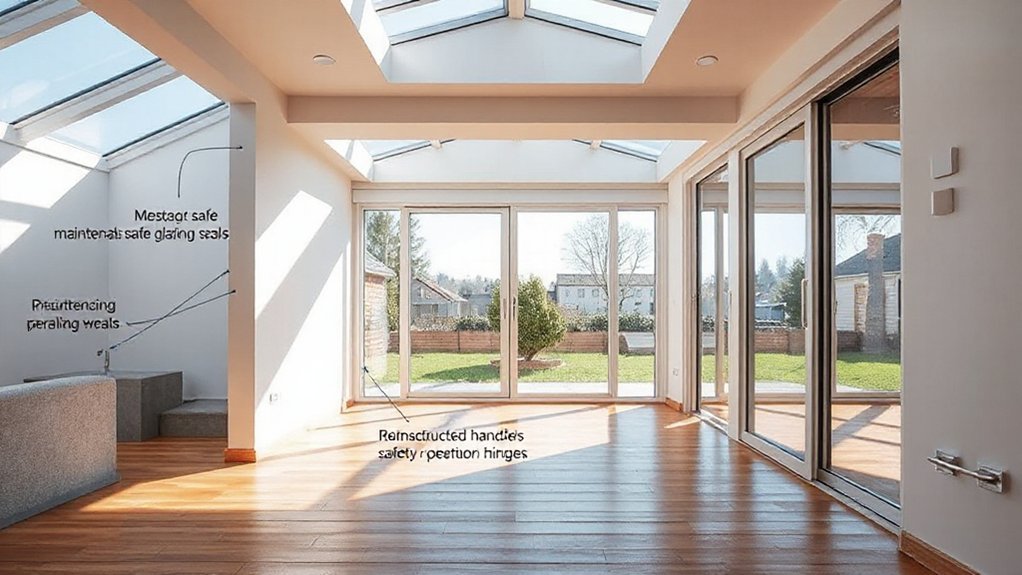
Regular inspection and proactive maintenance are essential to guarantee rooflights and sliding doors perform safely and durably under varying loads and weather conditions. You should implement a documented maintenance plan that prioritizes seal integrity, frame deformation checks, and hardware wear.
Routine cleaning schedules prevent debris buildup that could impede drainage, degrade seals, or obscure sensors. Inspect glazing for microcracks and ensure coatings remain UV-stable to preserve performance and appearance.
Verify weatherproofing measures, including gaskets, seals, and flashing, after seasonal shifts and extreme events. Lubricate moving parts with manufacturer-recommended compounds to maintain smooth operation and reduce resistance.
Replace damaged components promptly, and verify drainage paths remain unobstructed. Finally, test safety devices, such as restrictors and sensors, to ensure reliable response under fault or fault conditions.
Frequently Asked Questions
How Do I Choose Rooflight Shapes for Different Rooms?
You should choose rooflight shapes based on how each room uses light and space. For living areas, opt for wider, panoramic forms to boost ambience and sightlines.
For bedrooms, benefit from softer, rectangular or low-angle shapes to minimize glare.
For kitchens and baths, use elongated or high-angled skylights for ventilation and task lighting.
Consider rooflight styles that prioritize even distribution for room-specific lighting, accounting for furniture layout, glazing, and seasonal sun angles.
What Maintenance Schedule Keeps Skylights Leak-Free Long-Term?
A skylight can last 15–20 years with proper care. To keep leaks at bay, follow a seasonal maintenance schedule: inspect the sealant annually, and perform skylight cleaning every six to twelve months.
Begin with a sealant inspection to catch cracking or gaps, then reseal as needed.
Clean glass gently to avoid streaks or etching.
After heavy storms, recheck seals and flashing, and document findings for future service intervals.
Can Sliding Doors Improve Insulation in Winter Climates?
Yes, sliding doors can improve insulation in winter climates when you choose thermal breaks and high-performance glazing.
They reduce heat loss by minimizing framing volume and using multi-pane, low-emissivity glass, which enhances thermal efficiency.
Proper installation seals gaps and incorporates weatherstripping for airtight performance.
For energy conservation, opt for doors with insulated frames and low U-values.
Pair with controlled ventilation and automated shades to maximize gains while minimizing drafts.
Are There Health Risks From Excessive Glare Indoors?
Glare can harm your eyes; excessive indoor glare poses health risks. You may experience eye strain, headaches, and reduced visual task performance from bright, uneven light.
To mitigate, guarantee effective glare reduction through appropriate shading, lighting design, and window glazing.
UV exposure can contribute to skin and eye risks, so monitor radiant sources and consider coatings or films.
Maintain balanced luminance levels, protect sensitive individuals, and consult standards for safe indoor exposure limits.
How Do Rooflights Affect Room Acoustics and Soundproofing?
Rooflights can alter room acoustics by increasing flutter echoes and reducing perceived sound insulation unless properly treated.
They typically contribute to higher sound transmission due to penetrations in the roof plane, so you should specify Acoustic insulation improvements and sealing details.
Use high-performance glazing, laminated glass, or acoustic-rated skylight assemblies, plus airtight seals around frames.
Add absorption at boundaries and consider decoupled mounts to minimize structure-borne noise, achieving balanced sound transmission and clearer speech.
Conclusion
To maximize daylight, couple rooflights with sliding doors in a layout that prioritizes sun exposure, glazing choices, and sensible shading. You’ll gain brighter spaces, improved ventilation, and reduced artificial lighting without compromising privacy or security. A real-world example: a compact living-dining open-plan used rooflights over the seating zone and a south-facing sliding door to centralize daylight, cutting electric lighting by 40% during peak hours. Implement precise placement, compatible glazing, and durable hardware to sustain performance.
About the Author