You step into a sunlit kitchen where warm wood tones meet crisp white surfaces, and you can almost hear the soft hush of a well-ordered pantry. You’ll design with practical charm: shaker cabinets, apron sinks, and durable textiles that shrug off daily life while looking polished. You’ll optimize flow from indoors to your yard, balance tech with coziness, and still leave room for personal touches that keep pulling you forward. So what’s your first thoughtful move?
Key Takeaways
- Embrace warm neutrals with timber accents and textured textiles to create cohesive modern farmhouse interiors in suburban homes.
- Prioritize open layouts, abundant natural light, and seamless indoor-outdoor flow with practical mudrooms and clutter-free pantries.
- Use shaker-style cabinetry, apron sinks, warm wood tones, and durable surfaces balanced by cooler quartz or concrete countertops.
- Incorporate hidden storage, modular furniture, and adjustable shelving to maximize small-space usability without visual clutter.
- Integrate vintage-inspired lighting, brass finishes, and smart tech with discreet wiring and labeled controls for a cohesive, low-maintenance look.
What Modern Farmhouse Means for Suburban Homes
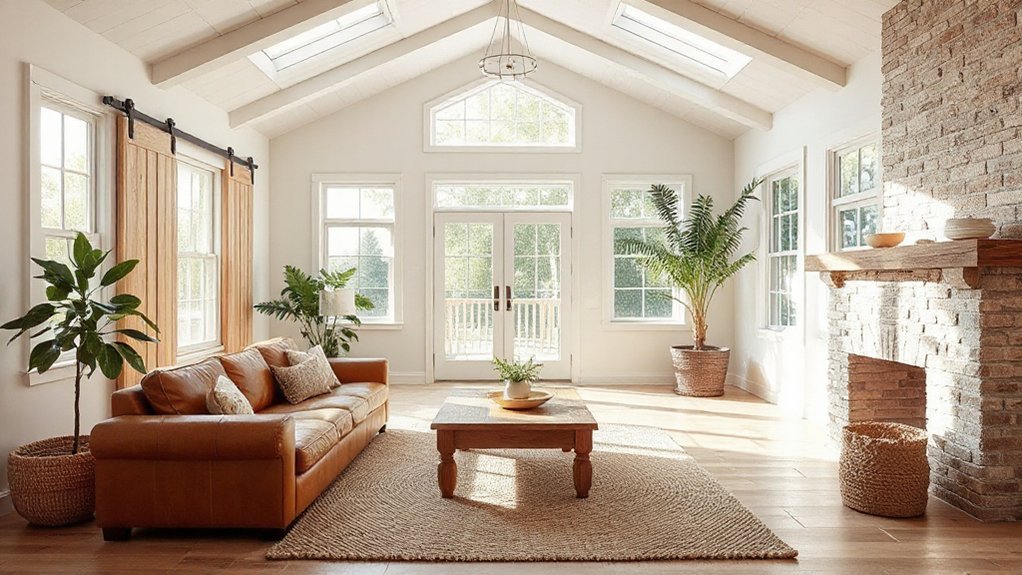
Modern farmhouse design translates well to suburban lots because it blends warmth with practicality. You’ll see Farmhouse architecture expressed in clean, timber-accented lines, neutral palettes, and purposeful materials that resist trends.
In a Suburban neighborhood, you’ll appreciate durable finishes: wide plank floors, board-and-batten accents, and metal lighting that reads rustic without loosening elegance.
Layout decisions emphasize flow: open sightlines from living to dining, a functional mudroom, and a pantry that keeps clutter out of sight.
You’ll prioritize daylight—large windows, simple casings, and soft, matte finishes that reflect natural tones.
Maintenance stays manageable with washable paints and durable surfaces.
This approach delivers timeless appeal, strong resale value, and a comfortable, efficient home that suits everyday life in a Suburban neighborhood.
Kitchen Upgrades: Shaker Cabinets, Apron Sinks, and Warm Woods
If you’re upgrading your kitchen, consider how Shaker cabinets’ clean lines pair with practical storage solutions and durable finishes.
Apron sinks add workstation efficiency and a timeless look that blends with warm wood accents like walnut or maple.
We’ll explore how to balance proportion, grain, and color to create a cohesive, low-maintenance space.
Shaker Cabinet Details
Shaker cabinets pair clean, flat panels with simple hardware to create a timeless, versatile base for your kitchen. They’re especially effective in kitchens that blend warmth with restraint. You’ll notice precise joinery, aligned rails, and uniform gaps that guarantee smooth operation and a quiet visual rhythm.
Choose a soft paint or light wood stain to keep the space airy, then balance with practical details like full-extension drawers and dovetail fronts for durability. For character, incorporate vintage lighting above prep zones and understated pendant clusters.
Pair with rustic textiles in nearby seating or window treatments to soften edges without competing with the cabinetry’s clean lines. Fine-tune hardware finishes to avoid glare, and maintain consistent door overlay for a cohesive, enduring look.
Warm Wood Accents
Choose open measures: 3/4-inch panel thickness, 1/2-inch plywood backs, and full-overlay doors for a refined, durable fit.
Pair warm woods with cooler countertops—quartz or concrete—to preserve clarity and reduce visual clutter.
Consider a single wood island with a durable finish, plus matching shelving to display rustic charm and keep essentials at hand.
Seal all visible edges to resist moisture, and apply a matte satin for a soft, usable patina.
Integrate muted hardware, and let the wood’s tone anchor your kitchen’s cohesive, timeless character.
Modern Farmhouse Living Rooms: Cozy Meets Clean Lines
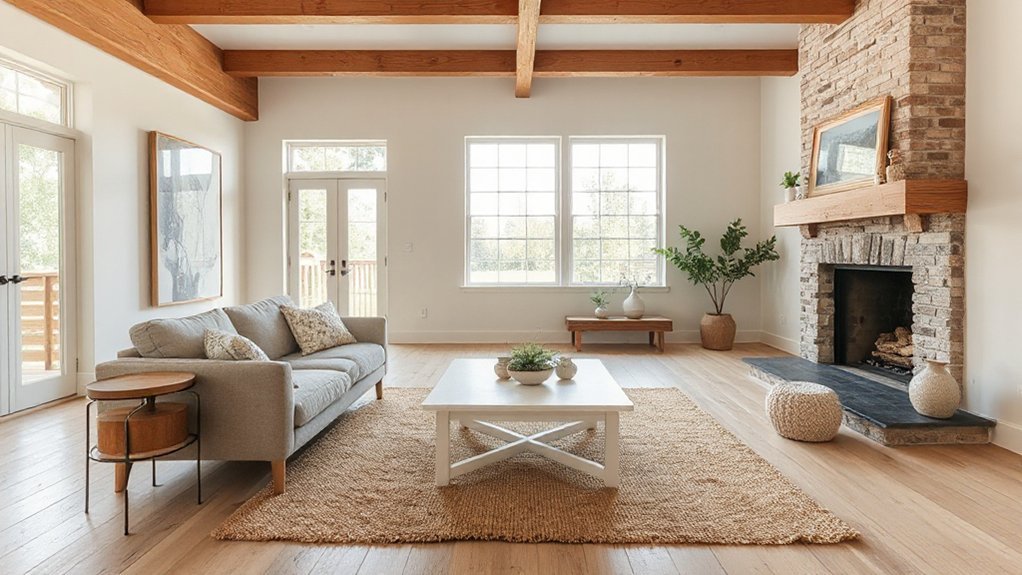
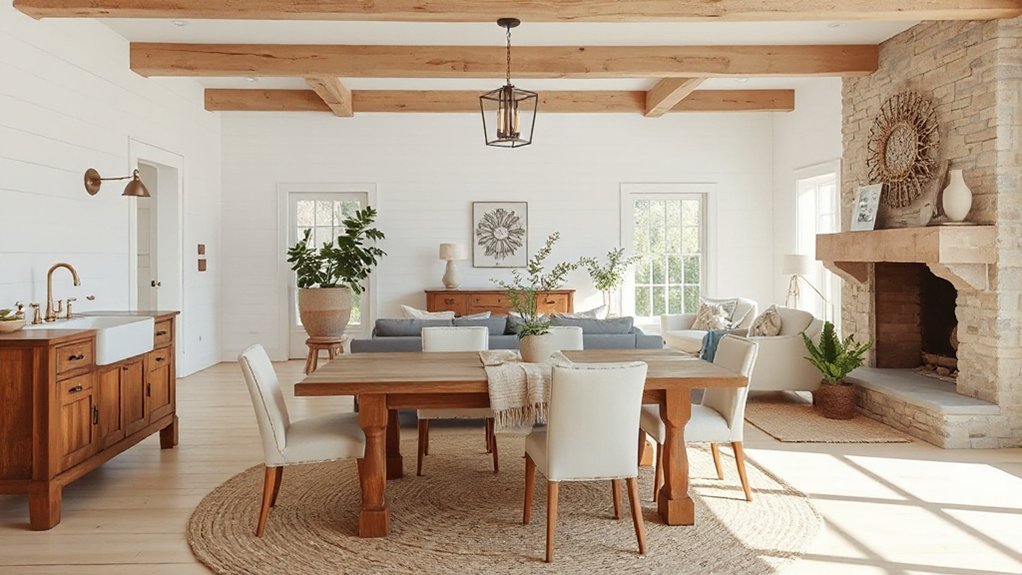
Modern farmhouse living rooms strike a balance between cozy textures and clean lines, making these spaces welcoming without feeling bulky. You’ll pair rugged, rustic accents with streamlined silhouettes to keep warmth without clutter.
Start with a neutral base: soft creams, warm whites, and a matte charcoal for contrast. Introduce texture through a chunky knit throw, linen upholstery, and a sun-washed wood coffee table.
Storage should be practical and visible; use open shelving with labeled baskets to reduce visual weight.
Incorporate modern technology discreetly—hidden outlets, wireless charging pads, and a smart speaker—so function boosts comfort without distraction.
Choose lighting that softens edges: shaded lamps, a neutral-toned chandelier, and dimmable options to adapt ambiance.
Finish with a durable rug that anchors furniture, resisting wear while enhancing coziness.
Lighting That Feels Vintage but Fresh
Vintage-inspired lighting can elevate a room by pairing nostalgic silhouettes with modern efficiency, so choose fixtures that echo eras like mid-century or industrial without feeling dated. You’ll balance form and function by selecting bulbs and finishes that read as timeless rather than cliché, delivering both brightness and character.
To implement with precision, prioritize scale, glare control, and dimming.
- Choose a statement pendant with a metallic finish to anchor a room, delivering Vintage charm while remaining practical.
- Pair a wall sconce in an aged brass with a modern-glass shade to fuse Modern elegance and utility.
- Add recessed LEDs hidden behind a vintage-style lattice to maintain ambiance without overpowering architectural details.
Soften With Textiles: Linen, Wool, and Rustic Textures
Textiles are your quickest upgrade for coziness, so lean on linen, wool, and rustic textures to soften hard lines and brighten rooms with tactile depth. You’ll texture surfaces through textile layering, pairing linen drapes with wool throws and a textured cotton or jute rug.
Choose neutral tones as a base, then introduce subtle color via pillows and quilted upholstery to avoid visual overload. Prioritize natural fibers for durability and breathability, and match weave weights to room function: lighter linens for living spaces, heavier wool for chairs and throws.
Maintain clean edges and minimal patterns to preserve a calm, farmhouse feel. Keep cozy textures balanced with ample daylight and a few sculptural textiles to emphasize dimension without clutter.
Finishes and Materials: Stone, Brick, and Weathered Wood
Stone, brick, and weathered wood bring nature’s texture into your home while aging gracefully with minimal maintenance. You’ll choose finishes that balance rugged character with clean lines, emphasizing longevity and ease of care. Use these core strategies:
1) Pair stone or brick with neutral walls to highlight texture and create a timeless backdrop.
2) Layer weathered wood in structural elements or accents for warmth, while preserving a contemporary edge with matte metal details.
3) Integrate rustic charm and industrial accents through lighting, hardware, and open shelving to achieve cohesive contrast.
Technique tips keep maintenance simple: seal stone to prevent staining, use durable brick finishes, and opt for low-sheen wood finishes.
This approach yields durable surfaces, authentic texture, and a refined farmhouse aesthetic.
Warm Color Palettes for Suburban Farmhouses
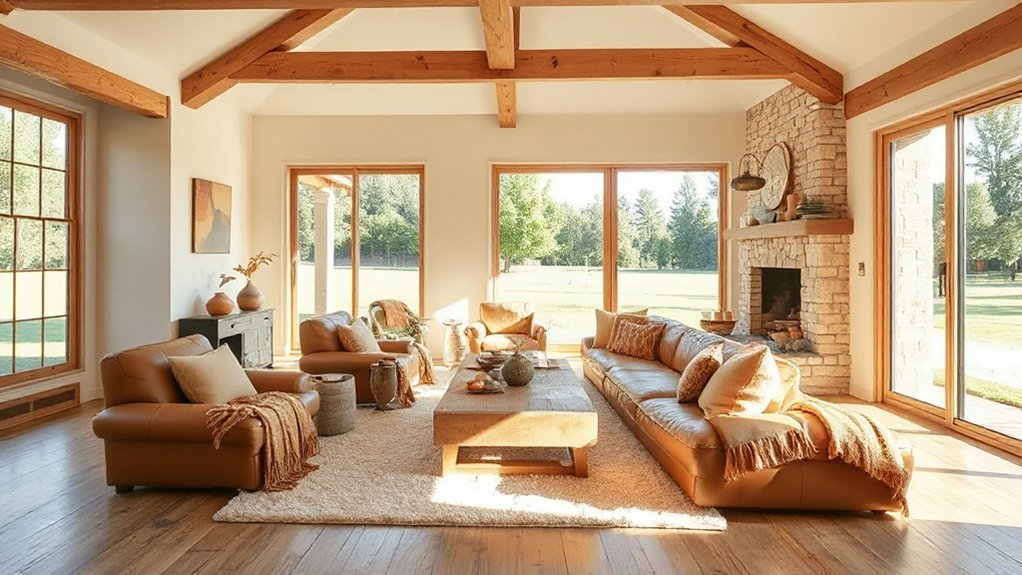
Warm color palettes anchor suburban farmhouses with welcoming warmth and timeless appeal, balancing cozy interiors with light, airy spaces. You’ll pair warm neutrals—creams, taupes, and soft greiges—with accents in muted terracotta, sage, and charcoal for depth.
Use strategic contrast: a parchment wall in living areas highlights architectural features, while charcoal trim grounds the room. Introduce vintage accessories sparingly to add character without heaviness, selecting pieces with finishes that echo aged brass or patinaed wood.
For textiles, choose natural fibers in warm tones to deepen the palette without overwhelming. Rustic lighting, such as oversized wrought-iron fixtures or distressed lanterns, provides focal points and casts inviting glows.
Keep color shifts gradual across adjoining rooms to sustain flow and perceived spaciousness.
Functional Storage Without Clutter
Hidden cabinet solutions tuck away daily essentials without intruding on your design, keeping rooms clean and calm. Use multi-functional surfaces that hide storage in plain sight—think desks with built-in drawers or coffee tables with concealed compartments.
Vertical storage ideas maximize wall space with slim units and open shelving that still reads tidy and intentional.
Hidden Cabinet Solutions
Maximize storage without sacrificing aesthetics by choosing hidden cabinet solutions that blend seamlessly with your existing design. You’ll find hidden cabinet options that hide in plain sight, maintaining clean lines while expanding capacity. Prioritize concealed storage in kitchens, pantries, and laundry nooks to keep clutter off displays and counters.
- Install toe-kick drawers beneath base cabinets to utilize the usually wasted space.
- Integrate push-to-open panels with lipped edges for seamless, magnet-free access.
- Choose shallow wall niches with door fronts that match your cabinetry for a discreet, cohesive look.
Aim for uniform hardware and consistent finish to preserve the farmhouse feel. This approach delivers functional storage without visual disruption, ensuring a tidy, inviting environment.
Hidden cabinet solutions prove you can organize beautifully without sacrificing style.
Multi-Functional Surfaces
From hidden storage, you can pivot to surfaces that do double duty, keeping counters clear while boosting function. Multi-functional surfaces layer efficiency into daily routines without adding bulk. Choose solid wood boards that fold into breakfast natches or extendable butcher blocks that tuck away after meals.
Integrate pull-out trays beneath islands for prep work, then slide them back to reveal clean lines. Add recessed charging stations and slim organizers within countertops to cradle phones, keys, and mail, minimizing clutter. Opt for moisture-resistant finishes that wipe clean, preserving rustic charm while supporting heavy use.
Choose farmhouse decor elements like open tray dividers and tray-inset lids to maintain order. Prioritize durable textures, shallow depth, and intuitive access, so every surface earns its keep.
Vertical Storage Ideas
Vertical storage can transform tight spaces by directing items upward, keeping surfaces clear and workflows smooth. You’ll optimize every nook with practical, visible organization that remains stylish.
- Install wall-mounted cabinets and pegboards to hold frequently used items within reach, guided by a clean vertical line.
- Choose vintage decor-inspired bins and baskets that pair with farmhouse accents, ensuring textures feel cohesive yet distinct.
- Integrate tall shelving with labeled tiers, using adjustable heights to adapt to seasonal needs without clutter.
Focus on intent: items live where you use them, not hidden away. Slim, recessed lighting highlights storage zones, preventing shadowed corners.
Regularly purge, rotate tools, and maintain a simple color palette to preserve a calm, functional aesthetic.
Designing Outdoor-Indoor Flow for Suburban Yards
Designing outdoor-indoor flow starts with a clear plan to blur edges between living spaces and the yard, so you can move naturally from indoors to outside without obstacles. You’ll map sightlines from doors to seating and dining zones, prioritizing level passages and minimal thresholds.
Choose a cohesive material palette that extends from floorboards or rugs inside to decking or pavers outside, reinforcing continuity. Create defined routes with garden pathways that guide traffic and frame views, avoiding clutter at entry points.
Position outdoor furniture to mirror indoor layouts: a living area with a shaded seating cluster, a dining nook near the kitchen exit, and a quiet retreat for reading.
Guarantee weather protection, durable finishes, and easy storage to sustain daily use.
Small-Space Comfort: Maximize Every Floor Plan
When every square foot counts, optimize layouts that prioritize flow, function, and light. You’ll sculpt rooms that feel spacious by pairing built-ins with vertical storage and clear sightlines, reducing clutter without sacrificing charm.
Embrace modular seating and movable tables to adapt spaces for guests or daily tasks, preserving floor real estate while enhancing comfort. Focus on zones: compact dining near the kitchen, a seating nook by a window, and a quiet workstation tucked under eaves.
1) Storage-first design: pullouts, baskets, and hidden compartments
2) Light maximization: reflective surfaces, sheer curtains, and strategic mirrors
3) Furniture choreography: scale, placement, and multi-use pieces that transition with you
Vintage charm, rustic elegance blend seamlessly in every carefully planned corner.
Budget-Smart Upgrades With Big Impact
You can start with energy-smart appliance swaps to cut ongoing costs without sacrificing performance.
Fresh paint and a fresh look refresh rooms quickly, while DIY storage solutions reclaim cluttered corners with precision.
Together, these moves deliver tangible upgrades on a budget, aligning efficiency, aesthetics, and practicality.
Energy-Smart Appliance Swaps
Upgrading your home’s efficiency starts with budget-smart appliance swaps that pay back fast. You’ll target key loads first, choosing Energy Star models and smart thermostats to cut phantom energy and optimize cycles.
Prioritize compact, high-efficiency dishwashers, refrigerators, and clothes washers that preserve performance while lowering consumption.
1) Replace aging units with tiered efficiency upgrades, focusing on annual energy use and compatible electrical circuits.
2) Pair appliance swaps with energy-conscious habits, like running full loads and scheduling off-peak cycles.
3) Integrate energy-smart lighting and solar power integration where feasible, ensuring panels or converters align with inverter capacity for reliable reserves.
This approach delivers measurable savings, reduces heat load, and supports a calmer, more efficient farmhouse aesthetic.
Fresh Paint, Fresh Look
Fresh paint offers a budget-smart upgrade that reshapes a room’s feel without demanding major renovation. You select a hue aligned with color psychology to influence mood: calming blues for bedrooms, warm neutrals for living spaces, and crisp whites to maximize light.
Start with clean, repaired surfaces, then apply painter’s tape precisely along edges. Use two coats for true color delivery, letting each layer dry fully to prevent streaking.
For even coverage, maintain a consistent brush or roller technique and use thin, overlapping strokes. Consider an accent wall to create focal depth without overwhelming the room.
Choose a low-odor, washable finish for practicality and longevity. Plan color gradations by testing samples on an unobtrusive patch, observing under different daylight and lamp conditions before committing to the entire space. paint application, color psychology.
DIY Storage Solutions
Can you reclaim cluttered spaces with budget-smart DIY storage solutions that deliver big impact? You can, with careful layering of walls, furniture, and clever bins. Begin by wall-mounting open shelving in entry halls and kitchens to keep daily items visible yet contained.
Next, repurpose preexisting crates or slim rolling carts into movable organizers for laundry, tools, or craft zones. Finally, conceal clutter behind cabinet doors or curtain panels, and label containers for quick returns.
1) Install pegboard panels with hooks and baskets to maximize vertical space.
2) Use storage benches with hidden compartments in mudrooms or entryways.
3) Create a compact pantry with labeled jars and a labeled wire rack.
Garden planning awareness and outdoor lighting keep pathways clear, inviting, and bright.
Personalizing Your Farmhouse: Vintage Finds and Smart Home Harmony
You don’t have to choose between vintage charm and modern ease when personalizing your farmhouse; smart integrations keep the look clean while adding practical, everyday value.
Start with a curated mix: select vintage decor pieces that anchor rooms, then layer in smart technology for effortless control. Choose a retro console with built-in outlets to power sensors discreetly, and pair it with a smart speaker hidden behind a cabinet door for clean lines.
Prioritize compatibility, not novelty; assure lighting, climate, and security systems communicate seamlessly. Use programmable routines to mirror daily rhythms—morning brightness, evening warmth, away-mode security.
Document setup steps and labeling so anyone can operate it without guesswork. Maintain a cohesive palette, and let texture—woven throws, aged wood, brass hardware—underscore the fusion of past and present.
Frequently Asked Questions
How Can I Mix Modern and Traditional Farmhouse Styles Cohesively?
To mix modern and traditional farmhouse styles cohesively, you blend clean lines with rustic accents. Start with a neutral base, then introduce Rustic accents—textured wood, wrought-iron lighting, and matte black hardware.
Add Vintage textiles—plaid throws, linen curtains, and faded quilts—to infuse warmth without clutter. Keep scale balanced, repeat a unifying material, and curate a few statement pieces.
You’ll achieve harmony by prioritizing intentional contrasts, not competing elements.
What Are Budget-Friendly, Durable Farmhouse Flooring Options?
You’ll want budget-friendly, durable options like luxury vinyl plank or ceramic tile with a wood-look finish, plus sealed concrete for longevity.
For farmhouse lighting, pair warm-toned fixtures with subtle rustic accents to extend durability and style.
Look for water- and wear-resistant surfaces, easy maintenance, and solid warranties.
Choose interlocking or click-lock installations to save labor costs.
Prioritize boards with a clear finish and UV protection to prevent fading over time.
Which Paint Colors Best Resist Wear in Busy Suburban Homes?
You should choose paints that resist wear by using satin or semigloss finishes in durable brands, especially in high-traffic areas.
Opt for lower-sheen tones like warm neutrals, greiges, and soft whites, and seal with high-quality stain-blocking primer.
For durability, pair them with durable topcoats and color-tested samples.
Vintage accents and Rustic textures help disguise scuffs, while you’ll appreciate the easy touchups after busy days.
Prioritize washable pigments and staggered color contrasts for lasting appeal.
How Do I Optimize Storage in Small Farmhouse Kitchens?
You optimize storage in a small farmhouse kitchen by planning compact,入口-friendly layouts and smart shelving. Use vertical storage, pull-out pantry modules, and deep drawers to maximize every inch.
Install a pegboard wall for lightweight tools and a magnetic strip for metals. Choose fold-away island options and hinged countertops.
Integrate Farmhouse decor with vintage accessories to create order and charm, keeping frequently used items accessible. Regularly purge excess to maintain a clutter-free, functional space.
Can Farmhouse Design Support Smart Home Technology Integration?
Yes, farmhouse design can support smart home tech, no problem at all. Irony aside, you’ll embrace Smart lighting and Voice control without sacrificing charm.
You wire nodes discreetly, pick rugged yet friendly fixtures, and pair them with a centralized hub. You’ll automate lighting scenes, dimming for evenings, and voice-activated routines for daily tasks, all while preserving wood tones and warm textures.
Practical, precise, solution-focused setup keeps your space effortless and inviting.
Conclusion
You’ll notice the pieces fall into place just as you hoped—like a well-timed coincidence that makes sense. The kitchen’s warm woods meet the living room’s clean lines, while linen textures whisper calm in every corner. Your outdoor-indoor flow aligns with yard rhythms, maximizing space without clutter. Small tweaks, smart storage, and vintage accents quietly harmonize with smart tech. In the end, your suburban farmhouse feels personal, practical, and effortlessly inviting—precisely where cozy meets modern.
About the Author