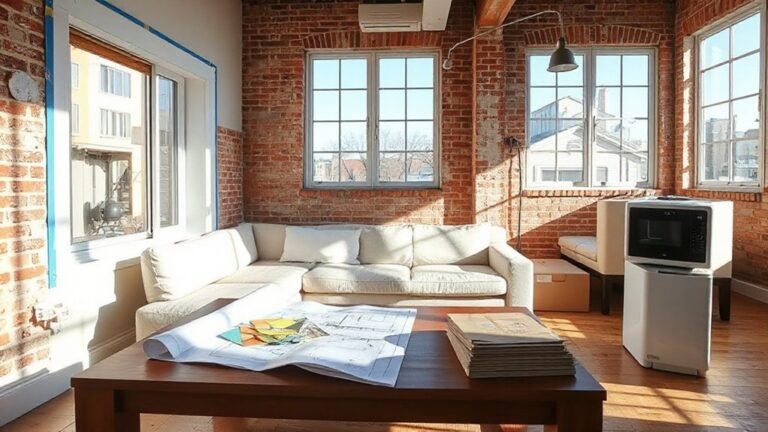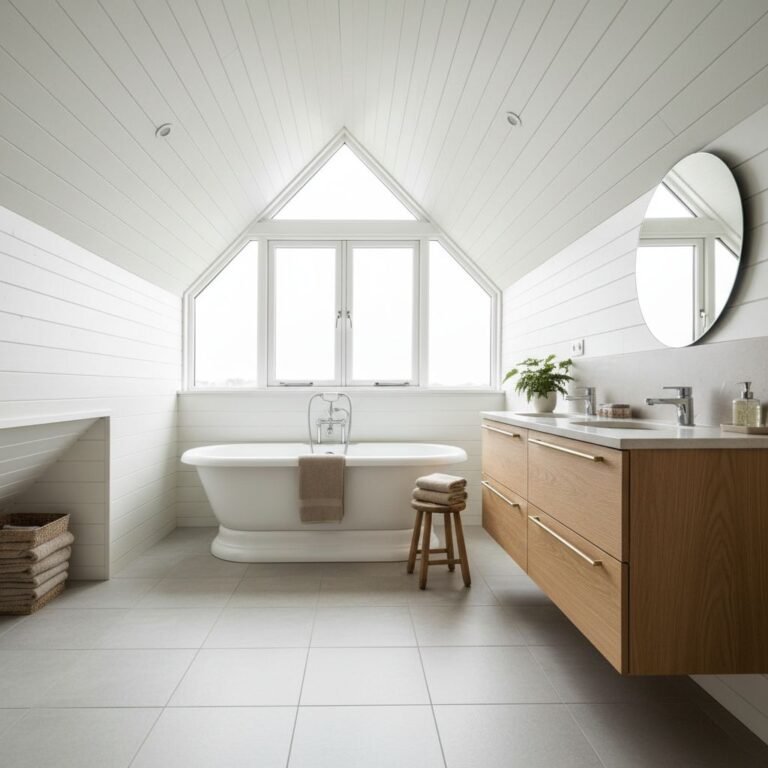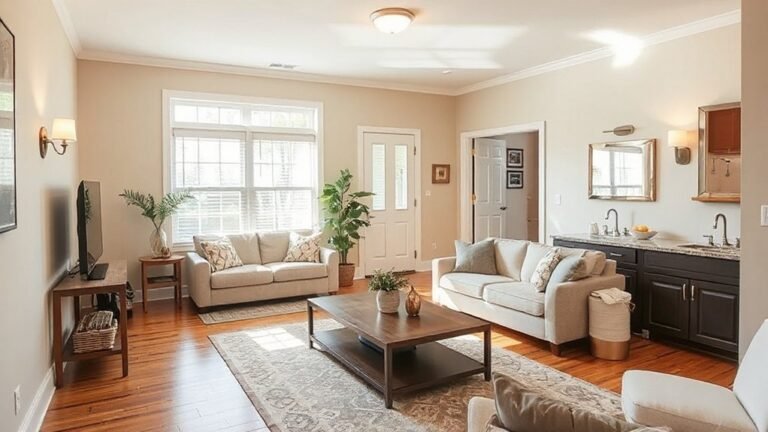
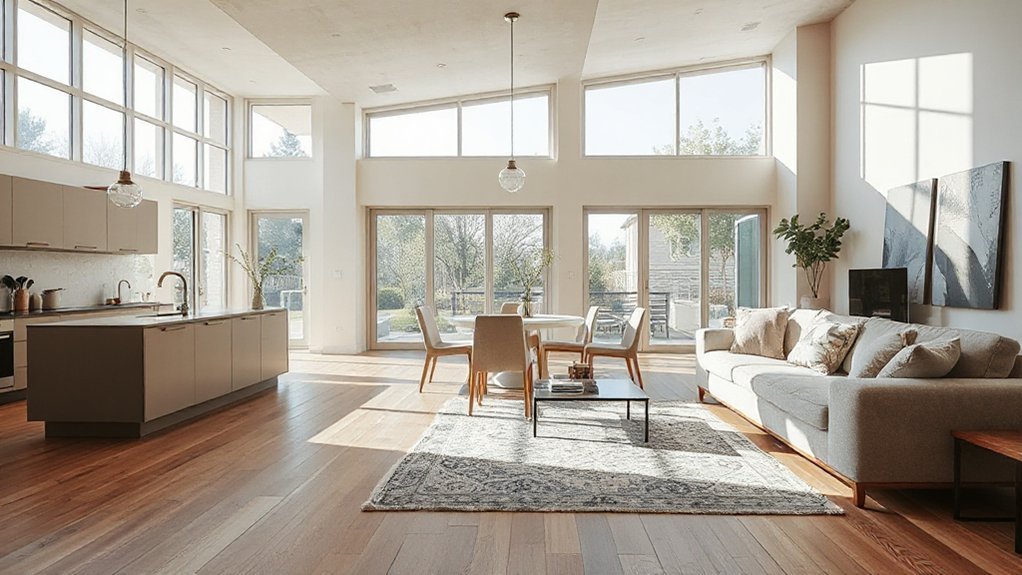
Open-plan living is about blending kitchens, dining, and lounges into one usable flow, not a blank canvas. You’ll notice how sightlines boost supervision and quick layout changes empower you to adapt as life shifts. Yet noise and privacy won’t vanish on their own, so your plan must include smart partitions, zoned zones, and cohesive finishes that calm as they connect. Curious how to balance openness with quiet? Let’s map practical ideas that actually work.
Key Takeaways
- Open-plan living prioritizes flow and sightlines by removing walls while using intentional zoning to preserve function and privacy.
- Benefits include seamless daily routines, improved supervision, flexible layouts, faster design iteration, and effective privacy via smart zoning.
- Common drawbacks are privacy loss and noise challenges; mitigate with acoustic screens, partitions, and layered textures.
- Quick-win zoning and storage tricks: modular dividers, hidden labeled storage, low-profile screens, and glass/perforated panels for light and sound balance.
- Cohesion hinges on a core palette, aligned architectural details, consistent lighting, and placing key activities within sightlines.
What Open-Plan Living Really Is (And Isn’t)
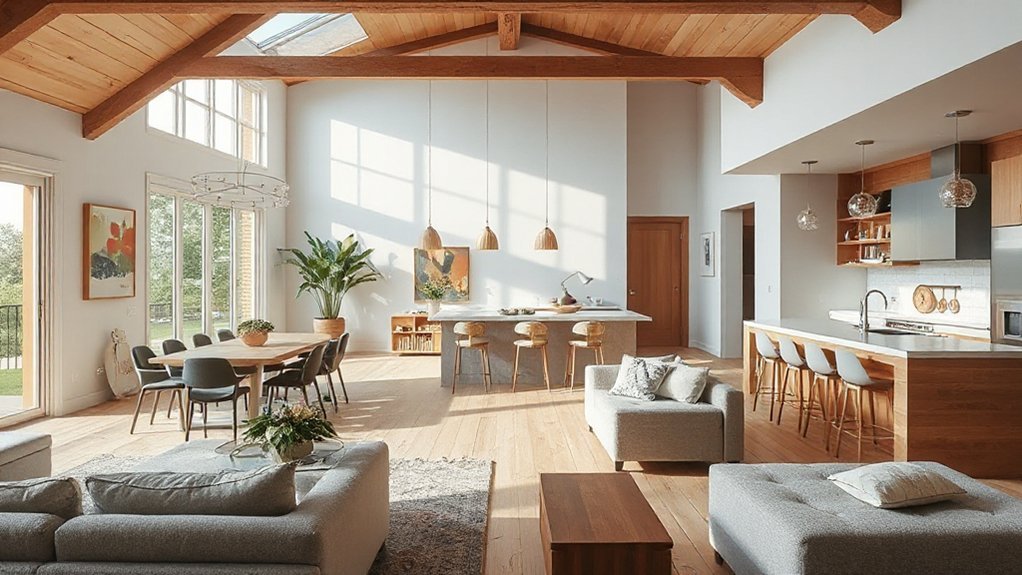
Open-plan living is more about flow than layout alone: it’s the deliberate removal of unnecessary walls to create spaces that breathe, adapt, and connect. You’ll redefine rooms by function, not borders, so you can see, hear, and move through activities without friction.
It’s not a free-for-all; it’s intentional zoning that preserves sightlines while prioritizing purpose. You’ll design around daily rhythms—meals, work, relaxation—without rigid separations.
Yet you must address privacy concerns: locate quiet corners and use visual screens or shelving to create temporary seclusion without breaking the openness. Noise control matters, too; incorporate soft surfaces, rugs, and acoustic panels where hard reflections threaten clarity.
Real open-plan is disciplined generosity—bright, flexible, and connected—so you can adapt as life shifts while maintaining a cohesive, purposeful home.
The Open-Plan Benefits That Matter
One core benefit is seamless everyday life: fewer walls mean fewer barriers between cooking, dining, and relaxing, so you can respond to needs in real time without interruptions. Open concept myths aside, the flow boosts efficiency, social connection, and evolving use, helping you adapt as life changes.
- It clarifies daily routines by aligning zones for work, play, and meals without rigid separations.
- It enhances supervision and safety, letting you monitor kids or guests while staying engaged with tasks.
- It supports flexible furniture layouts that optimize sightlines and acoustics without sacrificing privacy.
- It accelerates design iteration, letting you test lighting, color, and material choices in one cohesive space, rather than staged corners.
Privacy concerns fade when you integrate smart zoning and ample storage to preserve quiet moments.
Unexpected Drawbacks and How to Mitigate Them
Despite its advantages, open-plan living isn’t without drawbacks, and addressing them early keeps the concept practical. You’ll face privacy concerns when compartments dissolve, so plan zones with subtle boundaries: acoustic screens, bookcases, and sliding panels that don’t kill flow.
Think about noise management through thoughtful layouts—place high-activity spaces near kitchens or entrances, and tuck bedrooms behind sound-absorbing partitions. Use variable lighting and layered textures to cue different moods without shouting, maintaining focus and calm.
HVAC requires care, too; drafty openings amplify disturbances, so seal transitions and install controlled vents.
Furniture choices matter: low-profile storage reduces clutter-induced distraction, while multipurpose pieces keep spaces flexible.
Finally, map routines so everyday crescendos don’t collide, preserving intimate moments amid communal energy.
Quick-Win Zoning and Storage Tricks
A smart start is small, fast, and high-impact: quick-win zoning that preserves flow and quick-access storage that clears clutter. You foreground efficiency with smart partitions, sightlines, and magnetic or modular dividers that sculpt zones without walls. Pair this with hidden, labeled storage that’s reachable in a snap, so clutter never resists your daily routine.
Lighting enhancements and privacy solutions subtly redefine spaces, boosting mood and focus while maintaining openness.
- Install low-profile modular screens to create soft zones, then tuck lighting into coves for ambient separation.
- Use wall-mounted shelves with labeled bins for grab-and-go storage near workspace and living areas.
- Add glass or perforated panels to modulate sound and sightlines without blocking light.
- Integrate uplights and task lights to sharpen zones and maintain privacy where needed.
Finishes and Layouts for Cohesion, Not Chaos
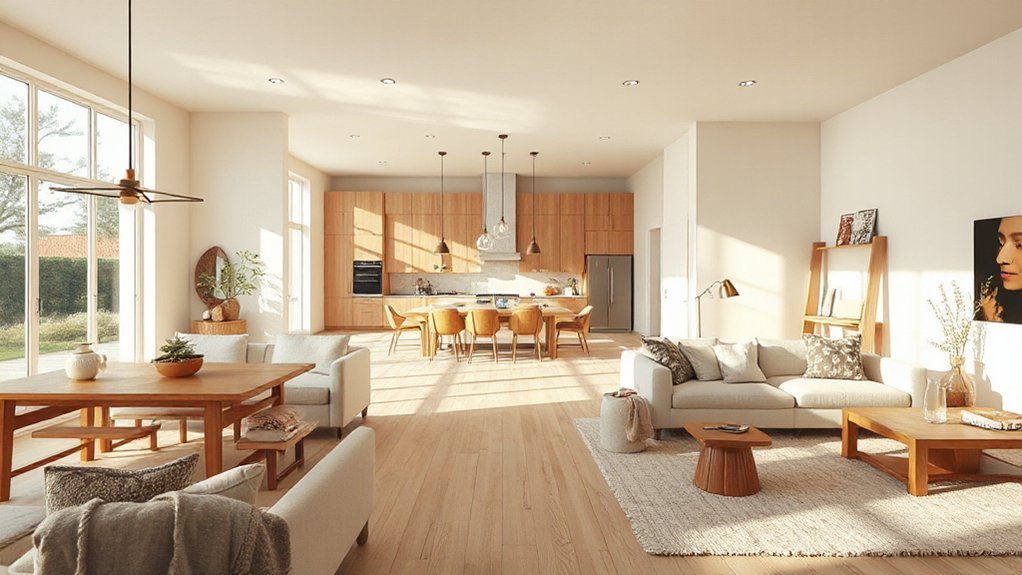
Finishes and layouts should thread spaces together rather than pull them apart, so you choose materials, colors, and textures that read as a single story. For cohesion, pick a core palette and carry it across floors, cabinetry, and cushions, then layer with texture to keep interest without chaos.
Prioritize color coordination: recurring tones or undertones across zones reduce visual noise and guide connections. Align architectural elements—ceiling height, baseboards, and door hardware—to reinforce a unified feel.
In layout, place key activities within sightlines, using sight-restrictions and soft boundaries (area rugs, shelving) rather than walls to separate uses.
Guarantee lighting consistency: steady color temperature and calibrated brightness across rooms, so you feel connected, not pulled apart, as you move through the space.
Frequently Asked Questions
How Does Open-Plan Affect Acoustics and Privacy?
Open-plan spaces reduce privacy and can worsen acoustics if you don’t manage sound. You’ll notice more echoes and spread noise between zones, challenging focus and conversation.
To fix it, prioritize sound absorption with soft surfaces, textiles, and diffusers, plus strategic zoning.
Use noise control measures like shelving, plants, and ceiling clouds to trap sound.
Plan for regional zones, doors, and privacy screens to reclaim quiet zones while keeping openness.
What Are Budget-Friendly Soundproofing Options?
Did you know a simple DIY doorway can cut noise by up to 20%? You can start with low-cost, cost-effective options: weather-stripping doors, adding draft stoppers, and sealing gaps around windows.
Use thick, furniture-grade felt pads behind outlets, and hang dense curtains for mass. For walls, consider inexpensive acoustic panels or mattress toppers as temporary fixes.
These DIY solutions are practical, budget-friendly, and your vision for quieter spaces becomes achievable now.
How Can You Create Defined Zones Without Walls?
You can create defined zones without walls by using decor zoning and strategic furniture arrangement. Start by grouping related activities into distinct areas.
Then, place rugs, lighting, and color shifts to cue boundaries. Position sofas, bookcases, and consoles to channel traffic and form subtle barriers.
Use vertical elements, like tall plants or screens, and consistent materials to unify the space. You’ll gain visual separation, improved acoustics, and a cohesive flow that stays open and flexible.
Which Lighting Schemes Work Best in Open Spaces?
Ambient lighting softens the space, while task lighting sharpens focus where you need it. In open spaces, you mix dimmed ambient with directed task cues, creating zones without walls.
You’ll install layered sconces, track lights, and under-cabinet LEDs to guide movement and highlight textures. Balance brightness, color temperature, and glare control.
You’ll switch scenes for dining, lounging, and work, using dimmers and smart controls to harmonize practicality with visionary, flexible design.
How to Plan for Future Furniture Changes?
You plan for future furniture by prioritizing Flexible furniture and Modular layouts, so spaces adapt as needs shift. Start with scalable pieces, multi-use surfaces, and easy-to-reconfigure zones.
Measure clear sightlines and cable routes to accommodate changes without clutter. Choose neutral, durable finishes and track lighting that won’t box you in.
Leave space for evolving tech and seating that rearranges for gatherings. This mindset keeps your open-plan flexible, functional, and future-forward.
Conclusion
Open-plan living isn’t chaos; it’s a compass. You’ll steer with zoning, smart partitions, and hidden storage, turning noise into a soft hum and sightlines into a thread that ties rooms together. Finish with cohesive materials and lighting that glow in harmony, not competition. Stay practical: test layouts, iterate, and adapt. You’ll craft spaces that feel expansive yet intimate, social yet private—a balanced orchestra where every note earns its place and purpose.
About the Author