You want depth, you want warmth, you want efficiency. You can highlight architecture with uplights, wash walls with color, and guide guests with a layered glow. You can pair safe pathways with inviting entries and quiet accents for plants and water features. You can control it all with smart, energy-smart choices that last. But the details matter—there’s more to balance, and the next steps could reshape your curb appeal.
Key Takeaways
- Use warm porch lighting and architectural uplights to create inviting curb appeal that highlights entrances and seating areas.
- Highlight façade textures with a mix of uplights and wall-washes for depth and architectural emphasis.
- Line pathways with low-profile bollards or recessed lights for safe, even illumination and subtle drama.
- Layer lighting (ambient, task, accent) to balance safety, mood, and visual interest across exterior spaces.
- Integrate smart controls and color-tuning to adapt mood, energy use, and emphasis for different occasions.
What Makes Outdoor Lighting Stand Out at a Glance
Outdoor lighting stands out at a glance because it blends function with atmosphere. You notice how well-placed fixtures guide paths, highlight architectural details, and create inviting silhouettes. This balance matters: lighting should support outdoor decor without overpowering the scene.
You’ll choose fixtures that complement materials—stone, wood, metal—and align with seasonal themes to keep the look cohesive year-round. Practicality stays at the forefront: consider brightness levels, color temperature, and durability for weather exposure.
You also assess how lighting interacts with landscape elements, ensuring shadows add depth rather than confusion. In minutes, you can transform curb appeal by pairing narrow bollards with uplights that frame eaves.
The result is a controlled, welcoming ambiance that feels intentional, refined, and adaptable to changing moods and occasions.
Design Criteria for Outdoor Lighting: Safety, Mood, and Efficiency
Design criteria for outdoor lighting balance three core aims: safety, mood, and efficiency. You’ll prioritize lighting technology and fixture selection that yield reliable illumination, comfortable contrast, and energy awareness. Consider how design choices guide behavior, deter hazards, and enhance curb appeal without glare or overillumination. Precision in placement and control guarantees you meet intended purposes without waste.
- Safety-first placements emphasize boundary visibility and pedestrian pathways with glare-free, evenly distributed light.
- Mood optimization uses warm color temperatures and layering to subtly shape perception and ambiance.
- Efficiency relies on low-wattage options, smart controls, and appropriate dimming to conserve energy.
- Compatibility focuses on fixtures suited to weather, soil, and mounting constraints while maintaining consistent aesthetics.
Layered Lighting Basics: Ambient, Task, and Accent
Layered lighting organizes illumination to support safety, mood, and efficiency without overpowering the scene. You’ll balance three layers: ambient for general visibility, task for specific actions, and accent to highlight features.
The lighting hierarchy guides placement, intensity, and color temperature, ensuring shifts feel natural rather than jarring. Use ambient fixtures to create a soft baseline that defines paths and entrances; think evenly spaced wall washes or ceiling-mounted fixtures.
Add task lighting at outdoor work zones—porch railing, grill area, or doorway—providing focused, glare-free illumination.
Accent lighting then accents architecture, landscaping, or water features, drawing eye to depth and texture.
Embrace layered concepts to craft depth, mood, and safety, while maintaining energy efficiency and cohesive aesthetics.
Warm Porch Glows That Invite Guests Inside
You can start with a cozy porch that’s softly illuminated by warm tone fixtures, inviting guests to linger as they approach your door.
Choose lighting that creates a welcoming glow at varying levels—enough to guide feet without overpowering the entrance.
This balance of cozy, warm accents supports a practical, confident first impression.
Cozy Porch Lighting
A warm porch glow welcomes guests before they even step inside, so start with lighting that blends function and mood. You’ll optimize visibility at entry points while setting a relaxing tone, using fixtures that complement your exterior style. Balance task lighting for steps and seating with ambient accents that invite lingering conversations. Include subtle features like low-glare LEDs and warm CCTs to maintain comfort as dusk settles.
Integrate elements such as a fire pit and thoughtfully traced garden pathways to unify the scene and guide guests naturally.
- Install dimmable sconces along the steps to control brightness without glare.
- Place a weatherproof pendant above the seating area for focused yet soft illumination.
- Use path lights to outline garden pathways, enhancing safety and charm.
- Add a sheltered glow near the door to welcome guests as they arrive.
Warm Tone Fixtures
Warm porch glows rely on warm-toned fixtures that feel inviting rather than harsh, so choose lighting with soft, amber or golden hues and steady, low-glare outputs.
You’ll notice how vintage fixtures add character without overpowering entryways, creating a timeless first impression. Seek lamps with consistent color temperature around 2700–3000K to preserve coziness as guests approach.
Artistic designs can merge form and function, supporting safety while enhancing curb appeal; select silhouettes that complement your architectural style, whether classic or contemporary.
Aim for layered illumination: wall sconces at eye level, a subtle pendant, and floor accents guiding steps.
Prioritize durability and ease of maintenance in outdoor-rated finishes.
Calibration matters—check brightness at night and adjust to avoid glare for a welcoming, refined entrance.
Welcoming Glow Levels
By calibrating your porch lighting, you create an inviting glow that guides guests inside without overpowering the entry. Welcoming glow levels balance function and ambiance, letting you see steps clearly while setting a cordial tone as they approach.
- Use low-contrast layers along the garden path to softly guide footsteps without glare.
- Highlight architectural features with decorative lanterns at porch corners, not directly overhead.
- Choose warm temps (2700–3000K) to preserve color accuracy and a cozy feel.
- Place dimmable fixtures so you can modulate intensity for seasons, events, and mood.
Facade Highlights: Uplighting and Wall-Wash to Add Architectural Pop
Uplight for facade drama sets a bold stage, shaping the building’s silhouette after dark.
Wall-wash texture highlight reveals subtle surface details without glare, adding depth to the architecture.
Together, architectural angles are accentuated to guide the eye and elevate curb appeal.
Uplight For Facade Drama
Effective facade drama comes from carefully placed uplight and wall-wash that sculpt architectural details without washing out textures. You can achieve that punch by targeting key lines, eaves, and corner joints, then adjusting for depth and shadow. Prioritize contrast over glare to keep a refined look.
- Highlight architectural cornices with evenly spaced uplights to reveal form without hotspots.
- Use narrow-beam fixtures for crisp silhouettes, integrating festive accents and artistic fixtures.
- Layer light levels: uplight for structure, lower wall-wash for texture, avoiding over-illumination.
- Dimming capability lets you shift mood from subtle to dramatic with ease.
Wall-Wash Texture Highlight
Wall-wash elevates texture by casting soft, even illumination across surfaces, revealing brickwork, stone, or siding without creating hot spots. You’ll aim for a uniform glow that respects architectural lines and avoids glare. Choose fixtures with diffusers or lenses that spread light horizontally, not upward or downward aggressively.
The wall wash technique focuses on low-angle placement, so light travels over the surface rather than into your eyes. This approach enhances texture—you’ll notice subtle shadows and depth without harsh contrasts.
For best texture enhancement, position three to five fixtures along a façade, spacing evenly to ensure consistent coverage. Use warm-color temp (around 2700–3000K) to maintain natural tones.
Prioritize glare control, beam control, and compatibility with your existing outdoor lighting plan.
Architectural Angles Accentuated
To add architectural pop, blend uplighting with wall-wash to sculpt angles and emphasize façade geometry. You’ll reveal projections that trace cornices, pilasters, and setback planes, creating depth without clutter.
This approach crafts a garden symphony of shadows and light, where every plane reads clearly and purposefully. Guarantee lighting harmony by balancing color temperature and intensity across fixtures.
- Position uplights low and angled to carve edges without glare
- Apply wall-wash at a consistent distance for an even canvas
- Use warmer tones at entry quads, cooler tones on modern horizontals
- Dim beyond viewing hours to preserve night ambience and contrast
Pathways and Entryways: Safe, Stylish Illumination Ideas
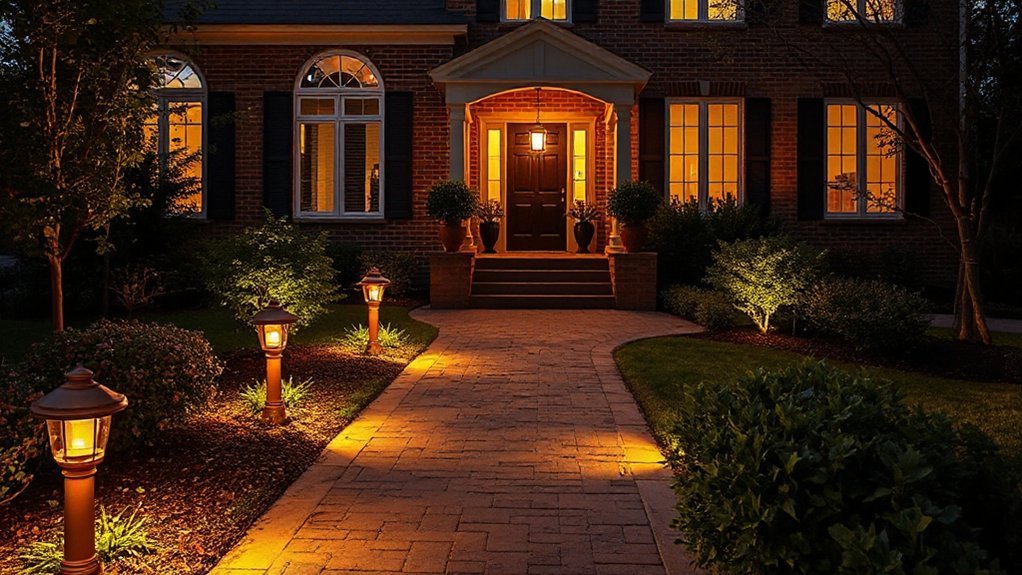
Pathways and entryways deserve lighting that guides you safely while elevating curb appeal. You’ll choose fixtures that provide even, glare-free illumination along walkways and at stairs, using warm color temperatures to invite steps without harsh contrast.
Plan low-profile bollards or recessed ground lights to define edges, paired with wall sconces at door height for security and ambiance. Keep switches accessible and consider motion-activated options to conserve energy while adding practicality.
Integrate garden art subtly with lighting to create focal points without overpowering paths, and position outdoor furniture to benefit from soft, indirect glow for social moments.
Prioritize durability, water resistance, and ease of maintenance, ensuring the setup remains pristine through seasons while preserving a refined, welcoming approach.
Landscape Accents: Spotlighting Trees, Shrubs, and Features
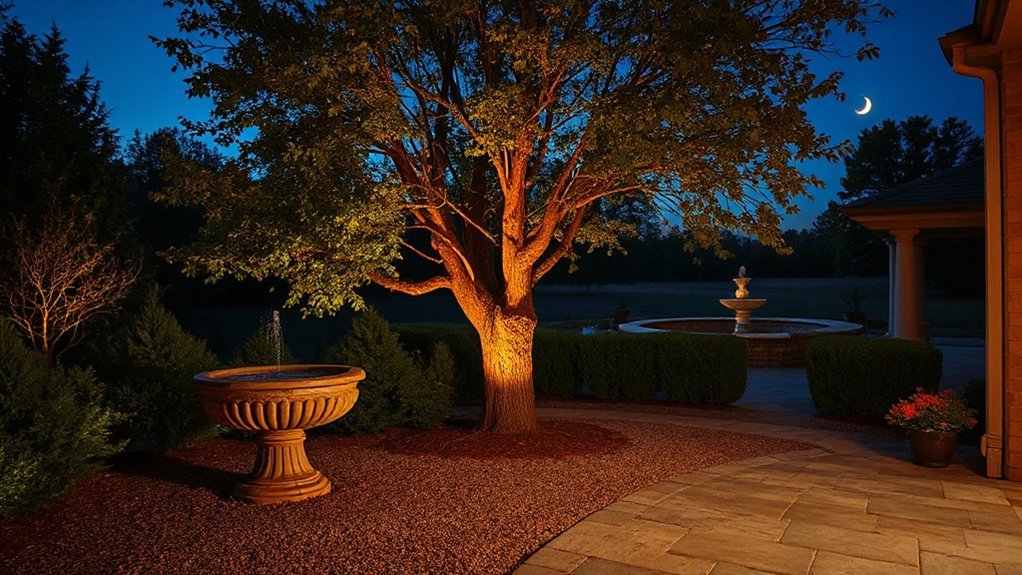
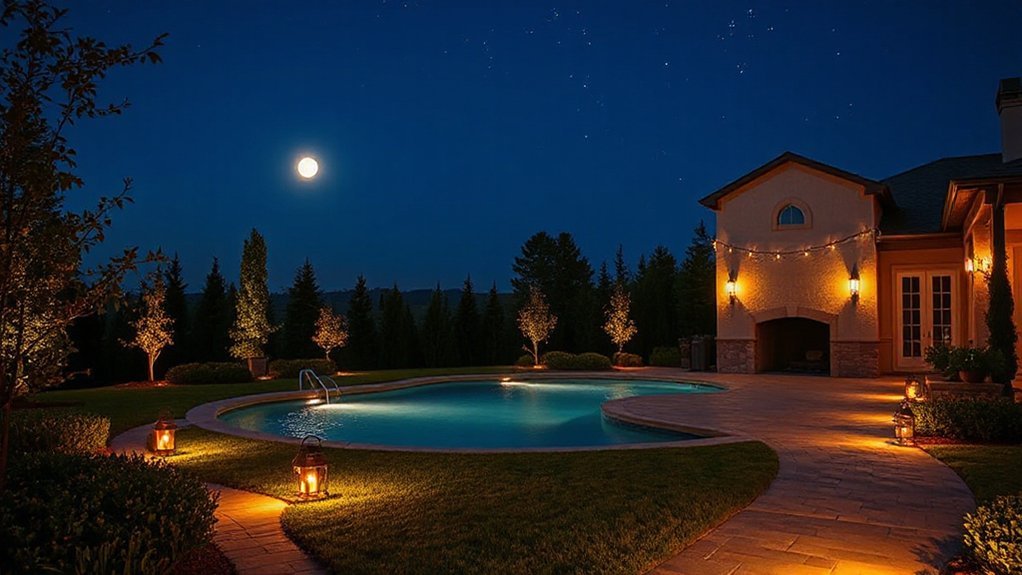
Trees, shrubs, and landscape features deserve deliberate lighting that reveals form and texture without glare, guiding the eye from focal points to surrounding planting beds. You shape night’s canvas by emphasizing structure, contrast, and subtle ambiance, ensuring safe navigation while highlighting artistry.
- Use shielded, directional fixtures to illuminate trunks and branches, creating sculptural silhouettes without spillover.
- Elevate garden sculptures with low-angled spotlights that reveal detail and shadow play at dusk.
- Illuminate water features softly to avoid glares on ripples, enhancing reflections and depth.
- Cluster lighting around focal plantings to balance contrast, guiding the view toward entrances and seating zones.
This approach enhances curb appeal, emphasizing garden sculptures and water features with precise, restrained illumination.
Color and Smart Lighting: Mood-Shifting, Controllable Options
Color and smart lighting let you shift mood on demand, with easy control over hue, intensity, and timing. You’ll tailor outdoor scenes by syncing ambient tones to activities, from relaxing evenings to lively gatherings.
Color psychology informs your choices: cooler hues for focus, warmer tones for comfort, and balanced blends for sociable spaces. Smart technology enables seamless adjustments via app, voice, or wall controls, so you can set scenes, timers, and dimming without moving a finger.
Consider zoning: designate primary seating with one mood, pathways with subtle accents, and entryways with welcoming warmth.
Consistency matters—match luminance levels to architectural features and landscape elements to avoid harsh contrasts. Prioritize reliable fixtures and color-rendering quality to preserve natural textures while achieving the desired atmosphere.
Energy-Smart Solutions: LED, Solar, and Automation Essentials
Energy-smart outdoor lighting hinges on three core components: efficient LEDs, renewable-powered options, and dependable automation. You’ll maximize energy efficiency by choosing high-CRI LEDs with lumen-per-watt efficiency and proper sizing to avoid overlighting.
Solar or grid-tied sustainability reduces running costs while preserving ambiance, and smart controls tailor usage to schedules and occupancy.
- Select LEDs with ideal efficiency and long life, matching color temperature to your landscape.
- Pair solar with grid backup or a low-voltage system to guarantee reliability.
- Implement motion sensors and timers to minimize waste without sacrificing security.
- Integrate a centralized controller for seamless scene setting, energy reporting, and adaptive automation.
This approach delivers practical, precise lighting that enhances curb appeal while protecting energy efficiency.
Timeless Outdoor Lighting Classics With Modern Twists
Even as you lean into modern twists, timeless outdoor lighting remains anchored in clean lines, subtle shadows, and reliable performance. You’ll find classic fixtures reimagined with contemporary finishes and efficiency, preserving form while elevating function.
Think lanterns and wall sconces that pair warm glow with precise beam control, shaping entry paths without glare. Materials endure: brass, copper, and dark bronze patinas age gracefully, complementing stone and wood architectures.
Timeless elegance emerges in balanced proportions, understated ornament, and glare-free illumination that guides rather than overwhelms.
Modern reinterpretations introduce dimmable LEDs, smart timing, and weather-ready seals, ensuring longevity and adaptable ambiance.
The result is a cohesive exterior rhythm: familiar silhouettes, refined textures, and purposeful lighting that enhances safety, architecture, and curb appeal.
Installation and Maintenance: Practical Steps and Routines
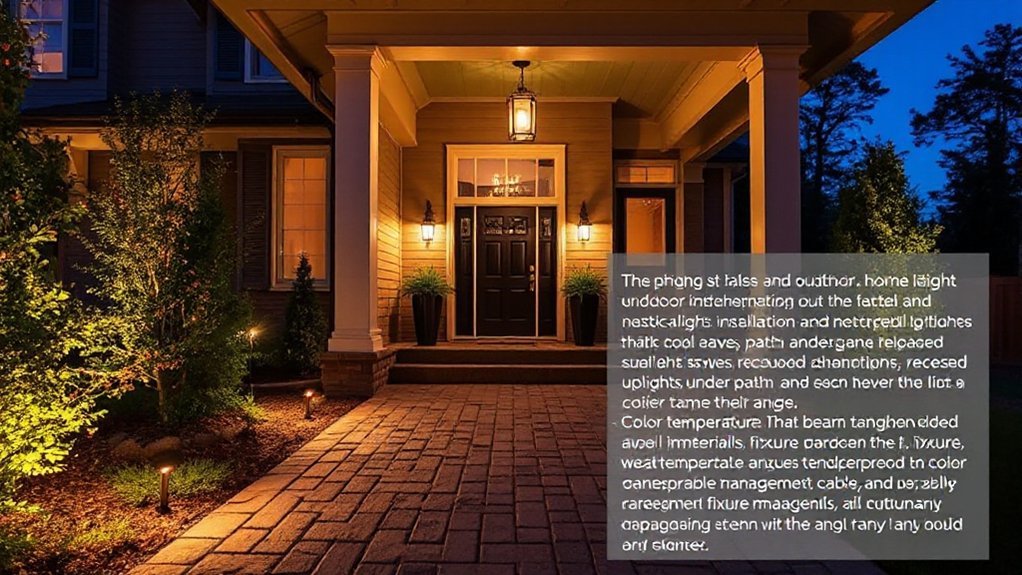
You’ll start by establishing a Routine Maintenance Checklist that keeps cords, fixtures, and photo cells orderly and accessible.
Then implement Seasonal Upkeep Plans to adapt for weather, growth, and changing daylight, ensuring timers and sensors stay accurate.
This discussion will focus on practical steps, clear responsibilities, and timely routines to prevent outages and extend your system’s life.
Routine Maintenance Checklist
To keep outdoor lighting reliable and safe, establish a routine maintenance checklist that covers installation verification, component inspection, and seasonal adjustments. You’ll ensure connections are secure, lenses are clean, and transformers operate within spec, minimizing outages and glare.
1) Verify wiring and mounting integrity, tightening fasteners and checking for corrosion.
2) Inspect bulbs, replace worn or flickering elements, and confirm proper color temperature for the landscape.
3) Test timers, sensors, and controls; recalibrate as needed for dusk-to-dawn performance.
4) Schedule seasonal adjustments, clean fixtures, prune nearby plants, and remove debris that blocks light.
Maintain awareness of garden herbs and outdoor furniture nearby to avoid overheating or accidental contact with hot housings. Regular upkeep preserves curb appeal and safety.
Seasonal Upkeep Plans
Each season, you perform targeted tasks: in spring, verify wiring if accessibility allows, replace failing components, and test dusk-to-dawn sensors.
In summer, prune nearby foliage to prevent glare and overheating.
In autumn, perform seasonal pruning to keep fixtures clear and optimize light spread, while inspecting seals for rain protection.
In winter, implement frost protection measures and secure delicate elements against ice, wind, and snow.
Your plan emphasizes simple, repeatable routines, minimizing downtime and extending fixture life while preserving curb appeal and nighttime safety.
Budget Planning for Outdoor Lighting: Prioritizing High Impact Per Dollar
Effective outdoor lighting starts with a clear budget that prioritizes high impact per dollar. You’ll maximize returns by choosing fixtures and placement that illuminate key features without waste, focusing on efficiency and longevity. Plan to balance upfront costs with long-term savings, and reserve funds for installation if you’re not DIYing.
- Prioritize high-visibility zones (entrance, path, patio) with cost effective lanterns and low-wattage LEDs.
- Leverage DIY installation where feasible to cut labor costs while ensuring proper wiring and weatherproofing.
- Invest in durable fixtures rated for your climate to reduce replacement frequency.
- Favor modular systems that allow future upgrades without complete overhauls.
Frequently Asked Questions
How Bright Should Outdoor Lights Be for Safety Without Glare?
You should aim for about 3,000–4,000 Kelvin for color temperature to avoid glare, keep consistent brightness, and guarantee safety.
Use staggered, layered lighting with motion sensors, and choose shielded fixtures to minimize glare.
For solar placement, position panels where they won’t cast shadows on paths at night.
Pick light color that preserves night vision, and dim to safe levels along walkways to reduce hot spots.
This balance preserves visibility and aesthetics without harsh glare.
What Fixtures Resist Weather and Corrosion Best?
Corrosion resistance and fixture materials that last are stainless steel, aluminum with powder coating, copper, and cast brass. You’ll want those with sealed electrical housings and gasketed joints to fend off moisture, salt, and debris.
Prioritize marine-grade or outdoor-rated finishes, and look for UL/IP ratings for reliability.
Choose fixtures with replaceable LED modules, and maintain a clean, even light.
These choices keep your exterior lighting durable, stylish, and low-maintenance over time.
Can Lighting Control Be Integrated With Existing Smart Devices?
Yes, lighting control can be integrated with your existing smart devices. You’ll enjoy seamless smart device compatibility, letting you synchronize your lights with schedules, sensors, and voice assistants.
Use lighting automation to set scenes, adjust brightness, and trigger events based on motion or sunset. Make certain your hub supports standard protocols (Zigbee, Z-Wave, or Wi‑Fi) and that your fixtures are compatible.
Then you’ll manage everything from one app, effortlessly.
How to Avoid Light Pollution While Staying Illuminated?
The best way to avoid light pollution while staying illuminated is to minimize light trespass and protect the dark sky. Use full-cutoff fixtures, shielded downlights, and motion-triggered lighting to limit glare.
Apply warm, low-intensity bulbs, and direct light only where needed. Implement timers, zoning, and dimming to reduce spill beyond your property line.
You’ll maintain visibility while respecting neighbors and the night environment, embracing a practical, Dark Sky–friendly approach.
What Maintenance Schedule Keeps LEDS Performing Well?
You should follow a regular maintenance schedule: inspect monthly, clean quarterly, and replace components annually. Like a steady heartbeat, this routine keeps your LEDs performing well.
Check seals, drivers, and connections for corrosion; dust lenses to preserve energy efficiency.
Track color temperature changes and brightness over seasons. Calibrate dimming and sensors as needed.
Use energy-efficient LEDs and replace aging strips promptly to maintain consistent color temperature and peak energy efficiency.
Conclusion
As you tune your outdoor lighting, remember how a quiet lighthouse guides a ship home. You’ll craft safeguarding shadows into safe, inviting pathways, and turn architectural lines into a stage where your home’s character shines. Like a well-tuned sonata, each layer—ambient, task, and accent—reads with precision, efficiency, and warmth. Embrace smart controls, sustain the glow, and let your curb appeal quietly reward you, tonight and every night.
About the Author