
Yes. In winter 2025, you should consider a backup power solution to protect essential loads, reduce outage downtime, and cut energy costs with a modular, hybrid setup tailored to your home’s load profile. Prioritize fast response, resilience, and future-proofing with scalable options—UPS, hybrid inverters, or grid-tied systems with storage. Plan for duty cycles, seasonal demand, and safety compliance. If you keep exploring, you’ll uncover practical steps to implement your resilient plan.
Choose the Right Backup Power for Winter 2025
Choosing the right backup power for winter 2025 means matching your home’s load profile to a reliable, scalable energy source. You prioritize predictable performance, rapid response, and long-term resilience.
Assess your essential circuits, then select a solution that can sustain them without oversizing beyond your peak needs. Consider modular, hybrid architectures that blend solar integration with storage for daytime capture and nighttime reliability.
A properly configured system reduces peak demand charges and smooths voltage dips, preserving equipment life and comfort. If you value autonomy, pursue grid independence through smart management that prioritizes critical loads during outages.
Guarantee compatibility with your existing panels and inverters, and verify potential future expansions. A strategic choice today delivers consistent, efficient power tomorrow.
Why Outages and Bills Make Backup Power Worth It
Outages expose the fragility of a fragile, weathered grid and force you to face costly interruptions to daily life and work. When the lights go out, you feel the ripple—loss of productivity, spoiled groceries, and compromised safety.
That pressure makes backup power not a luxury but a calculated asset. With energy storage, you lock in electricity you can draw on during spikes, outages, or price surges, reducing dependency on volatile utilities.
Power redundancy isn’t just about staying online; it’s about preserving critical routines, safeguarding electronics, and stabilizing monthly costs.
Strategic sizing, coupled with reliable energy storage, helps you shift from reactive to proactive, converting unpredictable grid events into manageable, predictable energy budgets and uninterrupted performance.
Compare Generators, Batteries, and Hybrids
When planning backup power, you must balance availability, cost, and complexity across three main options: generators, batteries, and hybrids.
Generators deliver rapid, scalable power but require fuel logistics, noise budgeting, and maintenance. They shine in high-load, short-duration events and when the Power grid is uncertain, yet emissions and refueling are ongoing concerns.
Batteries provide quiet, clean energy storage with high energy efficiency and fast recovery during outages, but capacity and cycle life drive upfront costs and cooling needs.
Hybrids blend storage and generation, offering legible reliability with reduced fuel dependence and smoother progressions.
Your choice hinges on load profile, outdoor space, and resilience requirements. Consider grid interaction, charging strategy, and total cost of ownership to maximize energy efficiency while preserving essential loads during winter outages.
Safety and Installation Basics for Your System
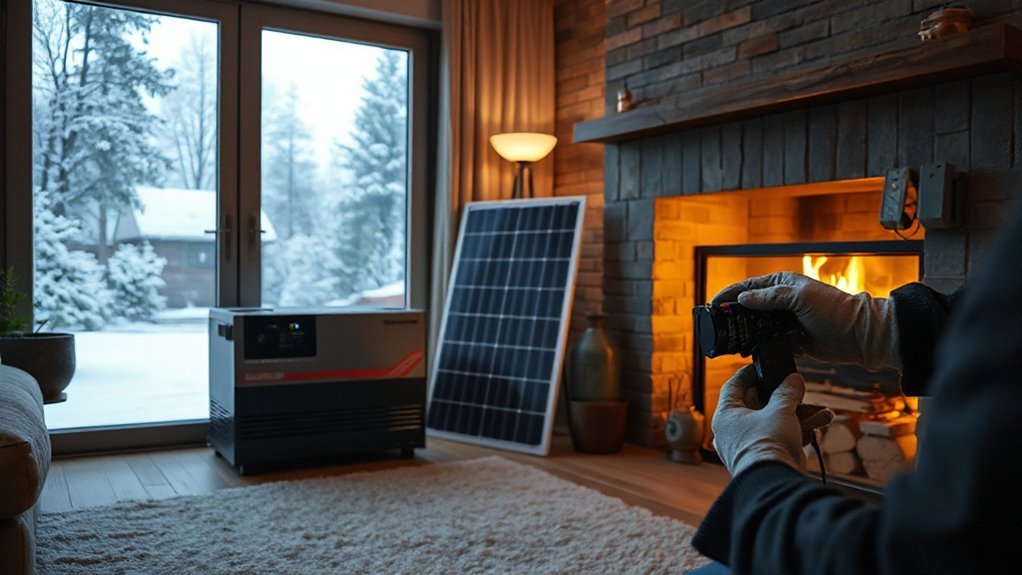
Bringing together generators, batteries, and hybrids means setting up safeguards that protect people, property, and equipment from the start. You’ll implement a robust layout, isolating sources and establishing clear fault-paths to minimize backfeed risks.
Start with proper ventilation and spill containment; respect indoor vs outdoor placement guidelines to prevent carbon monoxide hazards and heat buildup. Establish safety protocols for switching, maintenance, and testing, documented in concise checklists you can follow during storms.
Ground-fault protection, proper cabling, and AFCI/MCB devices reduce arc-fault incidents and overloads. Use labeled disconnects, lockout/tagout procedures, and commissioning audits to verify system integrity before operation.
Emergency preparedness emphasizes rapid de-energization, accessible shutoffs, and clear communication plans for household members and responders. Regular inspections, maintenance, and training keep performance reliable and compliant.
Cost, Value, and ROI in Practical Terms
You’ll see how upfront costs, maintenance, and installation complexity shape your overall budget, so you can plan with precision.
Value versus installation considerations you to weigh reliability, payback period, and system longevity against upfront spend.
We’ll frame ROI in terms of home resale impact, energy resilience, and long-term performance to guide strategic choices.
Cost Implications Revealed
Cost considerations for home backup power hinge on upfront hardware costs, ongoing maintenance, and the long tail of energy savings. You’ll weigh capital outlays against reliability gains, balancing battery size, inverter quality, and install complexity.
Ongoing maintenance encompasses periodic battery health checks, firmware updates, and system diagnostics that protect performance during outages.
The long tail of energy savings depends on your consumption patterns, climate, and the efficiency of appliances you back up. Energy conservation remains a practical lever, improving ROI through smarter usage and load shifting.
Renewable sources, when combined with storage, can reduce dependence on the grid and lower operating costs over time.
Strategic sizing avoids overinvestment, ensuring resilience without compromising aesthetic or functional goals.
Value Versus Installation
Value is realized when the upfront hardware and installation costs align with measurable gains in reliability, resilience, and long-term energy savings. You assess total cost of ownership against practical benefits, not just sticker price.
In this balance, energy storage capacity and system lifecycle determine ROI timelines, so you can forecast payback within predictable windows. You’ll weigh grid dependence reductions, downtime avoidance, and peak-demand shifts, translating these into quantifiable savings on bills and maintenance.
Material quality, warranty terms, and integration complexity influence total value, affecting service reliability and future upgrades. Consider modular growth paths to minimize sunk costs and maximize adaptability.
Aesthetics matter too, as seamless installation preserves home harmony while delivering resilient power, even during outages.
ROI Into Home Resale
Because resale value hinges on tangible performance, framing ROI in practical terms means translating backup power features into marketable benefits: faster recovery from outages, enhanced home reliability, and lower ongoing operating costs that buyers can verify.
In this view, you quantify upfront costs against durable gains, focusing on system efficiency, long-term energy savings, and reliability metrics that influence bids.
Outdoor entertainment stability and seamless hosting become selling points, especially for homes positioned as leisure-centric.
Energy conservation translates to lower utility bills and predictably priced maintenance, appealing to energy-conscious buyers.
Present clear, auditable data: runtime, recharge speed, emissions, and compatibility with smart grids.
Aesthetically, showcase clean installation and modular scalability as strategic advantages that reinforce resale trajectory without overpromising performance.
How to Assess Your Home’s Backup Resilience Step by Step
Start by accurately evaluating your power needs to determine essential versus optional loads.
Then compare system types—stationary vs. portable, grid-tied vs. off-grid—to find the best fit for resilience.
Map a practical budget by aligning capabilities with anticipated use, maintenance, and lifecycle costs, so you can prioritize investments that maximize uptime.
This approach sets the stage for a disciplined, stepwise plan that links demand, solutions, and dollars.
Evaluate Power Needs
To assess your home’s backup resilience, start by inventorying essential loads and their critical timelines, then quantify how long you need power during outages.
You’ll map base resiliency against discretionary loads, noting priority sectors (lighting, refrigeration, heating). Use a grid to assign run times and start-up surges, converting them into energy requirements (kWh) plus reserve margins.
Next, translate demand into daily and seasonal profiles, factoring climate impact on usage patterns. Compare existing utility variability to your projected needs, identify peak-shaving opportunities, and estimate storage or generator sizing accordingly.
Prioritize energy efficiency retrofits to lower baseline demand, then validate with scenario testing for winter storms.
This disciplined approach yields a lean, scalable design aligned with energy efficiency and climate impact considerations.
Assess System Types
First, map the core backup architectures available for residential use—uninterruptible power supplies (UPS) with battery banks, hybrid inverters with energy storage, grid-tied systems with backup capability, and standalone generators. You evaluate system types by matching your load profile to response time, runtime, and reliability targets.
A UPS prioritizes critical circuits with instant transfer, while hybrids blend storage with solar or other renewables for optimized efficiency. Grid-tied backups leverage utility resilience and feed-in options, and generators provide autonomous cadence during long outages.
Consider scalability, battery chemistry, and maintenance cadence as you compare performance, cost, and resilience. Renewable options and technological advancements inform upgrades, ensuring you pursue modular, future-proof solutions that adapt to evolving codes and smart-control capabilities.
Plan Practical Budget
Carefully translate your resilience goals into a practical budget by anchoring decisions to load priorities, runtime targets, and anticipated outage frequencies. You’ll map essential circuits, lighting, and climate control to concrete dollar figures, then layer in flexibility for nonessential loads.
Assess system options through total cost of ownership, factoring upfront hardware, installation, maintenance, and potential incentives. Prioritize Energy efficiency upgrades first; the lower baseline load reduces required capacity and cycles, stretching budget effectiveness.
Quantify runtimes for critical loads and choose modular solutions that scale with demand. Consider renewable sources alongside storage to diversify resilience, balancing capital with payback timelines.
Build in contingency for outages, policy changes, and weather variability. Document decision criteria, review quarterly, and refine budgets as your home’s use evolves.
Real-World Scenarios: When Backup Power Shines or Falls Short
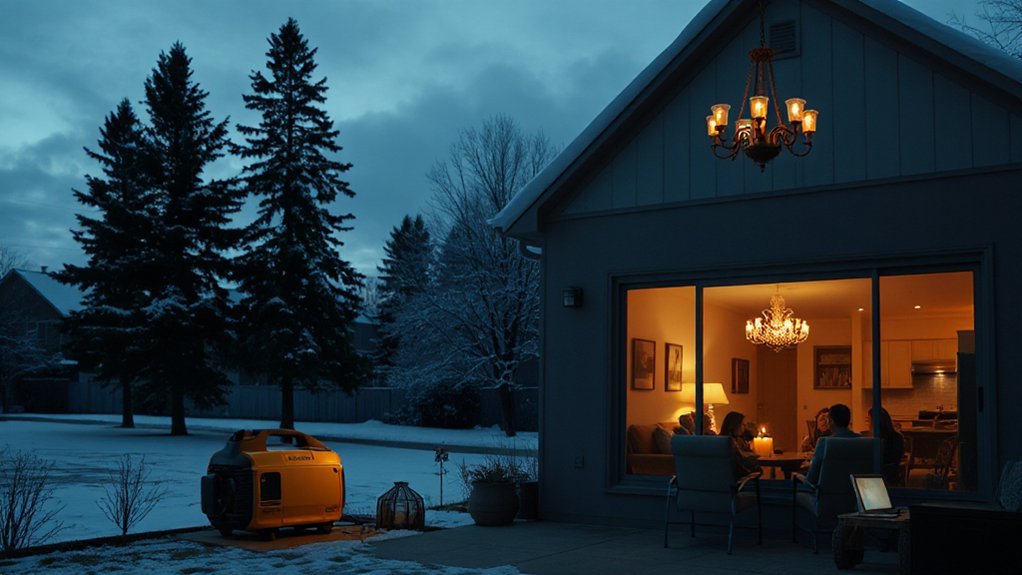
When backup power systems work, they act as invisible insurance, immediately restoring essential loads during outages and keeping your daily routines intact; you notice reliability, not complexity, as critical devices stay powered and comfort persists.
- A street-wide outage leaves your home humming, lights steady, fridge cold, and data syncing.
- An ice storm tests generators against moisture, yet you maintain safe heat without manual startups.
- A grid fault reveals how inverters manage handoffs with minimal voltage sag.
- A summer heat wave proves battery banks slice peak-demand costs, seizing winter energy savings opportunities.
- A failed integration exposes cabling or ATS hiccups, guiding precise troubleshooting.
Seasonal power outages stress planning; real resilience hinges on thoughtful sizing, monitoring, and control.
Debunking Myths and Building Your Winter Readiness Plan
Debunking myths about home backup power isn’t just about clearing confusion; it’s about arming you with clear, actionable steps to winter-ready your system. You’ll evaluate cycles, capacities, and standby losses with a technician’s eye, prioritizing reliability over hype.
Avoid assuming that size alone guarantees resilience; plan for duty cycles, weather outages, and load shifting. Build your winter readiness plan around Renewable integration considerations, ensuring your inverter and battery chemistry align with seasonal demands.
Leverage Smart technology to monitor state of charge, temperature compensation, and automatic generator start, trimming nuisance calls and extending hardware life.
Identify critical circuits, set priority loads, and design a staged response to outages. Document testing protocols, maintenance windows, and vendor SLAs to maintain cadence and confidence.
Frequently Asked Questions
Do Backup Power Systems Work During Extreme Cold Temperatures?
Yes, backup systems work in extreme cold, but performance varies; generator noise and battery lifespan matter. You’ll want cold-rated units, proper insulation, and smart management to maintain reliability, efficiency, and aesthetics while protecting your investment.
How Long Can a Home Run on Backup Power During a Winter Outage?
You’ll run on backup power for several hours to days, depending on load and fuel capacity. Prioritize fuel efficiency, monitor fuel consumption, and choose a design with low noise levels to maintain comfort during outages.
Are There Tax Credits or Rebates for Winter Backup Power Setups?
Yes—you can access tax incentives and rebate programs for winter backup power. You’ll evaluate eligibility, claim timelines, and system specs to optimize cost recovery, ensuring your installation aligns with standards and maximizes financial benefits.
How Do Maintenance Needs Differ by Generator vs. Battery Systems in Winter?
You’ll notice maintenance differs: generators demand fuel-line, coil, and oil checks; battery systems require electrolyte, temp control, and charge management. Prioritize fuel efficiency and system durability in winter, optimizing for reliability, efficiency, and long-term performance.
What Hidden Costs Appear After Installation in Winter Conditions?
Yes, hidden winter costs emerge: fuel consumption rises when climates demand frequent cycling, and installation challenges intensify with cold joints, cramped spaces, and frost-related delays, complicating guarantees and permitting, while you weigh long-term maintenance against upfront efficiency gains.
Conclusion
Backup power isn’t a luxury, it’s a winter resilience decision. You’ll weigh generators, batteries, and hybrids with eyes on reliability, cost, and safety, then design a system that aligns to your home’s load profile. Think ahead, test regularly, and budget for maintenance like any critical asset. Your plan should weather outages, reduce bills, and preserve comfort—like a sturdy weatherproof shield against the cold. Prepare now, and you’ll sleep easier when the grid falters.
About the Author