You might think smart upgrades are a luxury, but they pay back in practical ways you can measure—lower bills, easier daily routines, and stronger appeal to buyers. With the right platform and reliable devices, you gain noticeable efficiency, better security, and adaptable heating without overhauling your systems. Ready to map out what adds real value in the UK market, from energy-rated appliances to secure outdoor lighting that stands up to weather and time? The details that follow will guide you to a durable, future-proof setup.
Key Takeaways
- Prioritize a scalable, standards-based smart home platform with local processing and strong security to boost long-term property value.
- Install energy-efficient smart appliances, programmable lighting, and scene-based lighting to reduce bills and appeal to buyers.
- Use exterior smart lighting, weather-resistant sensors, and automated irrigation to enhance curb appeal and outdoor usability.
- Implement secure, tamper-resistant cameras and smart locks with clear access logs and offline fail-safes for trusted safety features.
- Provide clear energy usage data and ongoing maintenance documentation to demonstrate real-cost savings and system reliability to prospective buyers.
Start Here: Key Smart Home Upgrades to Boost UK Home Value

Upgrading your home with smart tech isn’t just about convenience—it’s a smart investment. You focus on practical value, so start with core, high-return upgrades.
Install voice assistants in living areas and kitchens to streamline daily routines, reduce energy waste, and demonstrate modern living standards to buyers.
Choose smart appliances with energy ratings and reliable integration, prioritizing devices that save both time and costs.
Enhance lighting with programmable schedules and occupancy sensing to cut bills and create a welcoming atmosphere.
Add smart hubs or bridges that ensure smooth compatibility across devices, preserving future-proofing.
Document energy savings and usage patterns to show tangible advantages in app reports and disclosures.
Keep installations tidy, securely configured, and easy to operate for all potential buyers.
Foundations First: Choosing a Platform, Hub, and Connectivity
Foundations matter first when you start smarting up a home. Your first move is picking a solid platform, then tying in a capable hub and reliable connectivity options. A unified platform reduces compatibility headaches and simplifies future upgrades, so choose one that supports broad device families and robust scene automation.
The hub should feel like the brain: local processing preferred, with cloud backup for resilience. Consider mesh Wi‑Fi or wired backbones to eliminate dead zones and jitter. Prioritize security, update cadence, and expandable I/O. Don’t lock into proprietary locks that trap you later.
- Visualize a single nerve center coordinating every device through a stable backbone
- Picture devices pinging a central hub with minimal latency
- Imagine seamless voice, app, and automation orchestration
- Envision future upgrades sliding in without reconfiguring your network
platform selection connectivity options balance, future-proof, and control.
Efficient Heating: Smart Thermostats and Zonal Control for UK Winters
Smart thermostats boost efficiency by learning your schedule and adjusting heat output accordingly, which helps you cut wasted energy during UK winters.
With zonal control, you can target heating to rooms you use most, avoiding full-house warmth when it isn’t needed.
Start by pairing a reliable thermostat with compatible zone valves or dampers, then map your routines to maximize comfort and minimize bills.
Smart Thermostat Efficiency
Are you getting the most from your heating system with a smart thermostat? You should, because efficiency isn’t just about temperature—it’s about precise control, responsive schedules, and accurate sensing. When properly installed and calibrated, a smart thermostat reduces energy use without sacrificing user comfort, lowering bills and emissions in UK winters.
Rely on learning algorithms that adapt to your routines, avoid overshooting zones, and optimize boiler operation during off-peak hours. Regular maintenance and firmware updates keep performance high and reliability steady.
- A cozy living room responds quickly to your presence without overheating
- Radiators heat only where needed, supporting thermal zoning
- Sensors detect chilly drafts and compensate before you notice them
- The boiler runs smarter, not longer, delivering consistent warmth
Zonal Heating Control
Install compatible thermostats, ensure boiler support for multiple zones, and fit motorised valves or zone valves where needed. With smart zoning, you can set higher temps in living areas while bedrooms stay cooler, improving overnight efficiency.
Track energy consumption by zone to identify waste and adjust patterns accordingly. Routine maintenance keeps sensors accurate and valves responsive, preventing leaks and uneven heat.
In UK winters, this approach reduces boiler runtime, lowers bills, and preserves floor integrity by avoiding overheating. Zonal heating remains a practical, value-driven upgrade.
Smart Lighting That Saves Money and Sets the Mood
With smart lighting, you can cut energy use while shaping the room’s mood, so you’ll save money and enjoy a more comfortable environment. You’ll control ambience with precision, use schedules, and dim strategically to reduce bills without sacrificing comfort.
Smart bulbs deliver instant, scalable lighting, adapting to activities and natural light. Mood lighting becomes a design tool, highlighting textures and corners while preventing glare.
Set scenes for reading, meals, or movie nights, and sync them with daily routines to maximize efficiency. It’s practical, enduring value you can measure in monthly costs and daily satisfaction.
- Soft, warm scenes that invite relaxation
- Bright task areas for focused work and cooking
- Dimmed, cinematic lighting for evenings
- Automated schedules that mirror daylight shifts
Security at the Core: Smart Locks, Cameras, and Alarms You Can Trust
You’ll want trusted smart locks that resist tampering and provide clear audit trails, so you know who accessed your home and when.
A secure camera system means encrypted video, tamper detection, and reliable coverage without blind spots.
Alarm reliability standards matter, so you get fast, accurate alerts and minimal false positives that you can depend on.
Trusted Smart Locks
Are you confident your entryway is locked at all times? Trusted smart locks put control in your hands with keyless entry, tamper alerts, and remote locking. You’ll appreciate how they reduce friction while increasing home security, especially when you’re away.
Look for devices with encrypted communication, automatic re-lock, and compatibility with your door frame. Prioritize models that log access events so you can review who entered and when.
Installation should be straightforward, and maintenance minimal. Pairing with a reliable hub or app keeps your security posture cohesive across devices. Choose trusted smart locks that integrate with your existing system and support regional standards for UK properties.
- Stainless steel case withstands weather and prying attempts
- Quick re-lock after every entry
- App shows real-time unlock history
- Alarm triggers on forced entry
Secure Camera Systems
Smart cameras pair with trusted locks to complete a security loop you can monitor from one place. You design a practical layout that minimizes blind spots and respects privacy, using cameras that suit UK regulations and local guidelines.
Prioritize discreet placement at entry points, porches, and driveways, where evidence quality matters but intrusiveness stays controlled. For camera placement, choose fixed angles that cover direct approaches without peering into private spaces like bedrooms or bathrooms.
Opt for wide dynamic range and clear night vision to handle changing light. Guarantee recordings are securely stored and access is logged, reducing risk of unauthorized viewing.
Regularly review feed permissions and firmware updates to sustain reliable, real-world protection. Privacy concerns remain central to your camera system choices.
Alarm Reliability Standards
How can you guarantee alarm reliability stays rock solid across your smart security setup? You’ll set clear reliability standards for every device, then verify with regular, real-world tests.
Prioritise firmware updates, secure pairing, and offline fail-safes so alarms trigger even if your internet wobbles. Choose devices with proven compatibility to sustain system consistency, reducing false alarms and missed alerts.
Maintain centralized monitoring that flags health issues, and document response times to guarantee predictable performance. Implement redundancy for critical components and define a clear escalation path.
- Predictable alerts with verified battery longevity and tamper resistance
- Regular tests that simulate outages and interconnections
- Consistent firmware and protocol updates across all devices
- Centralized health dashboards tracking uptime and response metrics
Real-Time Energy Monitoring for UK Properties
Real-time energy monitoring gives UK homes immediate visibility into consumption, cost, and demand patterns so you can act quickly to save money and reduce emissions.
You’ll see which appliances spike demand, when nocturnal rates apply, and how weather shifts usage. Set benchmarks for daily and weekly energy, then chase reductions with precise targets.
Use dashboards that highlight high-usage periods and provide actionable tips, like timing heavy loads or swapping to energy-efficient settings.
Connect monitors to your boiler, heat pumps, and EV charging where possible, to capture HVAC and transport footprints in one view.
This approach drives energy efficiency, supports cost savings, and makes budgeting predictable while validating retrofit decisions with concrete data.
Maintain regular checks to sustain momentum and optimize returns.
Wireless Upgrades and UK Compatibility: Planning Now
Planning wireless upgrades now requires a clear UK compatibility path and a practical installation plan that minimizes disruption. You’ll assess existing networks, identify hubs, and align devices with UK regulations to avoid retrofit costs.
Prioritize standards, firmware updates, and interoperability to guarantee reliable performance and futureproofing. You’ll map zoning, cabling needs, and wireless channels to reduce interference and security risks.
Anticipate password hygiene, guest networks, and device onboarding to streamline the rollout. Overall, you’ll create a phased approach that minimizes downtime while delivering predictable results for homeowners.
- Visualize a quiet attic as you sync hubs, with labeled cables and clean RF planning
- Picture a living room where smart speakers, lights, and sensors communicate without glitches
- Imagine a compact tech closet neatly organized for maintenance
- Envision documented compliance steps aligning with UK regulations and safety checks
Exterior and Garden Tech: Lighting, Sensors, and Access
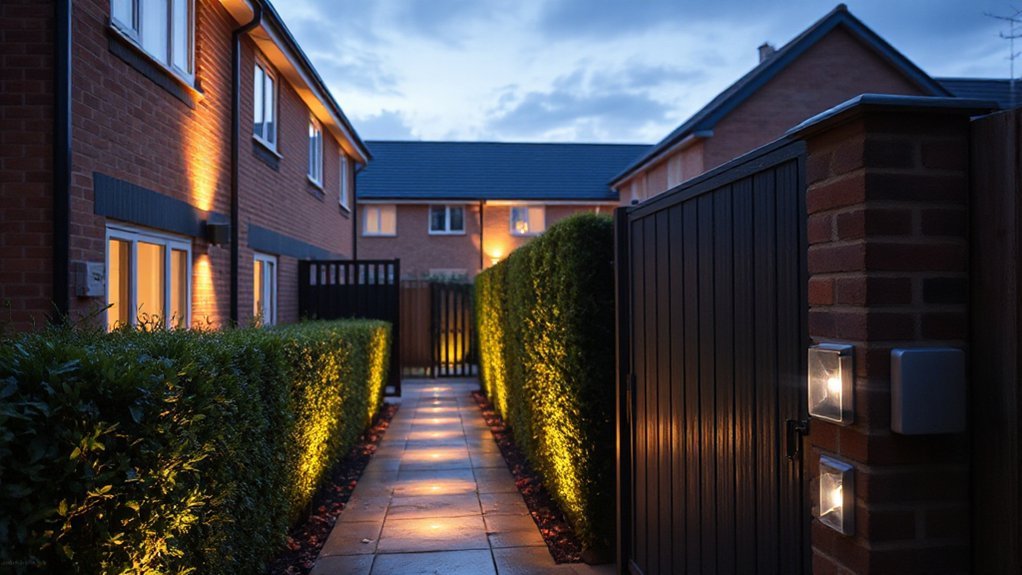
As you apply the UK-ready wireless groundwork from the previous topic, shift focus outdoors to exterior and garden tech where reliability and control matter most. You’ll deploy smart lighting that schedules, zones, and adapts to dusk, minimizing energy use while improving visibility.
Integrate weather-resistant sensors for gates, motion alerts, and perimeter checks, guaranteeing fast notifications and actionable data. Choose robust cameras with local and cloud options for outdoor security, balancing privacy and monitoring needs.
Garden automation should center on irrigation, lighting, and automated shade or gate control tied to occupancy and daylight. Prioritize interoperability, secure network segmentation, and firmware updates.
Ensure seamless app control and voice assistant compatibility, with clear routines for entry, exit, and seasonal changes. Outdoor security remains your top safeguard against intruders and nuisance events.
Power Reliability: Batteries, Backups, and UK Power Standards
You’ll start with Battery Backup Fundamentals to guarantee your essential loads stay powered during outages. Then map how UK Power Standards shape charger specs, breaker rules, and safety requirements.
We’ll cover Reliable Grid Handoff so your system knows when to switch between mains and backup without disruption. This discussion sets the baseline for practical decisions on sizing, compliance, and dependable operation.
Battery Backup Fundamentals
Battery backups are essential for maintaining power during outages and ensuring critical smart-home devices keep running. You’ll learn how to size, connect, and monitor systems so they power essential loads reliably, with an eye on longevity and practical usage.
Focus on Battery lifespan, cycle counts, and how Backup integration with your hub can simplify control during an outage. Understand that proper selection balances capacity, efficiency, and safety, not just price.
- A compact UPS sits beside your router, keeping Wi‑Fi alive during an outage
- A wall-mounted battery module ties into a smart-home hub for automatic failover
- Clear labeling and protection devices guard against surges and shorts
- Real-time status alerts help you gauge remaining runtime and health
UK Power Standards
Are UK power standards keeping your backups trustworthy when outages hit? You’ll want robust adherence to UK Grid Code and Ofgem guidance, ensuring your storage and generation stay within permitted voltages and safety margins.
Prioritize certified batteries with defined cycle life, depth of discharge, and thermal management, plus automatic isolation features during faults.
Understand backup reliability metrics like outage duration, charge recovery time, and seamless switchover capability, so your smart systems don’t degrade during blackouts.
Align energy tariffs with your usage patterns to optimize charging windows and cost.
Plan for smart appliance integration that coordinates energy storage with critical loads, avoiding nuisance trips and maintaining essential comfort.
In practice, document maintenance schedules, warranty terms, and inspection intervals for ongoing resilience.
Reliable Grid Handoff
- Clear isolation during faults
- Rapid transfer under load
- Temperature-tolerant storage
- Compliance-ready interconnection
Budgeting and DIY vs Pro: A Practical Installation Guide
Determining whether to DIY or hire a pro is a practical trade-off you’ll want to nail down before you buy a single device. You’ll prioritize clear budgeting strategies, outlining costs for devices, wiring, permits, and potential labour.
Start with a realistic home assessment: what needs upgrading, what can wait, and which tasks cross electrical or safety lines.
For DIY, choose user-friendly systems and document troubleshooting steps, prioritising robust warranties and return policies.
For pro-led installs, request written scope, milestones, and post-install support.
Compare hourly rates, travel fees, and disposal costs, then build a risk-adjusted budget with a contingency buffer of 10–15%.
In either path, focus on interoperability, future upgrades, and minimal disruption.
DIY troubleshooting comes into play when errors arise; know your limits.
Future-Proofing Your System for Rules and Buyer Expectations
Future-proofing your smart home means designing with evolving rules and buyer expectations in mind, so you stay compliant, secure, and appealing over time. You’ll build resilience by prioritising interoperable tech and clear data practices, not hype. Focus on future-ready security and established connectivity protocols to minimise gaps as standards shift.
Plan for regular firmware updates and transparent privacy notices that reassure buyers. Integrate modular components that can be swapped without overhaul, reducing cost and downtime. Document configurations and warranties, and test before listing to avoid surprises.
- A future-ready hub that supports multiple standards and over-the-air updates
- Clear privacy settings and data flows for smart security
- Uniform connectivity protocols across devices for seamless control
- Scalable wiring and power design that accommodates new tech
Value-Proofing: Choosing Platforms and Ecosystems for Longevity
When you’re choosing platforms and ecosystems for longevity, you’re not chasing the newest buzzword; you’re building a resilient foundation that remains useful as standards evolve. Prioritize open APIs and broad compatibility to avoid vendor lock-in.
Prefer ecosystems with clear long‑term roadmaps and documented upgrade paths, not disruptive shifts that require total rewiring. Evaluate voice control capabilities for multi‑device consistency, not isolated strengths.
Favor integration platforms that support widespread devices, standard protocols, and reliable middleware, so you can mix brands without friction. Consider data ownership, local control options, and security update cadence to reduce future risk.
Plan for gradual expansion by selecting scalable hubs and modular sensors. Document configurations and keep firmware inventories. A thoughtful, platform‑agnostic approach preserves value and simplifies future upgrades.
Frequently Asked Questions
How Much Value Do Smart Upgrades Typically Add to UK Homes?
Smart upgrades typically add about 5–15% to your home’s value, depending on the system quality and integration. You’ll see faster sell times when you pitch smart security and energy savings as core benefits, plus demonstrated reliability.
In practice, choose reputable devices, plan a cohesive setup, and document monitoring costs and energy cuts. You’ll win buyers with clear security perks, lower bills, and a straightforward, well-supported network.
Guarantee professional installation and transferable warranties to maximize impact.
Which Must-Have Features Boost Resale Appeal Most?
Voice control and energy monitoring are must-haves that seriously boost resale appeal. You’ll wow buyers when lights, climate, and gadgets respond instantly, and you’ll save money with real-time energy data.
Prioritize robust hubs, reliable sensors, and clear dashboards. You’ll highlight seamless integration, fast routines, and transparent consumption breakdowns.
In practice, install top-tier devices, keep firmware current, and present simple usage guides. This practical setup shows you’ve upgraded thoughtfully, not just added gadgetry.
Are Smart Home Costs Recouped in Sale Price?
Yes, smart home costs can be recouped in sale price, though it varies by setup and buyer. You’ll maximize value with energy efficiency improvements and security enhancements, which buyers notice most.
Highlight reduced energy bills, better insulation, smart thermostats, lighting, and robust alarm systems during viewings. Keep documentation handy, show easy maintenance, and emphasize long-term savings.
If you’re strategic, the added value often outpaces initial outlay, boosting appeal and marketability in a competitive UK market.
Do Planners or Insurers Affect Smart Home Installations?
Yes, planners and insurers can affect smart home installations. You’ll need to secure applicable planning permissions for external changes or visible CCTV and lighting, and check building regulations compliance.
Insurance considerations matter too: disclose systems, choose reputable installers, and verify coverage for smart devices and liability.
Anticipate objections about cost or hassle by obtaining permits early and keeping documentation. You’ll reduce risks and ensure smoother approval, with proactive compliance guiding your installations.
What Is the Fastest Return on Investment for UK Homes?
The fastest return on investment for UK homes comes from boosting energy efficiency and tightening security enhancements. You’ll cut ongoing bills while increasing appeal to buyers.
Prioritize smart thermostats, high-efficiency boilers, and advanced insulation, plus smart lighting and demand-responsive devices for instant savings.
Pair these with robust security features like cameras, doorbells, and smart locks.
In practice, you’ll see quicker sale times and greater resale value, driven by lower running costs and stronger home protection.
Conclusion
In short, smart upgrades pay off when they’re practical, reliable, and future-friendly. You’ll gain comfort, lower bills, and stronger curb appeal by pairing efficient heating, smart lighting, and solid security with dependable power backups. Match your choices to your home’s layout and your buyers’ expectations, sticking to proven platforms for longevity. Think of your system as a well-tuned piano: every component must harmonize to create lasting value rather than a cherry-picked showcase.
About the Author