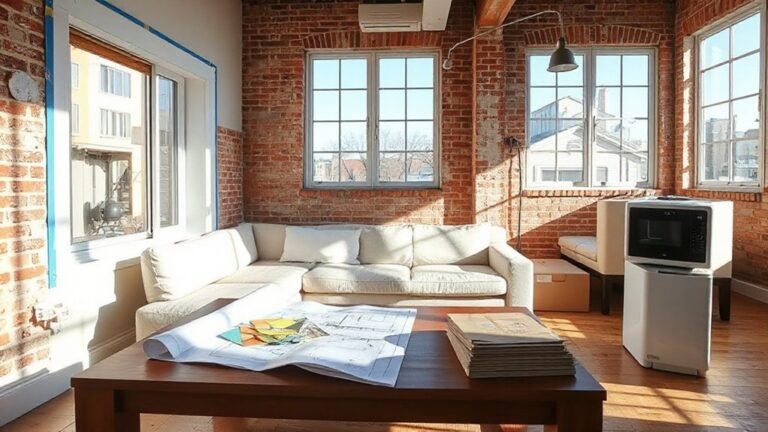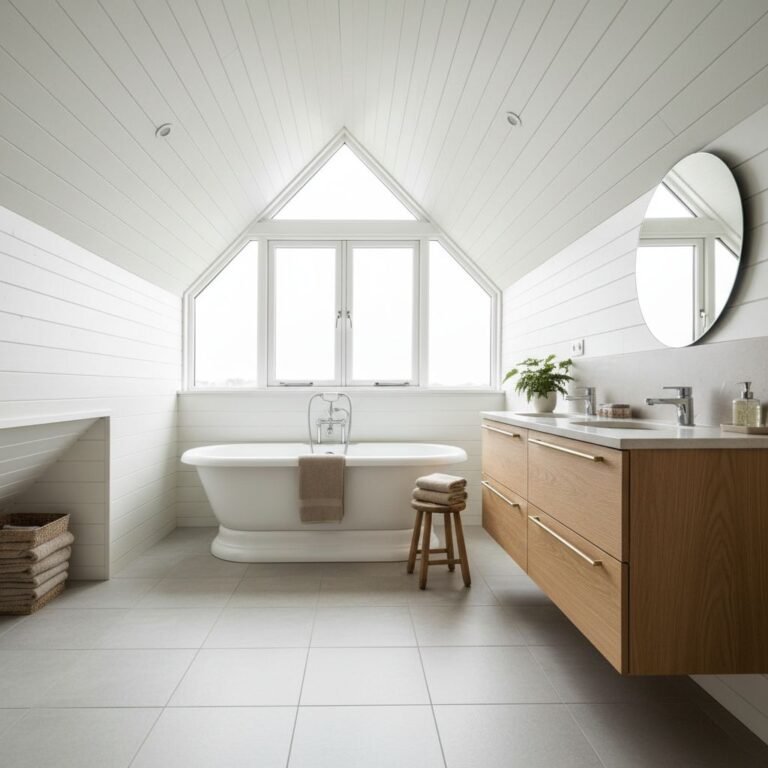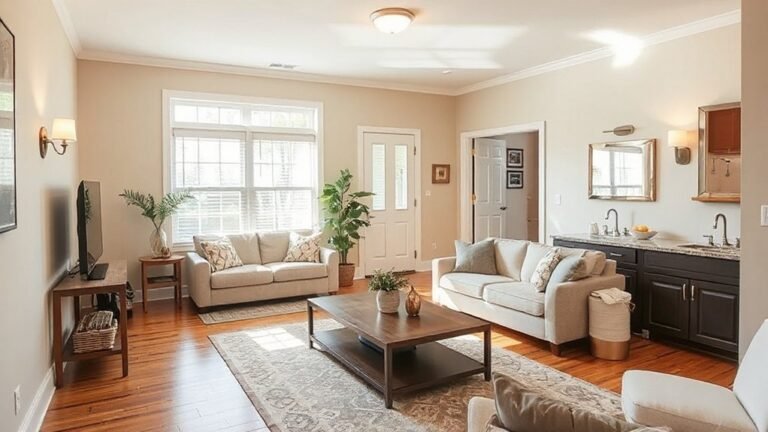
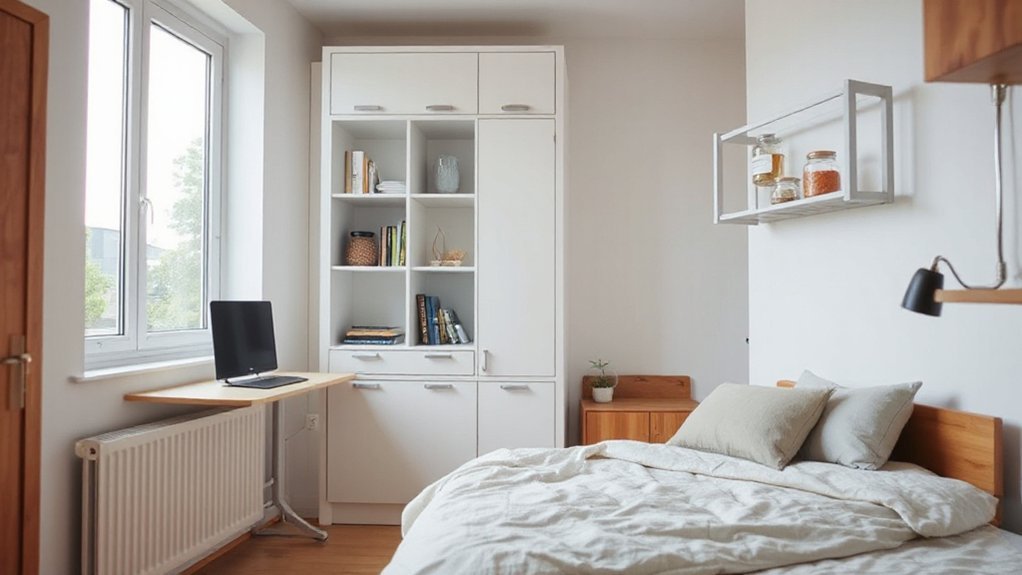
Smart storage for small homes starts with practical, flexible systems you can trust. You’ll prioritize vertical space, hidden compartments, and modular furniture that adapts as your needs shift. Use labeled bins, wall-mounted shelves, and elevated platforms to keep surfaces clear. As you plan, consider budget swaps and maintenance routines that keep everything efficient and tidy. Ready to map out rooms and test a reconfigurable setup that actually grows with you?
Key Takeaways
- Use modular, multi-purpose furniture with hidden storage to maximize function without clutter.
- Invest in vertical solutions: tall shelves, wall rails, hooks, and pegboards to reclaim floor space.
- Incorporate hidden compartments in coffee tables, ottomans, beds, and stairs for discreet storage.
- Organize with labeled, stackable containers and color-coding to quickly locate items and reclaim surfaces.
- Establish zones (daily vs. seasonal) and schedule regular maintenance to prevent clutter and wear.
What Smart Storage Delivers in Small Spaces
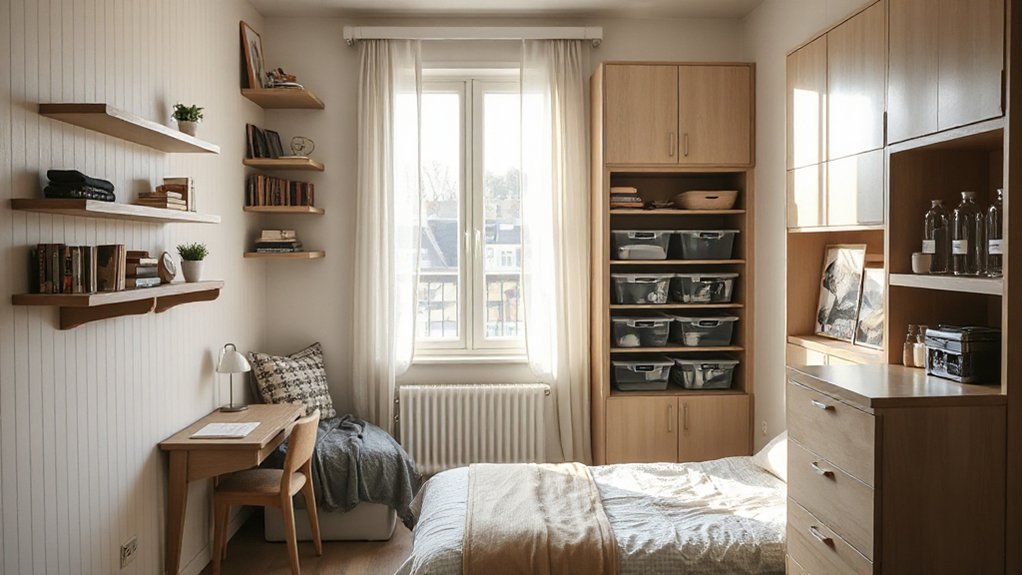
Smart storage in small spaces delivers more usable room without expanding square footage. You optimize every inch by choosing compact furniture, multi-use pieces, and hidden compartments.
Creative storage helps you reclaim floor area while keeping essentials within reach, so you don’t chase clutter. You’ll notice a calmer rhythm when you categorize items and assign dedicated zones, reducing rummaging time.
Innovative solutions like drawers under stairs, wall-mounted shelves, and hover-compatible desks maximize vertical and horizontal planes without crowding the room. You select modular systems that adapt to evolving needs, ensuring flexibility without waste.
First, assess daily routines, then map storage to those flows. You’ll achieve cleaner surfaces, easier access, and a sense of openness, proving smart design outperforms brute square-footage expansion.
Maximize Vertical Space With Practical Hacks
Vertical space is your first line of defense against clutter, so start by looking up and planning storage that uses walls, ceilings, and tall systems before you widen the floor plan.
You’ll reclaim floor area by deploying elevated shelves and wall rails, keeping frequently used items within arm’s reach. Choose innovative shelving that adapts: adjustable heights, edge-to-edge spans, and slim profiles that don’t crowd rooms.
Pair these with modular containers that stack, nest, and label, so you can see inventory at a glance. Install hanging hooks and pegboards for tools, cookware, or craft supplies.
Then run cables and LED strips to illuminate high shelves. Maintain clean lines with neutral tones and consistent hardware to prevent visual chaos—maximize vertical real estate without sacrificing accessibility.
Stylish Hidden Storage That Hides Clutter
Could hidden storage really transform a room without stealing style? Yes, and you can implement it with purpose.
Start with hidden compartments integrated into furniture you already use daily—coffee tables with a lift lid, ottomans that swing open, or benches with hollow interiors. Choose pieces that match your existing finishes to keep the room cohesive.
For clutter-prone areas, add secret drawers beneath beds, in stair risers, or inside wall panels; they silently store essentials out of sight yet easily reachable. Prioritize accessibility over secrecy; label or color-code a few discreet spots so you don’t forget them.
Use soft-close mechanisms to prevent noise, and avoid overloading. This approach preserves space while maintaining a clean, stylish aesthetic.
Furniture That Multiplies Your Space
When space is tight, furniture that multitasks isn’t a luxury—it’s a necessity. You’ll choose pieces that gain you function without stealing floor area, prioritizing payoff over size. Multifunctional furniture lets you work, sleep, and store in the same footprint, while modular designs let you reconfigure on a whim as needs shift.
Look for hidden storage, lift-top surfaces, and stackable forms that stay neat. Focus on clean lines and compact footprints that don’t trap sightlines or traffic flow.
- Use storage ottomans and benches for seating plus hidden bins
- Opt for sofa beds with integrated shelves or charging stations
- Choose modular desks that can expand into a workstation or collapse for living space
Tiny-Home Room-by-Room Organization Checklist
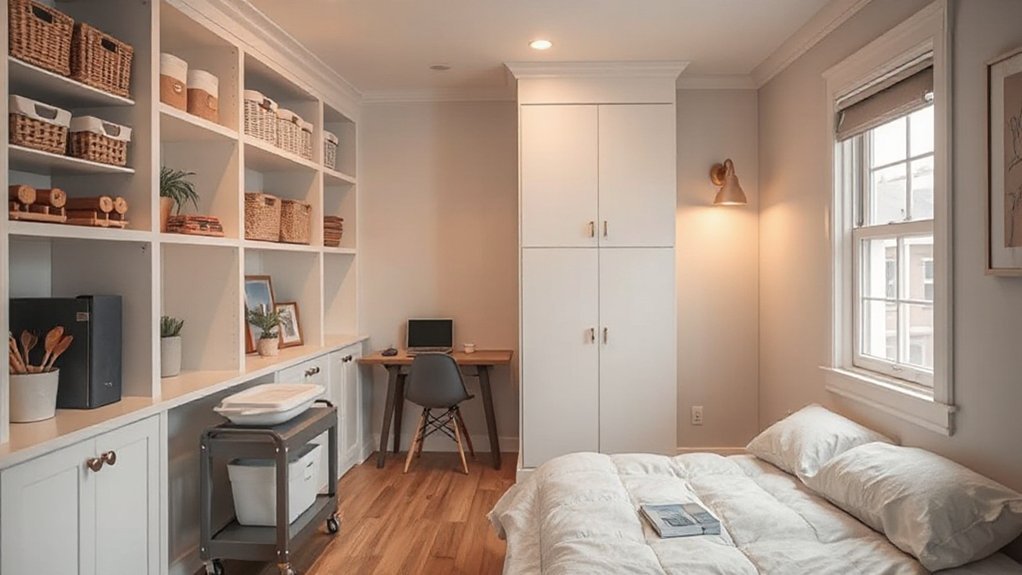
Start with maximizing wall space by choosing open shelving, peg rails, and wall-mounted bins to keep surfaces clear.
Then evaluate compact cabinet systems that fit tight corners and multi-purpose furniture, so every inch serves a function.
This room-by-room checklist helps you prioritize efficiency, reduce clutter, and stay organized as you scale your tiny home.
Maximizing Wall Space
- Install slim, adjustable shelving at varying heights for books, bins, and daily essentials.
- Use wall-mounted hooks and pegboard sections for tools, cords, and small applicants, keeping surfaces clear.
- Integrate decorative wall accents and hanging plant solutions to add personality without crowding.
Keep layout balanced: group similar items, leave breathing room, and label clearly.
Choose lightweight frames and organizers to avoid sag.
Opt for reversible, damage-free mounting whenever possible.
Measure before holes, and test accessibility from typical spots you’ll use daily.
Compact Cabinet Systems
In the kitchen, stackable shelves and pull-out bins keep utensils, spices, and canned goods accessible without crowding counters.
In living areas, wall-mounted units pair with compact work surfaces to form adaptable dashboards for work and display.
In bedrooms, vertical wardrobes and under-bed drawers access hidden capacity while preserving floor space.
Bathrooms benefit from slim towers and recessed medicine caddies to minimize clutter.
Use multi purpose fixtures—an ottoman with storage, a coffee table with a lift top—to collapse unused surfaces.
Choose durable finishes and label contents for fast, repeatable organization.
Budget Swaps That Maximize Storage
Start with Budget-Friendly Storage Swaps that swap clutter for vertical or underused spaces, like wall-mounted shelves or over-door organizers.
Try Clever Space-Saving Hacks that reconfigure furniture and use multi-purpose pieces to free up floor area.
Pair Affordable Upgrades with Big Storage gains by choosing modular, stackable containers and labeled systems you can expand as needs grow.
Budget-Friendly Storage Swaps
Small-space living demands smart swaps: swap bulky furniture for modular or multi-purpose pieces that free up wall and floor space. When you shop on a budget, prioritize items that pull double duty, like ottomans with hidden storage, bed frames with built-in drawers, and wall-mounted desks that fold away.
Look for sturdy, adjustable components that adapt as your needs change, avoiding one-trick buys. To maximize efficiency, mix in innovative shelving and a creative closet design that keeps clothes and accessories organized without crowding.
Prioritize quality over quantity to reduce replacements over time.
- Choose modular pieces that stack, fold, or slide
- Use wall-mounted storage and overhead rails to free floor space
- Integrate hidden solutions for shoes, lids, and extraneous clutter
Clever Space-Saving Hacks
With budget swaps, you can reclaim every square inch by prioritizing versatile, space-smart choices that pull double duty. You’ll optimize vertical real estate with smart shelving, placing frequently used items at eye level for quick access and stacking lighter boxes above.
Choose modular containers that can be reconfigured as needs shift, letting you adapt shelves, under-bed spaces, and corners without buying new systems. Double-duty furniture—benches with hidden storage, ottomans that flip open—keeps clutter from spreading.
Use labeled, stackable bins to separate seasonal gear and infrequently used items, then rotate them seasonally. Slim, wall-mounted hooks and magnetic strips keep small tools within reach, avoiding drawer buildup.
Finally, consolidate similar items into centralized zones, so you know where everything lives and reclaim wasted space.
Affordable Upgrades, Big Storage
If you’re aiming for big storage without big costs, small upgrades can yield substantial gains by rethinking what you already have and how you use it. Affordable upgrades rely on smart choices that don’t require major renovations.
You’ll tap into existing spaces with budget swaps that feel like new storage, guided by practicality and reliability. Implement smart shelving that adapts to your needs and room layout, and pair it with modular solutions you can reconfigure over time.
- Install adjustable shelves and stacked bins for flexible, visible storage
- Choose modular units that snap together, maximizing corners and alcoves
- Rehouse rarely used items in labeled, stackable containers to reclaim surface area
Simple Maintenance for Lasting Storage Efficiency
To keep storage efficient over time, start simple: establish a quick, weekly check routine to spot wear, loose hinges, and corners where dust collects. You’ll keep cabinets, baskets, and rails operating smoothly by tightening screws, lubricating hinges, and wiping down surfaces.
Prioritize Eco friendly materials when replacing components, and choose items with durable finishes to resist chipping. Practice sustainable design by organizing zones: designate reachable shelves for daily use and higher spots for seasonal items.
Use uniform containers to maximize space and reduce friction, then label contents for fast retrieval. Schedule quarterly reviews to purge unused goods, repair damaged linings, and reseal gaskets.
Maintain consistency, not intensity, and you’ll extend life, cut waste, and sustain efficient storage without extra effort.
Frequently Asked Questions
How Do I Price-Proof Smart Storage Upgrades for Resale?
To price-proof smart storage upgrades for resale, you set a practical target: show clear ROI through efficiency and lasting appeal.
Start with a competitive, evidence-based price range, anchored by cost, installation, and product warranties.
Emphasize creative design and aesthetic integration so buyers see value beyond specs.
Highlight energy savings, modularity, and durable materials.
Offer flexible configurations, documented upgrade costs, and a transferable warranty.
Market with transparent, data-backed benefits to minimize negotiation and maximize perceived value.
Can Smart Storage Reduce Energy Use in Small Homes?
Yes, smart storage can cut energy use in small homes. You’ll reduce wasted space and improve airflow, cutting heating and cooling loads.
Energy efficiency rises as you organize by zone, employ LED lighting, and use smart thermostats tied to storage systems.
Less clutter means better insulation effectiveness, lowering climate impact. You’ll save on energy bills and shrink your footprint while staying comfortable.
It’s a practical, resourceful upgrade you can implement today.
Is Maintenance Cost Worth Ongoing Smart Storage Systems?
Maintenance cost can be worth it if you choose wisely. You’ll weigh upfront install versus ongoing fees, but smart storage pays back through convenience and longevity.
Aesthetic integration matters, so you install units that blend with your decor and aren’t disruptive.
Do a Cost comparison across brands, features, and energy savings to see if monthly expenses cancel out.
If durability and scalability fit your needs, ongoing costs become manageable and worthwhile.
What Safety Considerations Come With Hidden Compartments?
Hidden compartments pose safety risks like accidental entrapment and hidden latch failures. You should verify proper hidden lock mechanisms that resist accidental opening, allow quick escape, and include tamper resistance.
Also address ventilation concerns to prevent mold, odors, or battery gas buildup if stored items are volatile. Regularly inspect seals, hinges, and locks.
Keep emergency keys accessible, and avoid storing heavy or hazardous items in concealed spaces. Prioritize ventilation and clear exit paths.
Which Materials Are Most Durable for Tiny-House Storage?
You’ll want durable materials like plywood, birch, or high-grade MDF for tiny-house storage.
Choose weather resistant materials for exterior or moisture-prone areas, and use solid joinery to prevent sagging.
For modular shelving, opt for powder-coated steel accents and multi-ply hardwoods.
Prioritize stability with cleats and steel brackets, and seal edges to resist humidity.
This combination keeps units sound, flexible, and easy to relocate as your space evolves.
Conclusion
You’ve got the tools to transform a tight space into a calm, organized home. Think of your rooms as a chorus: vertical lofts, hidden compartments, and modular furniture all harmonize to reduce clutter. Choose adaptable pieces, label containers, and keep surfaces clear. With simple maintenance, your storage stays crisp year after year. It’s a well-organized orchestra, and you’re conductor—directing efficiency, comfort, and style without sacrificing space.
About the Author