Did you know a well-staged room can boost perceived value by up to 20%? You’ll start by setting a clear budget and scoring criteria, then choose a cohesive, neutral palette with careful accents. Focus your upgrades where it counts, layer textures, and use lighting to create depth without overspending. You’ll be tempted to overdo it, but a few smart, refined moves will keep the space polished—and that’s exactly what you’ll want to access as you move forward.
Key Takeaways
- Set a show-home budget with hard area ceilings, contingency, and weekly receipt tracking to stay within scope.
- Choose a luxe-looking, cohesive neutral palette with two family-based accent colors for depth and flow.
- Layer textures thoughtfully (cushions, rugs, throws) in a unifying color scheme to add warmth without clutter.
- Use strategic lighting (dimmed overheads, lamps, and accent lighting) to create depth and highlight focal features.
- Place accessories in odd numbers, use trays and vases at eye level, and rotate seasonal items to maintain balance and calm.
Set Your Show-Home Budget and Scoring Criteria
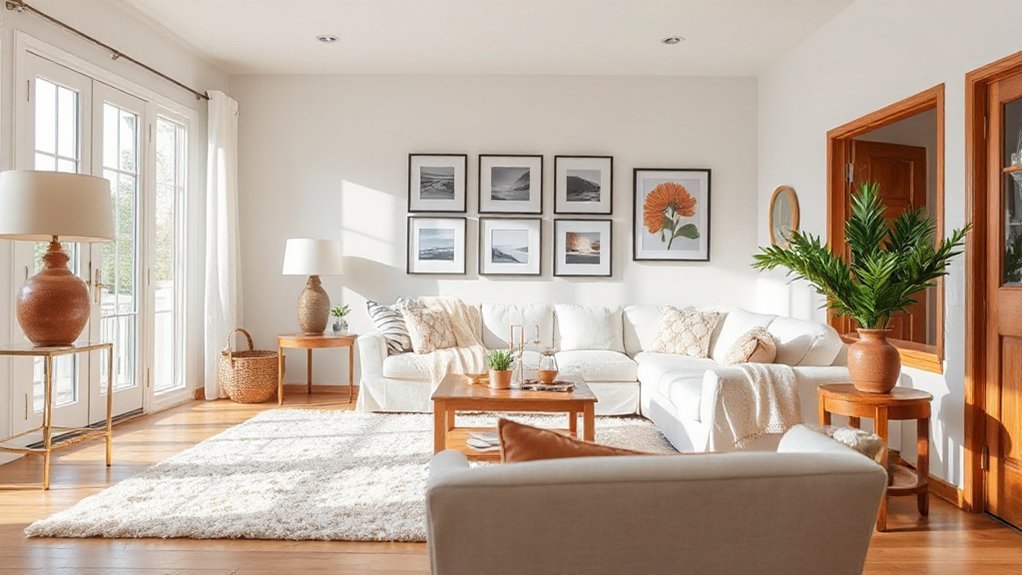
Setting a clear show-home budget and grading what you’ll judge by is the first step. You’ll map your limits, then define what matters most in the space. Use budget planning to allocate funds for key zones: living, dining, bedrooms, and entry. Establish a hard ceiling for each area and a contingency for unforeseen needs.
Next, set scoring metrics that reflect your priorities—visual impact, durability, and cohesiveness across rooms. Create simple rubrics: allocate points for color harmony, fabric quality, lighting, and furniture scale.
Track receipts and compare against forecasts weekly. Be disciplined: adjust only when a change delivers proportional value. Keep your final plan documented, accessible, and revisable.
This clarity keeps you focused, saves money, and guides decisive, confident purchases.
Choose a Luxe-Looking Palette That Costs Less
A Luxe-looking palette doesn’t have to break the bank; smart choices create high-end impact for less. You’ll maximize appeal with a restrained color story and purposeful contrasts.
Start with a cohesive base—neutrals or soft whites—that read as expensive when finished surfaces are smooth and consistent. Build depth with two accent colors pulled from the same family, not a dozen disparate hues.
Focus on color coordination across rooms to reinforce continuity, so spaces feel curated rather than random. For Material selection, choose textures that read premium—matte ceramics, brushed metal, and engineered woods with visible grain.
Invest in key finishes (hardware, lighting) that unify the palette. Remember, restraint communicates sophistication; quality over quantity drives the luxe illusion.
Create a Focal Point Without Overdoing It
To create a focal point without overdoing it, pick one anchor element that draws the eye and keep everything else complementary. Your goal is deliberate Focal point placement, ensuring the scene feels intentional, not busy.
Start with a verifiable anchor—perhaps a bold artwork, a statement lamp, or a standout sofa—and center it within the sightline. Surround it with supportive, simple pieces in calm tones to maintain Visual balance.
Avoid competing textures and patterns near the anchor; use restrained accents to echo color or shape elsewhere. Dim ambient lighting around the focal area to emphasize it without shouting.
Check sightlines from multiple angles to confirm the point remains obvious yet effortless. Adjust scale and spacing until the composition feels cohesive, calm, and purposefully curated.
Layer Texture to Add Depth and Warmth
Layer texture adds depth and warmth without breaking the budget. Choose a mix of materials—cushions, throws, rugs—in complementary tones to create contrast and coziness.
Start with a few key textures and layer gradually to avoid clutter.
Layer for Depth
Texture is what makes a show-home feel inviting, so layer textiles, finishes, and surfaces to add depth and warmth. You’ll create visual interest by mixing textures, like a velvet throw with a jute rug, and pairing matte with gloss finishes. Keep color contrast intentional, using darker accents against light neutrals to guide the eye.
Consider furniture arrangement that promotes flow and depth: stagger seating, avoid parallel walls, and place a statement piece off-center to create focus. Layering should feel cohesive, not cluttered, so repeat a shared tone across textiles, wood, and metal. This builds rhythm and warmth without overwhelm.
- Use varied textures with a unifying color palette
- Place furniture to emphasize sightlines and depth
- Repeat a few tones across textiles, wood, and metal
Warmth Through Texture
Heat is built where textures meet. You layer surfaces to create warmth without cost, focusing on texture as a design tool.
Begin with textiles that bring tactile interest: throws, pillows, and a rug with a soft hand. This textural contrast draws the eye and anchors the room, while keeping things affordable.
Opt for cozy textiles in natural fibers—cotton, wool, jute—to add depth without heaviness. Mix weaves and pile heights to prevent flatness, then juxtapose smooth surfaces with rough ones for dynamic balance.
Consider a single statement textile, then repeat its color or pattern subtly elsewhere. Finish with appropriately scaled, lighter textures to preserve airiness.
Your goal: a inviting, layered feel that stays budget-smart and show-ready.
Smart, Budget-Friendly Styling Tricks That Look Designer
Smart, budget-friendly styling can feel luxe without the price tag. You can elevate any room by smartly mixing texture, color, and scale, then letting quality basics do the heavy lifting.
Prioritize balance: large pieces anchor the space, smaller accents pull it together. Use vintage accents and DIY art to add personality without overspending.
Keep contrast clean and cohesive, so high-end feels intentional, not attempted.
- Invest in a few statement basics (sofas, rugs) and accessorize with affordable thrill items like DIY art and vintage accents
- Swap in modular lighting and mirrors to amplify light and depth
- Add greenery in simple vessels and rotate pieces seasonally to refresh the look without a full overhaul
Reuse, Refurbish, and Real Finds for Big Impact
You can stretch that designer look even further by reusing, refurbishing, and hunting for real finds. Start with antique furniture; a restored piece often carries character you won’t replicate with new stock. Sand, paint, or reupholster to suit your palette, then pair it with clean, modern surroundings so it reads stylish, not salvaged.
Look for statement artwork that anchors a room and guides color decisions. You don’t need to break the bank—shop secondhand, flea markets, or thrift stores for quality frames, mirrors, or lighting that can be refreshed. Commit to simple upgrades: new hardware, fresh wax, or a bold coat of paint.
Keep scale and proportion in mind, and resist over-accessorizing; let a few real finds do the talking.
Finish With Fragrance, Lighting, and Accessories That Elevate
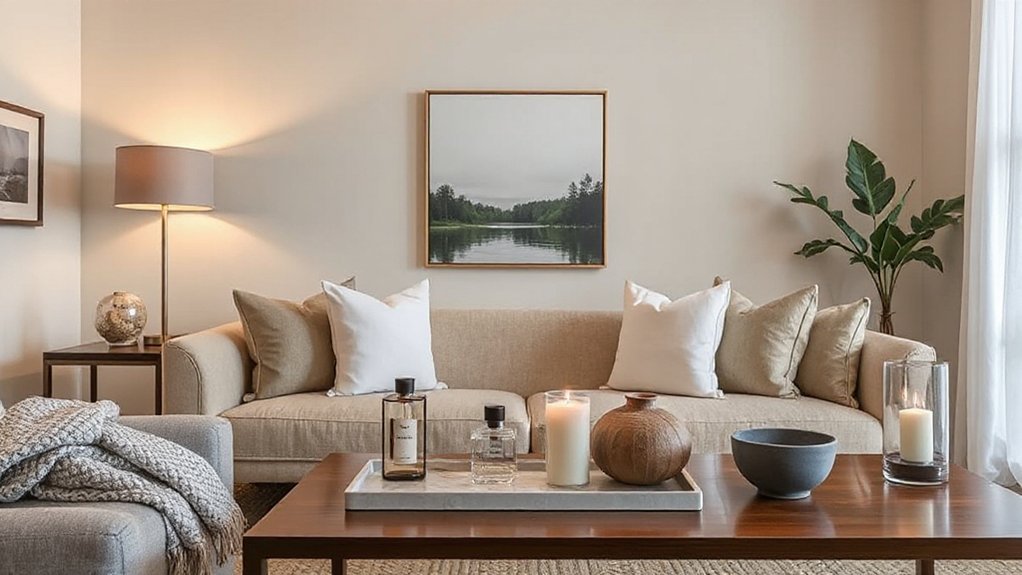
Think about how fragrance, lighting, and a few well-placed accessories can elevate a space without breaking the budget.
Try layered fragrances, strategic lighting, and careful accessory placement to emphasize focal points and create depth.
Use these three points—Fragrance Layering Ideas, Strategic Lighting Choices, and Accessory Placement Tips—as a framework to start the discussion.
Fragrance Layering Ideas
Fragrance layering, when done thoughtfully, elevates a show-home vibe without overwhelming the space. You’ll create a cohesive aroma profile by pairing light and mid notes with a subtle anchor scent, avoiding clashing tones. Focus on balance: softer sillage near seating, a stronger note at entry, and a neutral base that won’t fatigue over time.
Use strategic placement to guide fragrance diffusion, and monitor how often you refresh scents to maintain consistency. Scent combinations should feel intentional, not random, with timing that matches room use and traffic.
Keep the overall perception inviting rather than overpowering, and guarantee the fragrance aligns with décor style.
- Test Scent combinations in small rooms before broader use
- Favor clean, neutral bases for longevity and ease of diffusion
- Refresh fragrances regularly to sustain a welcoming atmosphere
Strategic Lighting Choices
Strategic lighting should highlight key features without dominating the space, guiding the eye to art, textures, and architectural details. You’ll use a layered approach that combines ambient glow with purposeful accents, so rooms feel cohesive yet dynamic.
Start by dimming overheads and adding soft sources—table lamps, wall sconces, or floor lamps—to create depth without glare. Use accent illumination to emphasize architectural corners, moldings, or framed artwork, keeping it subtle and controlled.
Choose bulbs with a warm color temperature for a welcoming vibe, not clinical brightness. Avoid overpowering fixtures; scale and proportion matter. Place lighting to reduce shadows on seating areas and highlight textures like fabrics or wood grain.
This balance delivers a polished, showroom feel while staying budget-smart and practical.
Accessory Placement Tips
Strategically place accessories so they anchor the room without clutter. You’ll create a calm, cohesive space by focusing on decor arrangement and highlighting accessory harmony. Begin with a few well-chosen pieces that echo color or texture from the room’s main elements, then layer fragrances, lighting, and accents to balance scales and lines.
Place trays, bowls, or vases at eye level or on surfaces that invite eye travel, avoiding overfill. Use scent and light to reinforce theme without competing notes; choose fragrances and bulbs that complement your palette.
Aim for intentional pauses rather than random clutter, and rotate items seasonally to sustain interest without investing in bulk. Small changes yield big impact, reinforcing a showroom-ready atmosphere.
- Mirror balance with scale-sensitive placements
- Group objects in odd numbers for flow and rhythm
- Vary textures to deepen decor arrangement and harmony
Frequently Asked Questions
How Can I Measure Balance Between Budget and Style?
To measure balance between budget and style, you prioritize cost comparison and aesthetic priorities, then adjust accordingly.
Start by listing must-haves, then estimate costs and compare with your budget.
Seek high-impact, low-cost upgrades (paint, lighting, textures) to maximize style per dollar.
Track spend weekly, cut items that don’t meet your priorities, and reallocate toward key pieces.
Reassess as you shop; you’ll preserve flow, avoid overspending, and achieve a cohesive, showroom-ready look.
What Are Quick Swaps to Update Dated Furniture?
Quick swaps to update dated furniture: swap in vintage accents like a brass lamp, woven throw, or retro art to refresh vibe.
Do an upholstery refresh by reupholstering a chair or swapping in new fabric cushions for sofas and ottomans.
Replace tired hardware on cabinets with brushed metal pulls.
Add a simple mirror to widen space, and layer textures with a cozy rug.
These moves feel intentional, affordable, and instantly transform your room.
How Do I Create Cohesion Across Rooms Cheaply?
You can create cohesion across rooms cheaply by sticking to two or three recurring color schemes and repeating textures, textures, textures. Start with a base palette, then weave color schemes through accessories, rugs, and art.
Use texture layering—linen, woven jute, and velvet—across spaces to tie them together. Swap in matching frames, consolidate metal finishes, and carry cushions between rooms.
You’ll feel coordinated, not cookie-cutter, and you’ll avoid breaking the bank.
Which DIY Details Deliver High-End Vibes Fast?
You’ll get high-end vibes fast with a few smart DIY details: add luxury accents like metallic hardware, framed mirrors, and plush textiles, plus DIY art that you curate yourself. Keep lines clean and avoid clutter to read as intentional.
Use bold focal pieces, blackout simple backing, and light layers of warm lighting. You’ll feel premium without breaking the bank, and you’ll stay cohesive across spaces with consistent color and texture choices.
How Can Lighting Transform a Space on a Budget?
Why not let lighting redefine the mood without wrecking your budget? It transforms perception by shaping shadows, warmth, and focus.
You’ll use ambient lighting to create a welcoming base and accent lighting to highlight features or art. You’ll layer sources, dimmers, and scale to avoid flatness.
You’ll test in real life, adjust for color temperature, and keep the layout practical. In short, smart lighting elevates spaces with minimal expense and maximum impact.
Conclusion
You’ve got the plan to nail a show-home look on a budget. Stick to your budget, grade items by impact, and curate key zones for focal polish. Choose a luxe-looking palette that costs less, layer textures, and add thoughtful lighting to create depth. Reuse and refurbish where possible, then finish with fragrance and restrained accessories. Think of your space as a well-tuned instrument—every piece performs without shouting, and the whole room sings harmony. Your polished (and affordable) home awaits.
About the Author