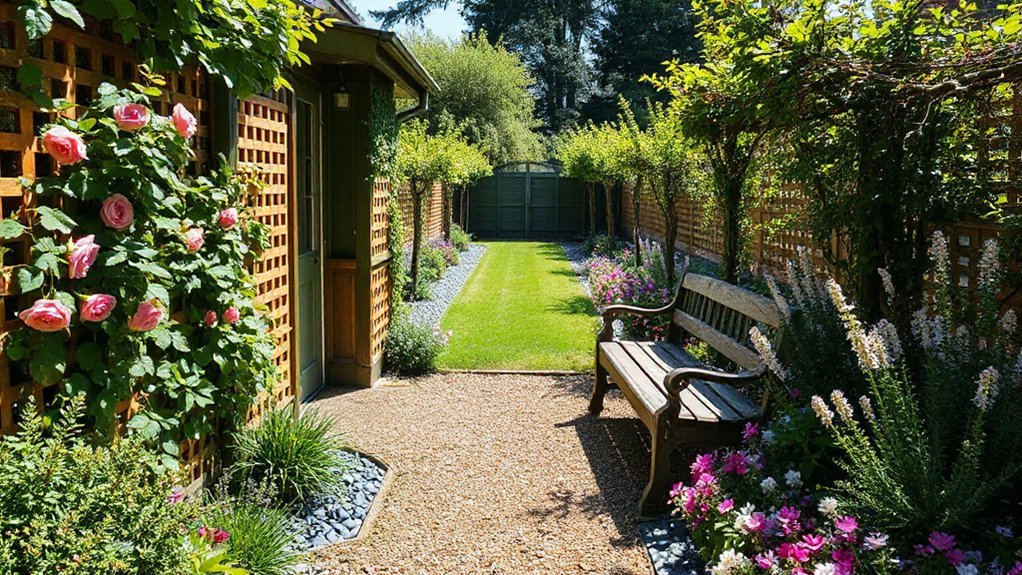
Transform your slim UK terraced yard into a multi-level retreat by embracing vertical planting, smart hardscaping, and seasonally resilient plant mixes. Start with a clear plan: map zones for sun, shade, seating, and privacy, then layer planting from ground to railing with evergreens, perennials, and fast-growing climbers. Use lightweight, durable surfaces and modular furniture to keep spaces flexible. Keep maintenance simple with microclimate tweaks and smart irrigation. Curious for more practical steps and examples? You’ll get even closer to your ideal terrace.
Start Your Terraced Garden Makeover: Assess, Plan, and Prioritize
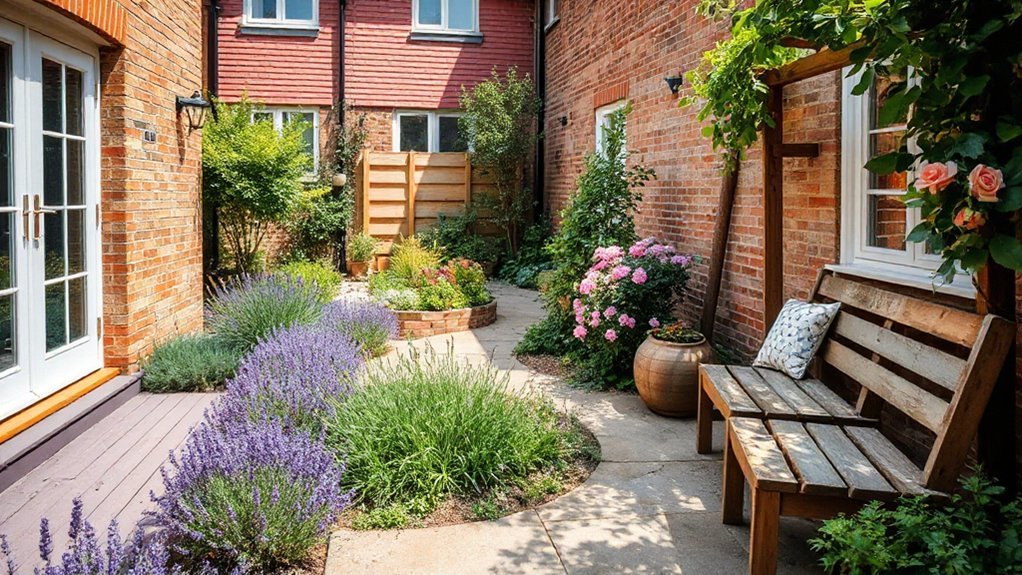
Start your terraced garden makeover by taking stock of what you already have and what you want to achieve. You’ll assess existing plants, containers, and furniture, then map how each element serves your summer goals.
Prioritize zones for seating, dining, and sun or shade, so you can plan flows like a well-landscaped path. Visualize color palettes, textures, and micro-climates across levels to guide purchases and swaps.
Before buying, test soil in each area and note drainage or compaction issues; this informs soil preparation decisions and plant compatibility.
Create a simple timeline: immediate fixes, mid-season tweaks, and long-term enhancements.
Keep a lean budget, focusing on versatile garden furniture and modular pieces. Stay pragmatic, but let the plan feel inspiring.
Maximize Space With Vertical Planting on UK Terraces
Ever thought you could double your growing space without widening your terrace? Vertical planting transforms tight spots into productive surfaces you can reach, water, and weed with ease.
You’ll install sturdy wall-mounted planters, trellises, and stackable containers that suit UK summers—bright days and cool nights. Prioritize light-loving herbs and compact vegetables at eye level, then let climbers weave upward for shade and privacy.
Choose Vertical gardening systems with modular shelves to adjust as plants grow, ensuring air circulation and reduced disease risk.
Container planting keeps soil choice flexible, so mix slow-release feeds with high-drain mixes to prevent soggy roots.
Pair vertical elements with compact railing planters to maximize every inch, creating a lush, efficient terrace you can harvest from.
Layered Planting for Year-Round Interest in a Small Terrace
Layered planting creates year-round interest on a small terrace by stacking color, texture, and height where you have the least space. You’ll design zones from ground to railing, using compact perennials, seasonal annuals, and evergreen structure.
Choose container combinations that balance weight, drainage, and display—group pots by height and color family for cohesion. Layer taller grasses or bamboo-mets as backdrops, mid-height shrubs or compact roses, and trailing anredera or sweet alyssum at the front for continuity.
In fall and winter, keep interest with evergreens, berries, and bronze foliage accents.
Mulch options matter: a thin mulch ring around containers preserves moisture, reduces weeds, and stabilizes soil.
Maintain periodic cutbacks and rotate plants to preserve energy flow across the terrace.
Zoning Your Narrow Plot for Privacy and Flow
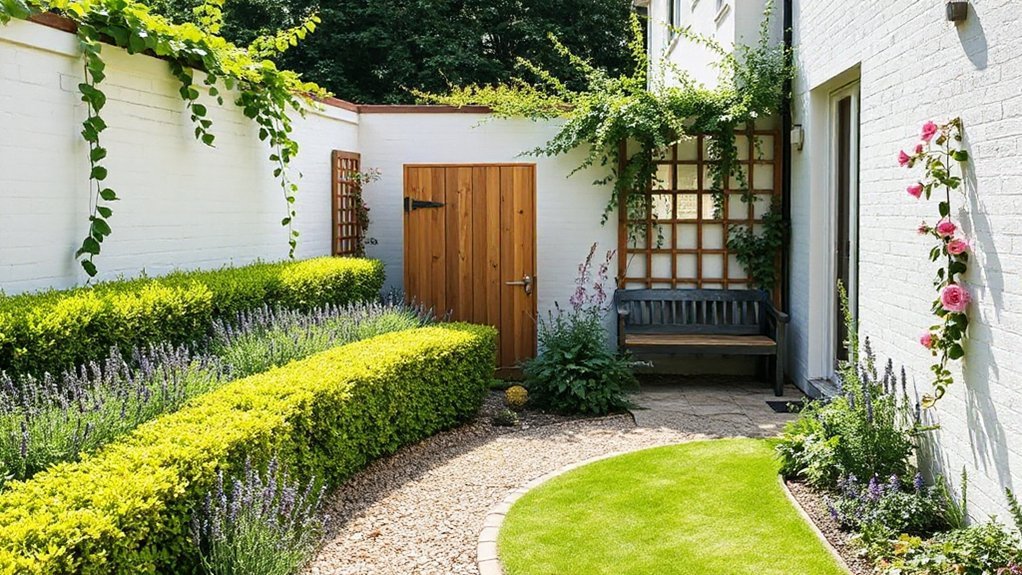
For a narrow plot, zoning becomes your compass: clearly defined zones create privacy where you want seclusion and flow where you need movement. You’ll map zones to suit sun, wind, and sightlines, using walls, screens, or tall planters to carve intimate corners from open spaces.
Practice garden zoning by assigning a quiet retreat near the house, a social area toward the rear, and a service strip for utilities or storage, all linked by sightlines and subtle paths. Prioritize privacy planning with tall, evergreen screens along boundary edges and narrow, vertical greens to soften edges without blocking light.
Use mulch, gravel, or stepping-stone progressions to delineate zones softly. This approach feels practical now and visionary for future growth.
Pathways and Surfaces That Make a Slim Yard Feel Bigger
Think about slim yard pathways as the spine of your garden, guiding movement without crowding space. Use light, reflective surfaces to brighten corners and create the illusion of width.
Pair compact paths with bright, clean edges to keep the surface feeling expansive and inviting.
Slim Yard Pathways
Use compact materials that read as a continuous line, like slender bricks or resin-bound gravel in a single hue, to avoid breaks that trap attention. Plantings should stay low and structured, creating garden corridors that feel open rather than boxed in.
Consider a simple, durable stepping-stone sequence or a narrow paver path that interrupts the surface just enough to invite exploration. Incorporate vertical elements sparingly—trellises or slim obelisks—to add height without narrowing.
The result is practical, expansive, and visually cohesive.
Brighten With Surfaces
Brighten a slim yard by choosing pathways and surface treatments that reflect light and feel expansive. You can maximize space by selecting light-colored pavers or resin-bound drives that bounce sunlight along the brick walls.
Use large-format slabs to reduce joints and create a seamless flow, making the area appear bigger. Consider smooth, non-slip textures for practicality and safety when the UK sun shines or showers occur.
Introduce reflective planters and garden art in metallic or pale finishes to draw the eye along the length of the yard. Choose patio furniture with slim profiles and weathered finishes to avoid visual clutter.
Finish with a clear, protective seal that preserves brightness while resisting dirt. This approach keeps the space welcoming, purposeful, and resilient.
Balcony-Friendly Screens and Privacy for UK Summers
Balconies can feel private and usable all summer long with screens that balance wind, light, and airflow. You’ll want balcony privacy that still reads as airy, so choose lightweight panels that block sightlines without closing off the sky. Think modular screens, lattice with climbing herbs, or vertical slats that tilt for breeze.
Materials should resist UK humidity and sun: treated wood, powder-coated metal, or durable composites. Integrate fold-away screens for evening dining or gusty days, then tuck them away when not needed.
Pair with planters to soften edges and create microclimates. Keep color and texture cohesive with your terrace, so the space feels spacious, calm, and usable from sunrise to sunset.
This approach delivers practical, visionary summer screens you’ll actually enjoy.
Budget-Friendly Hardscaping Ideas for Terraced Gardens
You’ll start with budget-friendly hardscape ideas that feel intentional, using recycled materials options to give spaces a second life.
For small spaces, you’ll opt for smart paving choices that maximize footprint while keeping costs low, and you’ll layer in budget-boost planting touches to soften edges and add seasonal color.
This approach blends practical builds with a forward-looking vision, proving that affordable, durable hardscaping can transform a terraced garden without breaking the bank.
Recycled Materials Options
If you’re aiming to stretch every pound, recycled materials offer practical, budget-friendly options for hardscaping a terraced UK garden. You’ll design with intention, choosing durable, low-cost elements that echo character rather than price tag.
Start with reclaimed wood for edging, planter boxes, or a small screening fence; its warmth adds texture while keeping costs down. Integrate recycled plastic composites for decking or lightweight furniture that withstands damp summers.
Look for second-hand bricks or stones to create stair risers, channels, or a simple path edge, steering your layout toward reuse and resilience.
Embrace modularity: upcycled containers can morph from herb beds to seasonal displays as you refine your terrace. Prioritize weather-ready finishes and secure, simple fixings to preserve longevity and visual cohesion.
Paving For Small Spaces
Even in a compact terraced garden, smart paving can define zones, add structure, and stretch outdoor usability without breaking the bank. You’ll want low-cost options that still feel deliberate. Consider large-format slabs laid in a simple grid to minimize joints and create a sense of continuity, then edge with timber or metal strips to keep lines crisp.
Create one focal patio using a light colour to bounce sunshine and visually expand the space. Introduce permeable textures like gravel or crushed slate beside paths to aid drainage and keep maintenance minimal.
Choose garden furniture that folds or nests for flexibility without crowding. For watering techniques, install a simple rain barrel connection and use drip lines to target containers efficiently.
Practical, scalable, and forward-thinking hardscaping starts here.
Budget-Boost Planting Touches
Small tweaks can punch up texture and color without blowing your budget. You’ll focus on Budget planting choices that deliver impact with restraint, pairing repeatable motifs with smart placement.
Think container batches of drought-tolerant perennials and compact shrubs that tolerate UK terrace climates, then mix in annuals for seasonal flair without overhauling beds.
Use verticals—trellises, wall pockets, and hanging planters—to maximize space while keeping costs down.
Emphasize Cost effective greenery by selecting evergreen base plantings for year-round structure and layering with color through affordable seasonal riffraff.
Schedule lighting-free irrigation or simple drip lines to extend plant life between visits.
Favor locally grown specimens to reduce transport costs, and group plants with similar water needs to simplify care and sustain thriving, budget-friendly displays.
Seasonal Plant Combinations for UK Terrace Weather
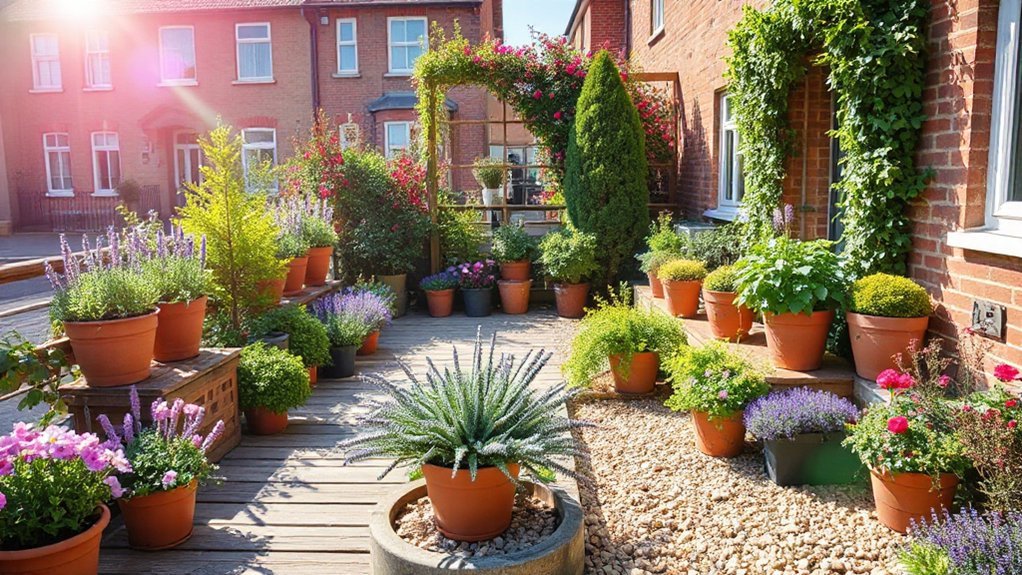
Begin with a sun-loving core in summer, add a shade-tolerant companion as light wanes, and layer grasses or trailing annuals for movement. Pair evergreen accents with seasonal annuals to maintain structure through drizzle and brisk gusts.
Use drainage, compact soil, and smart irrigation to reduce maintenance while boosting resilience. Plan early for microclimates on your terrace—east, west, or front-facing spots—and document what thrives after each storm, sunburst, or dry spell.
Your seasonal palette becomes your weatherproof signature. seasonal plant combinations, UK terrace weather.
Lighting and Ambience for Summer Evenings on a Terrace
Transform your terrace into a warm evening haven by layering lighting that’s practical, atmospheric, and flexible. To set mood and function, combine low-wattage string lights with inset wall lanterns and solar path lamps. Dimmable options let you shift from dinner to conversation without a glare.
Add targeted task lighting for grilling or reading, and keep a soft, ambient glow around seating zones. Consider warm tones (2700–3000K) to mimic sunset hues, and hide cables for a tidy look.
You’ll also reflect light off garden furniture and nearby walls to enlarge the space. Integrate outdoor decor that echoes your style, from woven textures to metallic accents, for depth.
The result is a coherent, usable terrace that invites longer evenings outdoors. Garden furniture complements the glow.
Easy Maintenance Habits to Keep a Small UK Terrace Gleaming
A small UK terrace can stay gleaming with simple, proactive habits that fit tight spaces. You keep maintenance minimal by establishing a quick daily rinse routine, selecting compact, multi-use furniture, and planning seasonal tweaks that don’t overwhelm.
Focus on smart storage, weatherproofing, and routine checks to prevent build-up and damage before it starts.
- Wipe down surfaces after use to avoid staining and grime
- Store cushions and tools in a waterproof box to cut clutter
- Schedule brief, quarterly cleanups for railings, tiles, and planters
- Choose garden furniture with easy-clean finishes and modular designs
- Implement pest control measures early, like sealant gaps and monitor plants
These habits transform a small terrace into a gleaming, efficient outdoor room.
Frequently Asked Questions
How Can I Prevent Slipping on Wet Terrace Surfaces?
Yes—start by installing slip resistant surfaces and choosing proper footwear. You’ll reduce risks with textured pavers and anti-slip coatings, and always wear proper footwear. Plan routes, keep dry mats handy, and maintain surfaces for safe, visionary, practical use.
What Are Low-Water Plant Options for UK Summers?
You’ll choose drought tolerant plants that thrive in UK summers and require minimal watering. Embrace water efficient gardening principles, mulching, and smart grouping to reduce evapotranspiration while you design resilient, low-maintenance palettes for your terrace.
Which Containers Suit Shaded Terrace Areas Best?
You notice the shade-dappled light and choose containers with good drainage, like terracotta or resin DP pots, because container drainage matters. Fill with shade tolerant plants and you’ll create a practical, visionary, cool, thriving terrace.
How Often Should I Prune Balcony Evergreens?
You should prune balcony evergreens every 4–6 weeks during the growing season. This pruning schedule keeps shapes tight and encourages healthy growth, while evergreen maintenance remains practical and visionary, sustaining vibrant, resilient urban greenery you can trust.
Can I Use Edible Plants on a Small Terrace?
“Yes, you can.” You’ll grow edible herbs on your Small vegetable patches, maximizing every inch. You envision a productive terrace, and you act: plant compact edibles, water smartly, and harvest often—planning today for tomorrow’s thriving, delicious space. Adage: practice makes progress.
Conclusion
You can transform a narrow UK terrace into a thriving year-round refuge with smart layering, vertical planting, and careful zoning. Start by evaluating what you have and what you’ll actually use, then map a simple, scalable plan. Fun fact: even small terraces can support 20+ edible herbs if you stack shelves and container plant smartly. Stay practical, stay bold—choose enduring materials, schedule tiny maintenance wins, and let the space evolve with you. Your summertime sanctuary is closer than you think.
About the Author